
Saltwater ich (marine white spot disease) is caused by the ciliate Cryptocaryon irritans. Do not wait for obvious white dots before acting: infections limited to the gills can cause rapid breathing, flashing, weakness, or death without visible spots. Because the parasite has protected stages in the aquarium, successful control usually requires a correctly diagnosed fish, a separate treatment system, and weeks of monitored therapy.
The safest plan is to have skin, fin, or gill material examined microscopically, then select copper, hyposalinity, chloroquine, or another veterinary-directed option that fits the fish, water chemistry, and presence of invertebrates.
As an Amazon Associate I earn from qualifying purchases.
What marine ich is—and why white spots are not required
Marine ich, saltwater ich, and marine white spot disease all refer to infection with Cryptocaryon irritans, a ciliated protozoan. It is not the same organism as freshwater ich (Ichthyophthirius multifiliis), so a freshwater-ich remedy or protocol should not be assumed to work in seawater.
The parasite can be present in several parts of a system at once. A trophont feeds while embedded in fish tissue. After leaving the host it becomes a protomont, encysts as a reproductive tomont, and produces tomites. These develop into free-swimming theronts that search for fish and start the cycle again. Fish carry some stages, while tomonts are protected in the environment. That combination is why a fish can look better while the aquarium remains infectious.
#1 Best Overall

- Contains one (1) API LIQUID SUPER ICK CURE Freshwater and Saltwater Fish Medication 4-Ounce Bottle
- Treats "ich" white spot disease in fish and secondary bacterial fish infections
- Quickly kills ich parasite, typically within 24 hours of first dose
- Use only in freshwater and saltwater aquariums not with reef aquariums
- Dose every day for five days when symptoms first start occurring
Visible “salt grains” are useful clues, not proof. Gill-only disease may produce no skin spots at all. The University of Florida IFAS Extension warns that accurate diagnosis and rapid response are necessary because losses can be devastating.
Signs to check, including cases with no spots
Inspect fish in good light and watch their breathing and behavior, not only their skin. Signs associated with C. irritans include:
- Small white spots, nodules, or patches on the skin or fins
- Excess mucus, ragged fins, cloudy eyes, or pale-looking gills
- Flashing or rubbing against rock, sand, or equipment
- Rapid breathing, gasping, or spending unusual time at the surface or bottom
- Abnormal swimming, lethargy, loss of appetite, or isolation
- Sudden deaths in an apparently healthy group
Rapid respiration is especially important when no spots are visible. A parasite burden in the gills can impair gas exchange before skin trophonts are easy to see. The same signs can occur with other ciliates, bacterial disease, water-quality injury, or mixed infections, so appearance alone cannot identify the cause.
Do these 3 things before closing this tab:
1Clear out junk files and repair common Windows errors2Scan for outdated or missing drivers - takes under a minute3Repair Windows errors before they cause bigger problemsHow marine ich is confirmed
Confirmation requires microscopic examination of material from the skin, fin, or gills and identification of the parasite or a characteristic life stage. A wet mount is the diagnostic method listed for marine protistan parasites in the Merck Veterinary Manual. A fish-health veterinarian or qualified aquatic diagnostic laboratory can select sampling sites and interpret the result.
Do not scrape a fish simply to “look for spots” without guidance. Handling a distressed fish can worsen oxygen debt or injury, and a negative sample does not automatically prove the aquarium is clear if sampling missed an infected area or the parasite is in another stage. Diagnosis should be paired with a review of temperature, salinity, recent fish additions, shared nets, and any previous treatment.
Rank #2

- Contains one (1) API LIQUID SUPER ICK CURE Freshwater and Saltwater Fish Medication 16-Ounce Bottle
- Treats "ich" white spot disease in fish and secondary bacterial fish infections
- Quickly kills ich parasite, typically within 24 hours of first dose
- Corals and invertebrates may be sensitive to this medication. We do not recommend usage in reef aquariums or any freshwater or saltwater aquarium with invertebrates.
- Use at the first sign of “Ich” (white spots). Repeat dose after 48 hours. See Directions for more details.
Why treatment takes weeks
Only some stages are vulnerable to a particular treatment. Trophonts are embedded in tissue, tomonts are encysted and reproducing off the fish, and theronts are exposed while swimming. A short course can therefore remove visible spots while protected stages later release new infective cells.
UF/IFAS reports that development varies with parasite strain, temperature, salinity, host species, and other conditions. Its publication gives an average life cycle of 1–2 weeks but reports that a complete cycle can range from 6–11 weeks. Those figures describe reported ranges, not a guaranteed schedule for every aquarium.
The same guidance describes prolonged treatment of 3–6 weeks and notes that some situations require longer. For quarantine at 24–27°C (75.2–80.6°F), it gives a minimum of 3–6 weeks, with 7–11 weeks sometimes needed. For new fish entering an established population, it recommends quarantine for 30–90 days. Keep the fish isolated for the full protocol even if spots disappear early.
Choose the treatment system before choosing a drug
For an infected fish, a bare hospital or quarantine aquarium is usually easier to control than a display reef. Treatment decisions depend on five questions:
- Is C. irritans confirmed or only suspected, and which life stage is likely present?
- Can the fish tolerate the proposed salinity, medication, and handling?
- Will alkalinity, pH, water volume, or other chemistry change the drug concentration?
- Are corals, crustaceans, mollusks, or other invertebrates exposed?
- Can the aquarist measure the active drug and maintain it for the entire course?
Copper, hyposalinity, and chloroquine are described immersion options. Formalin has also been used, with variable success. No single regimen is appropriate for every species, strain, or system.
Rank #3

- Treats Velvet (Gold Dust)
- Treats Ich
- Treats Saprolegniasis
- Treats Cryptocaryonaisis
| Option | Source-specific example | Main monitoring or safety issue | Where it fits |
|---|---|---|---|
| Copper | Copper sulfate at 0.15–0.20 mg/L free copper for 3–6 weeks in the UF/IFAS publication | Measure free copper at least twice daily; toxicity depends on water volume and total alkalinity, and copper can be immunosuppressive | Usually a controlled treatment tank, not a reef display with invertebrates |
| Hyposalinity | 15 g/L for 21–30 days for sensitive strains, with gradual salinity reduction | Effectiveness varies with strain salinity tolerance and the fish’s tolerance; salinity must be reduced and restored gradually | A monitored fish-only system where the species can tolerate the target |
| Chloroquine | 10 mg/L for 2–3 weeks or longer in the cited UF/IFAS example | Efficacy is not completely demonstrated in Merck’s summary; use a measured, veterinary-directed protocol | A treatment system where the medication can be accurately dosed and removed |
| Formalin | Used as a saltwater treatment, with variable success | Requires product-specific directions and careful observation; no universal schedule is established in the cited guidance | Only when a fish-health professional selects it for the case |
Copper: effective when controlled, hazardous when improvised
Copper is commonly used and often considered effective, but it has a narrow margin for error. The UF/IFAS publication describes gradually increasing concentration over 2–3 days, checking free copper at least twice daily, and maintaining the selected concentration through a prolonged course. Its copper-sulfate example is 0.15–0.20 mg/L free copper for 3–6 weeks.
Free tools Windows power users keep installed
One-click scans. No signup required.
Those numbers come from that publication and are not a universal prescription. Read the medication label, confirm whether it specifies free or total copper, and use a test kit compatible with that exact product. Measure the actual treatment volume rather than relying on the aquarium’s nominal size. Water changes, adsorption by materials, and changes in chemistry can alter the measured level.
Merck cautions that copper is highly toxic to fish when mismanaged and that safe use depends on water volume and total alkalinity. Saltwater invertebrates can also be sensitive. Do not casually dose a reef display containing invertebrates. Move the fish to a treatment tank unless an aquatic veterinarian has designed a system-specific plan.
Hyposalinity: a gradual, species-dependent option
UF/IFAS gives 15 g/L for 21–30 days as an example for sensitive strains, while emphasizing that both parasite and fish tolerance matter. Lower salinity gradually rather than making a single abrupt change. Verify salinity with a calibrated instrument, record readings, and keep temperature and oxygen stable as salinity changes.
Hyposalinity is not interchangeable with copper. Some fish tolerate it poorly, and a strain that survives at a given salinity may not be controlled by that same target. Restore normal salinity slowly after the treatment interval and continue observation in quarantine.
The Tool Desk
Outbyte PC Repair FREERepair Windows errors before they cause bigger problemsFix Now →Outbyte Driver Updater FREEScan for outdated or missing drivers - takes under a minuteDriver Scan →Rank #4
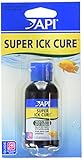
- Contains one (1) API LIQUID SUPER ICK CURE Freshwater and Saltwater Fish Medication 1.7 -Ounce Bottle
- Treats "ich" white spot disease in fish and secondary bacterial fish infections
- Quickly kills ich parasite, typically within 24 hours of first dose
- Use only in freshwater and saltwater aquariums not with reef aquariums
- Dose every day for five days when symptoms first start occurring
Chloroquine and formalin
The UF/IFAS example for chloroquine is 10 mg/L for 2–3 weeks or longer. Merck lists chloroquine among saltwater options but notes that its efficacy is not completely demonstrated. Use it only with an accurately measured dose, a compatible treatment tank, and professional advice on duration and removal.
Formalin is also listed for marine disease treatment, but published success is variable. Because concentration, exposure time, aeration, and fish condition affect risk, follow the selected product’s label or a veterinarian’s written protocol rather than combining formalin with another treatment on your own.
What UV can and cannot do
Ultraviolet sterilization can affect theronts only when they pass through the unit at a lethal dose. It does not reach tomonts attached to surfaces or other protected stages in the aquarium. UV may therefore reduce some free-swimming exposure, but it is not a stand-alone cure and does not replace quarantine or a complete treatment course.
A practical quarantine and treatment workflow
- Separate the affected fish. Use a cycled or otherwise prepared hospital aquarium with reliable heating, strong aeration, a secure cover, and equipment that will not be shared with the display.
- Stabilize water first. Test temperature, salinity, pH, ammonia, and oxygen. Correct dangerous water quality before adding medication; a weakened fish can deteriorate from both disease and poor water.
- Seek confirmation. Arrange microscopic examination of skin, fin, or gill material when possible, especially if signs are atypical or spots are absent.
- Select one compatible protocol. Consider species tolerance, current condition, invertebrate exposure, water chemistry, and whether you can perform the required measurements.
- Measure every dose. For copper, increase gradually over 2–3 days if following the UF/IFAS approach and check free copper at least twice daily. For hyposalinity, record each salinity reduction. For chloroquine or formalin, measure the treatment volume and follow the chosen written protocol.
- Maintain the full duration. Do not stop when spots vanish. The relevant UF/IFAS ranges are 3–6 weeks for prolonged treatment, with longer periods sometimes needed; quarantine recommendations at 24–27°C are 3–6 weeks minimum and potentially 7–11 weeks.
- Monitor the fish and the water. Record appetite, breathing, behavior, mortalities, ammonia, and medication or salinity readings. Remove uneaten food and dead fish promptly, but account for any water change when recalculating medication.
- End isolation deliberately. After the treatment interval, restore water conditions gradually when required, continue observation, and disinfect equipment before it returns to another aquarium.
Preventing introduction and recurrence
Biosecurity must cover fish, water, and equipment. Quarantine every new fish for the planned 30–90-day period before it joins an established population, rather than relying on a supplier’s claim that the fish looked healthy. A fish that survived an earlier infection may appear normal while acting as a carrier.
Quick wins for a faster PC:
Repair Windows errors before they cause bigger problemsFix Now →Fix the driver behind crashes, sound loss and screen glitchesFind Drivers →Use separate nets, buckets, siphons, and airline equipment for quarantine whenever possible. Do not transfer source water into the display. Before equipment, tank structures, or inert decorations are reused, clean and disinfect them using a method appropriate to the material, then rinse and dry thoroughly. Environmental tomonts can remain after the original fish is removed, and slow-developing or dormant stages can serve as reservoirs.
Best Value
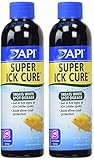
- Contains 2 API LIQUID SUPER ICK CURE Freshwater and Saltwater Fish Medication 4-Ounce Bottle
- Treats "ich" white spot disease in fish and secondary bacterial fish infections
- Quickly kills ich parasite, typically within 24 hours of first dose
- Use only in freshwater and saltwater aquariums not with reef aquariums
- Pack of 2
Keep written dates for fish arrival, treatment starts, medication readings, water changes, and the planned release date. This prevents an apparently improved fish from being returned before the parasite’s variable development period has passed.
Troubleshooting common failures
“The fish is breathing hard, but I see no spots.”
Assume gill disease is possible and increase aeration while arranging professional diagnosis. Do not dismiss the problem because the skin looks clear.
“Spots disappeared and came back.”
The course may have ended before protected tomonts released theronts, or the original diagnosis may be wrong. Recheck the fish and system rather than repeatedly changing medications.
“Copper readings keep drifting.”
Check the test kit’s compatibility with the medication, verify true water volume, and look for adsorption or dilution after water changes. Keep a written log and obtain specialist help before raising the dose.
“Invertebrates are in the aquarium.”
Do not treat the reef display casually with copper. Move fish to a suitable treatment system and manage the display’s fallow or quarantine plan with professional guidance.
“A UV unit is already installed.”
Continue quarantine and the selected treatment. UV can act only on theronts that pass through the sterilizer and cannot remove encysted tomonts from the aquarium.
When to call an aquatic veterinarian
Seek urgent help for rapid breathing, multiple deaths, severe lethargy, fish unable to maintain position, or a mixed-species outbreak. Professional input is also warranted when the species is known to be medication-sensitive, when copper cannot be measured reliably, when hyposalinity is being considered for a marginal fish, or when microscopy is unavailable and the signs are atypical. A correct diagnosis prevents exposing fish and invertebrates to a treatment aimed at the wrong disease.
Quick Recap
Product prices and availability are accurate as of the date/time indicated and are subject to change. Any price and availability information displayed on Amazon at the time of purchase will apply.





Leave a Reply