
Do these 3 things before closing this tab:
1Scan for outdated or missing drivers - takes under a minute2Repair Windows errors before they cause bigger problems3Fix the driver behind crashes, sound loss and screen glitchesSome links on this page are affiliate links: if you buy through them we may earn a commission, at no extra cost to you.
Megaesophagus is a syndrome in which a dog’s esophagus becomes abnormally widened and cannot move food and water normally. The most characteristic sign is repeated regurgitation—a passive, effortless return of undigested food or liquid—not vomiting. A dog with repeated regurgitation, weight loss, coughing after meals, or breathing changes needs veterinary assessment.
Breathing difficulty, blue or gray gums, collapse, or suspected inhalation of food or liquid is an emergency. Aspiration pneumonia is the most dangerous complication, and respiratory signs can occasionally be more obvious than the regurgitation itself.
As an Amazon Associate I earn from qualifying purchases.
Recommended Free Tools
What is megaesophagus in dogs?
The esophagus is the muscular tube that carries swallowed food and water from the throat to the stomach. Normally, coordinated muscular contractions called peristalsis propel its contents downward. With megaesophagus, the esophagus is abnormally dilated or stretched and often has weak or absent peristalsis. Food, water, and saliva can collect in the chest instead of reaching the stomach normally.
Eventually, the retained material may flow back into the mouth as regurgitation or enter the airways and lungs. Megaesophagus is therefore best understood as a syndrome or management challenge, not one disease with one standard cure. Some dogs have a treatable underlying cause; others have idiopathic disease for which feeding and aspiration-prevention strategies are the main treatment.
Popular on Amazon

- ATTENTION: Please check the size chart before oder, make sure the stand height will fit your dog well. We suggest to measure dog height from foot to the middle line of the body, and data needs to meet a certain height of the stand approximately, puppy's whole body height under 15inch won't fit after setting the stand up.
- FOR SENIOR DOGS: Effectively protects the spine and neck, avoiding appetite problems caused by prolonged uncomfortable posture. An adjustable dog bowl stand for dogs that tend to vomit when eating, have limited mobility, and suffer from arthritis.
- ADJUSTABLE HEIGHT RAISED DOG BOWLS: Our raised dog bowls for large sized dog can be adjusted to four different heights 3.15'' 9.09'' 10.63'' 12.20'' 13.78'', suit for all breeds and ages. Designed for large dogs, the maximum adjustable height is approximately 1.58 inch higher to fit large dogs needs.
- DUAL STAINLESS STEEL DOG BOWLS: Comes with two dog bowls for water or food, 7.87x 2.56 inch, meet the feeding needs of most dogs for a day. Easy to detach and clean, dish-washable. The oil in dog food can be cleaned more easily to avoid problems such as black chin.
- ANTI-SLIP QUIET DURABLE: The non-slip pads and the silent strip on the elevated dog bowl stand, prevents it from being accidentally knocked over by your dog, but also ensures that the bowl and stand stay stable even during vigorous eating. Avoid daily hassle of cleaning up the floor after your dog's meal!
Regurgitation versus vomiting
This distinction is one of the most useful things an owner can report to a veterinarian:
| Regurgitation | Vomiting |
|---|---|
| Usually passive and effortless | Active process involving nausea, retching, and abdominal contractions |
| Often occurs soon after eating or drinking, although retained material can return later | May follow a period of nausea, lip-licking, drooling, or restlessness |
| Material is commonly undigested food, water, or saliva | Food is often partly digested or mixed with stomach contents |
A short video of an episode can be very helpful to the veterinary team. A dog can also have vomiting for another reason in addition to megaesophagus, so describing the event accurately matters.
Signs of megaesophagus
Common signs include:
- Repeated, effortless regurgitation of undigested food, water, or saliva
- Regurgitation shortly after meals or drinking, or episodes that occur later when retained material comes back up
- Weight loss, poor body condition, or difficulty maintaining enough calories
- Failure to thrive or poor growth in a puppy
- A puppy that begins regurgitating when solid food is introduced around weaning
- Coughing or other breathing changes after regurgitation
- Reduced exercise tolerance, lethargy, or reduced appetite when a respiratory complication develops
Adult dogs may sometimes develop respiratory signs with little obvious regurgitation. Material can be aspirated in small amounts, or the owner may not see every episode. That is why a new persistent cough or breathing change deserves attention even when the dog’s regurgitation has not been obvious.
When aspiration pneumonia may be developing
Aspiration pneumonia occurs when food, liquid, or saliva enters the airways and lungs. Warning signs include:
- Coughing, especially after eating or drinking
- Fever
- Nasal discharge
- Lethargy or marked weakness
- Reduced appetite
- Rapid breathing or increased effort to breathe
- Reduced tolerance for normal activity
What causes megaesophagus?
Causes vary with the dog’s age, the distribution of the esophageal dilation, and whether another disease is present. The broad categories are congenital, acquired secondary, and idiopathic.
Quick wins for a faster PC:
Repair Windows errors before they cause bigger problemsFix Now →Scan for outdated or missing drivers - takes under a minuteDriver Scan →Congenital megaesophagus
Congenital cases result from a developmental problem affecting the esophagus, its nerves and muscles, or nearby anatomy. Possibilities include developmental neuromuscular dysfunction, congenital myasthenia gravis, and vascular-ring anomalies that trap or compress the esophagus.
Congenital megaesophagus commonly becomes apparent when a puppy is weaned and solid food is introduced. Some congenital cases improve as the puppy matures, often by approximately six months of age. However, a puppy should not simply be assumed to “outgrow” the problem. Regurgitation can cause malnutrition and aspiration pneumonia during that period, so veterinary supervision remains important.
Breed or family tendencies have been reported in Wire-haired Fox Terriers, Miniature Schnauzers, German Shepherds, Great Danes, Newfoundlands, Irish Setters, Labrador Retrievers, Chinese Shar-Peis, and other breeds. A breed association is not a diagnosis: any dog can be affected.
Also popular on Amazon

- Medium slow feeder dog bowl – helps slow down eating up to 10X; this SLOWEST level feeder is best for very fast eaters and small to medium dog breeds
- Holds 2 cups of dry or wet dog food – this very deep dog bowl has our most challenging puzzle feeder maze design and can fit a full meal for medium-sized dogs
- Mindful mealtime – encourages slower eating and longer engagement, helping pups enjoy every bite while making mealtime more fun and interactive
- Multiple sizes, maze patterns, and 3 SLOW levels to choose from – Slow, Slower, or Slowest – to slow your dog down as much as needed; pick the perfect size and design for your unique pet
- Non-slip, food-safe, and easy to clean – our puzzle feeders are top-rack dishwasher-safe and made without BPAs, PVCs, lead, or phthalates
Acquired and secondary megaesophagus
Adult-onset megaesophagus may be idiopathic, meaning no underlying cause is found, or secondary to another disorder. Reported associations include:
- Neuromuscular disease: myasthenia gravis, polymyositis, central nervous-system disease, and dysautonomia
- Endocrine or immune-mediated disease: hypoadrenocorticism, hypothyroidism, and systemic lupus erythematosus
- Structural disease: foreign body, esophageal injury, stricture, neoplasia, external compression, or a vascular-ring anomaly
- Toxic or metabolic disease: heavy-metal or other toxic exposure and glycogen-storage disease
Finding and treating one of these conditions may improve the esophageal problem. For this reason, adult dogs with newly recognized megaesophagus generally need evaluation for associated disease rather than being labeled “idiopathic” after a single X-ray.
One survey of 838 eligible owner reports identified myasthenia gravis, esophagitis, and hypothyroidism among diagnosed associated diseases. Because the survey relied on owner reports and recruitment through referral or support-site sources, its percentages should not be treated as prevalence estimates for every dog population. It does, however, illustrate why an underlying-cause workup is important.
How veterinarians diagnose megaesophagus
Megaesophagus cannot be confirmed reliably at home. The veterinarian will combine the history and physical examination with imaging and, when appropriate, tests for neuromuscular, endocrine, inflammatory, or structural disease.
Thoracic radiographs
Chest X-rays are commonly the first imaging test. They may show a widened esophagus containing air, fluid, or food. Radiographs can also look for changes consistent with aspiration pneumonia.
What’s actually slowing this PC down?
Pick the symptom - the matching free tool is one click away.
The distribution of the dilation can provide clues. Generalized enlargement is compatible with diffuse esophageal dysfunction. Dilation limited mainly to the area cranial to a lesion may point toward an obstruction or compression, such as a stricture, foreign body, neoplasia, or vascular-ring anomaly. An X-ray pattern is a clue, not a complete diagnosis.
Additional tests
Depending on the findings, a veterinarian may recommend:
- A contrast esophagram to assess movement or identify narrowing and other structural abnormalities
- Endoscopy to investigate a foreign body, stricture, inflammation, or another lesion
- Videofluoroscopic swallowing or feeding evaluation to observe swallowing and esophageal transit in real time
- Blood testing and targeted endocrine testing
- Acetylcholine-receptor antibody testing when myasthenia gravis is suspected
- Neurologic evaluation or additional imaging when a neuromuscular or central nervous-system problem is possible
Videofluoroscopy can be particularly useful in selected dogs. It may help distinguish generalized poor motility from obstruction at the lower esophageal sphincter or an achalasia-like syndrome. That distinction matters because a small subgroup may be candidates for a targeted procedure rather than management directed only at idiopathic megaesophagus. A veterinary internal-medicine consultation and, where available, a videofluoroscopic feeding evaluation can help when regurgitation persists, diet tolerance is unclear, pneumonia recurs, or the initial workup does not explain the problem.
Treatment: address the cause when possible
Treatment depends on the diagnosis:
- Vascular-ring anomalies generally require surgery.
- Foreign bodies and strictures need specific veterinary treatment, which may involve endoscopy, dilation, or surgery.
- Inflammatory, endocrine, toxic, neuromuscular, or immune-mediated diseases require treatment directed at that condition.
- Dogs with a lower-esophageal-sphincter achalasia-like disorder may be considered for mechanical dilation, botulinum toxin, or surgery by a suitably equipped specialist.
- Idiopathic generalized megaesophagus usually has no reliably curative medical treatment. Care focuses on delivering nutrition safely and reducing aspiration risk.
In idiopathic cases, medications and surgery do not generally restore normal esophageal function. That does not mean treatment is pointless: an individualized feeding routine can make a major practical difference, while prompt treatment of aspiration pneumonia can be lifesaving.
Free tools Windows power users keep installed
One-click scans. No signup required.
Also popular on Amazon
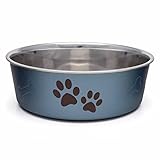
- STAINLESS STEEL & DURABLE - This Bella Bowl (27 oz, 6.75" x 2") features a stainless steel design with a poly-resin exterior great for dog food mat, which makes them dish washer safe and easy to keep clean and hygienic. Perfect cat food bowl or dog water bowl for home & travel.
- REMOVEABLE RUBBER BASE - This feature prevents and ensures no spill water bowl for dogs. It’s perfect for puppy food and makes an excellent addition to your dog feeding station. Watch the bowl stand steady on your pet food mat, making it a great complement to your dog mat and other dog stuff.
- PATENTED AWARD-WINNING DESIGN – Bella Bowls are renowned for being the bestselling bowls in the pet industry. The Bella Bowl Stainless Steel Bowls come in a variety of sizes, making this versatile dog food bowl perfect for all pets—from puppy bowls and small bowls to dog bowls large breed and everything in between! These bowls are also ideal for use as a cat water bowl, with smaller sizes being highly recommended for cat bowls for indoor cats.
- REAL STEEL STYLISH & COLORFUL DOG FEEDER – Available in a wide range of vibrant colors, this dog bowl seamlessly complements any pet supplies collection or dog accessories and makes a fantastic addition to your home’s décor. The Bella Bowls come in beautiful hues like blueberry and artichoke, making them a perfect fit for your dog bowl mat or cat food mat.
- VETERINARIAN RECOMMENDED – This stainless steel dog bowl and stainless steel cat bowls have all the benefits of stainless steel making them hygienic and clean. Bella bowls are truly a must-have for any cat feeding station and essential addition to your dog supplies.
Feeding and daily management
When esophageal propulsion is poor, gravity becomes the main practical aid. The goal is to help food and water travel toward the stomach while limiting the amount retained in the esophagus.
1. Feed with the front end elevated
Veterinary references commonly recommend feeding with the dog’s front end elevated or in a near-vertical position, followed by keeping the dog in that position for at least 10–15 minutes after eating. Some dogs need a longer period based on their individual response and veterinary instructions.
An ordinary raised bowl is not necessarily enough. Simply lifting a bowl a few inches does not create the same controlled, near-vertical posture. The correct position also depends on the dog’s size, body shape, mobility, and ability to breathe and swallow comfortably.
A Bailey chair for dogs can make consistent upright feeding more practical, particularly for medium and large dogs. It must be correctly fitted, allow comfortable breathing and swallowing, and be used with supervision. A chair is a management aid—not a cure, not a guarantee against aspiration, and not a reason to skip veterinary care.
- Have the veterinary team help assess the dog’s posture and tolerance.
- Keep the dog supervised while in the chair.
- Never use a position that causes struggling, choking, breathing difficulty, or excessive neck flexion.
- Keep the chair stable and inspect straps, supports, and surfaces regularly.
- Do not assume a chair designed for another dog will fit safely.
Dogs that cannot fit a standard chair or have mobility limitations may need a discussion about custom adaptive feeding equipment or another specialist-approved setup.
2. Find the food texture the individual dog can tolerate
There is no universally best consistency. Depending on the dog, a veterinarian may recommend trialing:
- A soft gruel
- Dry food
- Canned food formed into compact meatballs
Some dogs handle one texture better than another, and the preferred texture can be counterintuitive. Trial changes should be systematic and supervised rather than made repeatedly without monitoring. Change one meaningful variable at a time when possible, record the result, and discuss repeated regurgitation with the treating team.
The diet must provide enough calories and appropriate nutrition to prevent continuing weight loss. A veterinary nutritionist may be valuable when a dog is underweight, has food intolerance, needs a homemade diet, or cannot maintain adequate calories on the initial plan.
The Tool Desk
Outbyte PC Repair FREEClear out junk files and repair common Windows errorsFree Scan →Outbyte Driver Updater FREEFix the driver behind crashes, sound loss and screen glitchesFind Drivers →3. Use meal sizes and timing recommended for that dog
Frequent, small meals are commonly used because large meals may be more difficult to move safely. The correct number and size depend on the dog’s calorie needs, food texture, body condition, and response. There is no single meal schedule that works for every patient.
Also popular on Amazon

- Stainless Steel Pet Bowl: Made for daily food or water use with a simple, practical design
- Silicone Nonslip Bottom: Helps reduce sliding and noise on smooth feeding surfaces
- Wide, Stable Shape: Designed to sit steadily during everyday meals
- Easy to Clean: Smooth stainless steel surface rinses clean and is dishwasher safe
- Stackable Design: Bowls can be stacked for compact storage when not in use
Ask the veterinarian how to divide the daily calorie target and how to adjust it if the dog loses weight. Do not compensate for regurgitated food by repeatedly offering large replacement meals, which may increase the amount retained in the esophagus.
4. Make a specific hydration plan
Water is essential, but water delivery can be challenging when it is also regurgitated or aspirated. The treating veterinarian should determine how much water the dog needs and how it should be offered in relation to meals. Do not rely on a universal online water recipe, fluid volume, or unrestricted-water rule. A dog that is dehydrated, repeatedly regurgitating water, or unable to maintain hydration needs veterinary guidance promptly.
5. Track what is actually happening
A simple daily log can help the veterinary team refine the plan. Record:
- Food texture, approximate amount, and meal time
- Body position during feeding and how long the dog remained upright afterward
- Regurgitation episodes, including how long after eating they occurred
- Coughing, breathing changes, nasal discharge, fever if measured, or reduced activity
- Appetite, water intake as directed by the veterinarian, and body weight according to the agreed schedule
Patterns in the log are often more useful than changing several parts of the routine at once.
Independent reader supportYour contribution helps us test, update, and keep practical guides available for everyone.What about sildenafil and other medications?
Sildenafil is sometimes discussed for megaesophagus, but the evidence is limited and mixed. In a 2017 randomized controlled trial involving 21 puppies with congenital idiopathic megaesophagus, sildenafil was associated over 14 days with fewer regurgitation episodes, greater weight gain, and a smaller relative esophageal diameter.
A separate randomized crossover study in 10 client-owned dogs with generalized megaesophagus found statistical differences in regurgitation and body weight but concluded that clinically relevant improvement was not demonstrated. These small studies do not establish sildenafil as a standard cure or a suitable treatment for every form of megaesophagus.
Sildenafil should therefore be considered only as a veterinarian-directed, condition-specific option. Do not give a dog sildenafil left over from another prescription, obtain it as a self-treatment, or assume that a response in one study applies to a different cause or age group. The same caution applies to pyridostigmine, antibiotics, acid suppressants, prokinetic drugs, and other medications: the correct choice depends on the diagnosis and complications.
Specialist and advanced options
Dogs with severe, recurrent aspiration despite carefully managed feeding may require referral to a veterinary specialist. Rare approaches described in small case series and case reports include gastrostomy or esophagostomy-tube strategies and intermittent suctioning of retained esophageal contents. These are highly specialized interventions, not routine home treatments, and they carry their own risks and management requirements.
Referral may be especially reasonable when:
- The cause remains unclear after initial testing
- The dog has repeated aspiration pneumonia
- Weight or hydration cannot be maintained
- A lower-esophageal-sphincter obstruction or achalasia-like syndrome is suspected
- The dog cannot be positioned safely or does not fit available feeding equipment
Prognosis and life expectancy
There is no reliable single life-expectancy figure for dogs with megaesophagus. The outlook depends on the cause, age at onset, nutritional status, aspiration history, severity of esophageal dysfunction, and response to the feeding plan.
Also popular on Amazon
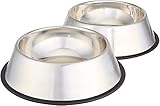
- Set of 2 stainless-steel food bowls for puppies, dogs, cats, or kittens
- Max fill (to the rim) 38 oz / 1.15 L each bowl, recommended fill up to 28 oz/ 0.8 L, perfect for dry kibble, wet food, treats, or water.
- Rust resistant; offers a healthy alternative to plastic; doesn’t hold odors
- No-slip design; rubber base protects floors and prevents bowls from sliding while your pet eats
- Dishwasher-safe for easy cleaning
Some congenital cases improve with maturation, often by about six months. A dog whose underlying disease can be treated, or whose family can maintain an effective individualized feeding routine, may do substantially better than a dog with persistent regurgitation and recurrent pneumonia.
Idiopathic generalized megaesophagus carries a guarded prognosis because aspiration pneumonia can be recurrent and fatal. Historical professional reports have described short survival and high mortality, but those figures are historical group data and should not be used to predict what will happen to an individual dog. A veterinarian who knows the dog’s diagnosis, weight trend, lung health, and response to feeding can give a more meaningful assessment.
Crashes, No Sound, or Screen Glitches?
Random freezes, missing sound and display glitches usually trace back to one bad driver. Find and replace yours safely.Free scan · under a minuteWindows Errors? Fix Them Before They Spread
Repair common Windows errors and clear accumulated junk for a smoother, more stable PC - no reinstall needed.Free scan · no reinstallPractical checklist for owners
- Confirm whether episodes are regurgitation, vomiting, or both.
- Arrange veterinary assessment for repeated regurgitation, weight loss, poor puppy growth, or coughing after meals.
- Ask whether chest radiographs and testing for an underlying disease are appropriate.
- Use the prescribed upright or elevated feeding position consistently.
- Keep the dog upright for at least the period recommended by the veterinary team—commonly 10–15 minutes or longer.
- Trial food textures systematically and monitor calorie intake and body weight.
- Follow an individualized hydration plan.
- Keep a food, posture, regurgitation, and respiratory-sign log.
- Seek emergency care for breathing difficulty, blue or gray gums, collapse, marked weakness, or suspected aspiration.
Evidence note: The core diagnostic and management guidance for this article is consistent with professional and owner guidance from the Merck Veterinary Manual. Evidence for sildenafil comes from small clinical studies, and evidence for advanced tube or suction approaches is limited to case reports and small case series. Those limitations matter when discussing treatment expectations.
Frequently Asked Questions
Can a dog outgrow megaesophagus?
Some congenital cases improve as a puppy matures, often by approximately six months, but this is not guaranteed. Regurgitation, malnutrition, and aspiration pneumonia can occur during that time, so the puppy needs veterinary supervision rather than watchful waiting alone.
Is megaesophagus in dogs fatal?
It can be, particularly when recurrent aspiration pneumonia develops, but the outcome varies widely. Dogs with a treatable underlying cause or a successful individualized feeding plan may do much better than dogs with persistent regurgitation and repeated pneumonia.
Can an elevated bowl treat megaesophagus?
A slightly raised bowl is not equivalent to controlled upright feeding. Many dogs need the front end elevated or a near-vertical position during and after meals. A properly fitted feeding chair may help, but it is a management aid—not a cure—and must be used under veterinary guidance and supervision.
Do these 3 things before closing this tab:
1Scan for outdated or missing drivers - takes under a minute2Repair Windows errors before they cause bigger problems3Fix the driver behind crashes, sound loss and screen glitchesCan dogs with megaesophagus drink water?
They need an individualized hydration plan, but the safest way to offer water varies by dog. A veterinarian should determine the delivery method and amount, especially if the dog regurgitates water or shows signs of dehydration. Do not use a universal internet recipe or fluid volume.
Is sildenafil a standard treatment for megaesophagus?
No. Small studies have produced mixed results, and sildenafil is not an over-the-counter remedy or universal cure. It should be considered only by a veterinarian for a specific dog and suspected mechanism.
The Bottom Line
Megaesophagus requires a diagnosis-based plan, not one generic treatment. The priorities are identifying a treatable cause, feeding the dog in a safe controlled upright position, maintaining calories and hydration, and recognizing aspiration pneumonia early. If regurgitation is repeated—or if coughing or breathing changes appear—contact a veterinarian promptly; breathing difficulty, blue or gray gums, collapse, or suspected aspiration require emergency care.





Leave a Reply