
Munchkin cats are medium-sized adult cats with an inherited short-legged appearance, not uniformly miniature or “teacup” cats. They are often playful, curious, sociable, and active. The important qualification is that their defining disproportionate-dwarfism trait is controversial: TICA describes Munchkins as mobile, while UK welfare authorities warn that shortened limbs may contribute to mobility, joint, spinal, grooming, and quality-of-life problems.
An individual Munchkin may be a happy, energetic companion, but no responsible guide should call the breed unconditionally healthy or assume every cat is impaired. Existing owners can support good quality of life through veterinary monitoring, healthy weight, accessible household layouts, grooming help, and low-impact enrichment.
As an Amazon Associate I earn from qualifying purchases.
What is a Munchkin cat?
The Munchkin is a medium-sized adult cat with unusually short legs caused by an inherited form of disproportionate dwarfism. Its body reaches an approximately average adult size; it is not necessarily a miniature, “teacup,” or permanently kitten-sized cat. Munchkins are recognized by The International Cat Association (TICA) in both shorthair and longhair forms and can have a wide range of coat colors and patterns.
Recommended Free Tools
They are often described as playful, curious, sociable, intelligent, and people-oriented. However, the same short-limbed trait that defines the breed is controversial. TICA’s breed standard states that the spine is unaffected and that short legs do not prevent mobility or survival, while the UK Animal Welfare Committee, Cats Protection, GOV.UK, and the Governing Council of the Cat Fancy (GCCF) warn about possible welfare problems involving movement, joints, grooming, spinal health, and quality of life.
#1 Best Overall

- COUCH CORNER DESIGN: Specially shaped to snugly fit furniture edges, providing a convenient and stable vertical scratching space for cats of all sizes.
- NATURAL SISAL: Wrapped with natural sisal mat that cats love to scratch, helping keep claws healthy and your cat active.
- STURDY & STABLE BASE: Comes with a wide wooden base and reinforced support to prevent wobbling or tipping—perfect for energetic scratchers.
- PROTECT FURNITURE: It helps to redirect cat bad behavior and protect your sofa. Use included catnip if your cat ignores the scratcher.
- EASY CARE & ASSEMBLY: The scratcher comes with stable wooden structure, simply follow the manual to assemble easily and quickly.
The most accurate summary is neither “every Munchkin is unhealthy” nor “Munchkins have no special risks.” An individual cat’s comfort and diagnosis must be assessed by a veterinarian, but prospective owners should understand why deliberately breeding for the short-legged phenotype remains an ethical and welfare issue.
Munchkin cat characteristics at a glance
| Characteristic | What to expect |
|---|---|
| Adult size | Medium-sized body with short legs; not uniformly miniature |
| Legs | All four limbs are shortened relative to the body in the standard phenotype |
| Coat | Shorthair or longhair, in many colors and patterns |
| Temperament | Often outgoing, curious, playful, sociable, and people-oriented |
| Activity | Usually active and interested in running, chasing, retrieving, and interactive play |
| Jumping | May jump, but some cats use smaller steps or alternate routes to reach high places |
| Care priorities | Routine veterinary monitoring, healthy weight, accessible resources, grooming support, and low-impact enrichment |
| Main controversy | Whether intentionally selecting for short limbs predictably creates mobility, health, or quality-of-life problems |
Appearance and size
The Munchkin’s defining feature is a normal-looking, average-sized body carried on markedly shortened legs. Peer-reviewed genetic research describes this as disproportionate dwarfism rather than a generally tiny body. That distinction matters when evaluating photographs or breeder descriptions: a short-legged Munchkin may still be a regular-sized adult cat with a substantial body.
The front and rear legs are shortened relative to the torso. The exact appearance can vary between individuals, and coat length can make the proportions look more or less pronounced. TICA recognizes both shorthair and longhair Munchkins, with a broad range of colors and patterns.
“Teacup Munchkin” is not a useful general description of the breed. The short-legged trait does not mean that every Munchkin is fragile, tiny, or unable to move normally. Conversely, a cat’s ability to run or play does not by itself rule out joint, spinal, or other health problems.
Munchkin temperament and activity level
Munchkins are commonly described as affectionate, outgoing, inquisitive, and energetic companion cats. TICA says they may enjoy running, chasing, retrieving, and interactive play, and Petfinder describes them as playful and curious indoor companions. They can be comfortable living with families and other pets when introductions, socialization, and the individual animals’ personalities are a good match.
These are tendencies, not guarantees. Temperament is shaped by genetics, early socialization, health, handling, and the home environment. Some Munchkins are constantly in motion; others are quieter or less athletic. A short-legged cat may be able to climb and jump while still benefiting from routes that reduce unnecessary high-impact landings.
Owners should watch the individual cat’s movement instead of assuming that a breed label explains every behavior. Reluctance to play, a new preference for floor-level resting places, stiffness, hiding, or irritability can indicate pain or illness rather than a normal Munchkin personality.
Why are Munchkin cats controversial?
The controversy is about the deliberate selection and breeding of an inherited physical trait that changes how a cat’s limbs relate to its body. Supporters point to individual Munchkins that are lively, mobile, and affectionate. TICA’s breed standard describes the spine as unaffected and says the short legs do not hamper mobility or survival.
Welfare authorities assess the issue more broadly than whether an individual cat can walk or play. The UK Animal Welfare Committee’s review discusses possible impairment of mobility and natural behaviors, difficulty grooming, abnormal joints, osteoarthritis, and intervertebral disc disease. Cats Protection similarly raises concerns about bones, joints, the spine, arthritis, grooming, jumping, climbing, chest deformities such as pectus excavatum, and the added effect of obesity.
Rank #2
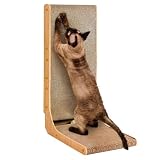
- HIGH QUALITY MATERIALS: The surface of the cat scratching board is made of non-toxic and high-density corrugated paper, which is durable enough to withstand cat scratching.
- INNOVATIVE DESIGN: Our cat scratcher for indoor cats features an L-shaped design. Please place it against wall and sofa to protect your furniture. The L-shaped cat scratcher provides more scratching area for cats to scratch in a variety of positions.
- MULTIFUNCTIONAL USE: Cats can scratch, relax and stretch on our cardboard cat scratcher. Our cat scratch pad also comes with a toy ball to play with. It provides a safe and comfortable environment for cats.
- MULTIPLE SIZES: We offer three sizes of cat scratching pad for you to choose from. The smallest size is specially for kittens. No matter what size your cat is, it enables your cat to scratch and play to its heart's content!
- EASY INSTALLATION: Our cat scratching board adopts a simple installation method and comes with instructions and necessary tools. We also provide an installation video so that you can install it quickly and easily.
These positions are not equivalent to a diagnosis for every Munchkin. They do establish that the phenotype has welfare implications that a responsible owner or prospective adopter should consider. The broader concern is that breeding for an extreme appearance can normalize inherited functional limitations and may reduce genetic diversity within a breed.
What the disagreement does—and does not—mean
- It does not mean every Munchkin is in pain. A specific cat needs an individual veterinary assessment.
- It does not mean a registry’s breed standard settles the welfare question. A breed standard describes the desired phenotype; it is not a lifetime health study of every cat.
- It does not mean every Munchkin is disabled. Many can run, play, climb, and jump to varying degrees.
- It does mean the short-legged trait should not be treated as purely cosmetic. It can affect movement, access, grooming, and the way a cat interacts with its environment.
The genetics of the short-legged trait
A 2020 study published in BMC Genetics identified a structural variant in the UGDH gene that was perfectly associated with the standard short-legged Munchkin phenotype in the study cohort. The researchers proposed that the trait follows an autosomal-dominant pattern of inheritance.
Free tools Windows power users keep installed
One-click scans. No signup required.
The study did not observe cats homozygous for the variant. The researchers also reported reduced litter sizes in matings involving standard Munchkins and proposed that inheriting two copies may be embryonically lethal. TICA’s science summary describes the trait in similar terms, while also presenting the two-copy outcome as a proposed explanation rather than a claim that should be stated more strongly than the available evidence allows.
That distinction is important. The study provides strong evidence of a genotype–phenotype association in the cats examined, but it does not justify claiming that every Munchkin line has identical risks or that the exact lethal mechanism is fully established. Genetic findings also do not answer the separate ethical question of whether selecting for the phenotype is appropriate.
Potential health and welfare concerns
Research and welfare guidance identify several areas to monitor. The presence of a risk or reported concern does not predict that an individual cat will develop the condition.
Mobility and natural behavior
Short legs can change how a cat runs, climbs, jumps, lands, and reaches elevated locations. Some Munchkins compensate by taking smaller steps or finding an alternative route. A cat that can move around the house is not necessarily moving without strain, and reduced access to high resting places can affect normal feline behavior.
PC Slower Than It Used to Be?
A free scan shows the junk files, broken settings and background clutter dragging Windows down - then fixes them in one click.Free scan · Windows 10 & 11Outdated Drivers Are Slowing You Down
One free scan finds every outdated or missing driver and matches the right update for your exact hardware.Free scan · exact hardware matchJoints, arthritis, and the spine
Welfare sources raise concerns about abnormal joint loading, osteoarthritis, and intervertebral disc disease. Cats Protection also identifies broader bone and spinal concerns. These are possibilities, not inevitable outcomes. Watch for stiffness, limping, reluctance to jump or use stairs, changes in posture, reduced activity, difficulty getting into the litter box, or sensitivity when handled.
Grooming difficulty
A short-legged cat may have trouble reaching some parts of its body, especially if it is long-haired, overweight, stiff, or already experiencing pain. Mats, dandruff, a greasy coat, skin irritation, or persistent unkempt areas can indicate that the cat needs grooming assistance or a veterinary examination.
Chest and other skeletal abnormalities
Cats Protection cites pectus excavatum, a chest deformity, among the concerns associated with dwarf breeds. A visibly unusual chest, breathing difficulty, poor exercise tolerance, or failure to thrive needs prompt veterinary attention. Appearance alone cannot establish the cause or seriousness of a skeletal difference.
Rank #3

- 【Value 2-Pack – More for Less】 Get two high density L-shaped cat scratchers at a better price compared to buying one individually. Perfect for homes with multiple cats, or to place in different rooms.
- 【Size Options】 Large: 25.6 x 14.6 x 11.8 inches, thickness: 1.6 inches (base), 1.4 inches (body); Medium: 19.7 x 15.4 x 10.8 inches, thickness of cardboard: 1.4 inches
- 【Reversible Pad – Double the Life】 Double the use of your scratcher with the reversible design. Simply disassemble and reinstall to use the other side when the first gets worn out.
- 【Protect Your Furniture】 Keep your furniture safe from scratches! This cat scratcher helps prevent damage to couches, walls, and other surfaces by providing a dedicated scratching spot that cats love.
- 【Eco-Friendly】 Made from 100% recyclable corrugated cardboard, non-toxic and safe for both your cat and the environment. A sustainable choice for conscious pet owners.
Obesity and secondary strain
Extra body weight increases the mechanical burden on joints and can make grooming and movement harder. Cornell’s Feline Health Center identifies obesity as a contributor to osteoarthritis risk and notes that excess weight can worsen other disorders. Keeping a Munchkin at a healthy body condition is therefore a practical welfare measure, not a cosmetic goal.
Do these 3 things before closing this tab:
1Clear out junk files and repair common Windows errors2Fix the driver behind crashes, sound loss and screen glitches3Repair Windows errors before they cause bigger problemsCaring for an existing Munchkin cat
Arrange preventive veterinary care
Follow a routine preventive-care schedule set by your veterinarian, and do not wait for severe lameness before seeking help. Regular examinations and appropriate diagnostic testing can help identify disease earlier, according to VCA Animal Hospitals.
Contact a veterinarian if your cat becomes withdrawn, stops using a favorite perch, avoids stairs or jumping, moves stiffly, grooms less, changes its litter-box habits, or becomes unusually irritable. Cornell notes that reduced activity, reluctance to use stairs or jump, litter-box difficulty, and reduced grooming can be signs of feline joint disease rather than simply normal aging.
Cats often conceal pain. A gradual change may be easier to notice in video than during a brief clinic visit, so recording a cat walking, climbing, or using the litter box can provide useful information for the veterinary team. Do not diagnose arthritis, spinal disease, or a congenital abnormality from appearance alone.
Maintain a healthy body condition
Measure food portions rather than relying only on a full bowl, and ask your veterinarian to assess body condition and feeding needs. Kittens, seniors, and cats with diagnosed disease may need different nutrition plans. Make diet changes gradually and discuss weight loss with a veterinarian; rapid or unsupervised restriction can be unsafe.
The Tool Desk
Outbyte PC Repair FREERepair Windows errors before they cause bigger problemsFix Now →Outbyte Driver Updater FREEScan for outdated or missing drivers - takes under a minuteDriver Scan →Never give a cat human pain medicine unless a veterinarian has specifically prescribed and explained a veterinary-safe treatment. Human NSAIDs and other household medications can be dangerous or fatal to cats.
Make preferred locations easier to reach
Observe where your cat chooses to sleep, watch birds, eat, drink, and hide. If a favorite location requires repeated high jumps, provide a stable route using a low platform, steps, or a ramp. Place nonslip material under the structure, check that it cannot slide or tip, and make sure the cat can approach and leave without being trapped.
A cat ramp can help an individual Munchkin reach a sofa, bed, window, or other preferred location with less jumping. It is an optional environmental aid—not a treatment for arthritis, a way to correct skeletal structure, or a requirement for every Munchkin. The best setup depends on the cat’s mobility, the height of the furniture, available floor space, traction, and whether the cat is willing to use it.
Some cats prefer steps to a ramp. Introduce either gradually with treats or play, and do not force the cat to use an unfamiliar structure. If your cat suddenly needs a ramp because it can no longer jump, arrange a veterinary examination rather than treating the equipment as the complete solution.
Rank #4
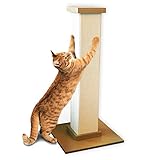
- 32″ height allows cats to stretch fully and tone muscles
- Sturdy 16″ by 16″ base eliminates tipping and wobbling
- Fibrous and durable woven sisal naturally inspires scratching
- Superior to carpeted posts that may snag nail
- Assembles with two included screws
Improve litter-box access
A low-entry litter box can reduce the need to step over a tall rim. Keep food, water, and litter boxes on an accessible route, particularly if your cat has diagnosed mobility problems. A box should remain stable and large enough for the cat to turn comfortably.
Sudden litter-box avoidance is not just a behavior problem. Painful joints, urinary disease, constipation, stress, and other medical issues can all contribute. If the change is new, contact a veterinarian even if replacing the box appears to help.
Support grooming
Shorthair Munchkins generally need less coat maintenance than longhair Munchkins, but every cat benefits from regular checks. Long-coated cats may need more frequent brushing to prevent mats. Use a gentle cat grooming brush, keep sessions short, and introduce handling gradually.
Check areas the cat may struggle to reach, including the back, hindquarters, and underside. Stop if the cat shows pain, panic, or unusual sensitivity. Persistent mats, skin lesions, or a cat that stops grooming itself warrant veterinary advice; poor coat condition can reflect obesity, arthritis, pain, or skin disease.
What’s actually slowing this PC down?
Pick the symptom - the matching free tool is one click away.
Provide low-impact enrichment
Short legs do not remove a cat’s need for exploration, hunting-style play, and mental stimulation. Rotate toys, use food puzzles, offer rolling toys, and provide supervised wand play at floor or low-platform level. An interactive cat toy can encourage chasing and problem-solving without making repeated high jumps the only way to exercise.
Let the cat choose the pace. End a session if you see limping, pain, marked fatigue, reluctance to continue, or a change in gait. Inspect toys regularly and remove small detachable parts that could be swallowed. Enrichment should expand the cat’s options, not pressure it into movements it avoids.
Independent reader supportYour contribution helps us test, update, and keep practical guides available for everyone.Are Munchkin cats recognized or restricted?
Recognition and breeding policy depend on the country and organization. TICA recognizes the Munchkin and maintains a breed standard. The GCCF’s November 2024 policy document lists Munchkin and other dwarf breeds as ineligible for recognition because of reported health problems. GOV.UK reports that Scottish breeding guidance considers Munchkin breeders unlikely to satisfy the welfare condition requiring that breeding not reasonably be expected to harm the health or welfare of parent cats or offspring.
These UK materials are not a statement of United States law, and registry recognition is not the same thing as legal permission to breed. A Munchkin is not universally banned. Anyone considering breeding or acquiring one should check the current rules in the relevant country, state, province, municipality, licensing authority, and registry. Rules can differ even within the same country.
Quick wins for a faster PC:
Fix the driver behind crashes, sound loss and screen glitchesFind Drivers →Repair Windows errors before they cause bigger problemsFix Now →Should you get a Munchkin cat?
If you are considering acquiring a Munchkin, the central question is not simply whether the cat is friendly or entertaining. It is whether you are comfortable supporting a phenotype that welfare authorities associate with possible mobility, joint, spinal, grooming, and quality-of-life problems.
Best Value
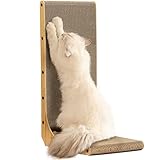
- Product Specifications - L shape size: 26.8 x 16.6 x 11.5 inch, thickness of cardboard: 1.6 inch. Thicker than other L shaped cat scratchers, more scratch-resistant.
- Irresistible to Cats - Cat scratching pads can help protect your furniture from claw damage, reducing unwanted scratching of other household objects.
- Unique design - L shape scratcher provides not only save space but also a place for cats to lounge and turn it into a cat wall scratcher ( Vertical ) , cat lounge/bed ( Horizontal) or cat house ( Prone ).
- Carefree Choice - Made of non-toxic corrugated paper and no harmful materials. Perfectly healthy for your adorable cats.
- Environmentally Friendly - Made of 100% eco-friendly and recyclable heavy duty cardboard, take it now!
Adoption is a worthwhile alternative. Petfinder provides Munchkin adoption information and notes that adoption fees may include services such as sterilization, vaccination, and microchipping, although availability and fees vary by location. Shelters and rescue groups should be contacted directly; no particular cat’s availability or medical history should be assumed.
If you already live with a Munchkin, there is no benefit in shaming you or neglecting the cat because of the breeding controversy. The practical responsibility is to monitor comfort, maintain a healthy weight, make essential resources accessible, assist with grooming when necessary, and obtain veterinary care when function or behavior changes.
Anyone researching a breeder should ask for clear information about the parent cats, health history, kitten care, and what support is provided if a cat develops mobility or other health problems. Be cautious of marketing that promises a “teacup” cat, guarantees perfect health, treats short legs as purely decorative, or dismisses all welfare concerns without evidence.
A practical decision guide
| Your situation | Most useful next step |
|---|---|
| You already own a healthy, active Munchkin | Continue preventive care, monitor gait and behavior, manage weight, and make access easier where your cat needs it. |
| Your cat has become stiff, withdrawn, less active, or reluctant to jump | Book a veterinary examination. Do not assume the change is normal aging or simply a breed trait. |
| Your cat cannot comfortably reach furniture or a window | Try a stable, nonslip ramp, low platform, or steps while investigating the reason for reduced mobility. |
| You are deciding whether to acquire a Munchkin | Consider adoption and weigh the ethical concerns and possible care needs before choosing a deliberately selected short-limbed phenotype. |
| You are considering breeding | Review current local welfare rules and the genetic and welfare evidence with qualified veterinary and regulatory advisers. |
Sources and scope
This guide uses TICA’s Munchkin breed information and standard for appearance and temperament; the 2020 peer-reviewed BMC Genetics research for the UGDH finding and proposed inheritance; the UK Animal Welfare Committee, GOV.UK, GCCF, and Cats Protection for welfare and policy concerns; Cornell Feline Health Center and VCA Animal Hospitals for joint-disease signs and veterinary-care guidance; and Petfinder for practical adoption and companion-cat information.
Breed descriptions are tendencies, not guarantees. Welfare warnings describe population-level and phenotype-level concerns, not a diagnosis for every individual cat. A veterinarian who examines the cat should guide decisions about pain, imaging, diet, exercise, medication, and treatment.
Frequently Asked Questions
Are Munchkin cats healthy?
Not necessarily. Munchkins can be active, playful, and mobile, but their inherited short-limbed phenotype is associated by welfare authorities with possible joint, spinal, mobility, grooming, and quality-of-life problems. No source supports saying that every Munchkin will develop these conditions, and a veterinarian must assess an individual cat.
Can Munchkin cats jump?
Yes, some Munchkins can jump and climb, although their short legs may make high jumps more difficult. Individual ability varies. Low platforms, steps, or a stable ramp can provide an easier route, but a sudden reluctance to jump should be treated as a possible health sign and checked by a veterinarian.
Outdated Drivers Are Slowing You Down
One free scan finds every outdated or missing driver and matches the right update for your exact hardware.Free scan · exact hardware matchWindows Errors? Fix Them Before They Spread
Repair common Windows errors and clear accumulated junk for a smoother, more stable PC - no reinstall needed.Free scan · no reinstallDo Munchkin cats need special care?
They do not all need special equipment, but accessibility can be useful. Monitor weight, provide easy access to food, water, litter, and favorite resting places, assist with grooming when needed, and use low-impact play. The right adaptations depend on the individual cat’s mobility and health.
Are Munchkin cats banned everywhere?
No. Recognition and breeding rules vary by country, local authority, and registry. TICA recognizes the breed, while UK organizations and guidance take a more restrictive welfare position. A Munchkin is not universally banned, and UK policy should not be presented as United States law.
Are Munchkin cats miniature or teacup cats?
No. The breed has a medium-sized adult body with shortened legs. “Teacup” is not an accurate description of every Munchkin, and the short-legged trait does not mean every cat is tiny, fragile, or unable to move normally.
The Bottom Line
Bottom line: Munchkin cats are average-sized, short-legged cats often known for playful and sociable personalities. Their ability to run and play should not obscure the legitimate welfare debate surrounding deliberate selection for disproportionate dwarfism. For an existing Munchkin, focus on weight control, accessible food, water, litter, and resting areas, gentle grooming, low-impact enrichment, and prompt veterinary attention for any change in movement or behavior. If you are considering acquiring one, adoption and cats without extreme physical traits are worth considering.
Quick Recap
Product prices and availability are accurate as of the date/time indicated and are subject to change. Any price and availability information displayed on Amazon at the time of purchase will apply.





Leave a Reply