The Muscovy Duck (Cairina moschata) is a large, heavy-bodied duck recognized by its long neck and red, bumpy facial skin. Wild birds are usually glossy dark with white wing patches; domestic and feral birds come in a wider range of colors. The species is native from Mexico through Central and South America, while populations elsewhere—including parts of the United States—may be introduced domestic birds that have become feral.
How to identify a Muscovy Duck
Look for a long neck, a fairly long bill that slopes smoothly up toward the forehead, a relatively long tail, and distinctive red, warty facial skin called caruncles. The body is large and heavy compared with that of many familiar ducks.


As an Amazon Associate I earn from qualifying purchases.
Wild Muscovy Ducks are generally glossy black or otherwise very dark, with white wing patches that are especially conspicuous on adult males. Domestic and feral birds may have extensive white or brown patches, and their facial skin can vary. Males are significantly larger than females; females tend to look duller and less glossy. These differences mean that no single plumage pattern identifies every Muscovy Duck. Cornell Lab of Ornithology’s identification guide compares the species with Mallards, Greater White-fronted Geese, and Double-crested Cormorants.
What’s actually slowing this PC down?
Pick the symptom - the matching free tool is one click away.
| Source | Length | Weight | Wingspan |
|---|---|---|---|
| Cornell Lab of Ornithology, identification page accessed 2026 | 26.0–33.1 in (66–84 cm) | 70.2–141.1 oz (1,990–4,000 g) | 53.9–59.8 in (137–152 cm) |
| Florida Fish and Wildlife Conservation Commission, profile accessed 2026 | Not stated | Average 4.3 kg (9 lb) | Typical 137–154 cm (54–61 in) |
The figures are separate summaries from the two organizations, not measurements to combine into a single range. Cornell notes that males are larger and domestic birds are often larger than wild birds. Cornell’s identification page; Florida FWC’s Muscovy Duck profile.
#1 Best Overall
Where Muscovy Ducks live
Wild Muscovy Ducks range from northern Mexico south to Argentina. They use wooded lowland wetlands, including lakes, lagoons, mangrove swamps, marshes, and slow-moving streams. They prefer freshwater wetlands but also use brackish wetlands, and forage in shallow water. Cornell Lab’s life-history account describes the species’ range and habitat.
In the United States, naturally occurring wild birds are associated with south Texas. Domestic birds introduced elsewhere can establish feral populations; Florida, for example, has a local population that the state describes as domesticated or feral. A Muscovy seen at a park or farm may therefore not represent the species’ naturally occurring range. Cornell Lab; Florida FWC.
Rank #2
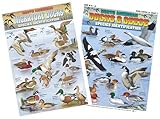
- Easy-to-Use Duck & Geese Identification: Features step-by-step instructions with visual diagrams to quickly identify a new species.
- 100% Waterproof: Built with high-quality, weather-resistant materials to withstand the rigors of outdoor use, ensuring long-lasting reliability.
- Portable & Lightweight: Convenient, travel-friendly size fits in any backpack or equipment bag, allowing you to have it on hand whenever you need to identify duck or geese.
- Perfect Gift for All: Ideal for beginners, seasoned hunters or observers, kids and scouts, and any outdoor enthusiasts looking to bird identification.
What Muscovy Ducks eat
Muscovy Ducks are omnivores. Their reported foods include grasses, sedges, water-lily and mangrove seeds, tubers, insects and their larvae, spiders, crustaceans, mollusks, worms, small fish, and reptiles. The mix varies with what is available in their habitat. Cornell Lab’s account and Florida FWC’s profile describe both plant and animal foods.
Quick wins for a faster PC:
Scan for outdated or missing drivers - takes under a minuteDriver Scan →Repair Windows errors before they cause bigger problemsFix Now →Fix the driver behind crashes, sound loss and screen glitchesFind Drivers →If you encounter ducks in a park or other public space, avoid feeding them. USDA APHIS advises against feeding wildlife because human food may be unhealthy and feeding can contribute to malnutrition; gatherings of animals can also increase disease-transmission concerns. This is general wildlife guidance, not a claim that every Muscovy flock carries or spreads disease. USDA APHIS: Don’t Feed the Wildlife.
Rank #3

- SIX BELOVED NURSERY RHYMES IN ONE – Five Little Ducks Nursery Rhymes brings together six classic songs — Five Little Ducks, Hickory Dickory Dock, Little Miss Muffet, The Farmer in the Dell, Eeny Meeny Miney Moe, and Mary Had a Little Lamb — in one interactive sound book that babies and toddlers return to again and again.
- PRESS, LISTEN, AND SING ALONG – Every page features an easy-to-press button and printed lyrics so babies and toddlers can follow along as they listen. Builds early language development, word recognition, and cause-and-effect understanding from the very first read.
- DESIGNED TO GROW WITH YOUR CHILD – From a baby discovering sound for the first time to a toddler who knows every word by heart, Five Little Ducks Nursery Rhymes grows with children from 0–3 and beyond, offering something new at every stage.
- INDEPENDENT PLAY, NO SETUP REQUIRED – A simple three-position switch controls volume and power — low, high, or off. No apps, no Wi-Fi, no parental setup. USB-C rechargeable (cable not included) and headphone-compatible via standard 3.5mm jack for quiet play anywhere.
- BUILT FOR REAL TODDLER LIFE – Sturdy board book construction and child-safe materials built to survive little hands and enthusiastic readers. Meets and exceeds all U.S. safety testing standards.
Behavior and nesting
Wild Muscovy Ducks are wary and often roost in trees, while domestic birds are commonly seen around parks. Florida FWC describes the species as non-migratory and active during the day in its Florida profile.
They nest in tree cavities and may also use nest boxes. Cornell reports clutches of 8–15 eggs and an incubation period of 30–31 days. The glossy white eggs may have a greenish or buff tint. The female defends the nest and cares for the ducklings; those reported clutch and incubation figures do not guarantee the same outcome for every nest. Cornell Lab of Ornithology.
Independent reader supportYour contribution helps us test, update, and keep practical guides available for everyone.Are Muscovy Ducks native, and are they protected?
The species is native from Mexico through Central and South America, with naturally occurring U.S. birds associated with south Texas. In places such as Florida, introduced domestic birds have formed feral populations. Florida classifies Muscovy Ducks as nonnative and lists potential concerns including competition with native species, property damage, and disease transmission. These are concerns described by the agency, not quantified outcomes for every location or flock. Florida FWC’s profile.
Rules depend on location and on whether a bird is wild or domestic. Florida FWC says no FWC permit is required for possession in Florida for exhibition, sale, or personal use; that state guidance is not a nationwide rule. The agency also says wild Muscovy Ducks are protected under the Migratory Bird Treaty Act subject to a U.S. Fish and Wildlife Service control order.
Best Value

- Fun muscovy duck gift for any bird lover, farmer, or poultry owner who enjoys quirky animal designs. A charming way to show off muscovy duck pride at home, on the farm, or at casual gatherings.
- Muscovy Duck gift for men, women and kids, great for Christmas, birthday surprises, or family celebrations. A fun present for mom, dad, teen boys, teen girls, or lover.
- Hardcover journal with 240 line-ruled pages (120 sheets)
- Built-in elastic closure and ribbon bookmark
- Includes an expandable inner storage pocket and a pen holder
Federal regulation 50 CFR § 21.48 generally prohibits acquiring or possessing live Muscovy Ducks, their carcasses or parts, or their eggs, except for raising them to be sold as food and for certain birds lawfully acquired before March 31, 2010. The regulation also sets limits on propagation, sale or transfer, and release. Because the exceptions and restrictions are specific, check current federal and state rules with the relevant wildlife authority before possessing, transferring, breeding, releasing, or removing birds. Read 50 CFR § 21.48.
Quick Recap
Product prices and availability are accurate as of the date/time indicated and are subject to change. Any price and availability information displayed on Amazon at the time of purchase will apply.




