The Norwegian Forest Cat is a large, slow-maturing cat from Scandinavia with a dense, weather-resistant coat, strong climbing ability, and an affectionate but independent personality. It is often called the Norwegian Forest, Norsk Skogkatt, or “Wegie.”
This is not a cat that simply looks impressive. It needs sturdy climbing equipment, regular coat care, measured feeding, and a home prepared for an athletic animal that may prefer sitting beside you rather than on you.
Norwegian Forest Cat quick facts
| Characteristic | Typical detail |
|---|---|
| Origin | Norway; developed naturally over many generations in Scandinavia |
| Adult female weight | About 8–12 lb, depending on frame and body condition |
| Adult male weight | About 12–18 lb, depending on frame and body condition |
| Growth | Slow; full maturity can take up to about five years |
| Coat | Dense, semi-long double coat with a woolly undercoat and water-repellent guard hairs |
| Temperament | Friendly, adaptable, playful, intelligent, and moderately independent |
| Activity level | Moderate to high, with a strong preference for climbing |
| Life expectancy | Often around 13 years or more; individual lifespan varies |
Breed averages are not a target weight. A veterinarian should judge whether an individual cat is healthy by body condition, muscle, age, and overall health rather than by the number on a scale.
History and origin
The Norwegian Forest Cat developed naturally in Norway and the surrounding Scandinavian region. Its heavy coat, large paws, muscular body, and climbing ability are consistent with adaptation to a cold, challenging environment. Unlike some modern breeds, it was not created through a recent planned hybridization program.
Recommended Free Tools
#1 Best Overall

- ENLARGED HAMMOCK - This cat tree is Equipped with a sturdy and spacious square hammock, this large cat tree tower offers a comfortable resting spot for your adult cat. The hammock design allows large cats to lie down, providing a relaxing space for napping and rejuvenation
- SPACIOUS AND COMFORTABLE CAT CONDO - This cat tower provides a spacious cat condo that allows cats to rest, hide, or play comfortably inside. The cat cave is a safe, private space that meets cats' needs
- SISAL ROPE SCRATCHING POST - The cat tower with 4 scratching posts and a scratching board is meticulously lined with durable natural sisal. The rough texture of sisal provides an ideal surface for your feline friends to scratch
- ENLARGED REMOVABLE TOP PERCH - Up to 70 inches tall cat tree includes the enlarged top platform is detachable for easy cleaning and maintenance. Offers a spacious resting and observation area for cats
- DUAL CLIMBING PATHS FOR VARIED ACTIVITY PLEASURES - This cat climbing tower features two upward climbing routes, integrating activity and rest to meet cats' various needs and enhance enjoyment
The exact ancient ancestry is uncertain. Stories linking the breed to Vikings, Norse mythology, or a specific royal event are part of its cultural history, but they should not be presented as fully proven facts. The often-repeated claim that King Olaf officially designated it Norway’s national cat also varies between breed histories in its date and wording.
In Norway, skogkatt means “forest cat.” The breed is now recognized by major cat registries, including the Cat Fanciers’ Association and The International Cat Association.
Appearance and distinguishing features
Norwegian Forest Cats are large, substantial, and well muscled rather than merely long-haired. They have a broad chest, strong hindquarters, large paws with toe furnishings, and a long, full tail. The hind legs are longer than the front legs, so the rump sits higher than the shoulders.
The head has a distinctive equilateral-triangle shape. The nose should be long and straight without a pronounced break. Large, almond-shaped eyes sit at a slight angle, and the medium-to-large ears are broad at the base and heavily furnished. Some cats have noticeable lynx tips.
The coat is one of the breed’s most practical features:
- A dense undercoat provides insulation.
- Longer guard hairs help shed moisture.
- A ruff frames the neck and chest, particularly in winter.
- “Britches” cover the hind legs.
- The tail is long and bushy.
The winter coat is usually heavier and fuller than the summer coat. Coat color and pattern can vary, but coat length alone does not prove that a cat is a Norwegian Forest Cat. A domestic longhaired cat may look similar; documented pedigree or registration is needed to establish breed identity.
Personality and behavior
Most Norwegian Forest Cats are affectionate without being relentlessly demanding. They often follow household members from room to room, settle on a nearby chair, or watch activity from the back of a sofa or cat tree. Some are devoted lap cats, but many prefer contact on their own terms.
Rank #2

- Spacious Top Perch: This cat tree features a large 21.7" x 11.8" platform at 76" height, offering cats an elevated space for rest and observation. The detachable design allows for easy cleaning and maintenance
- Wide and Stabilizing Base: This cat tower with scratching post is built with a wide 27.6" × 15.7" base supported by five sturdy posts. The integrated anti-tip strap ensures secure stability, preventing any tipping during active play.
- Complete Play and Rest Space: Equipped with two cat condos, one cozy basket, one hammock, and dangling pom-poms, this cat tree tower for indoor cats provides everything needed for play, rest, and privacy
- Scientifically Designed Structure: With multiple stepping platforms and perches, this cat tree for indoor cats large adult promotes healthy exercise by encouraging safe climbing and jumping, aligning with your cat's natural behaviors
- Easy Assembly Process: Enjoy a hassle-free setup with your new cat house . It includes all platforms, scratching posts, and tools needed. The clear guide and our dedicated support team ensure a smooth assembly process
They are generally intelligent, playful, and adaptable. With careful introductions, they can live with children, other cats, and cat-compatible dogs. A cat may still be cautious around unfamiliar visitors even when it is closely bonded with its family.
Crashes, No Sound, or Screen Glitches?
Random freezes, missing sound and display glitches usually trace back to one bad driver. Find and replace yours safely.Free scan · under a minuteWindows Errors? Fix Them Before They Spread
Repair common Windows errors and clear accumulated junk for a smoother, more stable PC - no reinstall needed.Free scan · no reinstallClimbing is a major part of the breed’s normal behavior. A tall, stable cat tree is more useful than a collection of low toys, and elevated resting places allow the cat to observe the home safely. Secure window perches can provide both enrichment and exercise.
Vocalization is usually moderate. Individual cats may chirp, trill, or meow to communicate, but the breed is not consistently described as persistently loud. Personality varies considerably between individuals.
Grooming and shedding
The coat is relatively manageable for a semi-longhaired breed, but it is not self-maintaining and the cat is not non-shedding. Weekly combing is often enough for much of the year. A stainless-steel comb can help reach through the coat and identify early tangles.
Increase grooming during the spring coat change. As the heavy winter undercoat comes out, loose hair can collect into mats, particularly around the ruff, behind the legs, and under the forelimbs. Some cats have coat textures that tangle more readily and need attention several times a week.
Quick wins for a faster PC:
Fix the driver behind crashes, sound loss and screen glitchesFind Drivers →Repair Windows errors before they cause bigger problemsFix Now →Scan for outdated or missing drivers - takes under a minuteDriver Scan →A practical grooming routine
- Choose a quiet time when the cat is relaxed.
- Check the ruff, armpits, belly, hind legs, and tail first.
- Comb in small sections rather than pulling through a large knot.
- Stop if the cat becomes distressed and resume later.
- Ask a veterinary professional or experienced groomer for help with tight mats; do not cut close to the skin with household scissors.
Healthy Norwegian Forest Cats rarely need baths. Their water-repellent coat can take longer to become fully wet and may also take longer to dry. Bathe only when necessary and use a product made for cats.
Exercise, climbing, and enrichment
This breed is athletic and benefits from daily opportunities to move, stalk, chase, and climb. Indoor living can work well when the environment is designed around those needs.
Rank #3

- Multi-level cat tree tower designed to satisfy your feline's natural instincts and activity needs with its 2 spacious cat caves, 2 perches, 2 hanging beds, 1 basket, and 1 scratching board.
- Easy to assemble and sturdy cat condo made with universal screws and a simple structure, requiring only one person and an included Allen hex key to set it up.
- Provides endless entertainment and encourages physical activity with 2 hanging pompoms with bells and 2 spare silent pompoms, perfect for multi-cat households.
- Safe and secure cat tree for large cats supported by a strong structure and secured with an anti-tip kit, accommodating up to 5 cats (max. 11 lb each) with peace of mind.
- Easy-to-clean cat furniture that makes fur, dirt, crumbs, and other debris no problem thanks to its easily-wiped surface, giving cat owners the convenience they crave.
- Provide a tall, heavy cat tree that cannot wobble or tip.
- Use sturdy vertical scratching posts; many cats enjoy sisal.
- Rotate interactive toys that encourage chasing and pouncing.
- Add elevated beds or secure window perches.
- Schedule daily play rather than relying on toys left on the floor.
Do not use a laser toy as the only form of play. Finish a laser session with a physical toy or treat the cat can catch. Inspect toys regularly, and avoid toys containing mylar if the cat could chew and swallow the material.
Because these cats are powerful climbers, secure unstable furniture, protect balconies, and use reliable screens on windows. A tall bookcase or open stair rail can become a dangerous launch point if it is not secured.
Feeding and weight control
A Norwegian Forest Cat does not need a special diet solely because of its breed. Feed a complete and balanced cat food suited to the cat’s life stage, then adjust the amount for age, activity, health, and body condition.
Large-framed does not mean overweight. Long fur can also make excess weight harder to notice. Ask a veterinarian to assess body condition and monitor weight as the cat matures, especially because this breed can continue growing for several years.
Fresh water should always be available. Wet food can contribute significantly to fluid intake because canned cat food is commonly at least about 75% water. Treats should remain a small part of the diet: keeping them below 10% of daily intake is a sensible target, although general veterinary guidance may allow up to 10–15% of daily calories.
Health concerns
The breed is generally considered robust, but responsible owners and breeders should be aware of several recognized conditions.
The Tool Desk
Outbyte PC Repair FREEClear out junk files and repair common Windows errorsFree Scan →Outbyte Driver Updater FREEScan for outdated or missing drivers - takes under a minuteDriver Scan →Glycogen storage disease type IV
Glycogen storage disease type IV, or GSD IV, is an inherited disorder associated with Norwegian Forest Cats. It is autosomal recessive, meaning an affected kitten generally inherits a disease-causing copy from both parents.
Rank #4
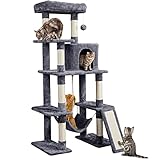
- Room for Every Cat, Every Mood: Five platforms, a 21″×15″ foam-edged perch, a cozy condo (up to 22 lb), and a hammock (up to 18 lb)—for three to four medium or two large cats. Every kitty finds their own sunbathing spot, hideaway, or lookout on this cat tree
- Instinctive Scratching & Play: Respect their nature and your home's safety. This cat-approved cat tree tower has seven sisal scratching posts and a scratching board for daily claw-sharpening. A purposeful zone where wild feline instincts meet home protection
- Stays Grounded Through Every Zoomie: A wide 30.5″×19″ base and an anti-toppling kit with a reinforced washer keep this cat tower firmly planted—even when your cats launch full-speed from the top perch. Trusted stability for large cats and multi-cat households
- More Time Bonding, Less Time Cleaning: Odor-free plush, FSC-certified, CARB P2 board, and natural sisal mean safe snuggles for your cats from day one. With a machine-washable hammock and easy-vacuum surfaces, this easy-to-clean cat tree stays fresh without the fuss
- Effortless Start, Endless Happiness: Illustrated manual, labeled parts, and every tool included—one person can handle it solo. Spend less time setting up this large cat tree and more time watching your cats turn every level into their personal kingdom
Some affected kittens die at or shortly after birth. Others may appear normal until around five months old before developing fever, muscle tremors, muscle wasting, and progressive illness. A DNA test is available. Breeders should be able to explain the parents’ results and show documentation.
Hypertrophic cardiomyopathy
Hypertrophic cardiomyopathy, or HCM, has occurred in the breed. There is currently no Norwegian-Forest-specific DNA test for HCM. Echocardiographic screening by a qualified veterinary cardiac professional is the best available screening method for breeding cats.
A normal scan is not a lifetime guarantee that a cat will never develop HCM. When buying a kitten, ask what cardiac screening was performed, who performed it, and when.
Pyruvate kinase deficiency
Pyruvate kinase deficiency is another condition listed as having affected Norwegian Forest Cats. DNA testing is available, so prospective owners can ask whether the breeding cats have been tested and request the results.
Routine preventive care
Breed-specific tests do not replace ordinary feline healthcare. Keep vaccination, parasite-control, dental, and veterinary records. Arrange regular examinations and watch for changes in appetite, weight, breathing, urination, mobility, grooming, or behavior. Sudden or persistent changes warrant veterinary advice.
Independent reader supportYour contribution helps us test, update, and keep practical guides available for everyone.Questions to ask a breeder
Health and temperament depend on more than breed reputation. Before paying a deposit, ask for:
- A written pedigree and registration information.
- GSD IV DNA-test results for both breeding cats.
- Pyruvate kinase deficiency results where applicable.
- Documented HCM screening, including the examination date and method.
- Vaccination, parasite-control, and veterinary records.
- A written contract covering health guarantees, returns, and breeder support.
- Evidence that kittens are raised in a clean, social household environment.
Registry membership alone does not guarantee ethical breeding or good health. A responsible breeder should discuss testing openly and provide copies of relevant results rather than offering vague assurances.
Best Value

- 81.1" Tall, Endless Climbing Fun: 81.1" tall. 5 levels. Short 12"-16" distance between levels. This plush cat tree is ideal for cats who love climbing and high places, but it’s also easy to climb
- All-in-One Playground: With 2 padded perches, 2 caves, 2 pompoms, and 1 hammock, cats of different characters can all find their fave spot on this multi-level cat villa—perfect for multi-cat homes
- Robust Material, Safe Cat Tree: Sturdy particleboard for durability, a reinforced base for stability, and an anti-tip kit for security—it’s stable and safe for up to 6 cats (max. 15.4 lb each) to play
- 14 Scratching Zones: Cats love to scratch. With scratching areas on each level, they can scratch to their hearts' content and let your sofa go! The scratch ramp doubles as a ladder for easy climbing
- Easy to Assemble: With a simple structure, step-by-step instructions, and labeled parts, assembling this tall cat tree is as easy as building blocks
Common Norwegian Forest Cat myths
| Claim | What is more accurate |
|---|---|
| “They are hypoallergenic.” | No cat breed is reliably hypoallergenic. All cats produce allergens. |
| “They need no grooming.” | The coat is manageable but still needs regular combing, especially during spring shedding. |
| “Every one is a lap cat.” | They are often affectionate, but many prefer staying close rather than sitting on a lap. |
| “They all love swimming.” | Some tolerate or enjoy water; it is not guaranteed for every individual. |
| “The breed’s ancient history is proven.” | The exact ancestry of the modern breed is uncertain. |
| “Any similar-looking longhaired cat is a Norwegian Forest Cat.” | Appearance cannot establish breed identity without pedigree or registration. |
Is a Norwegian Forest Cat right for you?
This breed may suit a household that wants a sociable but not constantly demanding companion and can provide vertical space, daily interaction, regular grooming, and careful weight management. It may be a poor match for someone looking for a very small, low-shedding, or reliably lap-oriented cat.
Plan for a large adult, a coat that changes with the seasons, and a kitten that may not reach full maturity until approximately five years of age. With appropriate nutrition, preventive veterinary care, enrichment, and grooming, a Norwegian Forest Cat can be a calm, engaging, long-term family companion.
FAQ
Are Norwegian Forest Cats good family pets?
Usually, yes. They are generally friendly, adaptable, and able to live with children and other pets when introductions are gradual and respectful. Individual temperament still matters.
How often should you groom a Norwegian Forest Cat?
Weekly combing is often sufficient outside seasonal shedding, but grooming should increase during the spring coat change. Cats with easily tangled coats may need more frequent attention.
Free tools Windows power users keep installed
One-click scans. No signup required.
How big do Norwegian Forest Cats get?
TICA gives approximate adult ranges of 8–12 lb for females and 12–18 lb for males. They are slow-maturing and may take up to about five years to reach full growth.
Are Norwegian Forest Cats hypoallergenic?
No. They shed and produce cat allergens like other cats. Regular grooming may reduce loose hair in the home but does not make the breed hypoallergenic.
The Bottom Line
The Norwegian Forest Cat is a large, athletic, affectionate breed with a distinctive insulating coat and a strong need to climb. It is relatively straightforward to care for, but not maintenance-free: expect seasonal shedding, regular combing, daily enrichment, measured meals, and ongoing veterinary care. If buying from a breeder, request documented GSD IV and pyruvate kinase testing and ask detailed questions about HCM screening.
Quick Recap
Product prices and availability are accurate as of the date/time indicated and are subject to change. Any price and availability information displayed on Amazon at the time of purchase will apply.
Do these 3 things before closing this tab:
1Fix the driver behind crashes, sound loss and screen glitches2Repair Windows errors before they cause bigger problems3Scan for outdated or missing drivers - takes under a minute



