The Tool Desk
Outbyte PC Repair FREEClear out junk files and repair common Windows errorsFree Scan →Outbyte Driver Updater FREEScan for outdated or missing drivers - takes under a minuteDriver Scan →The Orlov Trotter is a Russian light-harness horse breed developed at Khrenovskoy Stud under Count Alexei Orlov during the late 18th and early 19th centuries. It was bred for a hereditary fast trot, stamina, useful action, and adaptability to Russian working conditions. Its legacy extends beyond racing to coaching, troika driving, riding, and sport.
The Orlov Trotter is a Russian light-harness horse breed developed at Khrenovskoy Stud under Count Alexei (Aleksey) Orlov during the late 18th and early 19th centuries. It was bred for a hereditary fast trot, stamina, useful action, and the ability to work in demanding Russian conditions.
As an Amazon Associate I earn from qualifying purchases.
Although trotting performance is central to the breed’s identity, the Orlov Trotter was never only a racehorse. It became a valued coach and troika horse and has also been used for riding and sport. Modern examples are generally large, elegant, and substantial, but individual appearance, temperament, and aptitude vary among bloodlines, breeding programs, and horses.
Orlov Trotter facts at a glance
| Feature | Summary |
|---|---|
| Breed type | Russian light-harness and trotting horse |
| Developed | Approximately 1775–1784 onward, with the breed taking shape over subsequent generations |
| Foundation stud | Khrenovskoy Stud in the Voronezh region of Russia |
| Best-known trait | Hereditary fast trotting ability combined with stamina and efficient action |
| Historical uses | Racing, coaching, troika driving, riding, and sport |
| Typical height reference | About 162 cm (roughly 16 hands) for breeding stallions and 160 cm (about 15.3 hands) for mares in one commonly cited profile |
| Colors | Gray, bay, black, and chestnut; gray has particular historical prominence |
History and origin
Count Alexei Orlov established the breeding program at Khrenovskoy Stud in the Voronezh region. The breed’s development is often associated with the late 18th century, but it is more accurate to describe this as a development period rather than assign the Orlov Trotter a single “birth year.” The breeding program continued refining the type and performance of the horses over many generations.
#1 Best Overall

- 7-Piece Grooming Kit: Weaver Equine’s grooming horse supplies meet all your equine grooming needs; the horse care kit includes a comb, hoof pick, palm-held curry comb, face brush, mane and tail brush, dandy brush, and sweat scraper/coarse curry combo
- Organizer Storage Bag: Assorted horse brushes for grooming come in a sturdy nylon tote bag with six outer pockets; the plastic feet of this horse grooming bag protect the bottom from wear and tear, making it a reliable choice for every equestrian
- Convenient Design: This horse grooming tote features a top drawstring closure and flexible retaining strap to safely secure and hold all sorts of tools - use the wide pockets and spacious interior to easily organize your horse accessories
- Comfortable and Portable: Designed for easy use, the grooming bag for horses includes comfortable webbing handles and a soft padded shoulder strap with an on and off snap; effortlessly carry this lightweight horse tack room equipment wherever you go
- Ideal Equine Accessory: Crafted for both functionality and comfort, this horse grooming brushes kit is, with a wire-reinforced top that maintains shape, while the plastic feet keep the horse grooming caddy upright - ideal for both occasional and everyday grooming
The foundation was deliberately composite. Arabian horses contributed refinement and quality, while Dutch, Danish, Mecklenburg, Thoroughbred, and other European bloodlines contributed combinations of size, substance, speed, harness ability, and endurance. The Arabian stallion Smetanka is an important part of the traditional foundation account. His descendant Bars I, described in historical breed references as having Danish, Dutch, and Arabian ancestry, became a major progenitor of the modern Orlov Trotter pedigree.
This combination explains why the breed does not fit a narrow visual stereotype. The Orlov Trotter was developed as a practical performance horse, not simply as a refined show animal. Breeders sought an attractive horse that could move quickly and efficiently in harness, remain useful over distance, and cope with local climate and management conditions.
Appearance and conformation
Modern Orlov Trotters are usually described as large, balanced, and elegant light-harness horses. Commonly reported features include:
- a clean-cut head;
- a long, muscular neck;
- prominent withers;
- a long, comparatively level back;
- a broad chest and well-sprung ribs;
- a rounded croup; and
- well-developed joints and limbs.
These are breed-type descriptions, not a checklist that every individual must satisfy. Type can differ between breeding lines and stud farms, and a horse’s suitability for work cannot be judged from height or appearance alone. Balance, limb quality, soundness, movement, training, and temperament all matter.
Height and body size
A frequently cited breed profile gives approximate reference measurements of 162 cm at the withers for breeding stallions and 160 cm for mares, along with representative body-length, chest-girth, and cannon-bone measurements. These figures should be treated as useful averages or reference points rather than a universal size requirement. Individual Orlov Trotters may be taller, shorter, heavier, or lighter depending on pedigree and breeding goal.
Coat colors
Reported colors include gray, bay, black, and chestnut. Gray is especially prominent in historical descriptions and imagery, but the breed is not restricted to gray horses. A black, bay, or chestnut horse is not excluded from being an Orlov Trotter simply because it does not match the most familiar color.
Gaits and performance
The defining functional characteristic is a hereditary fast trot. Selection focused on passing on the ability to trot at speed while maintaining stamina, useful action, and efficiency. The breed’s historical achievement was therefore a combination of speed and practical endurance rather than speed in isolation.
Rank #2
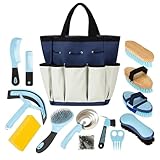
- 14-Piece All-In-One Horse Grooming Kit: Our all-in-one horse brush set covers daily care and show preparation to avoid separate purchases. This full horse brush set includes a soft face brush, flexible finish brush, hard dandy brush, soft body brush, grooming sponge, hoof pick with brush, sweat scraper, 2 straight combs, mane and tail detangler brush, braiding comb, rubber bands, and a waterproof storage tote — the ultimate equine grooming kit for all needs
- Deep Grooming for Healthy Shiny Coat: This horse care kit delivers gentle yet thorough care from head to hoof. The curry comb loosens caked mud, sweat and shedding hair, while the brushes boost skin blood circulation and the detangler brush smooths manes without pulling. Regular grooming leaves coats glossy and healthy, turning routine care into a relaxing bonding experience for you and your horse
- Premium Durable & Ergonomic Build: Built for long-term stable and pasture use, every piece in our horse grooming tools set uses high-grade materials. The rust-resistant stainless steel hoof pick ensures lasting reliability, and all brushes are ergonomically designed which reduce hand fatigue during extended sessions. Gentle on sensitive skin, tough on heavy dirt, suitable for year-round daily use
- 900D Waterproof Oxford Storage Tote: Keep all your tack room accessories neatly organized and ready to go. This waterproof horse grooming bag is made of heavy-duty 900D Oxford cloth, with dedicated compartments and elastic straps to secure each tool. It's for use in horse tack rooms or for on the go, ensuring you have quick access to your essentials
- Fits Riders of All Skill Levels: Ideal for beginners, seasoned equestrians, stable owners and professional caretakers alike, this horse grooming kit fits all usage scenarios. Whether for daily coat upkeep, thorough pre-show grooming, or casual bonding time with your horse, the intuitive tools deliver professional results without a steep learning curve
That distinction mattered in Russia, where a harness horse could be expected to cover distance, pull a vehicle, and work in variable conditions. A good Orlov Trotter had to be more than spectacular in a short effort: it needed the strength and durability to remain useful.
Historical and modern uses
Racing and trotting
Fast trotting was the breed’s principal specialization and a major reason for establishing and maintaining its pedigree. Racing performance also influenced breeding decisions and the formal development of the breed’s stud-book tradition.
Coaching and troika driving
Orlov Trotters became famous as carriage and coach horses. Their appearance, action, stamina, and harness aptitude made them suitable for ceremonial and practical driving. They were also associated with the Russian troika, the traditional three-horse vehicle arrangement.
Moscow Stud Farm No. 1 continues to associate the breed with troika work and maintains a Russian troika department. This is an important part of the breed’s living heritage, not merely a historical footnote.
Free tools Windows power users keep installed
One-click scans. No signup required.
Riding and sport
The breed has also been used as a riding and sport horse. Its versatility reflects its substantial but athletic construction and its history as a working horse. However, breed suitability is not a guarantee of individual success. Training, conformation, soundness, conditioning, and the horse’s temperament all influence performance in a particular discipline.
Temperament and trainability
Historical sources support describing the Orlov Trotter as an adaptable utility breed valued for work in harness and for its response to training in those contexts. They do not justify a universal temperament promise.
An individual Orlov Trotter may be steady, energetic, sensitive, forward, or challenging depending on its breeding, early handling, health, environment, and training. It is therefore misleading to label every member of the breed “naturally calm,” “beginner-safe,” or “easy to manage.” A prospective owner should assess the individual horse and seek an experienced trainer or veterinarian when evaluating a purchase.
Rank #3

- Horse Grooming Kit 12-Pieces includes: This complete horse grooming set comes with everything you need to keep your horse looking and feeling its best: 1× shelled figure horse brush, 1× grooming sponge, 1× oval massage curry, 1× hoof pick with brush, 1× sweat scraper, 1× curry comb, 2× aluminum straight combs, 1× mane and tail brush, 1× horse braiding comb, 1× pack of rubber bands, and 1× storage tote bag
- Professional Grooming Kit: This professional horse grooming kit makes daily grooming simple and efficient. It includes all the essential tools to brush, clean, bathe, or massage your horse. From hoof picks to grooming brushes, this set covers every step to keep your horse’s coat healthy, smooth, and shiny.
- High-Quality & Durable Materials: Each tool in this horse grooming set is crafted from premium materials to ensure durability, comfort, and long-term use. The brushes effectively remove dirt and loose hair while providing a gentle massage to stimulate blood flow and keep your horse relaxed and comfortable.
- Convenient Storage & Easy Carrying: The grooming tools come neatly organized in a practical mesh tote bag, making it easy to store and carry. The breathable mesh design allows water and dirt to drain quickly after grooming, keeping your tools clean and ready for next use. Perfect for stable, tack room, or travel.
- User-Friendly for All Riders: Whether you’re a beginner, casual rider, or professional trainer, this horse grooming kit is designed for everyone. Ergonomic handles ensure a comfortable grip during use, making grooming easier, faster, and more enjoyable for both you and your horse.
Care and management considerations
The breed’s history of adaptation to Russian climate and management conditions is not the same as a claim that it requires little care. Orlov Trotters are substantial, athletic horses and should receive the same fundamentals expected for any performance or driving horse:
Recommended Free Tools
- appropriate forage and a nutritionally balanced diet;
- regular farrier and dental care;
- vaccination and parasite-control planning with a veterinarian;
- conditioning suited to the horse’s age, soundness, and workload;
- safe, correctly fitted harness or tack; and
- consistent handling and training.
Driving equipment is not automatically breed-specific. If an Orlov Trotter is used for carriage or troika work, harness selection and fitting should be handled by someone familiar with the vehicle, workload, and horse. A poorly fitted harness can cause discomfort or injury regardless of breed.
Pedigrees, stud books, and population history
The Orlov Trotter has a long pedigree and stud-book tradition. During the 19th century, breeders and authorities worked to define acceptable pedigree, performance, and eligibility while increasing formal oversight of the breed. This means the Orlov Trotter’s identity has been shaped by both physical type and documented ancestry.
One historical record gives the first volume of an Orlov Trotter stud book, published in 1927, as containing 939 stallions and 1,120 mares. Later records show periods of expansion as well as decline in the breeding nucleus. Those figures are historical stud-book counts, not a current worldwide population estimate.
Current authoritative sources do not provide a reliable global census or a definitive international population total. The careful conclusion is that the breed is still actively maintained, while its breeding numbers have changed over time and have at points declined.
What’s actually slowing this PC down?
Pick the symptom - the matching free tool is one click away.
Where the breed stands today
The Orlov Trotter remains represented by Russian breeding and research institutions. Moscow Stud Farm No. 1 reports continuing Orlov Trotter breeding, troika work, auctions, equestrian education, and contributions to the modern breed gene pool.
The All-Russian Research Institute of Horse Breeding maintains a dedicated Orlov Trotter breed group and published notices in 2026 concerning a stallion catalog and registered records from 2025. These activities indicate continuing institutional management and documentation. They do not, by themselves, establish a current worldwide population figure or a particular conservation status.
Rank #4

- 7-Piece Grooming Kit: Weaver Equine’s grooming horse supplies meet all your equine grooming needs; the horse care kit includes a comb, hoof pick, palm-held curry comb, face brush, mane and tail brush, dandy brush, and sweat scraper/coarse curry combo
- Organizer Storage Bag: Assorted horse brushes for grooming come in a sturdy nylon tote bag with six outer pockets; the plastic feet of this horse grooming bag protect the bottom from wear and tear, making it a reliable choice for every equestrian
- Convenient Design: This horse grooming tote features a top drawstring closure and flexible retaining strap to safely secure and hold all sorts of tools - use the wide pockets and spacious interior to easily organize your horse accessories
- Comfortable and Portable: Designed for easy use, the grooming bag for horses includes comfortable webbing handles and a soft padded shoulder strap with an on and off snap; effortlessly carry this lightweight horse tack room equipment wherever you go
- Ideal Equine Accessory: Crafted for both functionality and comfort, this horse grooming brushes kit is, with a wire-reinforced top that maintains shape, while the plastic feet keep the horse grooming caddy upright - ideal for both occasional and everyday grooming
Orlov Trotter vs. Orlov-Rostopchin
The Orlov Trotter and Orlov-Rostopchin are not the same breed. The Orlov Trotter is principally a Russian light-harness and trotting breed developed around fast trotting, stamina, and harness utility.
The Orlov-Rostopchin is a separate Russian saddle and sport-horse lineage with its own registration rules and conformation standard. Some accounts of Russian horse breeding may mention Orlov Trotter ancestry among historically relevant bloodlines, but that does not make the two breeds interchangeable. A horse described as Orlov-Rostopchin should not automatically be identified as an Orlov Trotter, or vice versa.
Is the Orlov Trotter a good horse for you?
The breed may appeal to an experienced owner or driver looking for a horse with a strong trotting heritage, elegant carriage, and historical connection to coaching or troika work. It can also be relevant to riders interested in a versatile Russian breed.
The better questions are practical rather than purely breed-based:
- What work has this individual horse actually done?
- Has it been trained for riding, single-horse driving, pair work, or troika work?
- Can its soundness and veterinary history support the intended workload?
- Does its temperament match the handler’s experience?
- Are its pedigree and registration documents verifiable?
- Is suitable training, farrier care, veterinary support, and driving expertise available locally?
These checks matter because the Orlov Trotter is a performance breed, not a guarantee of a particular temperament or discipline result. The individual horse should determine the decision.
Further reading on harness-horse history
Readers who want broader historical context may look for Harness Horses, Bucking Broncos & Pit Ponies: A History of Horse Breeds, a horse-breed history book that includes the Orlov Trotter. It is a general breed-history title rather than an Orlov-Trotter-only monograph, and current availability should be checked before purchase.
Quick wins for a faster PC:
Clear out junk files and repair common Windows errorsFree Scan →Fix the driver behind crashes, sound loss and screen glitchesFind Drivers →Repair Windows errors before they cause bigger problemsFix Now →Summary
The Orlov Trotter is a historically important Russian light-harness breed developed at Khrenovskoy Stud from Arabian and European foundation stock. Its defining legacy is a hereditary fast trot supported by stamina, efficient action, and useful substance. It contributed to racing, coaching, troika driving, riding, and sport, and it remains represented by Russian stud farms and research institutions.
Best Value

- 7-Piece Grooming Kit: Weaver Equine’s grooming horse supplies meet all your equine grooming needs; the horse care kit includes a comb, hoof pick, palm-held curry comb, face brush, mane and tail brush, dandy brush, and sweat scraper/coarse curry combo
- Organizer Storage Bag: Assorted horse brushes for grooming come in a sturdy nylon tote bag with six outer pockets; the plastic feet of this horse grooming bag protect the bottom from wear and tear, making it a reliable choice for every equestrian
- Convenient Design: This horse grooming tote features a top drawstring closure and flexible retaining strap to safely secure and hold all sorts of tools - use the wide pockets and spacious interior to easily organize your horse accessories
- Comfortable and Portable: Designed for easy use, the grooming bag for horses includes comfortable webbing handles and a soft padded shoulder strap with an on and off snap; effortlessly carry this lightweight horse tack room equipment wherever you go
- Ideal Equine Accessory: Crafted for both functionality and comfort, this horse grooming brushes kit is, with a wire-reinforced top that maintains shape, while the plastic feet keep the horse grooming caddy upright - ideal for both occasional and everyday grooming
Its history is best understood without exaggeration: gray is prominent but not compulsory, temperament varies between individuals, historical stud-book figures are not a current census, and the Orlov Trotter must be distinguished from the separate Orlov-Rostopchin. For the right horse and experienced handler, it remains an impressive combination of elegance, harness ability, and Russian equestrian heritage.
Frequently Asked Questions
What is an Orlov Trotter?
The Orlov Trotter is a Russian light-harness and trotting horse breed developed at Khrenovskoy Stud under Count Alexei Orlov. It was bred for fast trotting, stamina, efficient action, and harness work.
Are all Orlov Trotters gray?
No. Gray is historically prominent, but Orlov Trotters may also be bay, black, or chestnut.
Is the Orlov Trotter the same as the Orlov-Rostopchin?
No. The Orlov-Rostopchin is a separate Russian saddle and sport-horse lineage with its own registration standards. Historical overlap in Russian bloodlines does not make the breeds synonymous.
Are Orlov Trotters good for beginners?
Not necessarily. The breed has a reputation for useful harness work and adaptability, but individual behavior depends on breeding, handling, health, environment, and training. The sources do not support calling every Orlov Trotter naturally calm or ideal for beginners.
Are Orlov Trotters rare or endangered?
The breed is still represented by Russian institutions, including Moscow Stud Farm No. 1 and the All-Russian Research Institute of Horse Breeding. However, authoritative current sources reviewed here do not establish a reliable worldwide population total.
The Bottom Line
Bottom line: The Orlov Trotter is a Russian light-harness breed valued for hereditary fast trotting, stamina, elegant-but-substantial conformation, and a long history in racing, coaching, troika driving, riding, and sport. It remains actively represented in Russian institutions, but individual temperament and ability vary, and historical stud-book figures should not be mistaken for a current global population count.
Outdated Drivers Are Slowing You Down
One free scan finds every outdated or missing driver and matches the right update for your exact hardware.Free scan · exact hardware matchPC Slower Than It Used to Be?
A free scan shows the junk files, broken settings and background clutter dragging Windows down - then fixes them in one click.Free scan · Windows 10 & 11Quick Recap
Product prices and availability are accurate as of the date/time indicated and are subject to change. Any price and availability information displayed on Amazon at the time of purchase will apply.




