Recommended Free Tools
Papillon dog breed information is straightforward: Papillons are 8–11 inches tall, weigh 5–10 pounds, and typically live 14–16 years. They are intelligent, lively companion dogs that can suit apartments and families, but they need training, mental stimulation, companionship, routine grooming, and careful supervision around children and larger animals.
The Papillon is best understood as a small, athletic, people-oriented dog rather than a decorative lapdog. The breed can be an exceptionally engaging companion, but the right fit depends on how much time a household can provide for interaction, training, exercise, preventive care, and safe handling.



As an Amazon Associate I earn from qualifying purchases.
Key takeaways
- According to the American Kennel Club’s 2026 Papillon profile, adult Papillons stand 8–11 inches tall, weigh 5–10 pounds, and typically live 14–16 years.
- Papillons are small companion dogs with substantial intelligence, energy, and training needs; they are not passive lapdogs.
- A Papillon can live successfully in an apartment when the household provides daily play, training, mental stimulation, and companionship.
- AKC recommends patella, cardiac, and ophthalmologist evaluations for Papillon breeding stock, but health screening reduces risk rather than guaranteeing a healthy puppy.
- Papillons have a comparatively manageable long coat because they generally lack an undercoat, but ear fringe, leg feathering, teeth, and nails still need routine care.
What is a Papillon like to live with?
A Papillon is a tiny, elegant, highly interactive companion dog that usually wants to participate in household life. The breed can be affectionate and portable while also being alert, athletic, curious, and eager to learn. A Papillon may enjoy cuddling, but a home that expects a dog to sleep quietly and remain content without attention for most of the day is usually a poor match.
PC Slower Than It Used to Be?
A free scan shows the junk files, broken settings and background clutter dragging Windows down - then fixes them in one click.Free scan · Windows 10 & 11Crashes, No Sound, or Screen Glitches?
Random freezes, missing sound and display glitches usually trace back to one bad driver. Find and replace yours safely.Free scan · under a minuteThe Papillon Club of America breed standard describes the breed as “a small, friendly, elegant toy dog of fine-boned structure, light, dainty and of lively action.” The standard’s desired temperament is “Happy, alert and friendly. Neither shy nor aggressive.” Those are breed-standard goals, not a guarantee about every individual dog; genetics, early socialization, training, handling, and environment all influence temperament.
The name Papillon means “butterfly” in French and refers to the breed’s characteristic fringed ears. The breed has a fine-boned body, a long silky coat, feathering on the ears and legs, and a long, flowing tail plume. Under the U.S. breed standard, the coat is white with patches of color, or parti-color. Show markings should not be treated as proof of health or personality.
| Characteristic | Papillon information | Practical meaning |
|---|---|---|
| Height | 8–11 inches | Small enough for many homes, but physically vulnerable to falls and rough handling. |
| Weight | 5–10 pounds | Easy to carry, but children and larger animals must handle the dog carefully. |
| Life expectancy | 14–16 years | Ownership is a long-term commitment involving senior-dog care. |
| Coat | Long, silky, generally without an undercoat | Less intensive than some long-coated breeds, but feathering can tangle and mat. |
| Ear varieties | Erect-eared Papillon and drooping-eared Phalène | Ear carriage distinguishes the varieties within the Continental Toy Spaniel. |
How big does a Papillon get?
According to the American Kennel Club’s 2026 breed profile, a Papillon is typically 8–11 inches tall and weighs 5–10 pounds. The Papillon is a toy breed, but small size does not remove the need for exercise, training, veterinary care, or careful supervision.
Very small dogs can be injured by jumping from furniture, falling down stairs, being stepped on, or playing roughly with a larger dog. Puppy-proof stairs and high furniture, supervise interactions with larger animals, and teach children to interact while seated and calm rather than carrying or chasing the puppy.
What is the difference between a Papillon and a Phalène?
The Papillon is the erect-eared variety of the Continental Toy Spaniel, while the Phalène is the drooping-eared variety. The Fédération Cynologique Internationale recognizes both varieties under Continental Toy Spaniel, Group 9, Companion and Toy Dogs.
The FCI lists the breed under official Continental Toy Spaniel nomenclature and publishes the breed standard as FCI Standard No. 77. Ear carriage is the obvious visual difference; prospective owners should still evaluate an individual dog’s health, temperament, socialization, and needs rather than assuming that ear type determines personality.
Are Papillons easy to train?
Yes, Papillons are often easy to train when training is positive, consistent, and broken into short sessions. AKC describes the breed as intelligent and eager to please, and Papillons can learn obedience, tricks, retrieving, tracking, agility, therapy behaviors, and conformation skills.
Rank #2
Training should begin with household manners, name recognition, recall, gentle handling, toilet training, and calm behavior. Short sessions usually work better than repetitive drills. Reward-based training helps maintain engagement, while early socialization teaches the puppy how to respond to people, dogs, sounds, surfaces, travel, and veterinary handling.
Do these 3 things before closing this tab:
1Fix the driver behind crashes, sound loss and screen glitches2Clear out junk files and repair common Windows errors3Scan for outdated or missing drivers - takes under a minuteSmall dogs can be unintentionally under-trained because owners find unwanted behavior less physically threatening than the same behavior from a large dog. A Papillon still needs clear boundaries. Jumping, nipping, barking for attention, guarding, and escaping through doors become harder to change when they are repeatedly rewarded.
Obedience classes can benefit both the dog and the owner by providing structured practice and feedback. A qualified trainer or veterinary behavior professional is appropriate when fear, aggression, separation-related distress, or persistent reactivity is involved.
How much exercise and mental stimulation does a Papillon need?
A Papillon needs regular physical activity and mental work, even though the breed does not have the endurance requirements of a large working dog. AKC notes that Papillons can exercise indoors through retrieving games and play and can also enjoy outdoor activities such as running and chasing. Indoor adaptability makes apartment living possible; it does not make exercise optional.
Think of the workload in two parts:
| Need | Examples | What happens when it is neglected |
|---|---|---|
| Physical exercise | Walks, safe play, retrieving, chasing toys, and age-appropriate outdoor activity | Restlessness, attention-seeking, and difficulty settling. |
| Mental stimulation | Short training sessions, food puzzles, scent games, trick learning, and novel experiences | Boredom and self-invented behaviors, especially in an intelligent dog. |
| Social interaction | Time with the owner, supervised play, calm companionship, and training participation | Unhappiness and undesirable behaviors when the dog is left alone for long periods. |
There is no reliable official breed-wide exercise-minute target in the supplied sources. The right routine depends on age, health, fitness, weather, and the individual dog. Puppies need protection from excessive impact, while older Papillons may need shorter, gentler activities and more recovery time.
Can Papillons live in apartments?
Yes, Papillons can live in apartments when their exercise, training, social, and toilet needs are met. Their small size makes indoor retrieving and play practical, but apartment owners should plan for daily enrichment rather than assuming that a small floor plan automatically satisfies the dog.
Apartment suitability also depends on the individual dog and the building. Introduce elevators, hallways, visitors, neighboring sounds, and other dogs gradually. Teach a quiet settle behavior and reward calm responses to noises. Do not promise that every Papillon will be quiet: the supplied official sources do not establish a reliable breed-wide barking statistic, so barking risk is best assessed through the individual dog’s temperament, environment, training, and triggers.
Are Papillons good family dogs?
Papillons can be good family dogs for households that understand the breed’s small size, sensitivity, intelligence, and need for interaction. Papillons are more likely to thrive with respectful children who can follow handling rules and with adults who supervise every interaction, particularly during puppyhood.
A Papillon may be a poor choice for a home with toddlers who may grab, drop, chase, or accidentally step on a tiny dog. The issue is not that every Papillon dislikes children; the issue is that a 5–10-pound dog can be injured by ordinary, poorly controlled child behavior. Give the dog a child-free retreat, never leave young children and the dog unsupervised, and teach children not to disturb the dog while eating or sleeping.
Families should also consider alone time. AKC cautions that Papillons may become unhappy and develop undesirable behaviors when left alone for long periods. A household that is away most of the day without a realistic companionship and enrichment plan may need a more independent individual or a different breed fit.
Are Papillons good for first-time owners?
Papillons can suit first-time owners who are willing to train consistently, socialize early, learn small-dog handling, and provide daily interaction. Their intelligence and responsiveness can make basic training rewarding, but their quick minds can also expose inconsistent rules and insufficient stimulation.
First-time owners should be prepared for more than feeding and short walks. The commitment includes positive training, safe handling, coat and dental care, nail trimming, preventive veterinary visits, puppy-proofing, and a plan for companionship when the owner is away. A reputable puppy class and guidance from a veterinarian can shorten the learning curve.
Are Papillons high-maintenance?
Papillons are moderately manageable rather than maintenance-free. Their coat is comparatively easy to care for for a long-haired breed because Papillons generally lack an undercoat, but the breed still requires regular brushing, dental care, nail trimming, bathing, training, exercise, and social contact.
What’s actually slowing this PC down?
Pick the symptom - the matching free tool is one click away.
AKC recommends using a comb or soft slicker brush on areas where mats commonly form, including behind the ears, inside the hind legs, and on the culottes. A soft slicker brush for Papillons or a small-dog pin brush can make those routine sessions easier; choose a tool that is gentle enough for a small dog and stop if brushing causes pain.
The Papillon Club of America affectionately calls the breed “wash and wear,” but that phrase should not be read as “no grooming required.” Show-conditioned coats may need daily brushing, while a pet Papillon’s schedule depends on coat texture, activity, tangling, and the owner’s routine.
A practical Papillon care checklist
- Comb or brush behind the ears, on the hind legs, and through the culottes often enough to prevent tangles.
- Bathe periodically using a dog-appropriate product and dry the coat thoroughly.
- Trim nails regularly and ask a veterinary professional or groomer to demonstrate safe technique if needed.
- Brush teeth regularly with dog-safe dental products; a small-dog toothbrush and toothpaste can help owners establish a routine, but dental problems require veterinary care.
- Check ears, eyes, skin, paw pads, and coat during routine handling.
- Schedule preventive veterinary examinations and discuss an individualized parasite-prevention and vaccination plan.
What health problems do Papillons have?
Papillons are generally considered healthy and long-lived, but no breed or screening program eliminates medical risk. The Papillon Club of America health statement, hosted by AKC and dated 2016, says that living 15 or more years is not unusual for a well-cared-for Papillon.
AKC lists three recommended health evaluations for Papillon breeding stock: a patella evaluation, a cardiac examination, and an ophthalmologist evaluation. The parent-club health statement also discusses screening of eyes, patellas, and hearts and notes work on DNA tests for conditions that may occasionally occur, including PRA-1 and NAD.
The Tool Desk
Outbyte Driver Updater FREEFix the driver behind crashes, sound loss and screen glitchesFind Drivers →Outbyte PC Repair FREEClear out junk files and repair common Windows errorsFree Scan →Health tests are risk-reduction tools, not guarantees. A prospective buyer should ask for the sire’s and dam’s actual results, confirm which organization issued the evaluation, ask what veterinary records come with the puppy, and discuss any family history the breeder can document. AKC’s parent-club health-testing guidance explains that breed-specific recommendations can include physical examinations and genetic tests.
Best Value
| Before choosing a puppy | Questions to ask |
|---|---|
| Parent health | Can the breeder show patella, cardiac, and ophthalmologist results for both parents? |
| Veterinary care | Has the puppy been examined, dewormed, and vaccinated or otherwise protected according to veterinary guidance? |
| Early development | How has the puppy been socialized to people, handling, household sounds, surfaces, and crate or travel experiences? |
| Documentation | Will the breeder provide medical records, written feeding and care instructions, a contract, and clear follow-up support? |
| Long-term responsibility | What happens if the owner can no longer keep the dog, and will the breeder remain available after placement? |
The Papillon Club of America’s code of ethics says puppies should not be sold before eight weeks and calls for written care, grooming, and feeding instructions, as well as veterinary examination, deworming, and protection against specified serious puppy diseases. Registry paperwork alone does not prove responsible breeding; evaluate documentation, living conditions, communication, and lifetime support together.
How should you decide whether a Papillon is right for your household?
A Papillon is a strong fit for an owner seeking a small, portable, affectionate dog that can participate in training, tricks, agility, and other structured activities. A Papillon is a weaker fit for a household that wants a dog comfortable being ignored for long periods, cannot supervise children around a very small dog, or does not want regular coat, dental, nail, and training responsibilities.
| Your household priority | Papillon fit | Important qualification |
|---|---|---|
| Small companion for an apartment | Often a good fit | Provide daily activity, enrichment, social contact, and noise-management training. |
| Highly trainable small dog | Often a good fit | Use short, positive sessions and do not excuse unwanted behavior because the dog is small. |
| Dog left alone most of the day | Often a poor fit | Long periods alone may contribute to unhappiness and undesirable behavior. |
| Home with young children | Household-dependent | Use constant supervision, gentle handling rules, and a protected retreat for the dog. |
| Low-maintenance pet | Usually a poor fit | The coat may be manageable, but dental care, nails, training, exercise, and companionship remain necessary. |
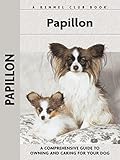
For further reading before adoption or purchase, a Papillon dog breed book or Papillon owner’s guide can complement, but not replace, advice from a veterinarian, qualified trainer, and responsible breeder or rescue organization.
Frequently Asked Questions
Are Papillons good family dogs?
Yes. Papillons can be good family dogs when children are taught gentle handling and adults supervise every interaction. Because Papillons weigh only 5–10 pounds, young children can accidentally injure them, so the dog needs a safe retreat and should never be left unsupervised with toddlers.
Are Papillons easy to train?
Yes. Papillons are intelligent and eager to please, so many learn obedience, tricks, agility, and household manners readily with short, positive, consistent training sessions. Early socialization and clear rules are important because intelligence does not eliminate unwanted behavior.
How big does a Papillon get and how long does a Papillon live?
Papillons are 8–11 inches tall, weigh 5–10 pounds, and have a typical life expectancy of 14–16 years according to the American Kennel Club’s 2026 breed profile. The Papillon Club of America’s 2016 health statement says living 15 or more years is not unusual for a well-cared-for Papillon.
What is the difference between a Papillon and a Phalène?
The Papillon is the erect-eared variety of the Continental Toy Spaniel, while the Phalène is the drooping-eared variety. The Fédération Cynologique Internationale recognizes both varieties under the same Continental Toy Spaniel classification.
Free tools Windows power users keep installed
One-click scans. No signup required.
The Bottom Line
The Papillon is a small dog with a large need for involvement. The breed can be an excellent apartment, family, or first-time-owner companion when the household provides positive training, mental stimulation, careful supervision, routine grooming and dental care, and daily companionship. Choose the individual dog and source carefully, and request documented patella, cardiac, and eye evaluations for the parents.
Quick Recap
Product prices and availability are accurate as of the date/time indicated and are subject to change. Any price and availability information displayed on Amazon at the time of purchase will apply.




