Feed your Persian cat a complete and balanced food suited to its life stage, measure portions, keep fresh water available, and ask your veterinarian to tailor amounts to your cat’s health and body condition. The available guidance does not establish that Persian cats as a breed need a unique diet or calorie allowance.
What should I feed a Persian cat?
Choose a commercially prepared food labeled complete and balanced for the appropriate life stage. Check the nutritional adequacy statement on the package; ingredients lists are ordered by proportional weight, but that order alone does not show whether a food meets your cat’s nutritional needs. Cats’ needs differ during growth, adulthood, pregnancy, and lactation. Some foods are labeled for all life stages. Cornell Feline Health Center’s feeding guidance explains what to look for.
As an Amazon Associate I earn from qualifying purchases.
A complete diet generally does not need added vitamins or minerals. Supplements can be harmful, so give them only if your veterinarian recommends them. Cornell also does not recommend raw diets in its feeding overview: evidence of benefit is lacking, and raw food can carry infectious organisms.
Recommended Free Tools
There is no established Persian-specific calorie figure in the cited guidance. A food label’s portion instructions are a starting point based on an average cat, not a prescription for every individual. Activity, health, and body condition affect how much food your cat needs.
#1 Best Overall
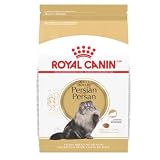
- FORMULATED FOR PUREBRED PERSIAN CATS: Royal Canin Persian Cat Food Dry Diet is formulated to meet the nutritional needs of purebred Persian cats 1 year and older
- SKIN AND COAT: Breed-specific nutrients promote skin and coat health, helping to keep a Persian's long hair soft and shiny
- HAIRBALL MAINTENANCE: A complex blend of fibers to help cats pass ingested hair and control hairball formation
- DIGESTIVE HEALTH: Royal Canin cat food with highly digestible proteins and prebiotics helps maintain healthy cat food digestion
- SPECIALIZED KIBBLE: Unique kibble is designed for the shortened jaw of a Persian cat, making it easy to pick up and chew
How often should I feed my Persian cat?
Cornell’s general schedule depends on age. Follow your veterinarian’s directions if your cat has a medical condition or a different feeding plan.
| Cat’s age | General meal schedule |
|---|---|
| Up to 6 months | Usually 3 meals a day |
| 6 months to 1 year | Generally 2 meals a day |
| Most adults | Once or twice a day |
| 10 years and older | Usually keep the existing routine unless a veterinarian advises otherwise |
Measure meals rather than repeatedly topping up a bowl, particularly if your cat is gaining weight. Free-choice dry food suits some cats, but it can lead others to overeat and gain excess weight. Diabetes and advanced chronic kidney disease are examples of conditions for which a veterinarian may recommend a modified diet or schedule. See Cornell’s overview of feeding frequency.
Rank #2
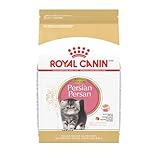
- FORMULATED FOR PUREBRED PERSIANS: Royal Canin Persian breed-specific dry kitten food is formulated to meet the nutritional needs of a growing purebred Persian kitten up to 12 months old
- IMMUNE SUPPORT: An exclusive blend of antioxidants for optimal growth supports a young kitten’s immune system
- DIGESTIVE HEALTH: Highly digestible proteins and prebiotics promote healthy development of digestive systems
- SKIN AND COAT: A precisely balanced formula of fatty acids and vitamins helps maintain skin and coat health
- SPECIALIZED KIBBLE: Unique kibble shape designed for the small mouths of Persian kittens
Should Persian cats eat wet or dry food?
Either format can work when the food is complete and balanced for your cat’s life stage. Wet food typically contains 70–80% water; dry food may be more convenient for some households. A mixed approach is also possible. The guidance does not establish that all Persian cats should eat one format, so choose based on your cat’s needs and your household routine.
When switching foods, find out what your cat currently eats and introduce the new food gradually, continuing to include some of the old food during the transition. A veterinarian can advise if the change is being made because of illness, appetite problems, or weight change.
Rank #3

- FORMULATED FOR PUREBRED PERSIANS: Royal Canin Persian Breed Loaf in Sauce Adult Cat Food is formulated to meet the nutritional needs of purebred Persian cats 1 year and older
- SKIN AND COAT: Breed-specific nutrients nourish skin and coat, keeping long hair healthy and beautiful
- DIGESTIVE HEALTH: Exclusive use of this Persian food wet formula supports digestive health
- TASTY LOAF IN SAUCE: Formulated to please even picky eaters with Loaf in Sauce wet cat food
- COMPLETE AND BALANCED: Moist cat food can be fed alone as complete and balanced diet or mixed with Royal Canin Persian Dry Food
How much water does my cat need?
Cornell’s approximate guidance is 4 ounces of water per 5 pounds of lean body weight per day. This is total water intake, including water in food—not a separate amount your cat must drink from a bowl. Wet food can contain up to 80% water, so a cat eating it may drink less. Keep clean, fresh water accessible regardless of food format. Cornell’s hydration guidance notes that some cats drink more from a fountain, though preferences vary.
Lethargy, weakness, poor appetite, and dry mucous membranes can be signs of dehydration. Contact a veterinarian promptly if you suspect your cat is dehydrated.
Rank #4

- FORMULATED FOR PUREBRED PERSIANS: Royal Canin Persian Breed Loaf in Sauce Adult Cat Food is formulated to meet the nutritional needs of purebred Persian cats 1 year and older
- SKIN AND COAT: Breed-specific nutrients nourish skin and coat, keeping long hair healthy and beautiful
- DIGESTIVE HEALTH: Exclusive use of this Persian food wet formula supports digestive health
- TASTY LOAF IN SAUCE: Formulated to please even picky eaters with Loaf in Sauce wet cat food
- COMPLETE AND BALANCED: Moist cat food can be fed alone as complete and balanced diet or mixed with Royal Canin Persian Dry Food
How can I keep my Persian cat at a healthy weight?
Ask your veterinarian to establish a healthy target weight and advise on portions. Obesity is a common nutrition-related problem in cats; Cornell describes feline obesity generally as body weight at least 20% above normal. Make weight adjustments with veterinary guidance rather than sharply cutting food. Sudden starvation can put a cat at risk of hepatic lipidosis.
Cornell’s obesity article quotes veterinarian Elizabeth McDaniel describing gradual weight loss of about 1–2% of body weight per week as an aim in a veterinarian-directed program. That is not a self-prescribed target for every cat. A small pet scale can help track weight at home when your veterinarian recommends monitoring.
Best Value

- FORMULATED FOR INDOOR CATS: Royal Canin Adult Indoor Cat Food Dry Formula is formulated for indoor cats 1-7 years old
- HAIRBALL CAT FOOD: An optimal blend of fiber for cats helps pass ingested hair through the digestive system to help manage hairballs
- WEIGHT MANAGEMENT CAT FOOD: Controlled calorie content adapted for an indoor cat's leisurely lifestyle helps promote a healthy weight
- OPTIMAL CAT STOOL: Royal Canin cat food with highly digestible proteins helps increase the digestibility of nutrients for cat digestive support
- ODOR CONTROL: This adult cat dry food also has specific nutrients to promote good digestion and help reduce the quantity and odor of stools
Get veterinary advice for persistent appetite changes, unexplained weight gain or loss, known disease, or a cat that refuses food and is losing weight. A general feeding guide cannot determine the cause or safely set an individual treatment diet.
What changes for senior Persian cats?
Older cats can gain or lose weight, and weight loss may point to a medical problem. A veterinarian can assess whether a special diet is appropriate and help restore or maintain normal body condition. Keep food and water easy to reach: arthritis or mobility difficulty can make dishes that require jumping or climbing harder to access. Cornell covers these considerations in its guide to the special needs of senior cats.
How to compare cat foods
- Nutritional adequacy: Does the package say the food is complete and balanced?
- Life stage: Is it intended for growth, adult maintenance, or another appropriate stage?
- Format: Is it wet, dry, or a mix that fits your cat and household?
- Portioning: Can you measure the amount and monitor your cat’s body condition?
- Health needs: Has your veterinarian recommended a therapeutic or modified diet?
A “Persian” label by itself does not establish a medical need for a particular food. Base the choice on nutritional adequacy, life stage, your cat’s condition, and veterinary advice.
Quick Recap
Product prices and availability are accurate as of the date/time indicated and are subject to change. Any price and availability information displayed on Amazon at the time of purchase will apply.




