
Do Persian cats shed? Yes. Their long coats release loose hair, and keeping that coat comfortable usually requires gentle brushing or combing every day. Regular grooming removes fur before the cat swallows it, helps you find tangles early, and can lower—but not eliminate—the chance of hairballs.
Veterinary references do not establish a dependable Persian-specific shedding rate. That means there is no evidence-based number of hairs, handfuls, or “cups” that applies to every Persian. Individual coat density, length, health, age, grooming tolerance, and seasonal changes can all affect what you see. The reliable answer is qualitative: Persians shed, and their long hair needs consistent maintenance.
As an Amazon Associate I earn from qualifying purchases.
What veterinary guidance establishes
| Question | What the veterinary sources support | What not to assume |
|---|---|---|
| Do Persians shed? | Yes. Persian cats are long-haired and release loose coat hair. | There is no validated Persian-specific shedding quantity to quote. |
| How often should the coat be groomed? | Long, silky, or curly coats generally need brushing or combing daily to prevent tangles and mats. | Daily care does not mean shedding will stop. |
| Where do knots form? | Behind the ears, in the armpits, and along the backs of the legs are common snag points. | A smooth-looking topcoat does not prove that the skin-level coat is tangle-free. |
| Why does grooming matter beyond appearance? | Removing loose hair can reduce the amount swallowed during self-grooming and may reduce hairball formation. | Grooming cannot guarantee that a cat will never cough up a hairball. |
| When is a problem urgent? | Frequent hairballs, repeated vomiting, or persistent retching warrant veterinary advice. | Retching is not automatically a harmless hairball. |
Cornell’s feline health guidance identifies long-haired breeds, including Persians, as having greater hairball risk than short-haired cats. Merck gives the same broad risk distinction. Neither source supplies a tested shedding rate specifically for Persian cats, so claims such as “Persians shed exactly X amount per day” are not supported.
What’s actually slowing this PC down?
Pick the symptom - the matching free tool is one click away.
Why loose Persian hair can become a hairball
Cats swallow some of their loose hair while licking the coat. Much of that material passes through the digestive tract, but some can collect in the stomach and be brought back up. Cornell veterinary advice compares a retained hairball to “a sponge or a rolled-up sock,” emphasizing that a compact mass can obstruct normal passage rather than simply being an occasional nuisance.
#1 Best Overall

- Pet Hair Remover: MIU COLOR Pet Grooming Brush is the ideal grooming dog hair brush to effectively reduce pet hair loss. Removes hair from cats and dogs of all sizes - short;medium and long hair dog combs. Get rid of annoying hair in your home or car
- High Quality: 4 inch stainless steel comb with evenly paced steel teeth is a good grooming comb for cats and dogs, which can quickly and easily remove loose undercoat and effectively promote blood circulation to the skin
- Convenient and Portable: The detachable comb head is easy to install and remove in daily use. it is also equipped with a safety blade cover to protect the blade and extend its service life. It is suitable for combing the upper layer of pet hair
- Safe Materials: High-quality materials are selected to ensure the safety of pets.he anti-slip handle is designed to facilitate pet hair removal and hair care.It is easy to use and durable and suitable for removing pet hair
- Ideal Choice: MIU COLOR Grooming Brush gives dogs and cats a comfortable experience. If you have any problems with your pet brush, we provide you with satisfactory product after-sales service
Long hair gives a cat more loose material to ingest than a short coat, which is why Persian cats need a prevention routine rather than occasional cosmetic brushing. Combing removes some fur while it is still on the coat. It also gives you a chance to notice a new mat, irritated skin, or a change in the cat’s willingness to be touched.
Does a Persian shed more at certain times?
Owners may notice more hair on a comb during seasonal coat changes, but the veterinary pages do not provide a Persian-specific seasonal shedding schedule or a reliable amount to expect. Treat a visible increase as a reason to check the coat more often, not as proof that a particular quantity is normal. If the change is sudden or accompanied by bald areas, inflamed skin, heavy dandruff, or altered behavior, ask a veterinary professional for an assessment.
A gentle daily grooming routine
1. Choose a calm setup
Work in a quiet, well-lit place where the cat can stand or lie down without being restrained tightly. Let the cat inspect the comb before you begin. Short, calm sessions are more useful than a long struggle that teaches the cat to fear grooming. If the cat becomes distressed, stop and try again later rather than escalating pressure.
Do these 3 things before closing this tab:
1Scan for outdated or missing drivers - takes under a minute2Repair Windows errors before they cause bigger problems3Fix the driver behind crashes, sound loss and screen glitches2. Start where the coat is easiest
Begin on a less sensitive area such as the shoulders or back. Use small sections and move in the direction the coat naturally lies. The purpose is to lift out loose hair and identify resistance, not to scrape forcefully through the coat. If the comb catches, pause and investigate the spot instead of pulling.
3. Work in repeatable sections
Divide the body into a few manageable zones—back, sides, chest, belly if tolerated, and legs—and check one zone at a time. Run your fingers over each section before combing so you can feel a knot that is hidden by a fluffy surface. Keep the comb close enough to the skin to reach the undercoat, but use only the pressure needed to move through free hair. A daily minute or two is still useful if that is all the cat currently accepts; tolerance can be built gradually.
Rank #2

- WORLD’S #1 CAT HAIR BRUSH: Our cat grooming brush / cat shedding brush is the world's best patented pet grooming brush for cats, small dogs, and rabbits. It is the perfect cat deshedding brush, short hair cat brush, & cat brush for long haired cats.
- EASY AND FAST CLEANUP: SleekEZ Deshedding Grooming Tool is great for removing hair and fur from carpets, pet bedding, cat trees, and more! Our cat comb for shedding is also an amazing pet hair remover and cat fur remover / cat hair remover brush.
- ALL HAIR & FUR TYPES: It is the perfect cat comb for long haired cats and cat brush for short haired cats. SleekEZ works as a deshedding brush for cats, cat deshedding tool, undercoat brush for cats, cat fur brush, cat deshedder, & small dog brush.
- PAINLESS AND ENJOYABLE: SleekEZ serves as a versatile kitten brush, puppy brush for small dogs, & bunny brush / rabbit brush. It's the best pet hair brush on the market and is an absolute essential for cat shedding control!
- GREAT GIFT: SleekEZ makes the industry's leading cat combs for indoor cats & shedding brush cat hair. It is a must have for any cat grooming kit, cat essentials for indoor cats, & cat supplies. Also an amazing cat dander remover & cat undercoat brush
4. Check the high-risk zones
After the first pass, deliberately inspect behind both ears, each armpit, and the backs of the hind legs. These areas bend and rub against other surfaces, so loose strands can interlock there before a knot is visible from above. Use your fingers to separate a small section of fur while looking at the skin underneath.
5. Finish with a skin check
Look for redness, moisture, dandruff, scabs, parasites, or a painful reaction. A sudden change in coat condition or grooming tolerance is a reason to ask a veterinary professional for advice. End the session while the cat is still relaxed and offer a reward if that is part of your normal routine.
During periods when the cat is releasing more coat, a comb that can lift loose undercoat may make the work easier. Veterinary guidance also notes that a suitable comb can gently tease out very small mats. Tool choice should match the individual cat; a veterinary healthcare team can recommend equipment for a particular coat and temperament.
Brushing versus combing: what matters in practice
The sources do not rank two named tools or declare one style universally superior. A practical choice comes down to three questions: can the tool remove loose undercoat, can you maneuver it through a small tangle without rough handling, and will the cat tolerate it? A comb intended for long-haired cats is a reasonable category to consider because it can remove loose undercoat and gently tease very small mats. A tool that causes repeated pulling, scratching, or fear is not a successful choice, even if it appears effective on paper.
Ask your veterinary healthcare team to suggest alternatives if the coat is unusually dense, curly, or difficult to handle. Introduce any new tool slowly: allow the cat to sniff it, touch the coat briefly, and stop before the cat becomes overwhelmed. There is no need to force a complete grooming session on the first day.
Rank #3

- 【Professional Pet Grooming Kit 】3 Pet grooming tools selected by pet lovers, which can meet daily all the grooming needs of pets. Let you, as the groomer, personally give your furry friend a shiny and healthy coat. This is a must-have beauty product set for pet lovers! The Best Dog Gifts - Merry Christmas
- 【Why Choose Augwind 3PCS ?】 Augwind Pet Grooming Rake makes it easy to remove stubborn, tangled hair. Augwind Self-Cleaning Slicker Brush quickly removes loose hair, dander, and residual dirt. Augwind Flea Comb effectively remove small objects and Dandruff Flakes. Our 3-in-1 Pet Grooming Kit handles all your needs: detangling, hair removal and removes fleas and ticks – The Ultimate Pet Essentials
- 【Dematting and Deshedding Tools】 Augwind Pet Grooming Rake features a double-sided design: The 9-tooth bristle side detangles stubborn knots and mats. The 17-tooth bristle side trims excess pet hair. Augwind self-cleaning dog brush includes a push-button retractable mechanism – simply retract the bristles after use to remove loose hair quickly and effortlessly
- 【Flea Comb】Use this fine-toothed lice comb regularly to effectively remove small debris and dandruff, help keep away fleas and ticks, and maintain your pet’s coat tidy and healthy
- 【2-Year Warranty】We are a professional pet products company, committed to bringing the safest, practical and affordable pet products to pets and owners. We promise to solve it for you at any time if there is any quality within 2 years. We provide 7*24 hours after-sales service, if you have any questions, please feel free to contact us
Handling tangles and mats safely
A tiny tangle may loosen with patient, gentle work on a small section. Stop if the comb will not pass, the cat shows pain, or the knot sits tightly against the skin. Do not yank a mat, hold the cat down while pulling, or cut close to the skin with household scissors. Cat skin can be drawn into a dense mat, making a seemingly simple cut dangerous.
The Tool Desk
Outbyte PC Repair FREEClear out junk files and repair common Windows errorsFree Scan →Outbyte Driver Updater FREEScan for outdated or missing drivers - takes under a minuteDriver Scan →The veterinary sources do not provide a universal home mat-removal protocol. For a tight or extensive mat, ask your veterinary team how it should be removed and whether a professional groomer experienced with long-haired cats is appropriate. Veterinary advice is especially important when the skin beneath the mat looks inflamed or the cat cannot tolerate handling.
Choosing a grooming tool
No single brand or model has been established as best for Persian cats. Select by function, safety, and whether your cat accepts the tool.
| Selection question | Why it matters | Practical approach |
|---|---|---|
| Can it remove loose undercoat? | Removing loose hair before self-grooming can reduce swallowed fur. | Look for a grooming comb intended for long-haired cats; use light pressure and short sections. |
| Can it reach small tangles without rough handling? | Early knots are easier to address than dense mats, but pulling can hurt. | Choose a tool you can maneuver behind ears, in armpits, and along the legs; stop when it catches. |
| Will the cat tolerate it? | A theoretically effective tool is not useful if every session becomes a fight. | Introduce it gradually, keep sessions brief, and ask a veterinary team for alternatives if the cat resists. |
| Can you inspect the skin while using it? | Coat problems may conceal irritation or parasites. | Work in sections under good light rather than brushing only the visible surface. |
Shedding, hairballs, and signs that need attention
A loose tuft on the comb is expected for a long-haired cat. Hairball-like coughing or retching, however, should not be diagnosed from appearance alone. Respiratory disease, gastrointestinal disease, pain, or an obstruction can look similar to an owner watching from across the room.
| What you notice | What to do |
|---|---|
| Loose fur collected during routine grooming, with normal appetite and behavior | Continue gentle coat care and monitor for new tangles or skin changes. |
| An occasional hairball with no other concerning signs | Discuss prevention at the next routine veterinary visit, particularly if episodes become more common. |
| Frequent hairballs, repeated vomiting, persistent retching, reduced appetite, lethargy, or difficulty passing stool | Contact a veterinarian promptly. These signs can indicate more than ordinary shedding. |
| A tight mat, bleeding skin, or severe distress during grooming | Stop home grooming at that spot and obtain veterinary guidance rather than pulling or cutting it yourself. |
Merck advises veterinary consultation when hairballs are frequent or vomiting repeats. Cornell warns that a hairball can cause a serious obstruction and specifically advises against giving laxatives or commercial hairball diets intended to prevent or relieve an obstruction without veterinary approval and supervision.
Rank #4

- FOR SHORT-HAIR CATS: Choose large size for cats over 10 pounds.
- REMOVES LOOSE HAIR: Stainless steel deShedding edge reaches through topcoat to safely and easily remove loose hair and undercoat without damaging topcoat or cutting skin.*
- FUREJECTOR BUTTON: Releases hair with ease, making deShedding easier than ever
- SKIN GUARD: Curved edge glides over skin, preventing digging in at edges, and conforms to your pet’s natural build and shape for comfort.
- ERGONOMIC HANDLE: Designed for comfortable, easy grooming.
Common grooming mistakes to avoid
- Waiting until the coat looks matted: Knots can form underneath a fluffy surface, especially in friction areas.
- Using force to finish a session: Painful pulling can injure skin and make future grooming harder.
- Cutting a mat close to the body: The skin may be hidden inside the mat and can be cut accidentally.
- Assuming every cough is a hairball: Repeated retching or vomiting needs professional assessment.
- Starting laxatives or “hairball” diets without approval: Cornell cautions that these products should be used only with veterinary supervision.
- Measuring success by a completely hair-free comb: The realistic goal is a manageable coat, fewer tangles, and less loose hair swallowed—not zero shedding.
- Ignoring a sudden behavior change: Refusing touch in one area can signal pain or skin trouble, not stubbornness.
How to make the routine workable for your cat
Consistency matters more than completing an elaborate session. Keep the comb where grooming normally happens, schedule it at a time when the cat is relaxed, and divide the coat into manageable sections. If the cat accepts only a minute at first, stop after that minute and build tolerance gradually. Never trade safety for a perfectly finished coat.
Record which areas tangle first and whether the cat’s tolerance changes. That information helps a veterinary professional distinguish a normal grooming challenge from pain, skin disease, or another problem. A cat that suddenly stops allowing touch in a previously easy area should be evaluated rather than labeled “difficult.”
The practical answer
Persian cats do shed, but veterinary sources do not support a precise Persian-specific shedding number. Plan for daily, gentle brushing or combing; pay special attention to behind the ears, the armpits, and the backs of the legs; and use grooming to remove loose hair before it is swallowed. Seek veterinary help for tight mats, painful skin, frequent hairballs, repeated vomiting, or persistent retching.
Frequently Asked Questions
How often should I brush a Persian cat?
Plan on gentle daily brushing or combing. Long, silky, or curly coats tangle easily, and daily care removes loose hair before the cat swallows it.
Do Persian cats shed more than short-haired cats?
Persians have long coats and a greater risk of hairballs than short-haired cats, but the veterinary sources do not provide a reliable Persian-specific shedding amount.
Best Value
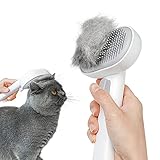
- 【Professional Cat Hair Brush】Perfect gift for pet owners, vets, and pet groomers. Using this cat brush for long haired cats on a regular basis can gently and effectively remove loose hair, tangles, knots, dander and trapped dirt. Suitable for short, medium or long, thick, thin or curly haired dogs/cats/rabbits, making your pets shiny and healthy.
- 【Skin-friendly Massage Needles】The mental pins on the cat brush with release button have round rubber tips on the ends. As a cat deshedding brush, it's perfect for shedding and massaging your pets without scratching your pet's skin, even the sensitive skin. After use, you can hang it with the silicone loop strap to protect the bent needle.
- 【Upgraded High Quality Material】The our long hair cat grooming brush made of durable 304 stainless steel and fine ABS material. Our wire bristles is 1.2 times as thick as bristles of other deshedding brush for cats. More sturdy and not easy to deform, can be used for a long time. 150° bent needles designed to penetrate deep into the coat are really easier to groom the undercoat well.
- 【One-click Cleaning Button】After brushing your pet, simply click the button. The shutter will pop out, separating the brushed hair from the metal needle, then wipe the hair off. The button of cat shedding brush on the handle saves time and energy when grooming and cleaning.
- 【SUPPORT · 365 Days】If the pet hair brush have any problems during use, we will provide you with replacement or 100% money back. And we have a professional customer service team and pet experts to provide you with the pre-sales and after-sales service. aumuca is always at your side.
Can brushing stop a Persian cat from shedding?
No. Brushing cannot stop normal shedding. Its realistic benefits are removing loose fur, finding tangles early, and potentially reducing swallowed hair and hairballs.
Where do Persian cat mats usually form?
Check behind the ears, in the armpits, and along the backs of the legs. These friction areas can tangle beneath a smooth-looking surface.
What should I do about a tight mat?
Do not yank it or cut close to the skin with household scissors. Stop if the cat is painful or distressed and ask your veterinary team about removal or a long-haired-cat groomer.
PC Slower Than It Used to Be?
A free scan shows the junk files, broken settings and background clutter dragging Windows down - then fixes them in one click.Free scan · Windows 10 & 11Outdated Drivers Are Slowing You Down
One free scan finds every outdated or missing driver and matches the right update for your exact hardware.Free scan · exact hardware matchIs every cough or retch a hairball?
No. Retching can resemble respiratory, gastrointestinal, pain, or obstruction problems. Frequent hairballs, repeated vomiting, or persistent retching require veterinary advice.
Can I give a laxative or hairball diet?
Cornell advises using laxatives or commercial hairball diets only with veterinary approval and supervision, especially because an obstruction can be serious.
What grooming comb should I buy?
Consider a comb for long-haired cats that can lift loose undercoat and gently address very small tangles. There is no veterinary-backed best brand; choose a safe tool your cat tolerates and ask your veterinary team for individualized advice.
The Bottom Line
Bottom line: Persian cats shed, and their long coats generally need daily, gentle grooming. Focus on loose-fur removal and early detection of knots, especially behind the ears, in the armpits, and along the backs of the legs. Never force a painful mat, and contact a veterinarian for frequent hairballs, repeated vomiting, persistent retching, or sudden grooming intolerance.
Free tools Windows power users keep installed
One-click scans. No signup required.
Quick Recap
Product prices and availability are accurate as of the date/time indicated and are subject to change. Any price and availability information displayed on Amazon at the time of purchase will apply.





Leave a Reply