
The Tool Desk
Outbyte Driver Updater FREEFix the driver behind crashes, sound loss and screen glitchesFind Drivers →Outbyte PC Repair FREERepair Windows errors before they cause bigger problemsFix Now →A rabbit is healthiest and most content in a home that functions as a small, secure habitat—not a cage. Provide enough room for exercise and normal movement at all times, a sheltered place to rest, a compatible rabbit companion where possible, constant hay or grass, fresh water, daily enrichment and prompt veterinary care when something changes. The setup must be large and safe for the rabbits’ adult size, whether it is indoors, outdoors or a combination of both.
What makes a real haven for pet rabbits?
Rabbits need to do more than eat and sleep. Their living area should let them rest, exercise, hide, explore, dig, mark territory and use a separate toilet area. Shelter and exercise space should be available continuously, not only for a few hours while someone is home. The Royal Society for the Prevention of Cruelty to Animals (RSPCA) describes the goal clearly: “A safe, spacious and enriching home is essential for their wellbeing.” — Eloise Dicks, Scientific and Policy Officer, RSPCA housing guidance.
As an Amazon Associate I earn from qualifying purchases.
Design the home around the rabbits’ full-grown bodies and behavior. They should be able to stand upright on their hind legs without their ears touching the roof, lie fully stretched out and turn around without obstruction. A setup that works for a young rabbit can become restrictive as the rabbit matures, so measure the usable interior rather than relying on a product’s label or its outside dimensions.
Quick wins for a faster PC:
Scan for outdated or missing drivers - takes under a minuteDriver Scan →Clear out junk files and repair common Windows errorsFree Scan →How much space do rabbits need?
The RSPCA minimum for two medium-sized rabbits
For two medium-sized rabbits, RSPCA guidance states a minimum total living space of 3 metres by 2 metres by 1 metre. That measurement includes the main shelter and the exercise area, and it is a minimum rather than a target. Bigger is better when you can provide it. The entire space should be available all the time, with no need to move the rabbits between a small hutch and a separate run for their daily exercise.
#1 Best Overall

- Spacious & Well‑Ventilated Small Pet Enclosure: Measuring 62"L x 22.6"W x 33.5"H with 10.93 square feet living space, this large rabbit hutch accommodates rabbits, guinea pigs, chinchillas and ferrets. Durable wire mesh ensures safety and steady airflow, creating a cozy ventilated habitat for small pets all year round
- Chew‑Resistant Reinforced Stable Structure: Constructed from solid wood with aluminum alloy reinforced frames, this bunny cage is highly chew‑proof against active small pets. The upgraded structure resists warping, cracking and outdoor wear, suitable for both indoor and long‑term outdoor use
- 3 Lockable Deep Pull‑Out Trays for Easy Cleaning: Equipped with 3 individual deep sliding waste trays with locking design, preventing accidental slipping or spills. It greatly simplifies daily cleaning, keeps the hutch dry and odor‑free with less maintenance work
- Multi‑Access Doors & Openable Roof for Convenient Care: Features 5 access doors plus an openable run roof for easy feeding, pet bonding and deep cleaning. Multiple entry points offer flexible operation, avoiding awkward reaching during daily pet care
- Mobile Design with Brake Casters for Stability: 6 swivel casters (2 with safety brakes) allow smooth relocation between indoor living space, patio and backyard. Lockable wheels keep the hutch stable against energetic pets’ jumping and playing
Arrange distinct zones
Use the available floor area to create connected but recognizable zones:
- Resting and hiding: provide a secure shelter where each rabbit can retreat. Constant access matters because hiding is a normal way to feel safe.
- Exercise: leave an uninterrupted route for running, hopping and turning. Remove narrow gaps that could trap a rabbit.
- Toileting: include a separate toilet area that can be cleaned without dismantling the entire home.
- Feeding and drinking: place hay or grass and water where they remain clean and easy to reach.
- Exploration and digging: add safe opportunities to investigate surfaces and perform natural digging behavior.
- Territory: allow rabbits to mark and use their space without forcing them to live in a bare, constantly rearranged enclosure.
Good ventilation is essential, but airflow must not become a cold draught. Check the height and floor area against the adult size of every rabbit, including a larger companion added later.
Why a hutch alone is not enough
A traditional hutch on its own does not provide the room rabbits need for sustained movement, exploration and separate functional areas. It can still serve as a sleeping or shelter component inside a much larger enclosure. When assessing any “rabbit cage” or hutch, ignore the marketing name and ask whether the complete, connected setup meets the adult rabbits’ dimensions and allows all-day access to shelter and exercise.
Free tools Windows power users keep installed
One-click scans. No signup required.
Indoor or outdoor: which home is better?
Both indoor and outdoor arrangements can meet welfare needs. The better choice is the one that supplies adequate usable space, secure construction, shelter, ventilation, weather protection, enrichment and reliable control of hazards. RSPCA notes that outdoor living may suit some rabbits that are already accustomed to it, provided their needs—including protection in cold weather—are met.
Rank #2

- 【COMPACT STRUCTURE】Its compact, low footprint design easily fits 2 separate stacked cages in a smaller space. This rabbit starter kit makes small animal ownership possible without sacrificing a whole lot of room! Overall Dimension: 36" L x 17.7" W x 33.5" H.
- 【EASY TO ACCESS】Easy entrance, Multiple side doors makes the cage can be opened and closed easily so that you can interactive with your pet and pull out tray for easy access to the inside space for cleaning, feeding, and other routine tasks. Deluxe and Functional Pet Home!
- 【CLEANING IS A BREEZE】With two pull of trays for each of the main compartments, cleaning these rabbit cages is incredibly easy and intuitive. NOTE: Buyer to determine the amount of pets that will fit in the hutch depending on breed and size.
- 【SERVICE】We packed chicken coop in package as good as we can, if there is any damaged parts, please contact us first , we will solve your problem as soon as possible with our professional customer service; This rabbit cage takes around 15 minutes to assemble.
- 【ULTRA DURABLE MATERIAL】The pet house is constructed by premium natural fir wood and painted with waterproof varnish, protecting it from any types of weather which offers long-lasting lifespan to provide a warm house for your lovely fur babies.
| Consideration | Indoor home | Outdoor home |
|---|---|---|
| Usable space | An exercise pen or rabbit-proofed room can work when it includes shelter, toilet and enrichment zones. | Combine a secure shelter with a permanently accessible exercise area; the total must meet the same adult-size space needs. |
| Security | Remove household hazards and prevent access to unsafe rooms, cables or openings. | Protect against escape, predators and insecure doors, panels or flooring. |
| Ventilation and temperature | Provide fresh air without placing the enclosure in a draught or excessive heat. | Use weatherproof shelter and monitor cold, wind, rain and heat; cold-weather needs require particular attention. |
| Enrichment | Plan digging, exploration, hiding and territory-marking opportunities within the room or pen. | Provide equivalent enrichment while keeping it dry, clean and safe from weather damage. |
| Supervision | Rabbit-proof the living area and check interactions with other household members and animals. | Inspect the enclosure, locks, barriers and shelter regularly, including after bad weather. |
An indoor pen is one possible component of a suitable home, not a guarantee of welfare by itself. A rabbit-proofed room can offer more usable area, but only after hazards are removed and the rabbit still has a dedicated shelter, toilet area, food and water access.
Build the setup step by step
- Measure the adult rabbits. Plan for the largest rabbit you expect to house and confirm that every rabbit can stand, stretch and turn freely. For two medium-sized rabbits, start with the RSPCA minimum of 3m × 2m × 1m and increase it whenever possible.
- Choose a secure structure. Select an enclosure that cannot be pushed apart, chewed through or opened accidentally. Check the floor, roof and doors as a complete system rather than trusting a “rabbit” product label.
- Connect shelter and exercise space. Rabbits should not lose access to their exercise area when the shelter is closed. Arrange a sheltered sleeping zone and a larger movement zone with a clear passage between them.
- Add separate toilet and feeding areas. Keep hay or grass and fresh water reachable at all times, and place the toilet area where it can be cleaned while leaving the rabbits’ essential space intact.
- Provide hiding and exploration. Add safe hiding places and surfaces or boxes that permit investigation and digging. Leave enough open floor for running and turning instead of filling the enclosure with equipment.
- Rabbit-proof the surroundings. Indoors, remove hazards before release into a room or pen. Outdoors, check every boundary, latch, roof and ground contact for escape routes and predator access.
- Test the finished home at rabbit height. Get inside the space mentally: can a rabbit stand without touching the roof, lie fully outstretched and reach shelter, food, water and the toilet area without squeezing through a gap?
- Recheck as rabbits grow or circumstances change. Re-measure after growth, bonding, illness or a change in furniture. A previously adequate arrangement can become crowded when another rabbit joins.
Companionship is part of the habitat
Rabbits are highly social animals and depend on suitable company for comfort and safety. RSPCA guidance encourages keeping rabbits with a compatible rabbit companion wherever possible. A human family can provide care, but it does not automatically replace rabbit companionship.
Do not place two unfamiliar rabbits together and assume they will get along. Introductions and bonding need to be managed carefully, with attention to each rabbit’s temperament and welfare. A veterinarian or qualified behaviourist may advise that an individual rabbit should live alone; treat that as a case-specific welfare decision rather than a general rule.
RSPCA reported that 42% of pet rabbits in the UK lived alone in 2024. This figure applies to the United Kingdom and that year; it is not a current worldwide prevalence estimate. It does, however, highlight how often social needs may be overlooked.
Rank #3
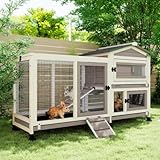
- 【3 Leak-Proof Pull-Out Trays】 Includes 3 separate deep trays that are completely waterproof. Designed with seamless one-piece molding to prevent any leaks. The smooth plastic surface can be wiped clean in seconds for ultimate ease.
- 【Chew-Resistant Ramp with Dual Metal Guards】 Reinforced with metal edges on both sides to prevent destruction from gnawing. Engineered to last twice as long as standard wooden ramps!
- 【All-Weather Indoor & Outdoor Use】 Engineered with an asphalt-coated roof to ensure a 100% dry interior, combined with a solid waterproof frame. The elevated design is perfectly sized for 1-2 rabbits with no weight limits!
- 【Hutch-on-the-Move】 6 locking casters make it easy. Roll your pet outside for fresh air or to a new spot for cleaning—effortlessly. Rolls with Ease, Locks in Place!”
- 【Spacious 2-Story Design】 Measuring 57"L x 22"W x 32"H, this extra-large habitat provides ample room for your bunny, guinea pig, or ferret to play and relax. A true palace for your beloved pets!
Feed for steady digestion and dental health
Build the daily diet around hay or grass
Constant access to hay or grass is a foundation of rabbit care, alongside fresh water. Keep the supply clean and available throughout the day rather than treating it as an occasional treat. Include suitable greens and measured rabbit nuggets as part of a balanced diet.
| Food or drink | How to provide it | Important qualification |
|---|---|---|
| Hay or grass | Keep it available at all times. | It is a fundamental part of a healthy rabbit diet, not optional bedding or a once-daily portion. |
| Fresh water | Provide constant access in a clean, dependable container. | Check availability whenever you inspect the enclosure. |
| Greens | Offer suitable greens as part of the varied diet advised for rabbits. | Do not allow treats or greens to displace the basic hay-or-grass supply. |
| Rabbit nuggets | Use measured portions rather than free-feeding. | RSPCA gives an adult guide of 25g—approximately an egg-cup full—per kilogram of body weight, adjusted for lifestyle, activity, age and health. |
The 25g-per-kilogram figure is a general adult guide, not an individualized prescription. A veterinarian can help adjust portions for a rabbit’s body condition, activity level, age or medical needs.
When a rabbit stops eating
Loss of appetite warrants prompt veterinary attention. RSPCA advises checking for underlying problems such as gut stasis—a slowdown or stopping of normal gut movement that requires immediate attention—or dental disease that makes chewing uncomfortable. Do not wait to see whether a rabbit resumes eating on its own.
Plan health care before an emergency
Daily care means more than refilling food. Make time to confirm that the enclosure remains secure, shelter and exercise areas are usable, food and water are available, and the rabbit’s behavior and appetite have not changed. A written routine helps every caregiver notice a problem quickly.
Rank #4

- Leak-Proof Locking Trays: 2 deep, removable trays with secure locks stay put even when pets jump or scamper—no messy spills, easy cleanup, and a dry, odor-free habitat for your furry friends
- Chew-Resistant Metal-Guarded Ramp: Dual full-length metal edges stop relentless gnawing (perfect for chewer bunnies/guinea pigs)! The textured, splinter-free surface protects delicate footpads while delivering unshakable traction—twice as durable as flimsy wooden ramps
- Mobile & Stable with Brakes: 4 smooth-swiveling casters (2 with locks) let you glide the bunny hutch from living room to patio or backyard effortlessly. Lock the brakes for rock-solid stability—no accidental shifting, even with rambunctious pets
- 5 Easy-Access Doors: Reach every nook and cranny for quick cleaning, feeding, or snuggles—no need to disrupt your pet’s space! Simplifies waste removal, tray checks, and bonding time, keeping the cage fresh with minimal hassle
- Spacious 2-Story Rabbit Cage:Measuring 39.3"L x 22"W x 36.8"H, this large 2-story design offers ample room for bunnies, guinea pigs, or other small animals to hop, play, stretch, and relax
Arrange access to a veterinary practice before you need it and know how you will transport the rabbits. Include routine and emergency medical care in the household plan. If a rabbit stops eating or appears unwell, contact the veterinarian promptly rather than attempting to diagnose the cause at home.
Independent reader supportYour contribution helps us test, update, and keep practical guides available for everyone.Understand the long-term cost and commitment
Rabbits are a long-term responsibility with recurring and unexpected expenses. Budget for:
- Initial and ongoing housing, including expansion as rabbits grow or are bonded.
- Food, hay or grass, water equipment and replacement supplies.
- Litter trays, cleaning materials and home adaptations.
- Enrichment items and repairs to worn or damaged equipment.
- Routine appointments and emergency veterinary treatment.
- Holiday or temporary care when you travel.
- Rabbit insurance, if a suitable policy is available for your location and circumstances.
Keeping rabbits in pairs can increase food, housing and veterinary costs, but companionship is also a core welfare consideration. Evaluate the full lifetime commitment before bringing rabbits home, including who will provide daily care if your routine changes.
Choose equipment by welfare function, not label
When comparing an exercise pen, enclosure or shelter, judge the complete arrangement against the rabbits’ needs. The most useful questions are:
Best Value

- 【20 PCS SET】1x apple wood molar string,1x timothy cake string,2x loofah toys,3x timothy grass ball with flowers, 1x rabbit shape grass cake,5x grass sticks,2x woven carrots,4x rattan balls
- 【NATURAL MATERIAL 】 All toys are made of natural materials such as apple wood, loofah,timothy grass,wood vines,very safe for your lovely pets to play and chew. there materials are not only rich in fibers can clean your pet’s tooth,promote digestion,but also excellent toys for exercising and relieving stress
- 【KEEP TEETH HEALTHY 】The bunny chewing toys can be used to grind teeth,by chewing these toys can prevent teeth from growing too fast which may cause uncomfortable ,it can relievve intestinal inflammations and mild pain,keep your pets’ tooth clean and healthy,no more worries about your furniture get bite
- 【MULTIPLE BENEFITS】these rabbits chew toys are rich in fibers,very good for digestion,can easily attract your pets to play and exercise ,you can interact with your little ones,it will foster relationships with them.
- 【WIDE USES 】These bunny chew toys can be hang in the cages with hooks,fit for rabbits,bunny, hamsters, guinea pigs, squirrel, rabbits,chinchillas, parrot,, providing more fun for your pets.
- What are the usable internal dimensions, and do they suit the rabbits at adult size?
- Can the structure hold separate shelter, exercise, toilet, feeding and enrichment zones?
- Is there continuous access between the shelter and exercise area?
- Are doors, panels, flooring and roof secure against escape, chewing and predators?
- Can you clean each area without removing essential shelter or crowding the rabbits?
- Does the design provide ventilation and protection from heat, rain, wind and cold where relevant?
- Can you add safe hiding, digging and exploration opportunities without reducing movement space?
A hay rack or feeder can help keep hay accessible and clean, but it is an accessory rather than proof that the enclosure is suitable. Likewise, a pen described as an indoor pet playpen is only useful when its size, configuration and construction create a complete rabbit home.
A practical readiness checklist
Before the rabbits arrive, confirm every item below:
- The complete home meets or exceeds the adult-size space requirement; for two medium rabbits, that starts at 3m × 2m × 1m.
- Shelter and exercise space are connected and available at all times.
- Rabbits can stand upright, stretch fully and turn without obstruction.
- There are separate resting, toilet, feeding, hiding and exploration areas.
- Hay or grass and fresh water are constantly available.
- The environment is secure, ventilated and protected from household hazards or outdoor predators.
- A compatible rabbit companion is planned where possible, with professional guidance for introductions or exceptional solitary housing.
- A veterinarian, transport plan and emergency budget are ready.
- Daily care, cleaning, holiday cover and ongoing costs have been assigned to a responsible person.
When these conditions are met, the enclosure becomes more than a place to contain a rabbit: it supports movement, security, social contact, feeding and the normal behaviors that make a home genuinely habitable.
Recommended Free Tools
Quick Recap
Product prices and availability are accurate as of the date/time indicated and are subject to change. Any price and availability information displayed on Amazon at the time of purchase will apply.





Leave a Reply