
Some links on this page are affiliate links: if you buy through them we may earn a commission, at no extra cost to you.
A Pomsky is a Pomeranian–Siberian Husky cross, not a guaranteed miniature Husky. Adult size, appearance, coat, vocalization, energy, temperament, and inherited traits can vary, so prospective owners should evaluate the individual dog and verify the parents’ health records before buying or adopting.
Pomsky at a glance
| What it is | A deliberate Pomeranian–Siberian Husky cross |
|---|---|
| AKC status | Not listed as an AKC-recognized breed in the official listings reviewed for this guide |
| Adult size | Variable; specialist Pomsky categories range approximately from 11 to 18 inches at the shoulder and 7 to 35 pounds |
| Coat | Usually a dense double coat; coat length, texture, markings, and shedding can vary |
| Temperament | Often described as affectionate, playful, intelligent, curious, and sociable, but the individual dog and its upbringing matter |
| Exercise needs | Daily age-appropriate activity, training, play, and mental enrichment |
| Best suited to | Owners prepared for regular grooming, daily interaction, training, and uncertainty about adult size and inherited traits |
A Pomsky is a Pomeranian–Siberian Husky cross, not a uniformly standardized miniature Husky. Pomskies can be affectionate, clever, athletic companion dogs, but their adult size, coat, vocalization, energy level, appearance, and inherited health risks can vary considerably. Anyone considering one should evaluate the individual dog, its parents, and the breeder’s records rather than buy into a guaranteed package of Husky looks in a small body.
As an Amazon Associate I earn from qualifying purchases.
What’s actually slowing this PC down?
Pick the symptom - the matching free tool is one click away.
The name “Pomsky” is used for dogs produced from Pomeranian and Siberian Husky ancestry. Both parent breeds are recognized by the American Kennel Club, but Pomsky is not included among the AKC-recognized breeds in the official listings reviewed for this article. Specialist organizations publish their own Pomsky descriptions, standards, and registries. Those documents can be useful references, but they are not one universally controlling breed standard.
What is a Pomsky?
In its simplest sense, a Pomsky is a deliberate cross between a Pomeranian and a Siberian Husky. Because the parent breeds differ greatly in size, early Pomsky breeding programs described using a Siberian Husky female and a Pomeranian male, with artificial insemination used to address the physical size difference. That description belongs to the particular breeding organization that published it; it should not be assumed to describe every dog marketed as a Pomsky or every breeding program operating today.
Popular on Amazon

- DUAL-SIDED DESIGN: Our Undercoat Rake Dog brush is perfect for deshedding your pet's coat. Designed with a dual-sided design, start with a 9-teeth side to tackle stubborn mats and tangles, and finish with a 17-teeth side to thin out and deshed after.
- HEALTHY COAT AND REDUCED SHEDDING: Our deshedding brush for dogs is designed with sharpened but finely rounded teeth that allow you to easily and safely remove mats, tangles, knots, and loose hair without irritation or scratching.
- EFFECTIVE DESHEDDING TOOL: This dematting and deshedding brush gently removes loose hair and eliminates tangles, knots, dander, and trapped dirt. The perfect cat grooming tool solution for pets with thick fur or dense double coats.
- COMFORTABLE TO USE: Keep your pet clean and healthy with our dog and cat brush for grooming. Designed with a lightweight, comfortable handle and a non-slip rubber base to keep the brush from moving around as you brush your pet.
- PERFECT GIFT FOR PET LOVERS: Our dog comb brush is a must-have grooming products for dogs and cats. A great gift undercoat rake dog for pet lovers who want to keep their fur buddies clean, healthy, and well-groomed!
It is useful to separate three ideas:
- The parent breeds: Pomeranian and Siberian Husky, each with its own established breed history and characteristics.
- The crossbreed name: “Pomsky,” a commercial and enthusiast term for dogs descended from those breeds.
- Specialist standards: descriptions created by Pomsky organizations. These may outline preferred structure, coat, size, and temperament, but they are not an AKC-approved Pomsky standard.
Some specialist programs also discuss future or additional breed involvement. That does not mean every Pomsky has the same ancestry. Ask for the actual parent identities, generation information, and breeding records if ancestry matters to your decision.
Size: how big does a Pomsky get?
There is no single adult size that applies to every Pomsky. A puppy’s eventual height and weight depend on the parents, generation, inherited traits, sex, nutrition, and overall health. Even littermates may mature differently.
Free tools Windows power users keep installed
One-click scans. No signup required.
The American Pomsky Kennel Club’s 2025 standard uses height as its primary way of organizing size and gives these approximate categories:
| Specialist category | Approximate height | Survey-based weight range |
|---|---|---|
| Toy | 11–13 inches | 7–15 pounds |
| Mini | 13.01–16 inches | 12–20 pounds |
| Standard | 16.01–18 inches | 20–35 pounds |
These are specialist-club ranges, not guarantees. A seller who promises that a Pomsky will stay under a particular weight, or who treats a label such as “micro” as proof of a predictable adult size, is giving you more certainty than the cross can support. Ask to see mature relatives where possible, but understand that even family history cannot guarantee a puppy’s final dimensions.
Appearance and coat
Pomskies often have an erect-eared, compact, northern-spitz appearance. Some have a plumed tail, a Husky-like facial mask, or other markings associated with one or both parent breeds. Blue eyes and striking facial patterns are especially popular, but appearance alone cannot establish ancestry, generation, health, or quality.
The specialist standard places body structure, health, and temperament ahead of color or mask. That is a useful principle for buyers: a fashionable coat pattern should not distract from missing health records, poor living conditions, fearful behavior, or a breeder who will not answer basic questions.
Pomsky coat texture and length can differ. The American Pomsky Kennel Club describes standard, plush, wooly, and extreme-wooly coat categories and identifies them as double-coated. The practical result is that many Pomskies require regular coat maintenance and may shed heavily when the undercoat changes seasonally.
Also popular on Amazon

- 【Professional Pet Grooming Kit 】3 Pet grooming tools selected by pet lovers, which can meet daily all the grooming needs of pets. Let you, as the groomer, personally give your furry friend a shiny and healthy coat. This is a must-have beauty product set for pet lovers! The Best Dog Gifts - Merry Christmas
- 【Why Choose Augwind 3PCS ?】 Augwind Pet Grooming Rake makes it easy to remove stubborn, tangled hair. Augwind Self-Cleaning Slicker Brush quickly removes loose hair, dander, and residual dirt. Augwind Flea Comb effectively remove small objects and Dandruff Flakes. Our 3-in-1 Pet Grooming Kit handles all your needs: detangling, hair removal and removes fleas and ticks – The Ultimate Pet Essentials
- 【Dematting and Deshedding Tools】 Augwind Pet Grooming Rake features a double-sided design: The 9-tooth bristle side detangles stubborn knots and mats. The 17-tooth bristle side trims excess pet hair. Augwind self-cleaning dog brush includes a push-button retractable mechanism – simply retract the bristles after use to remove loose hair quickly and effortlessly
- 【Flea Comb】Use this fine-toothed lice comb regularly to effectively remove small debris and dandruff, help keep away fleas and ticks, and maintain your pet’s coat tidy and healthy
- 【2-Year Warranty】We are a professional pet products company, committed to bringing the safest, practical and affordable pet products to pets and owners. We promise to solve it for you at any time if there is any quality within 2 years. We provide 7*24 hours after-sales service, if you have any questions, please feel free to contact us
Pomsky temperament and family life
Specialist Pomsky descriptions commonly present the desired temperament as affectionate, intelligent, playful, sociable, curious, and adaptable. A Pomsky may be alert and vocal, including barking or occasional howling. The preferred temperament described by the American Pomsky Kennel Club is not excessively vocal, fearful, or aggressive.
Those are tendencies and breeding goals, not promises. A Pomsky’s behavior is also shaped by inherited temperament, early handling, socialization, training, household routine, and individual personality. A puppy that looks calm at eight weeks is not guaranteed to remain easygoing, and a confident-looking puppy is not automatically suitable for every home.
Could a Pomsky be a good family dog?
Potentially, yes, for a family that can provide supervision, training, grooming, exercise, and daily interaction. Families should meet the puppy with its mother where possible and observe how the dogs respond to people, handling, noise, and their surroundings. Children should be taught to leave the dog alone while it eats, sleeps, or rests, and adults should supervise every interaction.
Recommended Free Tools
A small body does not make a dog low-maintenance. A Pomsky may be energetic, clever enough to invent its own activities, vocal when bored or excited, and demanding about attention. It should not be chosen on the assumption that it is automatically an easy apartment dog. Apartment living can work for some individuals if their exercise, enrichment, noise, and toilet needs are managed, but square footage alone does not determine suitability.
Pomskies should also not be marketed as hypoallergenic. Their double coats can shed, and no claim about a particular appearance makes a dog reliably suitable for someone with allergies.
Exercise, training, and mental stimulation
A Pomsky’s likely needs are best understood as a combination of physical activity, reward-based training, play, and mental enrichment rather than one fixed exercise number. The parent breeds and specialist Pomsky descriptions point toward a dog that may be athletic, intelligent, and playful, but age, health, body condition, weather, and individual energy level all affect the appropriate routine.
A practical daily plan may include:
- Age-appropriate walks, gradually increased as a puppy matures.
- Several short training sessions using rewards rather than intimidation or punishment.
- Scent games such as finding treats or toys around a safe room.
- Food puzzles and carefully chosen enrichment toys.
- Controlled play, with breaks before the dog becomes overtired or overexcited.
- Positive exposure to people, handling, household sounds, surfaces, and calm dogs.
Training should cover recall, loose-leash walking, settling, grooming cooperation, polite greetings, and being comfortable alone for gradually increasing periods. Husky-related independence and Pomeranian-related alertness can make consistency especially important, although the individual dog may not display either trait strongly.
The Tool Desk
Outbyte Driver Updater FREEFix the driver behind crashes, sound loss and screen glitchesFind Drivers →Outbyte PC Repair FREERepair Windows errors before they cause bigger problemsFix Now →Also popular on Amazon
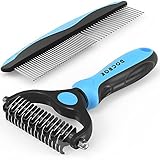
- 【Easy Dematting and Deshedding Tools】: Our Grooming brush and comb combo help effortlessly dematting and reduces shedding. A must have dog brush for shedding, pet supplies, cat supplies, dog supplies metal comb for dogs shedding.
- 【Safe Design】: Soft and protective edge brush and comb creating a comfortable feeling while detangling matted hair and deshedding without hurting your pet. Perfect metal comb for dogs, dematting comb for cats, undercoat rake for dogs double coat.
- 【2-in-1 Rake】: Our undercoat rake is perfect for medium and long-haired dogs and cats and other double coat pets. Wide side for easy dematting, dense side for deshedding. Well made deshedding tool, grooming brush and deshedder brush for dogs.
- 【2-in-1 Comb】: Wide sided for comb knot, smoothing and modeling your pet's hair, dense side for removal of loosen hair, you can use it on the legs, head or tail of your pets where the brush can’t. Perfect metal comb for dogs, dematting comb for cats deshedding tool for dogs.
- 【Sturdy and Comfortable Design】: Premium Stainless steel metal teeth and compact design make our product sturdy and durable. High-quality & lightweight TPR handle make your grooming effortlessly. High-quality undercoat rake for dogs double coat, metal comb for dogs, dematting comb for cats, dog comb for matted hair.
Do not treat high energy as aggression. A lively, noisy, or exuberant dog is not necessarily an aggressive dog. At the same time, persistent fear, guarding, snapping, or escalating reactivity deserves prompt help from a veterinarian and a qualified, reward-based behavior professional.
Grooming and shedding
Regular grooming is one of the clearest ownership commitments with a Pomsky. Dense coats can hide tangles close to the skin, particularly around the ruff, behind the ears, under a collar or harness, between the legs, and around the hindquarters and tail.
Brush consistently rather than waiting until mats are visible. AKC Pomeranian care guidance recommends using a pin brush and slicker brush down to the skin once weekly to help prevent mats. A Pomsky may need a different schedule depending on coat density, length, activity, and seasonal shedding. During an undercoat change, more frequent sessions may be necessary.
- Begin with short, calm sessions and reward the dog for standing or lying quietly.
- Part the coat so you can work through dense areas rather than brushing only the surface.
- Check the skin as you go for redness, parasites, sore spots, or trapped debris.
- Keep nails trimmed and introduce paw handling gradually.
- Use a professional groomer if you cannot safely reach the skin or the dog becomes distressed.
Because Pomskies can have dense double coats, an undercoat rake for dogs may be useful during shedding periods. Choose a tool suited to the individual coat and use gentle technique; forcing a tool through a tangle can hurt the dog. A slicker brush can also form part of a routine intended to reduce mats. Grooming tools do not replace veterinary attention for painful skin problems or professional help for severe matting.
Do not assume that shaving a double-coated Pomsky is routine or necessary. The care guidance reviewed here supports brushing and coat management, not a universal recommendation to shave. Discuss substantial coat problems or medical exceptions with your veterinarian and groomer.
Pomsky health: what should an owner ask?
There is no single universally controlling Pomsky-specific health-testing panel in the sources reviewed for this guide. The most responsible approach is to look at the screening practices relevant to both foundation breeds and request verifiable results for the actual sire and dam.
The Siberian Husky Club of America’s 2024 health statement recommends that breeding dogs have:
Also popular on Amazon
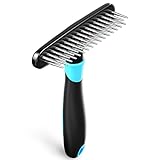
- One of the best dog brushes on the market, It has a double row of stainless steel pins/teeth to reduce pulling the coat without damaging it or hurting your pet. It is a very gentle experience for your dog, cat, rabbit, or any other furry friend that needs brushing.
- Our undercoat Rake dramatically reduces shedding by up to 90% after just 1 short session. This is compared to only 30% with the average Brush or comb. Perfect for matted, heavy shedding undercoats and fur.
- Our professional grooming brushes can be used on both dogs, cats, rabbits, or equestrian horses that have short, Medium or long hair. This professional, high quality brush is priced well, so you can buy one to keep in the house and one for the car.
- Recommended and used by veterinarians, groomers, and pet professionals. The perfect brush for removing unwanted shedding hair. Scientifically designed to promote healthy skin and a shiny top coat. Protects you and your pet from skin allergies, and minimizes irritation from build up, which reduces allergic airborne elements.
- The innovative design allows air to your pet's skin and stimulates the hair follicles, allowing the release of healthy oils. The contouring handle is strong and durable, made of a non-slip, non-toxic silicone. The stainless pins take the unnecessary ’hurt’ out of grooming your pet.
- An annual eye examination performed by a board-certified veterinary ophthalmologist.
- Hip evaluation through a recognized system such as OFA, OVC, or PennHIP.
- Genetic testing for Siberian Husky Shaking Puppy Syndrome Type 1.
- Genetic testing for Siberian Husky Polyneuropathy Type 1.
That is not a complete universal Pomsky panel, and a test result is not a promise of perfect health. It is a starting point for evaluating whether a breeding program is identifying and managing relevant risk. The Orthopedic Foundation for Animals provides databases and tools used by veterinarians, breeders, and prospective owners. A database entry or genetic result is evidence to review alongside veterinary care, family history, and the breeder’s practices—not a guarantee that a puppy will never develop disease.
Outdated Drivers Are Slowing You Down
One free scan finds every outdated or missing driver and matches the right update for your exact hardware.Free scan · exact hardware matchWindows Errors? Fix Them Before They Spread
Repair common Windows errors and clear accumulated junk for a smoother, more stable PC - no reinstall needed.Free scan · no reinstallRecords to request before paying a deposit
- The registered names or identifying information for both parent dogs.
- Actual eye and hip results relevant to the parent breeds, rather than a general claim that the dogs are “healthy.”
- Relevant genetic-test reports, including an explanation of carrier status and what it means for the litter.
- Vaccination, deworming, veterinary examination, and microchip records for the puppy.
- Information about the parents’ temperaments, previous litters, and any known health history.
- A written sales contract, health terms, and a clear return-to-breeder policy.
“Vet checked” usually means that a veterinarian examined the puppy at a point in time; it does not substitute for documented parental screening. Likewise, a registration certificate establishes paperwork within a registry, not welfare, health quality, or responsible breeding.
How to identify a responsible Pomsky breeder
Visit in person whenever possible. ASPCA guidance recommends seeing where the puppies and mother live, reviewing health records, and moving on if the breeder refuses access or pressures you to buy. The mother should be available to observe in an environment that is clean, safe, and appropriate for dogs. A breeder who insists on a parking-lot handoff, refuses a home visit, or offers delivery without allowing meaningful verification deserves particular caution.
Warning signs
- Guaranteed adult weight, eye color, mask, or “miniature Husky” appearance.
- “Rare” colors used to justify extreme prices or distract from health questions.
- Registration presented as the main proof of quality.
- Missing parent-dog health records or results that cannot be independently checked.
- Multiple litters always available and pressure to place a deposit immediately.
- Requests to meet in a parking lot or refusal to show the mother and living conditions.
- No written contract or no commitment to take the dog back if the owner can no longer keep it.
A simple breeder-screening checklist
- Ask what the puppy’s parentage and generation are, and request identifying information for both parents.
- Ask for original or verifiable eye, hip, and relevant genetic-test results.
- Visit the home or facility and observe the mother, puppies, cleanliness, and socialization.
- Ask how the puppies are introduced to handling, grooming, household sounds, people, and safe environments.
- Read the contract before sending money, including health provisions and the return policy.
- Speak with your veterinarian about expected care, preventive medicine, nutrition, and budgeting before bringing the puppy home.
Adoption and rescue
Buying from a breeder is not the only way to find a Pomsky-type companion. Local shelters, general dog rescues, and breed-focused organizations may occasionally have Pomskies or dogs described as Pomeranian or Husky mixes. Pomsky-specific rescue availability may be limited, and a rescue dog’s ancestry, adult size, and prior experiences may not be certain. That uncertainty is not a defect, but it should be part of the adoption decision.
Ask the rescue what is known about behavior, medical needs, resource guarding, separation concerns, dog compatibility, and handling. Arrange a careful introduction to everyone in the household and any resident pets. Adoption organizations should be able to explain their process and provide the records they possess.
Common Pomsky misconceptions
- “A Pomsky is a standardized miniature Husky.”
- Not necessarily. Pomsky organizations publish their own standards, but the cross remains variable and is not included in the AKC-recognized breed listings reviewed here.
- “Blue eyes prove that a Pomsky is authentic.”
- No. Eye color and markings cannot establish ancestry, generation, or health quality.
- “Small means easy.”
- No. A small dog can still be energetic, vocal, intelligent, difficult to tire mentally, and demanding about coat care.
- “Designer mixes are automatically healthier.”
- There is no safe blanket rule. Health depends on the individual dog, parental screening, inherited variants, breeding practices, and ordinary veterinary care.
- “A DNA test replaces breeder records.”
- No. A consumer DNA test may provide ancestry or selected genetic information, but it is not a health diagnosis and cannot replace veterinary evaluation, documented parent testing, or responsible records.
Is a Pomsky right for you?
A Pomsky may be a good match if you want an engaged companion and can commit to daily activity, reward-based training, regular grooming, socialization, and veterinary care. You should also be comfortable with uncertainty: your dog may be larger, more vocal, more independent, more energetic, or more heavily coated than the online photos that attracted you.
Before committing, budget for routine veterinary care, parasite prevention, food, grooming equipment or professional grooming, training, identification, and unexpected medical needs. Ask your veterinarian about preparing for inherited-risk uncertainty and whether a suitable pet health-financing or insurance option is available in your location; do not assume any policy covers a particular condition without checking current terms.
Also popular on Amazon

- COMPLETE GROOMING COMBO: Includes our dual-sided deshedding brush and a premium metal comb to effortlessly remove stubborn mats, tangles, and loose hair.
- 2-IN-1 METAL COMB: The included stainless steel comb features dual-density teeth perfect for detailed detangling on sensitive areas like the face, paws, and tail.
- DUAL-SIDED DEMATTING BRUSH: Start with the 9-teeth side for stubborn mats and tangles, then finish with the 17-teeth side for thinning and deshedding to reduce shedding by up to 95%.
- SKIN-FRIENDLY DESIGN: Both tools feature rounded, scratch-free teeth that gently massage your pet's skin, ensuring a pain-free and comfortable grooming experience.
- COMFORTABLE & DURABLE: Designed with a soft, ergonomic anti-slip grip for comfortable, long grooming sessions for both cats and dogs of all hair types.
The best Pomsky decision is based less on blue eyes or a tiny puppy and more on documented parent health, sound early care, a realistic grooming and training plan, and a breeder or rescue that supports the dog for life.
Frequently Asked Questions
Is a Pomsky an AKC-recognized breed?
No. A Pomsky is generally a Pomeranian–Siberian Husky cross, and it is not included in the AKC-recognized breed listings reviewed for this guide. Specialist organizations publish their own Pomsky standards and registries.
Do these 3 things before closing this tab:
1Repair Windows errors before they cause bigger problems2Fix the driver behind crashes, sound loss and screen glitches3Clear out junk files and repair common Windows errorsHow big will a Pomsky get?
There is no guaranteed size. One specialist standard lists approximate Toy, Mini, and Standard categories from 11 to 18 inches tall, with survey-based weight ranges from 7 to 35 pounds. Those figures are not guarantees for an individual puppy.
Do Pomskies shed a lot?
Pomskies commonly have dense double coats and may shed heavily during seasonal undercoat changes. Regular brushing is important, and some dogs may need professional grooming.
Are Pomskies good family dogs?
They may suit families that can provide supervision, training, grooming, exercise, and daily interaction. A Pomsky is not automatically easy because it is small, and children should always be supervised around the dog.
What health records should a Pomsky breeder provide?
Ask for verifiable eye, hip, and relevant genetic-test results for both parents, plus the puppy’s veterinary, vaccination, deworming, and microchip records. Also request a written contract and return-to-breeder policy.
The Bottom Line
Bottom line: Pomskies can be affectionate, intelligent, entertaining companions, but they are variable crossbreeds rather than guaranteed miniature Huskies. Prepare for a potentially energetic, vocal, double-coated dog, verify the parents’ health information, and judge the individual dog and its source—not its color, size label, or registration papers.





Leave a Reply