Yes, a puffer fish can be a pet, but only if you choose the exact species before buying the fish or setting up its aquarium. Puffers include freshwater, brackish-water, and marine species with very different adult sizes, salinity needs, diets, and social behavior. A species-only aquarium is the safest default; a small fish in a shop tank is not proof it will stay small or thrive in freshwater.
Can you keep a puffer fish as a pet?
Yes—but “puffer fish” describes a diverse group, not one kind of aquarium fish. Aqueon’s 2020 freshwater care guide says about 150 puffer species are known and fewer than 30 are strictly freshwater. Some species need brackish or marine conditions, and some grow far too large for an ordinary home aquarium.
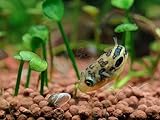
Before choosing one, confirm its full species name, adult size, water type as an adult, minimum tank footprint, diet, and social needs with a specialist aquatic retailer or responsible breeder. Do not rely on a common name or the conditions in a shop display. The Ornamental Aquatic Trade Association (OATA) warns that some fish sold as freshwater puffers need brackish conditions as they mature. Figure-eight and green-spotted puffers are among the fish commonly misidentified or sold without adequate explanation of their salinity needs.
The examples below show why the species name matters. The figures are guidance from the sources named, not a universal tank-sizing formula; verify the needs of the exact fish you intend to keep.
#1 Best Overall

- GLASS AQUARIUM KIT: The starter kit includes one glass aquarium with a low-profile, hinged hood, an LED lighting system, an internal filter and filter cartridge, a water conditioner sample, a food sample and a setup and maintenance guide.
- LED LIGHTING: Energy-efficient LEDs give you a beautiful natural daylight effect.
- FILTRATION SYSTEM: The included Tetra Internal Filtration System features mechanical filtration to catch debris and chemical filtration with Ultra-Activated Carbon for removal of odors, discoloration and toxins.
- EASY SETUP: Aquarium kit includes items you need to create a healthy home for your fish*.
- SIZE: This 10-gallon glass aquarium measures 20 inches wide by 10 inches deep by 12 inches high.
| Example | Water type | Size or aquarium guidance | Social and care considerations |
|---|---|---|---|
| Pea or dwarf puffer (Carinotetraodon travancoricus) | Freshwater | Aqueon (2020) gives 5 gallons as a possible minimum example for dwarf pea puffers. OATA gives 80 litres as an example for a small group of pygmy puffers. | OATA describes pygmy puffers as social and suggests groups of at least five. The different guidance makes footprint, group size, and species-specific advice important; do not treat the 5-gallon example as a group-tank recommendation. |
| Other freshwater puffers | Freshwater, depending on species | Aqueon (2020) says larger species may need 20 gallons or more per fish. | Some species, including Mekong, Nile, and mbu puffers, should be kept alone, according to Aqueon. |
| Figure-eight and green-spotted puffers | Often brackish as they mature; confirm the species’ adult salinity requirements | Not stated as a single minimum for these species in the cited Aqueon and OATA care sheets. | Do not assume freshwater is suitable because a shop displays the fish in it. Confirm the salinity plan and equipment before purchase. |
| Marine puffer under 10 cm | Marine | OATA’s marine puffer care sheet gives 100 litres as a minimum example for one smaller individual under 10 cm; larger species need substantially more. | Marine puffers are not reef-safe: they eat small invertebrates, according to OATA. |
| Mbu puffer | Freshwater | OATA’s current freshwater puffer care sheet says an aquarium at least 240 cm long may be required. | OATA’s figure illustrates the scale of commitment this species can involve; Aqueon advises keeping mbu puffers alone. |
What size tank does a puffer fish need?
There is no reliable tank size for “a puffer” in general. Adult length is only one consideration: the fish also needs room to swim, suitable floor area, a filter that can handle its bioload, and enough space for any group the species requires. A small juvenile may need a much larger aquarium as it grows. Do not choose a tank based on the fish’s shop size.
Use the species-specific guidance from an experienced retailer or breeder to settle the tank’s volume and footprint before purchase. The examples in the table are not interchangeable: the 5-gallon Aqueon example concerns dwarf pea puffers, while OATA’s 80-litre example concerns a small group of pygmy puffers. Marine and large freshwater species can require much larger systems.
Rank #2
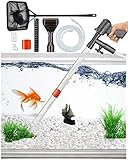
- Mufti-functional cleaning kit: Aquarium gravel vacuum cleaner kit is a mufti-functional aquarium cleaner that uses (adopts)the siphon design principle, which includes the aquarium, aquarium sand washing, algae scraping, fish excrement cleaning, aquarium residual debris, and aquarium water changing. Quick water change gives fish (provides)a clean and comfortable aquarium living environment.
- New safety design: new manual press design, no electricity required and silent while working. Fish tank cleaning tools uses a high-quality pressure resistant air bag, durable, super strong siphon pressure can quickly draw out the muddy water in the fish tank. The aquarium vacuum pipe has a filter net attached to the filter basket to block the blockage caused by the suction of gravel, while preventing your cute fish and the small gravel in the bathtub from being sucked out of the tank.
- Easy to install: This newly upgraded aquarium vacuum is easier to use than traditional fish tank vacuum. Simply hold the handle and press several times until you see water begin to flow out. You can also use a tube to agitate the gravel in the aquarium, causing fish manure, food debris, etc. to drain out of the aquarium with the current. The aquarium cleaning tools is securely attached to the aquarium so you can easily release your hands.
- A wide range of multi-combination accessories: aquarium cleaner vacuum crusher is suitable for different types and sizes of fish tanks, equipped with 2 water pipes and 1 joint, press pump, water flow clip, water pipe clip extended outlet hose, aquarium temperature stickers, fishing nets, plastic algae scraping plate, and detailed aquarium vacuum pump manual.
- Easy to use: The aquarium cleaning kit dust and water changer is hand-held, easy to use and operate, the aquarium cleaners can work stably and efficiently without electricity and without noise, which greatly saves your time and brings more convenience for fish tank cleaning.
Budget for the equipment the species actually needs, including an appropriately sized filter and, for tropical species, a heater. Brackish setups also require marine salt and a way to measure salinity. The cited care sheets do not establish a universal cost, so obtain a complete equipment and running-cost estimate for the intended species before committing.
How to set up and cycle a puffer aquarium
- Identify the exact species and adult requirements. Confirm water type, adult size, group needs, temperature requirements, and aquarium footprint before buying the fish or equipment.
- Prepare and cycle the aquarium before stocking. OATA says ammonia and nitrite must be zero before fish are added. Use a reliable aquarium water test kit to check them rather than assuming a tank is ready because it has been running for a certain number of days.
- Install suitable filtration and heating. Size filtration for the fish’s bioload. Use a heater when the species needs tropical temperatures, and verify that the equipment maintains the required conditions.
- Provide shelter without removing swimming room. Arrange plants, caves, rockwork, or artificial shelters to suit the species and aquarium footprint. Keep the tank in a quiet location away from direct sunlight, drafts, loud vibration, and sudden movement.
- Fit a secure cover. Puffers can escape; a secure lid helps prevent that.
- For brackish species, establish and measure salinity correctly. Confirm the adult salinity target for the species. Where marine salt is required, use marine salt rather than freshwater aquarium salt, and measure salinity with a refractometer or hydrometer.
- Test regularly and maintain the water. OATA lists ammonia, nitrite, nitrate, pH, and hardness among the parameters to test, and recommends testing at least weekly. Keep ammonia and nitrite at zero. Dechlorinate replacement water and perform regular partial water changes; Aqueon suggests 10% weekly or 25% every two weeks for freshwater puffers.
What do puffer fish eat, and how do you care for their teeth?
Puffers need an appropriate, varied diet rather than a basic flake-food-only routine. OATA recommends frozen or live meaty foods. For small freshwater species, examples include daphnia, bloodworm, and brine shrimp; larger fish may take cockle, mussel, and shrimp. Aqueon also recommends varied foods and occasional live snails for brackish puffers.
Recommended Free Tools
Rank #3

- Aquarium KIT Hexagon-shaped aquarium kit is perfect for betta fish
- COLORFUL Bubbling disc automatically cycles through a rainbow of LED light colors
- INCLUDES FILTER Includes air pump-driven Tetra Whisper Internal Power Filter to keep your tank clean and provide a healthy environment for pet fish
- AIR PUMP Drives both the bubbling disc and the filter
- CONVENIENT Clear canopy has a hole for easy feeding
Puffer teeth grow continuously. OATA advises feeding suitable shellfish in their shells, such as shell-on cockle or similar prey, to help grind them down. Ask a species specialist which prey size and food types are appropriate for your fish; a food that is suitable for one puffer may not suit another.
Offer only what the fish can eat promptly. Uneaten protein-rich food decomposes, can foul the aquarium, and makes water quality harder to maintain. Remove leftovers rather than letting them sit in the tank.
Rank #4

- HALF MOON AQUARIUM KIT: Clear plastic, half-moon-shaped front allows for unobstructed viewing.
- IDEAL FOR BETTAS: Bettas require minimal maintenance and make great species for beginners.
- MOVABLE LIGHT: Energy-efficient LEDs can be positioned to light tank from above or below.
- CONVENIENT FEEDING: Clear canopy has a hole to make feeding fish easy.
- PERFECT FOR BEGINNERS: Small aquariums like this 1.1-gallon tank are a great way to get started in the freshwater fishkeeping hobby.
Can puffer fish live with other fish?
Assume a puffer should live in a species-only aquarium unless reliable, species-specific advice supports a particular combination. Puffers may nip fins, attack tankmates, or eat smaller fish and invertebrates that fit in their mouths. Aqueon says some dwarf, redeye, and golden puffers may work with fast-moving fish such as danios, but its overall guidance is to treat freshwater puffers as species-tank fish. That possibility is not a guarantee of compatibility.
Do not select tankmates based on a general rule about puffers, or assume that a peaceful juvenile will remain peaceful. OATA advises against mixing puffers with animals they can fit in their mouths. Marine puffers are not suitable for reef aquariums with small invertebrates because they may eat them. If considering any companion animal, get advice for the exact puffer species and be prepared to separate the animals if aggression or injury occurs.
Best Value
How should you handle a puffer fish?
Never make a puffer inflate for entertainment or a photograph. OATA says puffing is a stress response and can be harmful to the fish. If handling is unavoidable, keep the fish underwater; OATA warns against exposing puffers to air during handling because they may swallow air. Minimize disturbance and use a quiet, stable aquarium environment to reduce stress.
What ongoing care should you expect?
Plan on weekly water testing, regular partial water changes, prompt removal of uneaten food, and monitoring that the filter and any heater are working correctly. Keep a record of test results so a change in water conditions is easier to spot. Watch the fish’s appetite, activity, body condition, and interactions with other animals, and seek advice from an aquatic veterinarian or experienced puffer specialist if you notice a persistent change.
There is no single lifespan figure that applies to all puffers in the cited care guidance. Longevity depends on species and husbandry, so ask about the expected long-term commitment for the exact fish rather than relying on a general puffer lifespan estimate.
Quick Recap
Product prices and availability are accurate as of the date/time indicated and are subject to change. Any price and availability information displayed on Amazon at the time of purchase will apply.




