
The Tool Desk
Outbyte PC Repair FREERepair Windows errors before they cause bigger problemsFix Now →Outbyte Driver Updater FREEFix the driver behind crashes, sound loss and screen glitchesFind Drivers →Some links on this page are affiliate links: if you buy through them we may earn a commission, at no extra cost to you.
Most puppy-feeding mistakes come from getting one of three things wrong: choosing food for the wrong life stage, feeding an unmeasured amount, or changing the diet based on a birthday rather than the puppy’s growth. A sound plan is simpler: use a complete growth diet, divide the daily portion into scheduled meals, and adjust it as your puppy’s weight and body condition change.
What should a puppy eat?
Choose a commercial dog food with a nutritional adequacy statement showing that it is complete and balanced for growth or for all life stages. The adequacy statement matters more than front-of-bag descriptions such as “premium,” “natural,” or “holistic.” See AAFCO’s guidance on selecting pet food.
As an Amazon Associate I earn from qualifying purchases.
Quick wins for a faster PC:
Scan for outdated or missing drivers - takes under a minuteDriver Scan →Repair Windows errors before they cause bigger problemsFix Now →Fix the driver behind crashes, sound loss and screen glitchesFind Drivers →On a U.S. label, look for wording that identifies the food as complete and balanced for growth. AAFCO sets nutrient profiles and feeding protocols but does not regulate, test, approve, or certify individual pet foods; manufacturers and state authorities are responsible for compliance. A food intended only for adult maintenance is not an appropriate main diet for a growing puppy. Foods labeled “for intermittent or supplemental feeding only” should be used as treats or additions, not as the puppy’s primary food.
Large- and giant-breed puppies need a specific label check
If your puppy is expected to weigh at least 70 pounds as an adult, the adequacy statement should say that the food supports “including growth of large size dogs (70 lb. or more as an adult)”. Some foods are labeled for growth or all life stages but specifically say “except for growth of large size dogs (70 lb. or more as an adult)”. That food is not the right choice for a large- or giant-breed puppy. See AAFCO’s model-label wording.
Popular on Amazon
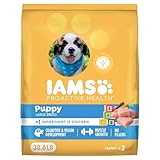
- Veterinarians Recommend IAMS: IAMS large breed dog food recipe is made with real chicken as the #1 ingredient and contains no fillers or artificial flavors; ingredients are natural as defined by the Association of American Feed Control Officials (AAFCO)
- Healthy Cognitive & Vision Development: IAMS Dog Food Proactive Health Large Breed Dry Puppy Food is formulated with Omega-3 DHA to support smarter, more trainable puppies, providing a great start with essential nutrients
- Healthy Bones & Joints: IAMS dog food large breed puppy dry is formulated with essential nutrients and optimal calcium levels to support healthy bones & joints
- Immune System Support: IAMS proactive health dog food is enriched with essential antioxidants Vitamin E and Selenium to help develop a strong immune system
- The Proactive 5 Difference: The Proactive 5 health benefits for IAMS Dog Food Dry Recipe for Large Breed Puppies are scientifically designed to support five key areas of your dog's health, keeping them full of life, for more of life
Do not add calcium, phosphorus, or vitamin D to a complete growth diet unless your veterinarian prescribes it. Extra supplementation can upset mineral balance and may harm skeletal development, particularly in large breeds, according to the Merck Veterinary Manual. Homemade diets have the same problem: meat, rice, vegetables, and supplements are not automatically balanced for puppy growth. If you want to feed homemade food, have the recipe formulated and monitored by a veterinary nutritionist.
When are puppies weaned?
Puppies are usually weaned from their mother’s milk at about 8 weeks of age. By roughly 7–8 weeks, most puppies can eat and drink independently when they leave their mother, according to VCA Animal Hospitals.
Free tools Windows power users keep installed
One-click scans. No signup required.
A puppy younger than 8 weeks, an orphan, or a puppy that cannot nurse needs a feeding plan from a veterinarian. Cow’s milk is not an adequate substitute for canine milk. Young puppies can become dehydrated or develop low blood sugar quickly, so do not improvise a milk-replacer schedule if a puppy is weak, cold, vomiting, or failing to gain weight.
How often should a puppy eat?
| Puppy’s age | Typical schedule |
|---|---|
| After weaning to 6 months | Three measured meals per day |
| 6–12 months | Two measured meals per day |
| Very small breeds | May need more than three meals daily, especially when young |
This general schedule is consistent with the Merck Veterinary Manual’s feeding guidance. Use regular meal times rather than leaving a full bowl available all day. Scheduled feeding makes it easier to see whether a puppy is eating normally, measure the total intake, establish a toilet routine, and prevent excess calorie intake. Very small puppies may need more frequent meals because they have limited energy reserves; ask your veterinarian for an individualized schedule.
How much food does a puppy need?
There is no single correct number of cups for every puppy. Different foods contain different amounts of energy, and two puppies of the same weight may have different needs.
Also popular on Amazon

- High-Quality Protein: This Pedigree puppy dry dog food is made with high-quality protein sources to support muscle development in growing pups
- Support Healthy Vitality: This Pedigree puppy food recipe is made with 36 vitamins, minerals, and amino acids to support your puppy’s health and vitality
- Immune Health: Pedigree Puppy Dry Food, Chicken, Rice, and Vegetable Flavor is fortified with vitamins & minerals to support a healthy immune system
- Complete and Balanced: Pedigree puppy dog food with Chicken, Rice & Vegetable Flavor is specifically designed for puppies, providing 100% complete and balanced nutrition to your pet
- Made with Key Nutrients: Pedigree Puppy dog food is packed with key nutrients similar to mother's milk and essential for puppy development
- Find the manufacturer’s growth feeding directions on the package.
- Identify the calorie statement, usually written as kilocalories per kilogram and per cup, can, pouch, or other unit.
- Use the label’s daily amount as a starting point—not as a permanent prescription.
- Divide that daily amount among the day’s meals. If the label says 1½ cups per day and your puppy eats three meals, that is ½ cup per meal; it is not 1½ cups at each meal.
- Weigh the puppy regularly and adjust the total portion according to weight trend, body condition, activity, stool quality, and veterinary advice.
A kitchen scale is often more consistent than guessing with a scoop, particularly for small puppies. If you change foods, recalculate the portion using the new food’s calorie content rather than transferring the old cup measurement directly. AAFCO describes label feeding directions as guidelines that may need adjustment for the individual animal; see its pet food label guidance.
Do these 3 things before closing this tab:
1Fix the driver behind crashes, sound loss and screen glitches2Clear out junk files and repair common Windows errors3Scan for outdated or missing drivers - takes under a minuteWhy calorie calculators are only estimates
The Pet Nutrition Alliance gives this commonly used starting equation: RER (kcal/day) = 70 × (body weight in kg)^0.75.
This estimates resting energy requirement; it does not tell you exactly how much food your puppy should receive. Individual energy needs can vary by approximately 50% from a predicted value, according to the Pet Nutrition Alliance. The practical goal is a steady, healthy growth pattern and an ideal body condition, not a mathematically perfect calorie figure.
How to tell whether your puppy is getting the right amount
Weigh a growing puppy about weekly under similar conditions and record the results. A single measurement is less useful than the trend. Your veterinarian can assess the growth curve and body condition, which is especially important for large and giant breeds.
A puppy should not be deliberately pushed to grow as fast as possible. Excess calories can accelerate growth without making the eventual adult dog larger and can increase the risk of excess body fat and orthopedic problems, according to the Merck Veterinary Manual. Conversely, a puppy that is visibly overweight should not be placed on an improvised calorie-restricted diet: the puppy still needs enough protein, minerals, and other nutrients for development.
Also popular on Amazon

- Real chicken is the first ingredient in this dog food for puppies to help provide the protein he needs for strong, growing muscles, including a healthy heart
- Purina ONE puppy kibble made with DHA, a nutrient found in mothers' milk, to support vision and brain development and four antioxidant sources to support a healthy immune system
- Easily digestible puppy dog food featuring a SmartBlend of high-quality ingredients, including omega-6 fatty acids, vitamins and minerals, for a shiny coat and healthy skin
- Deliciously crunchy bites and tender meaty morsels deliver great taste in this Purina puppy dry food formula made with no artificial flavors or preservatives
- Purina ONE dry dog food for puppies crafted in Purina-owned, U.S. facilities provides 100 percent nutrition for puppies with 0 percent fillers, so every ingredient has a purpose
Use your veterinarian’s body-condition assessment, ideally with the standardized nine-point canine Body Condition Score system, to guide changes. The World Small Animal Veterinary Association (WSAVA) Nutrition Guidelines provide body-condition assessment tools. Do not rely only on a breed’s expected adult weight or on whether the puppy appears “big” for its age.
Treats and training rewards
Treats, chews, table scraps, toppers, and food used for training should provide no more than 10% of the puppy’s daily calories. At least 90% should come from the complete and balanced main diet, as VCA Animal Hospitals recommends.
- Use some of the puppy’s measured daily kibble for training.
- Break treats into tiny pieces; training rewards do not need to be large.
- Reduce the regular food when calorie-containing treats are added.
- Check chews and dental treats for calories rather than assuming they are insignificant.
Never allow treats to replace meals. A snack labeled for supplemental or intermittent feeding does not contain the complete nutrient profile needed for growth.
When should you switch to adult food?
Do not switch automatically at 12 months. Small and medium dogs often reach skeletal maturity earlier, while large and giant dogs may continue developing into their second year. The appropriate timing depends on expected adult size, breed, growth rate, body condition, and veterinary assessment.
Windows Errors? Fix Them Before They Spread
Repair common Windows errors and clear accumulated junk for a smoother, more stable PC - no reinstall needed.Free scan · no reinstallCrashes, No Sound, or Screen Glitches?
Random freezes, missing sound and display glitches usually trace back to one bad driver. Find and replace yours safely.Free scan · under a minuteAs a general principle, continue a complete growth diet until skeletal maturity. Once a dog reaches approximately 90% of its expected adult weight, a less nutrient-dense adult-maintenance diet is often appropriate, according to the Merck Veterinary Manual. Confirm the timing with your veterinarian, especially for a large-breed puppy.
Also popular on Amazon

- Real chicken is the first ingredient in this dog food for puppies to help provide the protein he needs for strong, growing muscles, including a healthy heart
- Purina ONE puppy kibble made with DHA, a nutrient found in mothers' milk, to support vision and brain development and four antioxidant sources to support a healthy immune system
- Easily digestible puppy dog food featuring a SmartBlend of high-quality ingredients, including omega-6 fatty acids, vitamins and minerals, for a shiny coat and healthy skin
- Deliciously crunchy bites and tender meaty morsels deliver great taste in this Purina puppy dry food formula made with no artificial flavors or preservatives
- Purina ONE dry dog food for puppies crafted in Purina-owned, U.S. facilities provides 100 percent nutrition for puppies with 0 percent fillers, so every ingredient has a purpose
When it is time to change foods, transition gradually over about a week. For example:
| Days | Current food | New food |
|---|---|---|
| 1–2 | 75% | 25% |
| 3–4 | 50% | 50% |
| 5–6 | 25% | 75% |
| 7 | 0% | 100% |
Slow down the transition if your puppy develops loose stools, vomiting, or refuses the new food. Persistent digestive signs warrant veterinary advice.
Are raw or homemade diets safe for puppies?
Raw food is not automatically healthier or safer, and puppy growth leaves little room for nutritional errors. The FDA reports that raw pet food is more likely than processed pet food to contain harmful bacteria such as Salmonella and Listeria monocytogenes. Freezing does not reliably eliminate these organisms. People can be exposed while handling the food, bowls, surfaces, or the puppy’s feces, even when the animal appears healthy.
In an FDA study of 196 commercially available raw dog and cat food samples, 15 tested positive for Salmonella and 32 for Listeria monocytogenes. If you are considering raw feeding or a homemade recipe, discuss the risks and nutritional formulation with your veterinarian before starting. A growing puppy should not be used to test an unbalanced diet.
Independent reader supportYour contribution helps us test, update, and keep practical guides available for everyone.Foods puppies must not eat
Keep the following away from puppies:
- Xylitol, also called birch sugar or wood sugar
- Chocolate and caffeine
- Grapes and raisins
- Onions, garlic, and related allium foods
- Macadamia nuts
- Alcohol, tobacco, cannabis products, and human medicines
- Raw yeast dough
- Bones, corn cobs, fruit pits, and other objects that can obstruct the intestine
The FDA lists these and other potentially dangerous items. Xylitol poisoning can begin within 10–60 minutes and may cause dangerously low blood sugar, seizures, liver failure, or death, according to the FDA. If your puppy may have eaten xylitol or another toxic substance, call a veterinarian, emergency clinic, or animal poison-control service immediately. Do not wait for symptoms and do not induce vomiting unless a professional tells you to.
Also popular on Amazon

- High-Quality Protein: This Pedigree puppy dry dog food is made with high-quality protein sources to support muscle development in growing pups
- Support Healthy Vitality: This Pedigree puppy food recipe is made with 36 vitamins, minerals, and amino acids to support your puppy’s health and vitality
- Immune Health: Pedigree Puppy Dry Food Grilled Steak and Vegetable Flavor is fortified with vitamins & minerals to support a healthy immune system
- Complete and Balanced: Pedigree puppy dog food with Grilled Steak and Vegetable Flavor is specifically designed for puppies, providing 100% complete and balanced nutrition to your pet
- Made with Key Nutrients: Pedigree Puppy dog food is packed with key nutrients similar to mother's milk and essential for puppy development
Safe storage and feeding habits
- Wash your hands with soap and hot water for at least 20 seconds before and after handling food or treats.
- Wash bowls, scoops, and measuring utensils after each use.
- Refrigerate opened canned or pouched food promptly at 40°F (4°C) or below.
- Keep dry food in its original bag, tightly closed, in a cool, dry place below 80°F (27°C).
- Keep the lot number and original packaging until the food is finished, in case of a recall.
- Discard food that smells spoiled, is moldy, or has been left out according to the manufacturer’s safe-storage instructions.
These handling and storage recommendations follow the FDA’s safe-handling guidance. Keeping food in its original packaging also preserves the calorie statement, ingredients, expiration information, and product details your veterinarian may need if a problem occurs.
A simple puppy-feeding routine
- Choose food labeled complete and balanced for growth. For a future 70-pound-plus dog, verify that it includes growth of large-size dogs.
- Measure the entire day’s portion using the package’s growth directions.
- Divide that portion into three meals until about 6 months, then usually two meals.
- Count treats and chews as part of the daily calorie budget.
- Record weekly weights and watch body condition.
- Adjust portions gradually, and ask your veterinarian before making major changes.
- Keep toxic foods, medicines, and chewable hazards out of reach.
FAQ
Can puppies eat adult dog food?
Adult-maintenance food should not be the puppy’s main diet because it is not formulated to meet the nutritional demands of growth. Choose a food labeled complete and balanced for growth or all life stages instead.
What’s actually slowing this PC down?
Pick the symptom - the matching free tool is one click away.
Should I leave food out all day for my puppy?
Usually no. Measured meals at regular times help prevent excess calorie intake and let you monitor appetite. Very small puppies may need more frequent meals, so follow your veterinarian’s advice.
How much calcium should I give my puppy?
Do not add calcium to a complete growth diet unless your veterinarian specifically recommends it. Extra calcium and other mineral supplements can be harmful, particularly for large-breed puppies.
Can a puppy eat raw meat?
Raw diets carry bacterial risks and may be nutritionally unbalanced for growth. The FDA identifies raw pet food as more likely to contain Salmonella and Listeria than processed pet food. Discuss any raw or homemade plan with your veterinarian first.
When do puppies stop eating puppy food?
The timing depends on adult size and skeletal maturity. Small and medium dogs may switch earlier; large and giant breeds often need a growth diet into the second year. A veterinarian can identify the appropriate transition point.
Recommended Free Tools
The Bottom Line
Feed a puppy a measured, complete and balanced growth diet in scheduled meals. Start with the label’s growth directions, then adjust for weekly weight trends and body condition rather than feeding unlimited amounts. Large-breed puppies need food that specifically includes growth of large-size dogs, and they should not receive extra calcium without veterinary direction. Keep treats below 10% of daily calories, avoid toxic foods and unbalanced raw or homemade diets, and switch to adult food when growth and skeletal maturity—not simply age—make it appropriate.
Quick Recap
Product prices and availability are accurate as of the date/time indicated and are subject to change. Any price and availability information displayed on Amazon at the time of purchase will apply.





Leave a Reply