Recommended Free Tools
Before you choose a veterinarian, ask whether the practice is a good clinical fit for your pet, how it communicates, what happens in an emergency, and what care is likely to cost. Compare clinics using the same questions, then give extra weight to the needs that matter most for your pet. This guidance is U.S.-oriented; outside the United States, check your local veterinary licensing and emergency-care systems.
Start with your pet’s clinical needs
A convenient clinic is not necessarily the right fit if it rarely treats your pet’s species or cannot provide the care your pet may need. Ask about experience, available services, and how the practice coordinates care it does not provide. The AVMA’s Choosing a Veterinarian checklist specifically prompts owners of exotic or nontraditional pets to ask whether the veterinarian is able and willing to treat their animal.
- Do you regularly treat my pet’s species and life stage? Do you see exotic or nontraditional pets like mine?
- Which preventive, diagnostic, dental, surgical, and urgent services are available here?
- What care would require an outside specialist, and how do you coordinate referrals and share records?
- Are relevant services such as pharmacy, behavior, nutrition, grooming, or boarding available on site?
For a pet with a chronic condition, ask whether the practice has experience managing that condition and how it handles continuity if your usual veterinarian is away. If specialist care may be important, ask how referrals work before you need one. Referral guidance recognizes that practical circumstances such as transport and mobility can affect care; discuss those constraints when planning access. See the AAHA referral guidance.
Ask how communication and continuity work
Good communication helps you understand choices and know whom to contact when a question comes up between visits. Ask how the clinic handles calls, messages, test results, and follow-up—and what happens when your preferred veterinarian is unavailable.
#1 Best Overall
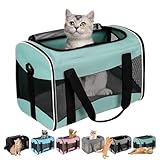
- [PRODUCT DIMENSIONS] Pet travel carrier size : 17x11x11 inches, recommended up to 15 lb pets, it is suitable for large, medium cats and small dogs. Please don't choose your airline cat carrying case based on weight, please refer to your pet's length and height when choosing a pet carrier size.
- [AIRLINE APPROVED] This cat carrier is designed with airline approved, it can fit comfortably under most flight seats, we can take our pets wherever we want. Dog travel carrier offers two attachment loop handles that can be used as a dual harness or as a luggage strap for balanced carry and secure transport.
- [EXCELLENT MATERIAL] Collapsible cat carrier is made of polyester fabric, supported by a steel ring, washable, wear-resistant and durable. The three sides and the top of this pet carrier are nylon mesh, scratch-resistant and not easy to damage, it can not only check your pet in real time, but also ensure enough air circulation.
- [SAFE AND COMFORTABLE] Dog travel bag has metal zippers on the top and side entrances, durable and not easy to deform, it allows your pets to enter and exit easily. The cat carrying case is equipped with an anti-escape safety buckle, which can effectively prevent pets from accidentally falling. It is suitable for car rides and vet rides.
- [PORTABLE AND FOLDABLE] Pet travel carrier comes with a detachable and hand washable wool pet bed, it can provide a comfortable sleeping space for your traveling pet. The cat travel case comes with an adjustable shoulder strap and handle for easy portability. When not in use, you can fold it up for storage.
- How are telephone calls, messages, test results, and follow-up questions handled? Does the clinic use phone, email, or text?
- Can I request an appointment with a specific veterinarian? Who will see my pet if that person is unavailable?
- How do the veterinarian and staff help a fearful, painful, or stressed pet feel safer?
- Will the team explain options, benefits, risks, and next steps in terms I understand?
The AVMA checklist asks, “How are telephone calls handled?” and “Can you request an appointment with a specific veterinarian?” The AAHA practice-selection guidance also recommends checking how a clinic communicates and supports follow-up.
Check hours, access, and emergency coverage
Find out what the clinic can handle during routine hours and where your pet should go when it is closed. A regular veterinary practice may not provide overnight emergency care, so identify the emergency option in advance rather than trying to find one under pressure.
Rank #2

- Hard sided pet carrier with 2 doors for front and top entry; suitable for cat or medium size dog weighing 12 - 20 pounds
- Durable plastic construction with steel wire doors; screws keep the top and bottom sections securely connected
- Spring load latches ensure easy one-handed door opening and closing; top door swings open to the left or right and includes a top carry handle
- Plenty of air ventilation on the sides, top, and back of the carrier
- Note: Be sure to measure the size of the pet when choosing carrier size
- What are your routine appointment hours, and how far ahead are appointments usually booked?
- Do you offer urgent appointments or emergency care? How are urgent calls handled during office hours, after closing, on weekends, and on holidays?
- Which emergency hospital do you recommend, where is it, and should I call before traveling?
- Can I reach the clinic reliably given my transport, mobility, parking, and scheduling needs?
The AVMA recommends asking how emergencies are handled during and after office hours and whether there is an emergency facility in the area. AAHA’s emergency-care guidance advises discussing signs of emergency specific to your pet’s conditions with your regular veterinarian. Bobbi Conner, DVM, DACVECC, president of the American College of Veterinary Emergency and Critical Care and a clinical associate professor and service chief, said: “Pet owners should absolutely speak with their veterinarians about their pets’ specific conditions and what kinds of things could indicate an emergency.” She added: “It’s also great to know where you might bring your pet if that were to happen.”
Keep your pet’s diagnoses and current medication names and dosages readily available for an emergency team. If you need to travel to an emergency hospital, call ahead when possible so the team can advise you and prepare for your arrival.
Quick wins for a faster PC:
Fix the driver behind crashes, sound loss and screen glitchesFind Drivers →Repair Windows errors before they cause bigger problemsFix Now →Rank #3

- High Quality Design:Sturdy steel cage structure and wooden support board maintain good spatial stability and shape. Breathable mesh windows on four sides,which can ensure good air circulation and views,make pets have a comfortable and safe travel.It can also be easy for you to check on your pets.There is a front pocket to store pet toys,treats,etc.
- Dimension and Weight:Made of durable tear-resistant fabric.Four easy entrances for pets. Dimensions: 17 inch x 11 inch x 11 inch (L*W*H), suitable for pets up to 16 lbs.Please don't choose your carrier based on weight only,consider your pet's length and height when choosing a carrier.
- Airline Approved & Safty:Can be placed under the seats of most airplanes(Four non-slip feet on the bottom to prevent movement), and comfortably on the seat next to you in a car or bus.It has a adjustable shoulder strap.Can also be fastened to the car seat with a safety belt or shoulder strap to keep your pet safe.
- Easy to Clean :You can clean the stains and dirt on the surface with a soft cloth.Soft mat inside the pet carrier is removable and washable.You can take it out and wash it easily to solve all stains.
- Easy to Collapsible & Lightweight:When not in use,fold it into a flat,space saving and easy to store.Only 2.2lbs,it's easier to carry around.It can also used as a toy of pet house,allowing pets to play in a safe space to relax and rest.
Look at the facility and verify credentials
Ask whether you may see the public areas and, where appropriate, tour other parts of the facility. Notice whether the clinic appears clean, orderly, and suitable for the services it offers. A visit can help you assess the environment, but it cannot by itself establish the quality of every clinical decision.
- May I see the public areas and, where appropriate, tour other areas?
- Is the facility clean, orderly, and appropriate for the services offered?
- Are the veterinarians licensed in this jurisdiction? What relevant credentials or specialty certifications do they hold?
- Is the clinic accredited by the American Animal Hospital Association (AAHA), and how can I verify its current status?
AAHA accreditation is voluntary and evaluates a practice against AAHA standards. Its selection guidance lists areas including anesthesia, dentistry, emergency and critical care, medical records, patient care, and surgery, and describes periodic reevaluation. Accreditation is one useful consideration, not a guarantee that a clinic is the right fit for your particular pet. Ask what the accreditation covers and verify current status with the practice or AAHA.
Rank #4

- Pet Carrier: 17.5” L x 11” W x 11” H, Recommended max load of 16 lbs cats small dogs. Please do not choose your carrier based on weight--please reference your pet's length and height in selecting a pet carrier size.
- Fits for under-seat dimensions of most airlines. Every airline has a specific set of rules and regulations, please contact with airline before flying with your cats small dogs.
- Mesh windows for ventilation, top and side entry with locking zippers for safety. Carrying handles, adjustable shoulder strap which can also be used as seatbelt, and back strap can fasten the pet carrier to your luggage.
- Pet carrier comes with a removable base insert, which creates a solid surface for your pet to stand on, along with a removable & hand washable cozy fleece pet bed, which offers a cozy sleeping space for your traveling cats small dogs.
- "Toys for pets, of textile materials". Mostly used as a Toy of Fabric Pet Home for pets playing and relaxing.
Get a clear picture of costs and payment
Ask about the exam fee and request an estimate or expected range for care your pet is likely to need. Before diagnostics or treatment, find out whether the clinic will provide an estimate and how it will explain a change in the plan or cost.
- What is the exam fee, and what is the expected range or estimate for care my pet may need?
- Will I receive an estimate before diagnostics or treatment? How will you explain changes?
- What methods of payment do you accept? Are payment plans or financial assistance available?
- Do you submit insurance claims directly, or should I pay first and seek reimbursement?
The AVMA checklist asks, “What methods of payment are accepted?” AAHA also recommends asking about costs, payment plans, and financial assistance. A clinic’s payment practices do not determine what an insurance policy covers: ask the insurer about exclusions, waiting periods, deductibles, reimbursement limits, and pre-existing-condition rules.
Best Value

- AIRLINE APPROVED CARRIER - With airline-approved design, you can take your pet to go to everywhere. This pet carrier provides two connecting loop handles for balanced carrying as a dual seat belt or luggage strap to secure transport
- SAFETY DESIGN - The adjustable shoulder strap help you hands-free carrying and makes it more safe and convenient pet carrier bag for your travel
- DURABLE - This cat carrier is made of durable and lightweight polyester fabric. The four-side mesh will not only give a safe and comfortable travel for your pet, but also easy for you to check on your pet
- PORTABLE & FOLDABLE - This dog carrier is easy to carry and store, which has a padded shoulder strap and handles
- BOTH SIZES AND WEIGHTS - The mediun cat carrier is designed for small and medium pets within 15" x 9" x 9"(smaller than product) and 15 lbs. Please do not choose your carrier only based on weight. Reference your pets' length and height in selecting a carrier size.If carried on board, the maximum dimensions should not exceed 18IN*11IN*11IN.
Compare clinics using the same checklist
Use a consistent set of criteria for each practice rather than relying on a single review, credential, or first impression. Give each factor weight according to your pet’s circumstances: for example, species-specific experience or reliable emergency access may matter more than distance for an animal with complex needs.
| What to compare | What to record |
|---|---|
| Clinical fit | Experience with your pet’s species, age, and conditions; available services; referral process. |
| Access and hours | Location, appointment availability, transport and mobility needs, routine and urgent hours. |
| Communication and continuity | How calls and results are handled, whether you can request a veterinarian, and how follow-up works. |
| Emergency plan | What the clinic handles, after-hours instructions, and the recommended emergency facility. |
| Facility and standards | Condition of the facility, relevant professional credentials, and any verified accreditation. |
| Cost and payment | Exam fee, estimates for likely care, accepted payment methods, and available financial assistance. |
Write down answers while you speak with each clinic. If a practice cannot answer a question immediately, ask who can provide the information and when. The goal is not to find a universally “best” clinic, but one that can meet your pet’s needs and work for your household.
Quick Recap
Product prices and availability are accurate as of the date/time indicated and are subject to change. Any price and availability information displayed on Amazon at the time of purchase will apply.




