A dog that can move from play or alertness into a settled rest has learned something specific: the spot is safe, its energy can drop, and it can stay put without being pushed. You teach that switch with short, reward-based practice on a comfortable spot. You reward loosening body language, add one challenge at a time, and step back whenever the dog stops looking comfortable. Calm here means a relaxed dog, not a dog that has simply been made to hold still.
What genuine calm looks like
Settling is a learned skill, and dogs can struggle to settle when they are excited, frightened, frustrated, anxious, or physically uncomfortable. The Veterinary Medicine Teaching Hospital guidance from VCA Animal Hospitals emphasizes both physical and emotional relaxation, and it asks owners to watch for signs of distress rather than only counting how long a dog stays down. VCA’s guide to teaching settle and calm is a useful starting point for the handling side of this work.
Look for softening rather than stillness. The signs that usually indicate a dog is genuinely relaxing include:
- Hips shifting onto the floor or bed, with weight spread across the body
- The chin resting down, or the head turning slightly away from the caregiver
- Eyes that look soft and may wander to the room rather than fixing on a trigger
- Slower, even breathing
- A dog that can choose to get up, sniff, or look away and then return to the spot
Stillness alone can mask trouble. A dog may lie down rigidly, eyes tracking every sound, flinching, refusing food it would normally take, or panting when it is not warm or active. Those are signs of distress or shutdown, and they mean the session is too hard, not that the lesson is working. Physical discomfort can also make a dog unable to settle, so a dog that will not lie down comfortably on any surface, or seems sore getting up, should be checked by a veterinarian before you train it through the problem.
What’s actually slowing this PC down?
Pick the symptom - the matching free tool is one click away.
#1 Best Overall

- New communication tool about you and your puppy.
- Pet Dog Training Clickers for Puppy, Cat, Potty, Bird, Horse, Pet, Trainer Training Tools, Behavior Aids
- Just press to mark desired behavior, then reward for faster learning.
- The spring wrist length : 16cm/6.3inches and can strength to 25cm/9.84inches.
- Package include : Black + Blue,each color 1 pcs.
Why excitement does not switch off on command
Heightened arousal interferes with learning. The Merck Veterinary Manual explains that highly aroused dogs can respond reflexively and have real difficulty learning, which is why settle training and reducing stimulus intensity are the usual first steps. The same source notes that a professional may consider referral or medication where appropriate. Merck’s section on behavior problems in dogs covers when this becomes more than a training question.
Excitement and fear can look alike in a training session: the dog is up, tense, alert, and hard to reach. That is why you should not assume a still dog is a relaxed dog, and why you should not push a dog through a trigger hoping it will get used to it. Treat the observable body state as the measure of progress.
Two different kinds of practice
It helps to separate general settle practice from work around a specific trigger, because they use different tools and carry different risks.
Rank #2

- ▼Come in 4 pack button clickers with wrist strap in 4 different colors:Black, Green, Orange, Yellow, each color 1 PCS
- ▼Can be used to train the dog basic obedience, small trick, and correct the bad behavior; Scientific method of training your pet safely and easily.
- ▼Stop barking and dog obdeience. Train your dog quiqly just by simply pressing the clicker and command.
- ▼Well constructed and durable, metal clicker will not rust or break.
- ▼Big button for easy clicking and loud sound. Easy to use in any position.
| Feature | Settle practice without a trigger | Practice around a specific trigger |
|---|---|---|
| Goal | Build a calm skill the dog can use in everyday life | Change how the dog responds to one particular stimulus |
| Typical setting | Quiet room, comfortable mat or bed, small rewards placed quietly | Controlled exposure at an intensity the dog can tolerate |
| Main method | Reinforce naturally relaxed behavior and shape a mat settle gradually (VCA) | Controlled exposure and counterconditioning (MSD Veterinary Manual; VCA desensitization guidance) |
| Stop signal | The dog gets up, becomes uncomfortable, or reacts; make the exercise easier | Any sign of fear or arousal; do not continue, and reduce intensity |
| When to involve a professional | Little or no progress over time | Fear, aggression, substantial distress, or sensitization is suspected |
The rest of this guide covers the first column. If your dog reacts to a specific trigger, the work is more complex and should be planned with a qualified behavior professional.
The Tool Desk
Outbyte PC Repair FREERepair Windows errors before they cause bigger problemsFix Now →Outbyte Driver Updater FREEScan for outdated or missing drivers - takes under a minuteDriver Scan →Use reward-based methods only
The American Veterinary Society of Animal Behavior states in its position statements, including its 2025 board statement: “We do not support the use of aversives in any context, regardless of the tools used or the trainer’s level of experience.” AVSAB recommends reward-based training for all dog training, including behavior problems. Settle work should never rely on pain, intimidation, or punishment to suppress movement, because a dog that is forced down is not learning to relax.
Green light and red light: a teaching framework
The labels below are a teaching device for this guide, not a published protocol. Use them to decide your next move in a session.
Rank #3
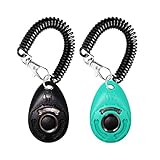
- EASY TO USE - Simple push button with distinct clicking sound.
- Comes with an elastic wrist band so you can leave it on your wrist or clip it to the leash or your pants.
- Not only train the dog but also the cat, bird, chicken, sheep a new behaviors like sit, fetch, roll over, lie down.
- For effective pet training ALWAYS reward with a treat after clicking.
- Can be used to train the dog basic obedience, small trick, and correct the bad behavior; Scientific method of training your pet safely and easily.
- Green light: the dog stays relaxed, breathing is steady, and it can remain down. Continue, and wait a little longer before the next reward.
- Red light: the dog stands, shifts uncomfortably, scans for a trigger, or shows distress. Pause, lower the difficulty, add distance, or stop for the session.
Step-by-step practice
Step 1: Observe first
Choose a time and place where the dog can rest and engage without a strong trigger nearby. Watch for loose posture and voluntary settling. Do not demand a down-stay. The aim is a dog that chooses to lie down, not one that has been placed there and held.
Step 2: Make the mat meaningful, if it helps
A mat is optional. If you use one, pick a comfortable, stable surface that the dog is likely to investigate. Reward calm investigation and relaxed postures. Once the dog begins to soften, you can add a verbal cue, so the mat itself becomes a familiar target. The Humane Society of Silicon Valley’s Reactive Dog Training Guide, dated July 11, 2025, describes mat work in the same supportive way.
Quick wins for a faster PC:
Repair Windows errors before they cause bigger problemsFix Now →Fix the driver behind crashes, sound loss and screen glitchesFind Drivers →Clear out junk files and repair common Windows errorsFree Scan →Step 3: Reward quietly
Use small pieces and place them between the front paws or on the mat, rather than tossing them or drawing attention to them. VCA cautions against treats so exciting that they raise arousal. Lower-value food, such as tiny kibble pieces, often suits this exercise better than high-value treats, though the right choice depends on your dog.
Rank #4

- MANUAL AUDIBLE CLICKER: Produces an audible click when manually pressed. The clicker contains no electronics, batteries, remote-control functions, or Electronic Stimulation features.
- INDIVIDUAL RESPONSE TO SOUND MAY VARY: Dogs and other animals may respond differently to audible clicker sounds. Introduce the clicker gradually and discontinue use if the animal shows discomfort or fear.
- COMPACT HANDHELD DESIGN: Small finger-clicker design is intended to be carried and operated by the user. Review the product images and compact size before ordering to confirm it meets your expectations.
- 5-INCH VELCRO FINGER STRAP: Includes an approximately 5-inch adjustable Velcro strap designed to position the clicker on the user's finger or hand. The strap is worn by the user and is NOT intended to be worn by the pet.
- TEAL CLICKER ACCESSORY: Includes one Teal manual finger clicker and training instructions. Remote transmitter, receiver collar, batteries, and other training-system components are NOT included.
Step 4: Build duration in small steps
Reinforce the dog first for remaining comfortably down, then gradually lengthen the pause between rewards at the dog’s pace. Battersea Dogs & Cats Home’s guide on teaching a dog to be calm and relaxed takes the same gradual approach, and it is the right pace to follow even when a session feels slow.
Step 5: Add one challenge at a time
Change only one variable: duration, distance from you, a mild distraction, or a different location. Move the mat slightly farther away, or practice in another easy spot. Add difficulty only while the dog remains comfortable. If it stands up, looks away and does not return, or reacts, go back to the last level it handled well.
Step 6: End on a green light
Finish the session while the dog is still comfortable, not after it has struggled. Short sessions that end well are more useful than long ones that end in red-light behavior.
Do these 3 things before closing this tab:
1Scan for outdated or missing drivers - takes under a minute2Repair Windows errors before they cause bigger problems3Fix the driver behind crashes, sound loss and screen glitchesBest Value

- Stronger Bark Control with 3X Ultrasonic Emitters: Unlike single-emitter devices, our upgraded dog bark deterrent features three synchronized ultrasonic heads—delivering 3X the coverage to quickly stop barking, biting, and jumping behaviors. Ideal for anti barking training, safer than bark collar, more effective than a dog whistle, offers a humane, high-performance dog training solution
- 6-in-1 Safe & Humane Training Modes:Our dog bark deterrent device features dual ultrasonic frequencies (fixed 25kHz and variable 20-30kHz), combining 4 ultrasonic modes plus an audible beep and LED flashlight for versatile training. Whether for daily training or stubborn, persistent barking, this anti bark device adapts to different dogs providing effective bark control without causing pain or distress. Perfect for training at home or to stop neighbors dog bark that disturbs your peace
- 23 FT Extended Range & Night Safety: Bark Control Anytime, Anywhere: Stop barking and bad behavior from up to 23 feet away with our powerful dog bark deterrent device — perfect for your yard, neighbor’s yard, outdoor walks, and off-leash areas. Whether you're relaxing at home or out for a stroll, enjoy safe, long-distance control to correct disruptions quickly. The built-in LED flashlight adds safety for evening walks, and low-light training
- Fast Charge & Long Battery Life – Always Ready for Training:With a Type-C fast charging port, our dog bark deterrent device reaches a full charge in just 2 hours and provides up to 30 days of regular use on a single charge, along with 180 days of standby time. Whether you're correcting anti barking behavior or training your dog in public places, you’ll always be prepared for any situation. Forget the hassle of frequent charging and enjoy reliable, long-term barks no more support
- Ultra-Compact Design for Everyday Convenience:50% smaller than standard dog bark deterrent devices, our anti barking device is ultra-compact and lightweight, fitting effortlessly into your pocket, bag, or hand. Whether you're on daily walks, outdoor adventures, or dealing with unexpected situations in public places, this portable design helps you stop barking and encourage good behavior anywhere, anytime. Say goodbye to constant noise and enjoy a barks no more experience with your dog
When to pause, back off, or get help
A red light means you change the plan, not that you push harder. Stop the exercise and lower the intensity if the dog shows fear, aggression, distress, or discomfort. The Merck guidance treats these signs as the reason to reduce exposure and consult a veterinarian or qualified behavior professional.
The MSD Veterinary Manual states in its guidelines for controlled exposure: “The dog must remain calm throughout exposure sessions.” It also advises using body language to pace changes and, after a reaction, stopping and returning to a level that will not provoke a response.
VCA’s desensitization guidance adds that you should not continue if the animal shows fear or arousal, and it recommends a behavior professional if progress is lacking or sensitization is suspected. Bring in that help early rather than after several difficult sessions.
Choosing a mat, rewards, and delivery aids
Compare equipment on comfort, stability, and how easily you can deliver quiet rewards. Brand claims and promises that a product will calm a dog on its own are not supported by the sources behind this guide.
Quick Recap
- Mat: choose one that is comfortable for lying down, stable on the floor, and easy to wipe. Nonslip mats help the dog keep its position.
- Rewards: small, low-arousal pieces that you can place quietly. Avoid anything that makes the dog spin, grab, or bark for more.
- Delivery aid: VCA mentions a remote-operated dispenser as one option when the caregiver is moving away from the mat. It is not required, and you can deliver rewards by hand.
Product prices and availability are accurate as of the date/time indicated and are subject to change. Any price and availability information displayed on Amazon at the time of purchase will apply.




