
There is no reliable basis for calling remote dog collars “excellent training solutions” in general. A remote training collar is a device worn by a dog and activated by a handheld transmitter; depending on the model, it may deliver a tone, vibration, or static stimulation. Products differ substantially, and a manufacturer’s range or number of settings does not prove that a collar will train your dog effectively or safely.
The American Veterinary Society of Animal Behavior (AVSAB) recommends reward-based training for all dog training and behavior modification and says aversive methods, including electronic collars, should not be used. If you are considering a collar for barking, escaping, recall, or another behavior, first identify the cause and check the law where you live. In many cases, a qualified reward-based trainer or veterinary behavior professional can address the problem without electronic stimulation.
As an Amazon Associate I earn from qualifying purchases.
What a remote dog collar is—and what it is not
A remote training collar is an electronic collar worn around a dog’s neck and controlled by a person through a separate transmitter. Victoria’s regulator uses that definition for devices intended to assist behavior modification. The label “remote dog collar” can also be used loosely for products that provide only a tone or vibration, as well as for GPS or location collars. Those are different product categories: a tracker reports where a dog is, while a training collar delivers a cue or stimulation.
Quick wins for a faster PC:
Fix the driver behind crashes, sound loss and screen glitchesFind Drivers →Repair Windows errors before they cause bigger problemsFix Now →Some training collars combine tone, vibration, and static stimulation. Others provide only sound and vibration. The collar’s mode, fit, battery system, water resistance, control layout, and safeguards matter more than the marketing label. A larger range, more intensity levels, or a higher price is not evidence of better learning or welfare.
#1 Best Overall

- [4 Custom Humane Training Modes] Train with confidence and build better behavior at home. This dog training collar helps reduce excessive barking, jumping on guests, leash pulling, chasing wildlife, and other unwanted behaviors, making everyday life more peaceful at home. Features Beep (1-8 Levels), Vibration (1-16 Levels), Safe Shock (0-99 Levels), and Shock Boost (10% Higher Stimulation) for fully customizable control. The shock function can also be turned off for a no-shock option when preferred.
- [4500FT Remote Range] Enjoy reliable off-leash training in backyards, dog parks, beaches, hiking trails, farms, and large open areas. Whether practicing recall or reinforcing commands from a distance, this e collar for dogs helps maintain consistent communication. Ideal for 2-dog households, the dual-channel remote controls up to 2 dogs and remembers each dog's settings for easy, simultaneous use.
- [IPX8 Waterproof Receiver Collar] Let your dog enjoy outdoor life without limits. Whether running through rain, playing in muddy yards, or swimming at the lake or beach, this shock collar for dogs is designed for active, adventurous dogs. The IPX8 waterproof receiver ensures consistent use in wet and outdoor environments, so training and playtime can continue naturally without interruption.
- [Fits Dogs 10-120lbs] Designed for small, medium, and large breeds with adjustable sizing for necks from 7.8" to 24.4". Ideal for growing puppies, active family dogs, and strong working breeds. The adjustable electric dog collar provides a secure and comfortable fit for daily wear and consistent use. For comfortable daily use, we recommend using the collar for no more than 12 hours per day.
- [Long Battery Life & Safety Lock] Spend more time training and less time charging. Perfect for daily walks, weekend trips, travel, and outdoor adventures, the ecollar receiver lasts up to 35 days on standby, while the remote lasts up to 45 days. Fast USB-C charging keeps things simple and convenient, while the built-in security lock helps prevent accidental corrections during everyday use.
What the veterinary behavior evidence says
AVSAB’s 2025 board statement identifies its 2021 Humane Dog Training Position Statement as its current authoritative position. It recommends reward-based methods for every type of dog training and behavior modification. Its exact conclusion is: “Aversive methods (including but not limited to electronic collars, prong collars, choke chains, leash corrections, and other forms of physical or psychological punishment) should not be used under any circumstances.” AVSAB’s position statements do not endorse or oppose individual trainers or training organizations.
This is a professional welfare position, not a claim that every electronic collar produces the same result in every dog. The available material for this guide does not establish a general success rate, a typical improvement, or a superiority statistic for remote collars. Manufacturer specifications describe hardware; they do not independently establish effectiveness, suitability for an individual dog, or absence of welfare risk.
The Scottish Animal Welfare Commission’s 2023 report likewise concluded that it found insufficient ethical justification to permit handheld remote-controlled e-collars. In the commission’s assessment, possible pain, distress, and longer-term behavioral and welfare effects weigh against their use. That conclusion is stated in the Scottish policy context and should not be treated as a universal legal rule in every country.
How stimulation can affect behavior
Electronic stimulation can change what a dog does without resolving why the behavior occurs. Agriculture Victoria’s code warns that incorrect use may increase fear or anxiety, reduce learning, cause a dog to connect stimulation with a coincidental person, animal, sound, or location, leave the underlying problem untreated, or trigger avoidance and aggression.
Rank #2
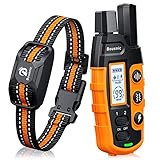
- Humane and Safe, Eliminate Bad Behavior Effectively: Bousnic Dog shock collar features 3 humane training modes with adjustable beep(1-8 levels), vibration(1-16 levels), safe shock(1-99 levels). It helps your unruly and hard-headed dogs learn to be a better part of your household.
- Extended 3300FT Range: Bousnic Dog Training Collar covers up to 3300Ft allowing your pet to roam farther. With dual-channel, It is perfect to train 2 dogs simultaneously outdoor at distances up to 3/4 mile.
- Fits for All Sizes of Dogs 5-120lbs: Bousnic training collar for dogs is ideal to control dogs as small as 5 pounds and as big as 120 pounds. Instant response security on/off switch button allows you to carry it without any fear of accidental touch.
- IP67 Waterproof Receiver: Bousnic electric dog collar can be used in any weather and any condition thanks to the IP67 waterproof design of the receiver (You’ll have to keep the remote control away from water).
- Incredible Battery Life: Bousnic e collar for dogs training has a decent battery life. The receiver’s battery can last for up to 15 days in working modes while the remote for over 1 month. the long battery runtime is a true lifesaver on those camping or tailgating weekends.
For example, a dog that receives a correction while looking at another dog may associate the discomfort with that dog rather than with pulling. A dog that is shocked for barking at a passerby may become quieter while becoming more fearful of people at the window. Suppressing a warning signal can make a situation less predictable, not necessarily safer.
Behavior should therefore be assessed before choosing equipment. Barking can relate to fear, territorial reactions, frustration, loneliness, pain, or boredom. Escaping may reflect inadequate exercise, separation distress, a rewarding environment outside the fence, or a medical or cognitive issue. A veterinary examination and a behavior assessment can identify causes that a collar cannot diagnose.
Product features that genuinely differ
If you are comparing devices for informational purposes, separate the physical specifications from the welfare decision. The following are the useful comparison axes:
Do these 3 things before closing this tab:
1Fix the driver behind crashes, sound loss and screen glitches2Clear out junk files and repair common Windows errors3Scan for outdated or missing drivers - takes under a minute| Feature | Questions to ask | Why it matters |
|---|---|---|
| Modes | Does it offer tone, vibration, static stimulation, or a combination? | A static mode makes the device an aversive electronic collar under AVSAB’s position; tone and vibration still require careful conditioning and monitoring. |
| Fit and dog size | What neck range and minimum dog size does the manufacturer state? Is the contact area appropriate? | A loose collar may not work consistently; an overly tight collar can irritate or injure skin. |
| Claimed range | Is the distance a line-of-sight marketing figure, and under what conditions? | Walls, terrain, vegetation, interference, and battery condition can reduce usable range. Distance does not predict training quality. |
| Water resistance | Is the collar waterproof or merely splash-resistant? Is the transmitter protected? | Ratings and limitations differ. Water exposure can damage electronics or create charging hazards. |
| Battery and charging | How long does a charge last, how long does charging take, and can the battery be replaced? | A dead collar can remove a cue unexpectedly; damaged charging equipment is a safety risk. |
| Controls and safeguards | Are buttons distinct, is there a lockout, and can stimulation be disabled? | Clear controls reduce accidental activation. A device that cannot disable static stimulation may not fit a reward-based plan. |
| Documentation | Are fitting, cleaning, charging, and troubleshooting instructions complete? | Missing instructions increase the chance of incorrect fit or use. |
Example specification: PetSafe Pro Dog Trainer with Remote
PetSafe’s support page for the Pro Dog Trainer with Remote, model PDT00-18038, lists the following manufacturer specifications. They were accessed on 13 October 2026 and are not independent tests.
Rank #3

- [4 Effective Training Mode - Recall & Correct Unwanted Dog Behavior] Featuring advanced Safe-Tech with 4 modes: Beep(1-8), Vibration(1-16), Shock(1-99 levels), and Emergency Shock Mode (stimulation for emergency behavior correction), our dog shock collar with remote control lets you customize the intensity and mode for efficient training, whether you're teaching basic commands at home or stopping excessive barking during outdoor walks.
- [Extended 4500FT Range - Ultimate Outdoor Freedom] The e collar for dogs training gives you exceptional long-range control - up to 4,500 feet - perfect for parks, beaches, and hiking trails. Train off-leash with total confidence. This dog training collar also supports 2 dogs with 1 remote, making it ideal for multi-dog homes. Plus, the smart remote remembers each dog’s settings, so switching between pets is seamless and hassle-free!
- [IPX8 Waterproof Collar - Ready for Any Adventure] With industry-leading IPX8 waterproof rating, the dog training collar is built to handle it all: rain, mud, lake swims, or even accidental dunks. No more worrying about water damage. Whether it’s a sudden downpour or a day at the beach, this shock collar for dogs stays fully functional. Let your dog splash, play, and train freely!
- [Adjustable & Comfortable Collar - Perfect for Most Dogs] Designed to fit dogs’ neck sizes from 7.8" to 24.4", this training collar suits small(10+lbs), medium, and large breeds up to 120 lbs - from energetic Terriers and smart Shepherds to playful Labradors, Huskies, and Golden Retrievers. The secure yet gentle fit ensures effective training without discomfort. For your dog’s well-being, we recommend using the collar for no more than 12 hours per day.
- [Long Lasting Battery & Safe-Lock] Enjoy up to 35 days of standby for the ecollar and 45 days for the remote. When it's time to recharge, a 2-hour fast charge gets you back quickly. Plus, the remote’s one-touch Safe-Lock can instantly lock the controls to prevent accidental pushes, so you can carry the remote worry-free in your pocket or bag. Train longer, train safer!
| Specification | Manufacturer listing |
|---|---|
| Claimed range | Up to 1,000 feet |
| Modes | Tone, vibration, and static stimulation |
| Static settings | 19 levels |
| Battery | Rechargeable; up to 20 hours of battery life |
| Collar water resistance | Waterproof, according to the manufacturer |
| Neck fit | 10–22 inches |
These figures tell you what the product is designed to provide, not how a particular dog will respond. They do not demonstrate that 1,000 feet is achievable in every environment, that 19 levels are necessary, or that static stimulation is appropriate. A buyer should also confirm current instructions, warranty terms, charging requirements, and regional availability directly with the manufacturer before purchase.
How to decide whether you need any electronic collar
- Define the behavior precisely. Record what happens immediately before and after it. “Bad behavior” is not specific enough; “barks at delivery workers for two minutes after the doorbell” is actionable.
- Arrange a veterinary check. Pain, hearing or vision changes, endocrine disease, neurological problems, and age-related changes can alter behavior. Treating a medical cause may remove the trigger.
- Identify the function. Determine whether the behavior seeks attention, escapes a trigger, obtains access to something rewarding, relieves anxiety, or reflects under-stimulation.
- Set management measures. Use gates, window film, leash handling, secure fencing, enrichment, supervised outdoor time, or separation arrangements to prevent rehearsal while training begins.
- Choose a reward-based plan. A qualified trainer can teach an alternative behavior, reinforce it, and change the dog’s emotional response through gradual exposure and counterconditioning.
- Review progress objectively. Track frequency, duration, intensity, recovery time, and triggers. If the dog becomes more fearful, avoidant, reactive, or irritable, stop the intervention and seek professional advice.
Reward-based tools that can replace static stimulation
Reward-based training is not permissive or consequence-free. It uses carefully timed reinforcement, management, and humane consequences such as removing access to a reward. Common tools include a clicker or verbal marker, small high-value treats, a treat pouch, a long line for supervised recall practice, secure harnesses, gates, and enrichment toys.
Recall and roaming
Begin in a low-distraction area and reward the dog for orienting to you, moving toward you, and arriving at your hand. Increase distance and distractions gradually. A long line provides physical safety while the recall is being proofed; it is not a substitute for a secure fence or supervision.
Crashes, No Sound, or Screen Glitches?
Random freezes, missing sound and display glitches usually trace back to one bad driver. Find and replace yours safely.Free scan · under a minuteWindows Errors? Fix Them Before They Spread
Repair common Windows errors and clear accumulated junk for a smoother, more stable PC - no reinstall needed.Free scan · no reinstallBarking
First reduce exposure to the trigger and reinforce quiet observation at a distance where the dog can still eat and respond. Teach a replacement behavior, such as going to a mat, and reward recovery after the trigger passes. If barking is driven by fear or separation distress, a behavior professional should design the plan rather than relying on punishment.
Rank #4

- 7 Effective Training Modes:SLOPEHILL dog shock collar with Beep, Vibration, Flash Light, Low shock level, High shock level, No shock ,and Keypad lock modes. You can use it to teach a dog basic commands and correct unwanted behaviors such as barking, chasing, and biting during outdoor activities
- 4200ft Remote Range & 3 Channels : Shock collar for dogs covers up to 4200ft remote range for more performance training.You can immediately get your dog's attention and recall them the moment they run too far.Train up to 3 dogs simultaneously from a single remote .You could train your dog in both the parks ,beaches, and hikes without any burden
- Built-in Anti-Lost Light on Both Collar and Remote: The flashing light on the collar helps you instantly locate your dog at night. Plus, the solid white LED light on the remote ensures you never fumble in the dark during nighttime walks. Keep your little one visible and safe in low-light situations
- No Shock Mode & Safe Static Adjustment :No shock mode is convenient for you to use only vibration and beep mode.Low shock (0-50) and high shock (51-99) allow you to adjust the accurate and comfortable static level for your dog, and keypad lock mode helps you prevent any accidental operation.When shock is not needed, you can also remove the metal prongs for a comfortable fit and it won’t harm your pet's skin
- IP68 Waterproof and Adjustable Shock Collar:The training collar receiver is waterproof which offers your dogs maximum flexibility during outdoor activities.(Note: Remote is Not waterproof).Size adjustable collar strap, length from 8 to 26 inches, fits dogs from 8 to 140 lbs.Dog training collar is the excellent solution to all your dog training needs
Leash reactivity
Increase distance from the trigger, reward the dog for looking at you, and use predictable turns or pattern games. Forced proximity and corrections can intensify the association with the trigger.
Separation-related distress
Use a veterinary and behavior assessment, then build alone-time tolerance in very small increments. A collar cannot treat panic and may add another frightening event to an already stressful situation.
Independent reader supportYour contribution helps us test, update, and keep practical guides available for everyone.Legal requirements depend on where you live
Rules for electronic collars are not uniform. Verify the current law, code, and local guidance before buying or using one. The following examples illustrate why a product that is sold legally in one place may be restricted or require professional oversight elsewhere.
| Jurisdiction or source | What the cited material says | Scope and caution |
|---|---|---|
| Victoria, Australia | Agriculture Victoria guidance updated 14 September 2026 says electronic collars must meet approved technical requirements. For remote-training and anti-bark collars, use must be by a veterinarian or qualified dog trainer, or under their supervision and written instructions. The guidance describes veterinary assessment, a dog older than six months, no more than 12 hours of wear in any 24-hour period, and compliance with the code and manufacturer instructions. | These are Victoria-specific requirements, not a worldwide standard. |
| Victoria code of practice | The code describes professional supervision during introduction and use, correct fitting, regular review, and stopping use and seeking advice if irritation or negative behavioral changes occur. | The code’s welfare warnings include fear, anxiety, reduced learning, mistaken associations, and aggression. |
| Scotland | The Scottish Animal Welfare Commission’s 2023 report found insufficient ethical justification to permit e-collar use and supports qualified trainers and reward-based methods. | This is a commission position in the Scottish policy context. |
| Wales and England | The commission’s report says Wales prohibits attaching shock-administering e-collars to dogs or cats. A UK government consultation outcome in 2018 reported a decision to amend the Animal Welfare Act 2006 to ban handheld remote-controlled e-collars, while not intending at that time to ban invisible-fence containment systems. | Legislation and implementation can change; check current national and local rules. |
If a collar is already in use
Do not increase intensity to compensate for an unclear training plan. Check the law, read the complete manual, and arrange an assessment with a veterinarian or qualified behavior professional. Inspect the neck regularly for redness, hair loss, swelling, scabs, or tenderness. Remove the collar and seek veterinary advice if any irritation appears.
Best Value

- 3300FT Long-Range Training for Multi-Dog Control – Train your dogs confidently indoors and outdoors. Works well in parks, backyards, or hiking trails. Single remote supports up to 3 dogs simultaneously, allowing effective control over barking, jumping, and leash-pulling with this shock collar for dogs.
- 3 Training Modes – Beep, Adjustable 0-20 Vibration & Shock Levels. Adjust intensity according to your dog's size and sensitivity. Doparet dog training collar with remote provides safe and consistent behavior correction for small, medium, and large dogs.
- LED Light & Night Safety – E-collar and remote include built-in LED lights for nighttime visibility. Helps locate your dog during evening walks, outdoor adventures, or low-light conditions. Suitable for shock collar for small dogs users who train after dark.
- Comfortable Fit & Adjustable for All Breeds – Collar fits necks 8–27 inches and dogs 8–120 lbs. Lightweight and durable design minimizes burden while training. Works for a wide range of dog sizes, including those using a dog shock collar.
- Rechargeable, Waterproof & Safety Lock – IP67 waterproof design allows use in rain, swimming, or muddy terrain. Fast USB charging with up to 35 days standby on collar and 45 days on remote. Safety lock prevents accidental shocks, making this shock collar suitable for extended outdoor use.
Stop and obtain professional help if the dog shows new fear, freezing, avoidance, hiding, startling, aggression, shutdown, or a stronger reaction to the original trigger. Do not leave an electronic collar on continuously, use it on an unsupervised dog, or attach it where the dog cannot escape a frightening stimulus. Never use a collar as a substitute for secure fencing, medical evaluation, or emergency management.
How to choose a humane trainer
AVSAB’s public resources include a guide titled “How to Choose a Trainer.” Ask prospective trainers to explain the reinforcement they use, how they prevent unwanted behavior without pain or intimidation, what qualifications and continuing education they have, and how they measure progress. Request a written plan that identifies triggers, management steps, replacement behaviors, rewards, and criteria for changing the plan.
Be cautious when a trainer promises guaranteed results, insists that every dog needs the same correction, describes fear or shutdown as proof of respect, or refuses to let you observe methods. A suitable professional should welcome veterinary collaboration and explain what they will do if the dog becomes more anxious or reactive.
Questions to ask before comparing models
- Is the device a tracker, a tone/vibration communicator, or an electronic collar with static stimulation?
- Can static stimulation be permanently disabled?
- What is the exact neck range, minimum dog size, and fitting procedure?
- What does “waterproof” mean for the collar and transmitter, and what are the charging restrictions?
- How are intensity controls protected against accidental activation?
- What cleaning, contact-point, and wear-time instructions apply?
- What independent evidence—not just a specification sheet—supports the claimed training outcome?
- Is the device legal for the intended use in your location, and does local law require veterinary or trainer supervision?
- What reward-based alternative will be used if the dog’s behavior is caused by fear, pain, anxiety, loneliness, confusion, inadequate exercise, or boredom?
What “best” should mean for this purchase
For a remote collar, “best” cannot responsibly mean the longest range or the most correction levels. A defensible evaluation starts with whether the device is necessary, legal, and compatible with the dog’s welfare. If an electronic collar includes static stimulation, it conflicts with AVSAB’s stated position against aversive methods. If the behavior may involve fear, pain, or anxiety, adding an aversive event can worsen the problem or mask its warning signs.
For many owners, the better solution is a veterinary assessment followed by a reward-based plan, management equipment, and instruction from a qualified professional. Hardware comparisons are useful only after those welfare and legal questions have been answered.
Quick Recap
Product prices and availability are accurate as of the date/time indicated and are subject to change. Any price and availability information displayed on Amazon at the time of purchase will apply.





Leave a Reply