
Reptiles are ectotherms: they depend on external heat and regulate body temperature mainly by moving between warmer and cooler places. Temperature therefore influences when a reptile can move, feed, digest food and mount normal physiological responses. The practical goal is not one “perfect” enclosure temperature, but a measured, species-appropriate thermal gradient with safe heating and a reliable way for the animal to choose its position.
Exact targets vary by species, life stage, season and health. The figures in this guide are examples from named authorities, not a universal prescription for every snake, lizard, turtle or tortoise.
As an Amazon Associate I earn from qualifying purchases.
What ectothermy means in a reptile enclosure
An ectotherm receives a substantial share of its body heat from the environment. Unlike an endothermic mammal that generates and maintains most of its body temperature internally, a reptile warms by using a basking surface, heated air, sunlight or another external source, then cools by moving away, changing posture or selecting a cooler microenvironment.
Crashes, No Sound, or Screen Glitches?
Random freezes, missing sound and display glitches usually trace back to one bad driver. Find and replace yours safely.Free scan · under a minuteWindows Errors? Fix Them Before They Spread
Repair common Windows errors and clear accumulated junk for a smoother, more stable PC - no reinstall needed.Free scan · no reinstallAgriculture Victoria’s Code of Practice for the Welfare of Animals—Private Keeping of Reptiles describes the process this way: “Reptiles are ectothermic and maintain their preferred body temperature through behavioural means, such as the selection of micro-environments so that heat gain or loss occurs as required.” The important distinction is that room temperature is not automatically the reptile’s body temperature. The animal’s body temperature depends on where it is, how long it stays there, the temperature of surfaces and air, and its physiological state.
#1 Best Overall

- Simulated Sunlight: Most amphibians and reptiles are poikilotherms, whose body temperature changes with their environment. Therefore, sunlight and temperature affect the growth, development and reproduction of reptiles. The REPTI HOME reptile heat lamp is able to simulate sunlight, and create an area for reptiles to bask in the sun, which provide a comfortable habitat for your reptile pet
- Rapid Heating Up: REPTI HOME Reptile heating bulb uses an advanced shape design and mature technology, allows light and heat to concentrate below the bulb, greatly reducing heat loss. More efficient and faster to heat than regular bulbs. After a few seconds of opening, you can feel the temperature rise, and after a few minutes the temperature can reach the temperature that amphibians need.
- Suitable for Various Reptiles: Reptile heat lamp bulbs can create a living environment closer to nature, suitable for various reptiles or amphibians, including bearded dragons, tortoises, turtles, lizards, snakes, iguanas, geckos, chameleons, frogs, toads, chickens, puppies, hedgehog, hermit crabs, etc
- Standard of Use: Each product includes 2 pack 100 watt reptile heat light in one box, the other bulb can be used as a spare or replacement, and the heating bulb can be used for 2,000 to 3,000 hours. And heat light are recommended to be used 4-6 hours a day and replaced every 3 months. Keep at least 30 cm away from reptiles and keep the surface of the bulb dry and away from water
- Note: When using this reptile heat lamp, avoid splashing water onto the basking bulb and do not use it with dimmers, thermostats, or rheostats. Do not turn on the heating bulb immediately after it is turned off, and do not turn on andoff the bulb freouently. This will shorten the lifespan of the light bulb. Do not use it when the voltage is unstable.
This is why an enclosure with one fixed temperature can be less useful than one with a controlled range. A gradient lets the reptile warm up when it needs heat and retreat when it has reached its preferred temperature. The arrangement must match the species’ natural behavior: a ground-dwelling lizard may use a heated surface and a shaded hide, while an arboreal species may need heat at a safe elevated perch with cooler routes below.
How temperature changes activity and body function
Activity and feeding
Agriculture Victoria notes that activity, physiological functions and feeding occur within a relatively narrow range around a species’ preferred body temperature. When a reptile is outside that range, it may be less able to carry out normal behavior. A reptile that is too cool may spend more time inactive or fail to use food normally; one that is too hot may repeatedly seek shade or another cooler location. These are general thermoregulatory effects, not a diagnosis of any particular illness.
Digestion and immunity
Merck Veterinary Manual guidance links a suitable enclosure temperature range with digestion and immune function. Heating is therefore part of health care, but it is only one husbandry factor. Poor substrate, inadequate hydration, stress, infection, nutritional problems and other conditions can produce similar changes in appetite or activity. Correcting temperature does not replace examination by a veterinarian experienced with reptiles.
Metabolism, water loss and medication
Temperature affects metabolic rate and evaporative water loss. A 2002 Association of Reptilian and Amphibian Veterinarians proceedings paper, Reptile Thermal Biology: A Veterinary Perspective, discusses how thermal conditions alter these processes, especially in ill patients. Merck also notes that temperature can affect the effectiveness of certain drugs. A clinician therefore needs to know the animal’s actual thermal options, not just the thermostat setting, when treating disease.
Rank #2

- Enhances UVB & Light Reflection: The reptile light fixture focuses the light emitted by the bulb, ensuring even distribution across the entire illumination area. The polished interior surface greatly enhances light reflection, minimizing losses of both light and UVB. This reflective effect optimizes the efficiency of the light source, promoting the health and growth of reptiles
- Max 160W: Each socket can accommodate 160W reptile heat lamps, suitable for ceramic heat bulbs, UVB bulbs, solar bulbs, and other reptile lighting
- Independent Switches: The power cord of the bearded dragon light fixture is equipped with two independent switches, allowing you to control the heat lamp and UVB lamp as needed, providing a comfortable temperature and lighting environment for reptiles
- High-Temperature Label: When the surface temperature of the reptile heat lamp exceeds 113°F, the triangular warning label on the lamp will turn red. This label can also be used to verify if the ceramic heat lamp is functioning properly
- Quick Heat Dissipation: The reptile heat lamp features multiple ventilation holes on the top for effective heat dissipation, preventing bulb damage from overheating and reducing the frequency of bulb replacements, thereby saving replacement costs
Why a thermal gradient is safer than one fixed temperature
A gradient provides a warm zone, a cooler zone and routes between them. It should be large enough that the reptile can move away from the heat source without leaving the enclosure’s safe range. Agriculture Victoria gives a broad daytime gradient of 25–30°C for “the majority of species,” but presents this as a general code recommendation, not a substitute for species-specific instructions.
Species, age, season and condition all change the appropriate range. A hatchling, gravid animal, brumating reptile and recovering patient may have different requirements. Merck recommends confirming proper temperature ranges and seasonal needs with a veterinarian or a reliable species-care authority. There is no single “reptile temperature” that can be applied safely to every enclosure.
How to set up a reptile temperature gradient
- Identify the species and its life stage. Start with husbandry guidance for the exact species, not a generic reptile chart. Record whether the animal is juvenile or adult and whether seasonal cycling or a medical condition changes the target.
- Place the primary heat source at one end. A lamp or other heater should warm one end or one elevated zone, leaving the opposite end cooler. This creates a choice instead of heating the entire enclosure uniformly. For climbing species, account for the heights and perches the reptile actually uses.
- Provide a usable cool retreat. Add shade and hides so the reptile can leave direct heat while remaining secure. The cool area must be reachable; a hide that is technically present but blocked by décor does not provide effective thermoregulation.
- Control the heater with a suitable thermostat. Thermostat control helps prevent runaway heating and limits fluctuations. Select a controller compatible with the heater and follow its installation instructions. A thermostat is a safeguard, not a reason to stop measuring temperatures at animal level.
- Guard any heater the reptile can touch. Screen or otherwise shield lamps, ceramic heaters and heated elements where contact is possible. Merck warns that “hot rocks” frequently cause burns in larger animals; avoid them rather than trying to manage their surface temperature by guesswork.
- Measure the places the reptile uses. Put probes at the basking surface or perch, in the warm retreat and in the cool retreat. A maximum–minimum thermometer or continuous monitor can reveal peaks and drops that a single spot reading misses.
- Test the enclosure before introducing the animal. Observe the readings through the heating cycle, including the warmest part of the day and the period after lights or heaters switch off. Adjust the source, thermostat or layout until both ends remain within the species’ verified range.
- Recheck after every change. New substrate, a different bulb, altered ventilation, seasonal room temperatures or changed décor can shift the gradient. Re-measure after making any of these changes.
Published temperature examples and their limits
| Source or example | Temperature | How to interpret it |
|---|---|---|
| Agriculture Victoria code | 25–30°C daytime gradient | Broad recommendation for the majority of species; not a universal target. |
| UK Government advisory standards | Contact heat source should not exceed 40°C in the described setup | A safety limit for that contact-heating context, not an enclosure-wide target. |
| University of California, Davis, bearded dragon care | Daytime tank 80–85°F; basking spot 88–95°F | Species-specific guidance for bearded dragons only. Do not generalize these figures to other reptiles. |
The UC Davis example also places a heat lamp above one end of the tank to create a gradient. The Fahrenheit values are recommendations on that bearded-dragon care page; they are not population statistics or evidence that every lizard needs the same range.
Free tools Windows power users keep installed
One-click scans. No signup required.
Measure temperatures where the animal actually spends time
An air reading near the enclosure’s door may differ substantially from the temperature of a basking tile, branch or hide. Mount or position probes at the surfaces and levels the reptile uses, and label each reading so you know which zone it represents. Check both the highest and lowest readings over a full heating cycle. Maximum–minimum instruments retain extremes; continuous monitors can show when a heater overshoots after activation.
Rank #3

- 【Newly Upgraded Bell-Mouth Design】 :This newly upgraded heating lamp with a TFNN bell-mouth design provides a wider range of UVA/B ultraviolet rays compared to the design of ordinary models. It can simultaneously heat and illuminate multiple reptiles. The light is adjustable, making it suitable for different seasons and various reptiles, and it is extremely convenient to use.
- 【Upgrade Timer】:The reptile heat lamp offers three timing cycle modes (3H/6H/12H), enabling all-night cyclic timing with automatic on/off functions. Additionally, it has three adjustable heating brightness levels. You can use the "+/-" buttons to adjust the temperature to find the most suitable setting for your pet, which is more conducive to heating and supplementing calcium for your pet. It provides more direct sunlight and higher UVA/B turtle basking light, simulating natural sunlight and promoting the pet's appetite and calcium absorption.
- 【360°Rotatable Swan Neck 】 : This heating lamp is made with a 15.8-inch swan neck. The independently rotating head is constructed from stainless steel tubing, capable of rotating 360 degrees. It allows for flexible control of the light's distance and angle without deformation, ensuring a wider coverage of the light. It can simultaneously provide heating and supplementary lighting for multiple tanks and pets, and can be applied to small habitats of various sizes such as pet boxes, turtle tanks, glass ball boxes, enclosures, aquariums.
- 【Upgraded Quality Material】 :The reptile heat lamp clip, lamp tube and lampshade are made of high-quality metal, featuring heat resistance. The clip has a stronger gripping force. It can be firmly and easily installed in any position and fixed effectively. It has two built-in electroplated bulbs, with power ratings of 50W and 75W respectively. The silver-plating process is adopted to ensure anti-oxidation and explosion-proof performance, and the vacuum glass tube extends the lifespan of each bulb. These bulbs simulate the solar spectrum and increase the temperature to achieve the best health condition for pets.
- 【Wide Use】 : This TFNN bell-mouth heating lamp is suitable for most amphibians, reptiles, and plants, including turtles, bearded dragons, lizards, geckos, frogs, toads, snakes, chickens, birds, and even fish and plants.
Do not rely on touch. Human skin cannot accurately judge whether a surface is safe for a reptile, and a reptile may remain on a hot surface long enough to burn. Likewise, a thermostat probe placed far from the hottest usable spot may report a safe value while the animal’s basking area is dangerously hot.
Species, life stage and season change the target
Temperature guidance must be species-specific. Desert lizards, tropical snakes, aquatic turtles and temperate tortoises evolved under different thermal conditions, and even two species from the same region can use heat differently. Arboreal species need vertical choices; terrestrial species generally need a horizontal warm-to-cool path. The gradient should reflect the animal’s normal movement and basking behavior rather than an arbitrary placement of equipment.
Life stage matters because juveniles may use different microhabitats and have different energy demands than adults. Seasonal requirements can also include cooler periods or altered photoperiods. Do not impose a seasonal drop or increase unless a trusted species-care source or reptile veterinarian has specified it for your animal.
Do these 3 things before closing this tab:
1Clear out junk files and repair common Windows errors2Scan for outdated or missing drivers - takes under a minute3Repair Windows errors before they cause bigger problemsHeating safety: burns, overheating and equipment failure
Heat sources can injure reptiles even when the enclosure’s average temperature seems acceptable. Direct contact with an unguarded lamp, element or heated surface can cause a localized burn. Merck specifically identifies hot rocks as a frequent cause of burns in larger animals. Guard equipment, prevent climbing routes that bring the reptile against a heater, and inspect fixtures for damage.
Rank #4

- The Light Dome with heat resistant ceramic socket can accommodate either reptile heat lamp or reptile basking bulb and ceramic heat emitter (Max. 150W).
- The Reptile Dome has an extra deep aluminum reflector dome that increases light, UVA output.
- The light can be easily turned on and off by the On/Off switch, mounted on the extra long power cord (180 cm/6 ft).
- This Reptile Light Fixture fits kinds of bulbs incl.; Daylight Basking Spot, Daytime/Night Time Heat Bulb, Natural Light, Reptile ceramic heat emitter.
- UL Listed Ceramic Socket with E26 Interface. ReptiKing Reptile Dome is warranted to be free for replacement if any damage or deformation. No hesitate to contact us if you need any support.
Use a thermostat appropriate to the heater and verify that the probe cannot be displaced by the animal, substrate or décor. Keep electrical connections dry and follow the heater manufacturer’s clearance requirements. Ventilation must be sufficient to prevent trapped heat, but changing ventilation can alter the gradient, so measure again after adjustments.
Heating and ultraviolet lighting are related but not interchangeable. UK Government and Merck guidance discuss light and UVB as additional enclosure considerations. A heat lamp that provides warmth does not automatically satisfy a species’ UVB requirement, and a UVB fixture should not be positioned in a way that forces the reptile to overheat to access it.
Independent reader supportYour contribution helps us test, update, and keep practical guides available for everyone.When a reptile is ill or debilitated
A sick reptile may not be able to move normally between warm and cool zones. The ARAV proceedings paper emphasizes that temperature preferences vary with species, time of day and physiological state, and that a debilitated animal may lack the ability to thermoregulate behaviorally. A fixed “warm room” is therefore not a universal clinical solution.
Recommended Free Tools
If illness, injury, severe lethargy, dehydration or persistent feeding problems are present, contact a reptile-experienced veterinarian. Provide the clinician with measured temperatures from each zone, the heating schedule, recent changes and the animal’s access to hides. Do not raise temperatures dramatically or administer medication based only on a general chart; thermal conditions can alter metabolism, water loss and drug effectiveness.
Best Value
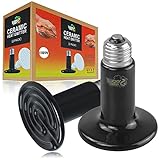
- 🦎No Light Emitted - The heat lamp bulb only generates heat during use, and does not emit light. It provides sufficient heat for your pets so that they can feel the warmth you made for it in a cold environment. Especially when it is used at night, it will not affect the pet's sleep.
- 🦎Heating UP Fast - After turning on the reptile ceramic heat bulb for 10 seconds, you can clearly feel the rapid rise in temperature, and it only takes 4 minutes for the reptile heat lamp to reach the rated temperature.
- 🦎Sturdy - LUCKY HERP reptile heat emitter is made of thick special ceramic material, and the heat light bulb shell is stronger and more durable than ordinary heating lamps. Our reptile light bulbs last up to 10,000 hours. Use in standard E26 lamp base, 120 volts and easy to install.
- 🦎Safety Instructions - You must use good quality ceramic lamp holders. When using the reptile basking bulb, keep a distance of more than 30cm from reptiles. Do not turn on the chicken heat lamp immediately after turning it off, and do not turn the bulb on and off frequently.
Common setup errors and how to correct them
The whole enclosure is the same temperature
Problem: The reptile cannot choose to warm or cool. Correction: Move the heater to one end, add a reachable cool retreat and verify both zones with probes.
The thermostat reading is the only measurement
Problem: A probe in one location misses a hotter basking surface or a colder hide. Correction: Measure every microenvironment the reptile uses and retain maximum and minimum values.
The heater is accessible
Problem: Climbing or contact can produce burns even if ambient air is moderate. Correction: Add a secure guard, redesign the route to the heater and inspect the surface temperature.
A generic chart is applied to every species
Problem: Broad numbers ignore species, age, season and health. Correction: Verify the range with species-specific guidance or an exotic-animal veterinarian; treat broad code figures as context, not a prescription.
The enclosure was measured once
Problem: Room temperature, bulb output and thermostat cycling change over time. Correction: Check the enclosure through the full day/night cycle and after replacing equipment or changing ventilation.
A practical temperature checklist
- Species, life stage and seasonal requirements are documented.
- A warm zone and a cooler zone are both reachable.
- Heaters are thermostat-controlled and physically guarded.
- Probes measure the basking surface, warm retreat and cool retreat.
- Maximum and minimum readings are reviewed, not just one momentary value.
- No hot rock or other unguarded contact heater is used.
- Heating is not being used as a substitute for diagnosis or veterinary care.
Temperature management works when the reptile has safe choices. Build the gradient around the species, verify it with measurements at animal level, and adjust the plan when the animal’s life stage, season or health changes.
Quick Recap
Product prices and availability are accurate as of the date/time indicated and are subject to change. Any price and availability information displayed on Amazon at the time of purchase will apply.





Leave a Reply