
Some links on this page are affiliate links: if you buy through them we may earn a commission, at no extra cost to you.
The Russell Terrier is a small dog with the energy, instincts, and persistence of a working terrier. It can be affectionate, athletic, entertaining, and highly trainable, but it is not an effortless companion. Most Russell Terriers need substantial daily exercise, purposeful mental work, secure outdoor management, and consistent training to prevent chasing, digging, barking, escaping, or destructive boredom.
In the United States, the American Kennel Club (AKC) recognizes the breed as the Russell Terrier: generally 10–12 inches tall, approximately 9–15 pounds, and with an AKC-listed life expectancy of 12–14 years. The name is not used consistently worldwide, however. The FCI and Royal Kennel Club use Jack Russell Terrier for a closely corresponding short-legged Russell-type breed, while the taller related breed is the Parson Russell Terrier. A dog advertised simply as a “Jack Russell” may come from any of several registries, breeding goals, or mixed ancestry.
As an Amazon Associate I earn from qualifying purchases.
Free tools Windows power users keep installed
One-click scans. No signup required.
Russell Terrier quick facts
| Characteristic | What to expect |
|---|---|
| AKC name | Russell Terrier |
| AKC group | Terrier Group |
| Height | 10–12 inches at the shoulder |
| AKC weight profile | Approximately 9–15 pounds; proportion and body condition matter more than a fixed number |
| Life expectancy | AKC estimate: 12–14 years; individual and population estimates vary |
| Coat types | Smooth, broken, or rough |
| Color | Predominantly white, with black and/or tan markings |
| Energy level | High |
| Grooming | Relatively simple, but the breed sheds and is not hypoallergenic |
| Trainability | Quick and intelligent, but easily bored and often independent |
| Children | Potentially suitable for respectful, dog-aware children with adult supervision |
| Cats and small pets | Possible with selected individuals and careful management; high prey-drive risk |
| Best owner | An active person or family that enjoys training and can safely manage a working terrier |
| Official-name note | Russell Terrier and Jack Russell Terrier terminology varies by registry |
These figures describe the AKC breed profile and standard, not a guarantee that every individual dog will have identical measurements or behavior. The AKC recognized the Russell Terrier as a breed in 2012. See the AKC Russell Terrier profile and official AKC standard.
What is a Russell Terrier?
The Russell Terrier is a predominantly white earth terrier developed from fox-hunting lines associated with Reverend John Russell. It was bred to work, not merely to look attractive: the dog had to locate foxes, go to ground, flush quarry, and help control vermin. That history explains much of the modern pet’s behavior. A Russell Terrier may be small enough to carry, but it can be intensely interested in scent, movement, tunnels, holes, wildlife, and anything that runs.
Popular on Amazon

- [4 Effective Training Mode - Recall & Correct Unwanted Dog Behavior] Featuring advanced Safe-Tech with 4 modes: Beep(1-8), Vibration(1-16), Shock(1-99 levels), and Emergency Shock Mode (stimulation for emergency behavior correction), our dog shock collar with remote control lets you customize the intensity and mode for efficient training, whether you're teaching basic commands at home or stopping excessive barking during outdoor walks.
- [Extended 4500FT Range - Ultimate Outdoor Freedom] The e collar for dogs training gives you exceptional long-range control - up to 4,500 feet - perfect for parks, beaches, and hiking trails. Train off-leash with total confidence. This dog training collar also supports 2 dogs with 1 remote, making it ideal for multi-dog homes. Plus, the smart remote remembers each dog’s settings, so switching between pets is seamless and hassle-free!
- [IPX8 Waterproof Collar - Ready for Any Adventure] With industry-leading IPX8 waterproof rating, the dog training collar is built to handle it all: rain, mud, lake swims, or even accidental dunks. No more worrying about water damage. Whether it’s a sudden downpour or a day at the beach, this shock collar for dogs stays fully functional. Let your dog splash, play, and train freely!
- [Adjustable & Comfortable Collar - Perfect for Most Dogs] Designed to fit dogs’ neck sizes from 7.8" to 24.4", this training collar suits small(10+lbs), medium, and large breeds up to 120 lbs - from energetic Terriers and smart Shepherds to playful Labradors, Huskies, and Golden Retrievers. The secure yet gentle fit ensures effective training without discomfort. For your dog’s well-being, we recommend using the collar for no more than 12 hours per day.
- [Long Lasting Battery & Safe-Lock] Enjoy up to 35 days of standby for the ecollar and 45 days for the remote. When it's time to recharge, a 2-hour fast charge gets you back quickly. Plus, the remote’s one-touch Safe-Lock can instantly lock the controls to prevent accidental pushes, so you can carry the remote worry-free in your pocket or bag. Train longer, train safer!
The breed belongs to the AKC Terrier Group and to Group 3, Terriers, under the FCI. Its flexible, slightly rectangular body and small, oval, compressible chest are functional features. The chest was intended to help the dog move through narrow underground passages while pursuing quarry. In other words, the breed’s unusual proportions are connected to its working purpose rather than being purely cosmetic. The AKC profile and AKC standard describe these characteristics.
A standardized Russell Terrier is not automatically the same thing as every small white-and-tan dog sold as a Jack Russell. Some dogs are registered Russell Terriers, some are Jack Russell Terriers under another registry, some are working-terrier dogs, and some are mixes. If pedigree, adult size, health history, or working temperament matters to you, ask for the registry and registered names of the parents rather than relying on an advertisement’s label.
Russell Terrier, Jack Russell Terrier, and Parson Russell Terrier: what is the difference?
The names overlap in everyday conversation, but they do not mean exactly the same thing in every country or registry. The safest approach is to identify the dog’s registry, pedigree, and breeding program.
| Name | Where it is used | Typical standard size | Key distinction |
|---|---|---|---|
| Russell Terrier | AKC, United States | 10–12 inches | The AKC-recognized short-legged Russell-type terrier |
| Jack Russell Terrier | FCI, Royal Kennel Club, and other registries | Approximately 10–12 inches; the Royal Kennel Club gives 25–30 cm | A closely corresponding short-legged Russell-type breed; the FCI lists England as country of origin and Australia as country of development |
| Parson Russell Terrier | AKC, FCI, and Royal Kennel Club | Usually over 12 inches; the AKC ideal is 14 inches | The taller, more squarely built related terrier |
| Jack Russell Terrier under JRTCA | Jack Russell Terrier Club of America working-terrier registry and trial system | Uses a working standard rather than one universal AKC-style size range | Places particular emphasis on traditional type, working ability, and working temperament |
The FCI lists the Jack Russell Terrier under standard no. 345, with an official standard published October 8, 2012. The FCI and Royal Kennel Club standards should not be treated as proof that every dog called a Jack Russell is genetically or registrationally identical to an AKC Russell Terrier. The FCI Jack Russell Terrier standard, Royal Kennel Club standard, FCI Parson Russell Terrier standard, and JRTCA working standard show how the frameworks differ.
Appearance and physical characteristics
Size, shape, and movement
Under the AKC standard, an adult Russell Terrier stands 10–12 inches at the shoulder. The AKC breed profile gives a typical weight range of 9–15 pounds, but the breed standard emphasizes proportion rather than prescribing one ideal weight. A healthy dog should carry enough muscle for work without excess fat, and a taller or more heavily built individual may appropriately weigh more than a smaller one.
The body is slightly longer than tall, creating a flexible rectangular outline rather than a square one. The chest is small, oval, and compressible. The legs are short relative to the body, but the dog should still move freely, efficiently, and athletically. Correct movement is coordinated and ground-covering, not clumsy or exaggerated.
The Tool Desk
Outbyte Driver Updater FREEFix the driver behind crashes, sound loss and screen glitchesFind Drivers →Outbyte PC Repair FREERepair Windows errors before they cause bigger problemsFix Now →A breed standard describes an ideal for judging and breeding. It does not guarantee that every pet will match the stated measurements exactly. The Royal Kennel Club also cautions that an individual dog may be larger or smaller than the standard’s stated size.
Head, ears, eyes, and tail
Russell Terriers have a keen, alert expression, dark almond-shaped eyes, and black nose and eye-rim pigmentation under the AKC standard. The ears are small and V-shaped, typically folding forward or dropping close to the head. The tail is set high. The AKC and FCI standards describe docking as optional, but that wording is not a recommendation: docking laws, veterinary rules, and welfare standards vary by jurisdiction, and a buyer should not assume it is necessary or appropriate.
Coat and color
The coat may be smooth, broken, or rough. The dog is predominantly white, with black and/or tan markings. Coat type affects how dirt and loose hair are managed, but none of the varieties should be marketed as non-shedding or allergy-free.
Russell Terriers should look athletic and functional. A very small, excessively delicate, unusually heavy, or structurally exaggerated dog may not represent the working qualities the breed was developed to retain.
Russell Terrier temperament
The most useful temperament description is not simply “friendly” or “energetic.” A Russell Terrier is typically lively, alert, bold, intelligent, playful, persistent, confident, and strongly motivated by movement, scent, and pursuit. Many are affectionate and devoted with familiar people. They can be delightful companions when their minds and bodies have appropriate outlets.
They are also independent and self-directed. A Russell may understand a cue perfectly and still decide that a squirrel, scent trail, hole, or moving object is more important. The breed standard describes the Russell or Jack Russell temperament as bold, fearless, friendly, confident, lively, and active, while the American Russell Terrier Club emphasizes that the dog remains a working earth terrier even when living as a pet. See the Royal Kennel Club temperament standard and American Russell Terrier Club temperament guidance.
Also popular on Amazon
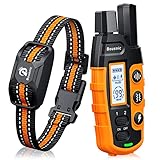
- Humane and Safe, Eliminate Bad Behavior Effectively: Bousnic Dog shock collar features 3 humane training modes with adjustable beep(1-8 levels), vibration(1-16 levels), safe shock(1-99 levels). It helps your unruly and hard-headed dogs learn to be a better part of your household.
- Extended 3300FT Range: Bousnic Dog Training Collar covers up to 3300Ft allowing your pet to roam farther. With dual-channel, It is perfect to train 2 dogs simultaneously outdoor at distances up to 3/4 mile.
- Fits for All Sizes of Dogs 5-120lbs: Bousnic training collar for dogs is ideal to control dogs as small as 5 pounds and as big as 120 pounds. Instant response security on/off switch button allows you to carry it without any fear of accidental touch.
- IP67 Waterproof Receiver: Bousnic electric dog collar can be used in any weather and any condition thanks to the IP67 waterproof design of the receiver (You’ll have to keep the remote control away from water).
- Incredible Battery Life: Bousnic e collar for dogs training has a decent battery life. The receiver’s battery can last for up to 15 days in working modes while the remote for over 1 month. the long battery runtime is a true lifesaver on those camping or tailgating weekends.
A well-bred and well-socialized Russell Terrier can be affectionate and enjoyable at home, but its intensity, prey drive, excitability, and persistence make it more demanding than its small size suggests. Under-exercise and boredom may show up as barking, digging, escape attempts, chasing, rough play, pestering other pets, or destruction. Calling the breed universally aggressive would be inaccurate; calling it automatically easygoing would be equally misleading.
Quick wins for a faster PC:
Scan for outdated or missing drivers - takes under a minuteDriver Scan →Repair Windows errors before they cause bigger problemsFix Now →Fix the driver behind crashes, sound loss and screen glitchesFind Drivers →Exercise and enrichment needs
For many healthy adult Russell Terriers, PetMD gives a practical starting estimate of approximately 90 minutes to two hours of exercise per day. That is an attributed benchmark, not an official breed-standard requirement. Puppies, seniors, dogs recovering from injury, and dogs with orthopedic or other medical conditions need an individualized plan from a veterinarian. Some individuals also have higher arousal and endurance than others.
A successful routine combines two kinds of work:
- Physical activity: brisk walks, hiking, structured games, fetch, supervised outdoor play, and suitable dog sports such as agility, flyball, rally, obedience, or lure coursing.
- Mental work: scent games, nose work, trick training, obedience practice, food puzzles, problem-solving, controlled digging opportunities, and appropriate terrier activities.
An example routine for a healthy adult might include a morning sniffing walk with a few minutes of training, a food puzzle or scent search later in the day, and an evening session of brisk walking, fetch, training, or a sport. The exact combination matters less than providing regular, purposeful activity and teaching the dog how to settle afterward.
A yard is useful but is not a substitute for exercise. A bored Russell Terrier may patrol the fence, bark at passersby, dig, search for escape routes, chase wildlife, or repeatedly demand interaction instead of calmly entertaining itself. PetMD’s Russell Terrier overview and VCA’s breed guidance discuss the breed’s activity and natural behaviors.
Prey drive, digging, and safe management
Prey drive is one of the most important Russell Terrier ownership issues. The breed was selected to pursue quarry underground, so many individuals have a strong instinct to chase small animals, investigate holes, dig, and keep pursuing after other dogs or people would have disengaged.
Outdated Drivers Are Slowing You Down
One free scan finds every outdated or missing driver and matches the right update for your exact hardware.Free scan · exact hardware matchWindows Errors? Fix Them Before They Spread
Repair common Windows errors and clear accumulated junk for a smoother, more stable PC - no reinstall needed.Free scan · no reinstallPlan on using a leash outside secure areas. A properly built, regularly checked fence is important, and gates should be managed carefully because a determined terrier may exploit surprisingly small gaps or dig beneath a barrier. Recall training is worthwhile, but it should not be treated as a guarantee near squirrels, rabbits, deer, livestock, or other fast-moving targets.
Provide legal outlets for the behavior: supervised digging in a designated area, scent searches, terrier-safe games, food hunts, and structured chase games in which the dog can respond to a cue and stop. Do not allow the dog to rehearse uncontrolled chasing whenever possible; each successful pursuit can make the behavior more rewarding and harder to interrupt.
Socialization and training can improve a Russell Terrier’s responses, but they cannot reliably erase inherited hunting motivation. Cats are not an automatic impossibility, particularly when a puppy is carefully socialized and introduced to a compatible cat, but the risk remains individual and management may be permanent. Rabbits, guinea pigs, hamsters, birds, poultry, and other small pets are a substantially higher-risk pairing. A dog with a known history of killing or intensely pursuing small animals should never be assumed safe merely because it has completed obedience training. PetMD and VCA both identify chasing, digging, and careful outdoor management as central considerations.
Training and socialization
Russell Terriers learn quickly, but they can also become bored quickly. Training works best when sessions are short, varied, rewarding, and connected to real-life goals. Repeating the same drill long after the dog has lost interest is an invitation to invent a more entertaining activity.
What’s actually slowing this PC down?
Pick the symptom - the matching free tool is one click away.
Priorities for the first months
- Attention to the handler and responding to the dog’s name
- Reward-based recall foundations, while retaining a leash or secure-area plan
- Loose-leash walking and calm doorways
- Leave it and drop it
- Impulse control around food, toys, doors, and moving objects
- Relaxing on a mat and settling after activity
- Crate comfort and gradual alone-time training
- Handling of paws, ears, mouth, coat, and nails
- Quiet behavior and an alternative response to barking
- Safe greetings without jumping, nipping, or chasing
Begin socialization early. PetMD recommends exposure to people, animals, and environments during puppyhood, ideally beginning within the first 16 weeks. That exposure should be controlled and positive rather than overwhelming: introduce different people, friendly dogs, surfaces, household sounds, travel, grooming, veterinary handling, crates, and calm public settings at a pace the puppy can manage.
Common training problems
- Recall fails around wildlife
- Continue practicing in controlled settings, use a long line only where it is safe and legal, and retain a secure-fence or leash policy around prey. A recall cue does not cancel a strong hunting sequence.
- Barking becomes constant
- Identify triggers, reduce opportunities to rehearse the behavior, reward quiet and attention, and teach a replacement behavior. Do not promise a silent Russell Terrier.
- Digging continues
- Secure escape points, supervise outdoor time, provide an approved digging area, and increase scent and problem-solving work.
- Destruction occurs when alone
- Prevent access to dangerous or valuable items, build alone time gradually, provide safe enrichment, and investigate separation-related distress rather than correcting the dog after the fact. A long walk immediately before departure is not a substitute for independence training.
- The dog chases children, joggers, or bicycles
- Use distance, barriers, leash management, impulse-control exercises, and qualified professional help if the behavior is intense or unsafe.
Reward-based training is preferable to intimidation or physical punishment. A determined terrier may become more defensive, evasive, or difficult to handle when training relies on fear.
The AKC notes that Russell Terriers often excel in agility, flyball, obedience, rally, and lure coursing. These activities can turn the breed’s drive into a cooperative job rather than trying to suppress the dog’s entire working nature. See the AKC breed profile.
Are Russell Terriers good with children?
They can be good companions for respectful, dog-aware children, especially when the dog is well socialized and adults actively manage interactions. They are not automatically ideal for toddlers or for homes where rough handling, chasing, screaming, or chaotic play cannot be supervised.
Do these 3 things before closing this tab:
1Repair Windows errors before they cause bigger problems2Scan for outdated or missing drivers - takes under a minute3Clear out junk files and repair common Windows errorsAlso popular on Amazon

- 7 Effective Training Modes:SLOPEHILL dog shock collar with Beep, Vibration, Flash Light, Low shock level, High shock level, No shock ,and Keypad lock modes. You can use it to teach a dog basic commands and correct unwanted behaviors such as barking, chasing, and biting during outdoor activities
- 4200ft Remote Range & 3 Channels : Shock collar for dogs covers up to 4200ft remote range for more performance training.You can immediately get your dog's attention and recall them the moment they run too far.Train up to 3 dogs simultaneously from a single remote .You could train your dog in both the parks ,beaches, and hikes without any burden
- Built-in Anti-Lost Light on Both Collar and Remote: The flashing light on the collar helps you instantly locate your dog at night. Plus, the solid white LED light on the remote ensures you never fumble in the dark during nighttime walks. Keep your little one visible and safe in low-light situations
- No Shock Mode & Safe Static Adjustment :No shock mode is convenient for you to use only vibration and beep mode.Low shock (0-50) and high shock (51-99) allow you to adjust the accurate and comfortable static level for your dog, and keypad lock mode helps you prevent any accidental operation.When shock is not needed, you can also remove the metal prongs for a comfortable fit and it won’t harm your pet's skin
- IP68 Waterproof and Adjustable Shock Collar:The training collar receiver is waterproof which offers your dogs maximum flexibility during outdoor activities.(Note: Remote is Not waterproof).Size adjustable collar strap, length from 8 to 26 inches, fits dogs from 8 to 140 lbs.Dog training collar is the excellent solution to all your dog training needs
Children should not tease, corner, grab, ride, or disturb the dog while it is eating or sleeping. Adults should watch for rising arousal around running and fast movement, separate the dog before play becomes frantic, and give the dog a quiet retreat. The dog’s exercise and training must remain an adult responsibility; a child cannot be expected to manage a strong prey drive or an excitable terrier safely.
The American Russell Terrier Club describes the breed as potentially good with children when raised with respect, while VCA recommends gentle, respectful children and supervision around younger children. ARTC temperament guidance and VCA’s Russell Terrier guidance offer useful context.
Are Russell Terriers good with other dogs?
Some live successfully with other dogs, particularly after careful introductions and early socialization. Compatibility is individual, however. A Russell’s rough or relentless play can overwhelm a quiet, elderly, or conflict-avoidant dog. Problems may also arise around food, toys, resting places, frustration, or a mismatch in play style.
Introduce dogs gradually on neutral ground, supervise toys and high-arousal play, provide separate feeding and resting areas, and learn each dog’s warning signals. Do not label the breed universally dog-aggressive or universally dog-friendly. The individual dog’s history, socialization, sex, temperament, and household management matter.
Can a Russell Terrier live in an apartment?
Yes, some can, but square footage is not the deciding factor. An apartment Russell Terrier needs a dependable daily exercise and enrichment routine, safe outdoor access, training for hallway and elevator behavior, and an owner prepared to manage barking and reactivity. Neighbors’ tolerance for alert barking is a practical consideration.
A large yard does not automatically make the breed suitable, and a small home does not automatically rule it out. The relevant question is whether the household can provide activity, mental work, secure management, and calm alone-time skills every day. Apartment living becomes a poor fit when the owner is sedentary, the dog is left without a plan for long periods, or barking and chasing cannot be managed. This conclusion follows from the breed’s documented activity, digging, prey-drive, and vocalization tendencies. VCA’s Russell Terrier overview discusses these practical behaviors.
Grooming, shedding, and routine care
Russell Terriers are relatively easy to groom, but easy grooming does not mean no grooming or no shedding.
- Brushing: Weekly brushing is a sensible baseline for all three coat types. Smooth coats are simple to brush but can still shed noticeably; broken and rough coats need regular brushing or combing to remove dirt and loose hair.
- Coat maintenance: Keep the coat functional and weather-resistant rather than over-trimming it. Ask a groomer familiar with the coat type for advice if the dog mats or collects substantial debris.
- Ears: Check weekly for dirt, odor, redness, or irritation.
- Nails: Trim approximately monthly, adjusting for natural wear and the dog’s gait.
- Cooperation: Teach grooming and veterinary handling from puppyhood, using small rewards before the dog becomes worried or resistant.
The AKC specifically recommends weekly brushing, monthly nail trims, and weekly ear checks. See the AKC grooming guidance. No coat variety should be described as hypoallergenic.
Russell Terrier health and preventive care
Russell Terriers are often sturdy, athletic dogs, but “generally robust” does not mean disease-free. Responsible breeding and routine veterinary care matter, particularly for the knees, eyes, hearing, and neurologic health.
Health tests recommended for breeding dogs
The AKC breed page and the American Russell Terrier Club identify four important screening categories:
| Screening | What it helps evaluate | What a buyer should do |
|---|---|---|
| Patella evaluation | Whether the kneecaps are stable or luxate | Ask for documented evaluations for both parents |
| Ophthalmologist evaluation | The actual health of the eyes and signs of eye disease | Request the veterinary eye examination report, not just a verbal assurance |
| BAER hearing test | Hearing in each ear, including congenital deafness | Ask whether the puppy or breeding dogs have documented results |
| PLL DNA test | A known inherited genetic variant associated with primary lens luxation | Ask for the parents’ results and how the breeder uses them in a breeding plan |
A DNA result and an eye examination are not interchangeable. A PLL DNA test assesses a known genetic variant; an ophthalmologist evaluates the dog’s actual eyes and can identify other eye conditions. The ARTC health guidance also discusses possible future inclusion of an ataxia DNA test, but buyers should not assume that every Russell Terrier requires the same ataxia test unless the current registry or parent-club requirements support it. AKC recommended testing and ARTC health recommendations are the appropriate starting points.
Patellar luxation
Patellar luxation occurs when the kneecap moves out of its normal track. It may cause intermittent skipping, lameness, or an abnormal gait. It does not mean that every Russell Terrier will develop a knee problem, but it is a reason to ask for actual patella evaluations for both parents and to have a veterinarian examine any dog that shows repeated skipping or lameness.
Recommended Free Tools
Primary lens luxation and other eye disease
Primary lens luxation, or PLL, is an inherited and painful condition in which the eye’s lens moves out of position. Forward displacement can rapidly contribute to glaucoma, pain, and blindness. A painful, red, cloudy, or suddenly abnormal eye is an ophthalmic emergency, not a condition to watch casually at home. Cornell’s explanation of primary lens luxation describes the signs and urgency, and OFA’s PLL information explains the genetic testing context.
Also popular on Amazon

- Dual-Channel Remote Dog Training Collar - The remote features two rows of buttons on the front, each controlling one of the two receiver collars. One remote can control two receivers in real time, allowing you to correct their behavior instantly and train two dogs at the same time without resetting—making training much more convenient.
- 3 Humane and Effective Training Modes - This dog training collar offers three adjustable modes—Beep (levels 1–8), Vibration (levels 1–16), and Safe Shock (levels 0–16)—ensuring customized and safe training for your dog while effectively helping correct unwanted behaviors. The receiver collar also includes a built-in light to illuminate the path or help locate your dog during nighttime outings.
- 3300 ft Remote Range - The collar provides an impressive remote control range of up to 3300 feet, allowing your dog to roam freely while still remaining under your control.
- Suitable for Dogs of All Sizes - Designed for dogs with neck sizes from 6 to 26 inches and weighing between 8 and 120 lbs, this collar is suitable for small, medium, and large breeds. The soft nylon strap ensures comfort, while the lightweight design minimizes any burden on your dog.
- IPX7 Waterproof for All Weather Conditions - With an IPX7 waterproof rating, the collar is durable and reliable in any weather, allowing your dog to enjoy training even in the rain or while swimming.
Congenital deafness
BAER testing is recommended for Russell Terrier breeding stock. In one study of 1,009 Jack Russell Terriers, unilateral deafness was reported in 3.57% and bilateral deafness in 0.50%, with associations involving white coat color and parental hearing status. These figures should not be presented as exact prevalence for every AKC Russell Terrier population because the study used its own Jack Russell Terrier population definition. Read the deafness study.
Inherited ataxia syndromes
Research has identified inherited ataxia syndromes and KCNJ10-associated disease in Russell-group populations, including Jack Russell, Parson Russell, and Russell Terriers. One peer-reviewed study described these as separately registered breeds within the same Russell group and identified a KCNJ10 mutation associated with spinocerebellar ataxia with myokymia, seizures, or both. This is an important specialized question for breeders and veterinarians, not a claim that every Russell Terrier will develop the condition.
Ask about unexplained neurologic disease in close relatives and whether relevant DNA testing is available and appropriate for that breeding line. Seek veterinary evaluation for wobbling, tremors, muscle contractions, seizures, or progressive coordination problems. See the KCNJ10-associated ataxia research and related genetic research in Russell-group terriers.
Free tools Windows power users keep installed
One-click scans. No signup required.
Dental disease and weight
Small dogs can accumulate dental disease, and an active Russell Terrier can still become overweight when treats, training rewards, or table food are not counted. Feed a complete and balanced diet appropriate to the dog’s life stage, measure portions, and assess body condition regularly rather than relying only on a scale.
Keep treats to no more than approximately 10% of daily calories. Daily toothbrushing is the most effective home dental-care routine when the dog can be taught to accept it; veterinary dental examinations remain important. AAHA’s weight-management guidance covers treat calories, and the AVMA dental-care guidance explains home care.
How long do Russell Terriers live?
The AKC lists a Russell Terrier life expectancy of 12–14 years. Other veterinary profiles list longer potential lifespans, including VCA’s 15–16-plus years, so 12–14 should be treated as the AKC profile estimate rather than a guaranteed limit. A UK VetCompass study reported 12.72 years for Jack Russell Terriers in its veterinary-record population, but registry definitions and study populations differ. These figures should not be transferred to every dog called a Russell Terrier with false precision.
Preventive veterinary care, healthy body condition, dental care, safe exercise, responsible breeding, and prompt attention to changes in mobility, vision, hearing, or neurologic function all matter more than treating one published number as a promise. AKC life-expectancy profile, VCA breed information, and the UK life-expectancy study provide the relevant estimates.
What’s actually slowing this PC down?
Pick the symptom - the matching free tool is one click away.
Finding a responsible Russell Terrier breeder
Health-test language in an advertisement is not enough. Use this process before paying a deposit:
- Ask for the registered names of both parents and the registry in which the litter is recorded.
- Request actual documentation for patella evaluation, ophthalmologist examination, BAER hearing testing, and PLL DNA testing.
- Verify results through the relevant registry or public database when available. A breeder who cannot explain what was tested, when, and with what result has not given you meaningful health information.
- Ask specifically about deafness, eye disease, patellar luxation, seizures, ataxia, and unexplained neurologic problems in parents, siblings, and close relatives.
- Meet the mother and observe whether she is stable, healthy, and comfortable with people. Ask how the sire’s temperament and health were evaluated if he is not on site.
- See where the puppies are raised. Ask how they are exposed to handling, household noise, surfaces, crates, travel, and appropriate social experiences.
- Require a written contract that includes a return-to-breeder or breeder-assisted rehoming provision if you can no longer keep the dog.
- Prefer a breeder who asks you detailed questions about exercise, fencing, prey drive, children, other pets, and training rather than focusing only on color, size, or availability.
- Be cautious of breeders who advertise unusually tiny dogs, novelty colors, or an “easy” Jack Russell while minimizing working temperament and health documentation.
A CHIC number can be useful, but it is frequently misunderstood. It means that the required tests for that breed were performed and made publicly available; it does not mean that every result was normal, nor does it guarantee that the dog or its puppies will be healthy. Read the individual results. AKC’s explanation of CHIC and health testing and AKC’s explanation of CHIC-number limitations are useful references.
Rescue can be an excellent alternative. An adult Russell Terrier’s energy, barking, dog compatibility, and response to cats may be easier to assess than a puppy’s future behavior, although rescue histories can be incomplete. Ask what the organization has observed in foster care and use trial or foster-to-adopt arrangements where available.
Russell Terrier ownership: benefits and trade-offs
| Benefit | Cost or risk |
|---|---|
| Small and portable | Small size can disguise substantial exercise and training needs |
| Intelligent and trainable | May become bored, independent, or mischievous with repetitive or inconsistent training |
| Affectionate and playful | May become over-aroused by fast movement, rough play, or exciting environments |
| Relatively simple coat care | Still sheds and is not an allergy-friendly or non-shedding breed |
| Athletic and versatile | Needs secure management around wildlife and small pets |
| Generally sturdy | Still requires breed-relevant screening and routine preventive care |
| Can adapt to different homes | Apartment living may magnify barking, hallway reactivity, and exercise challenges |
Strong reasons to choose one
- You want a small dog capable of serious activity.
- You enjoy training, interactive play, and teaching tricks.
- You would like to try agility, rally, flyball, scent work, obedience, lure coursing, or suitable terrier activities.
- You appreciate a lively, affectionate dog with a strong personality.
- You can provide secure fencing and careful prey-drive management.
- You are comfortable with some possibility of barking, digging, chasing, shedding, and persistence.
Strong reasons to choose another breed
- You want a naturally quiet, low-energy lapdog.
- You have rabbits, rodents, birds, poultry, or other small pets that cannot be physically separated.
- You expect reliable off-leash freedom near wildlife.
- You have very young children but limited capacity for supervision and management.
- You work long hours without a realistic daily exercise, enrichment, and alone-time plan.
- You want a first dog that is forgiving of inconsistent training.
- You strongly dislike digging, barking, shedding, escape attempts, or repeated chasing behavior.
Bottom-line decision
Choose a Russell Terrier if you want a compact working dog and are prepared to organize your life around exercise, training, enrichment, supervision, and secure management. Do not choose one because it is small, cute, or easy to groom while assuming those traits make it low-maintenance.
The Tool Desk
Outbyte Driver Updater FREEFix the driver behind crashes, sound loss and screen glitchesFind Drivers →Outbyte PC Repair FREEClear out junk files and repair common Windows errorsFree Scan →The right Russell Terrier can be a funny, affectionate, athletic, and remarkably capable companion. The wrong household is likely to experience the same instincts as barking, destruction, escape attempts, conflict with pets, or an exhausting inability to settle. The central question is not whether you have enough room; it is whether you can consistently give this working terrier an appropriate job and safe outlets for its instincts.
Frequently Asked Questions
Are Russell Terriers good family dogs?
They can be excellent family companions for active households with respectful, dog-aware children and adults who supervise interactions. They are not automatically suitable for toddlers, rough play, or families that cannot provide daily exercise and training.
Also popular on Amazon

- Humane and Safe, Eliminate Bad Behavior Effectively: Bousnic Dog shock collar features 3 humane training modes with adjustable beep(1-8 levels), vibration(1-16 levels), safe shock(1-99 levels). It helps your unruly and hard-headed dogs learn to be a better part of your household.
- Extended 3300FT Range: Bousnic Dog Training Collar covers up to 3300Ft allowing your pet to roam farther. With dual-channel, It is perfect to train 2 dogs simultaneously outdoor at distances up to 3/4 mile.
- Fits for All Sizes of Dogs 5-120lbs: Bousnic training collar for dogs is ideal to control dogs as small as 5 pounds and as big as 120 pounds. Instant response security on/off switch button allows you to carry it without any fear of accidental touch.
- IP67 Waterproof Receiver: Bousnic electric dog collar can be used in any weather and any condition thanks to the IP67 waterproof design of the receiver (You’ll have to keep the remote control away from water).
- Incredible Battery Life: Bousnic e collar for dogs training has a decent battery life. The receiver’s battery can last for up to 15 days in working modes while the remote for over 1 month. the long battery runtime is a true lifesaver on those camping or tailgating weekends.
Are Russell Terriers good with cats?
Some can live successfully with carefully selected cats after gradual introductions and early socialization, but prey drive makes the pairing higher risk than with many companion breeds. A history of intense pursuit or killing should be treated seriously, and permanent supervision or separation may be necessary.
How much exercise does a Russell Terrier need?
PetMD gives approximately 90 minutes to two hours daily as a practical starting benchmark for many healthy adults. The routine should include both physical activity and mental work, and puppies, seniors, and dogs with medical conditions need individualized plans.
Do these 3 things before closing this tab:
1Clear out junk files and repair common Windows errors2Fix the driver behind crashes, sound loss and screen glitches3Repair Windows errors before they cause bigger problemsDo Russell Terriers shed?
Yes. Smooth, broken, and rough coats are all relatively simple to maintain with regular brushing, but the breed is not non-shedding or hypoallergenic. Smooth coats can still shed noticeably.
Are Russell Terriers easy to train?
They learn quickly but can become bored, independent, or distracted by scent and movement. Short, varied, rewards-based sessions work best. Recall, barking, impulse control, calm settling, and prey management require ongoing practice.
What is the difference between a Russell Terrier and a Jack Russell Terrier?
The answer depends on the registry. The AKC uses Russell Terrier for its 10–12-inch breed. The FCI and Royal Kennel Club use Jack Russell Terrier for a closely corresponding short-legged breed, while Parson Russell Terrier is the taller related breed. JRTCA working dogs follow a separate working-terrier framework. Ask for registry and pedigree details rather than relying on the name alone.
Are Russell Terriers aggressive?
The breed is bold, confident, persistent, and prey-driven, but it is inaccurate to call every Russell Terrier aggressive or every one universally dog-friendly. Socialization, breeding, training, individual temperament, and management determine how the dog behaves with people and animals.
Can a Russell Terrier live in an apartment?
Some can, provided the owner supplies substantial daily exercise, mental stimulation, secure outdoor handling, alone-time training, and barking management. A large yard does not replace those needs, and apartment neighbors may make alert barking especially challenging.
How long do Russell Terriers live?
The AKC lists 12–14 years. Other sources give longer estimates, and a UK study of Jack Russell Terriers reported 12.72 years in its particular veterinary-record population. These figures vary by registry, study population, and individual dog.
What health tests should Russell Terrier breeders perform?
The AKC and American Russell Terrier Club identify patella evaluation, ophthalmologist evaluation, BAER hearing testing, and a PLL DNA test. Ask for actual results for both parents and inquire about neurologic disease, including ataxia, in the family history.
Can Russell Terriers be left alone?
They can learn to spend appropriate periods alone, but independence should be taught gradually. Exercise before departure helps but does not replace alone-time training. A household that leaves a Russell without enrichment, management, or a realistic routine may see barking, destruction, escape attempts, or distress.
Are Russell Terriers good for first-time owners?
A first-time owner can succeed with professional guidance, careful management, and a strong commitment to daily training, but this is not usually the easiest small breed. Someone seeking a forgiving, quiet, low-energy first dog should compare less intense alternatives.
The Bottom Line
Bottom line: The Russell Terrier is small in stature but substantial in working-dog demands. It is a strong choice for an active owner who enjoys training and can manage prey drive; it is a poor choice for a quiet, low-maintenance home or a household with unsecured small pets.





Leave a Reply