
The Tool Desk
Outbyte PC Repair FREERepair Windows errors before they cause bigger problemsFix Now →Outbyte Driver Updater FREEFix the driver behind crashes, sound loss and screen glitchesFind Drivers →Some links on this page are affiliate links: if you buy through them we may earn a commission, at no extra cost to you.
Yes—puppies can have several fruits besides banana, including blueberries, seedless watermelon, strawberries, raspberries, mango, cantaloupe, and properly prepared apple, pear, or peach flesh. Fruit should remain an occasional treat: UC Davis School of Veterinary Medicine guidance (2020) recommends that at least 90% of a puppy’s calories come from complete and balanced food.
The safest approach is simple: wash the fruit, remove every toxic or hard part, cut it into tiny pieces, offer one new fruit at a time, and watch for digestive or skin reactions. Never offer grapes, raisins, currants, or sultanas; suspected ingestion needs immediate veterinary advice, even if the puppy appears normal.
As an Amazon Associate I earn from qualifying purchases.
Do these 3 things before closing this tab:
1Clear out junk files and repair common Windows errors2Scan for outdated or missing drivers - takes under a minute3Repair Windows errors before they cause bigger problemsWhich fruits are safe alternatives to banana?
The following fruits can be used as small, plain treats for most healthy puppies when prepared correctly. “Safe” does not mean unlimited: a puppy’s size, age, chewing ability, health, and total calorie allowance all matter.
| Fruit | What to remove | How to serve | Important consideration |
|---|---|---|---|
| Blueberries | Stems and leaves | Wash and offer a few berries, whole only if the puppy can chew them safely; otherwise halve or crush them. | Small, soft berries are convenient, but any whole food can be a choking risk for a very small puppy. |
| Watermelon | Seeds and rind | Use seedless flesh in tiny pieces. | High water content makes it refreshing, but it still contributes calories and can loosen stools if overfed. |
| Strawberries | Leaves and stem | Wash, remove the leafy top, and cut into puppy-sized pieces. | Plain fruit only; do not use syrup, chocolate, or sweetened toppings. |
| Raspberries | Stems and leaves | Wash and give a small portion. | The texture is soft, but moderation is important because berries still contain natural sugar. |
| Mango | Skin and pit | Cut the flesh into small cubes. | The pit is a choking and obstruction hazard; never let a puppy chew it. |
| Cantaloupe | Rind and seeds | Offer bite-sized pieces of flesh. | Remove the tough outer surface completely. |
| Apple | Seeds, core, stem, and leaves | Slice the flesh thinly or dice it. | Apple seeds and the hard core should not be swallowed. |
| Pear | Seeds, core, stem, and leaves | Use plain, bite-sized flesh. | Canned pear in syrup is not an equivalent substitute for fresh fruit. |
| Peach | Pit, stem, and leaves | Offer a small amount of ripe flesh only. | The pit contains a cyanide-form compound and must be removed before the fruit reaches the puppy. |
These options are supported by guidance from the American Kennel Club and veterinary sources. Individual tolerance varies, so a fruit that suits one puppy may cause diarrhea, gas, vomiting, or itchy skin in another.
Popular on Amazon

- REAL CHICKEN FIRST: Baby BLUE Training Treats are made with delicious real chicken as the first ingredient, plus DHA for cognitive development, making them the ideal reward for your puppy’s best behavior
- MEATY TRAINING TREATS: For puppies that love a meaty treat, Baby BLUE training dog treats are tender, bite-sized morsels that make them perfect for training
- WHOLESOME INGREDIENTS: These dog treats contain NO chicken (or poultry) by-product meals and are free of corn, wheat and soy; Plus, they’re free of artificial preservatives and colors
- HEALTHY DOG TREATS: Blue Buffalo natural dog treats feature the healthy, wholesome ingredients you’ll love feeding as much as they’ll love eating
- Contains One (1) 4-oz bag of Blue Buffalo Baby BLUE Training Treats Natural Puppy Soft Dog Treats, Savory Chicken
Why fruit should stay a small treat
Growing puppies need a nutritionally complete diet formulated for growth. Fruit supplies water, fiber, and natural sugars, but it does not provide the balanced protein, fat, calcium, vitamins, and minerals that puppy food is designed to deliver. Replacing meals with fruit can dilute essential nutrients during a critical growth period.
UC Davis School of Veterinary Medicine states that at least 90% of calories should come from complete and balanced food, leaving no more than about 10% for treats and other extras. That 10% is a ceiling for all treats combined—not a daily fruit allowance in addition to biscuits, training rewards, chews, or table scraps.
For scale, UC Davis lists 28 grams (one-eighth cup, mashed) of banana as 25 kilocalories. The figure is a specific portion and preparation, not a universal serving recommendation for every puppy or every fruit. Because puppies differ greatly in body size and calorie needs, your veterinarian or the feeding guide for the complete diet should determine the treat budget.
Prepare fruit safely every time
Remove the parts that can poison, choke, or obstruct
Before serving, remove seeds, pits, cores, stems, leaves, and tough rinds. A puppy can swallow a hard piece quickly, and a pit or core may cause choking or an intestinal obstruction even when the surrounding fruit is safe. Peach pits are especially concerning because they contain a cyanide-form compound. Mango pits, cherry pits, apple cores, and watermelon seeds also belong in the trash, not the bowl.
Also popular on Amazon
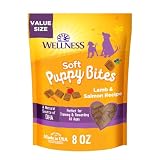
- GRAIN-FREE PUPPY TREATS: These bite-sized, soft puppy training treats are the perfect reward during training sessions or any time you want to thank your dog for good behavior. Puppy bites contain 6 calories per individual treat!
- SUPPORTS BRAIN DEVELOPMENT: Soft dog treats are crafted with salmon, a healthy source of DHA to promote healthy brain development.
- HEALTHY INGREDIENTS: These treats for dogs are made with minimal ingredients focused on quality proteins: made with lamb and salmon, with added vitamins specifically for puppies.
- NO CORN, WHEAT, OR SOY: Treats for dogs do not contain wheat, wheat gluten, corn, soy, or artificial colors.
- MADE IN USA: Our dog treats are quality-assured, made in USA, and crafted from the finest globally-sourced ingredients. Treats are tender, healthy, and bite-sized for small, medium, and large dogs of all lifestages, and activity levels.
Wash and cut for the puppy in front of you
Rinse fresh produce under running water. Cut pieces smaller than the puppy’s airway and match the texture to the puppy’s chewing skills. A tiny puppy, a puppy that gulps, or a puppy still learning to chew may need fruit minced, mashed, or lightly crushed rather than served as a whole berry or cube. Supervise the entire treat session.
Use plain ingredients
Do not share fruit salad, pie filling, trail mix, flavored yogurt, or packaged snacks unless every ingredient has been checked. Chocolate, macadamia nuts, xylitol, excess seasoning, and other additives can be dangerous to dogs. Sweetened, salted, spiced, or syrup-packed fruit is unnecessary; plain fresh or frozen fruit is the safer format.
Free tools Windows power users keep installed
One-click scans. No signup required.
How much fruit can a puppy have?
There is no single universal puppy serving size in the available veterinary guidance. A Chihuahua puppy and a rapidly growing large-breed puppy have very different calorie budgets, and a puppy with a sensitive stomach may tolerate less than a healthy littermate.
- Start with one tiny piece. For a small puppy, this may be a pea-sized piece; for a larger puppy, a small cube. The first taste is a tolerance test, not a snack bowl.
- Offer only one new fruit at a time. VCA recommends introducing one fruit or vegetable at a time because food sensitivities can occur. Wait until you know how the puppy responds before adding another new ingredient.
- Observe the next day. Check stool consistency, vomiting, gas, appetite, and skin for itching, redness, or new bumps. Stop that fruit if symptoms appear.
- Count all treats together. Keep fruit within the puppy’s overall calorie plan and the approximately 10% treats-and-extras limit described by UC Davis.
- Use fruit as a reward, not a meal. A few tiny pieces during training are usually easier to fit into the diet than a large serving given at once.
If diarrhea or skin problems develop, stop the new food and ask your veterinarian for advice. Do not keep testing different fruits while trying to identify a reaction.
Also popular on Amazon

- Lots of flavor, not fillers: Just three simple, all-natural ingredients mean low calories and high nutritional value, making a tasty but healthy treat that your pup will actually love
- Ready for training, wherever you are: The best training is consistent training. Our small treats are lightweight and perfectly sized for quick rewards so they are ready to go whenever there is a training opportunity
- Mess free treats: No oily, greasy, crumbly messes here, Pupford treats keep your hands and pouches clean. You can even keep some in your pocket for walks, classes, or mini adventures without worrying about them getting grimy or stale
- Motivate even the pickiest of pups: A wide range of flavors makes it easy to find the perfect fit for your pup’s tastes
- Pupford Promise: We strive to always provide simple, high-quality, healthy pup essentials. If you or your pup aren't happy with a purchase, let us know so we can help find the right fit!
Fruits and plant foods puppies should not eat
| Food | Why it is excluded | What to do |
|---|---|---|
| Grapes, raisins, currants, and sultanas | They can cause acute kidney injury. The toxic dose is unpredictable, and the exact compound responsible is still unknown. | Do not offer any amount. Contact a veterinarian or animal poison service immediately after suspected ingestion. |
| Cherries with pits | Pits create choking or intestinal-obstruction risks and contain potentially harmful compounds. | Choose a different fruit; do not rely on removing a pit after a puppy has already chewed it. |
| Avocado | It is listed among produce to exclude for dogs, and the large pit is an obstruction hazard. | Keep the whole fruit, pit, skin, and scraps away from the puppy. |
| Onions, garlic, chives, and leeks | These allium plants can damage red blood cells and are unsafe in fresh, cooked, dried, or powdered forms. | Avoid foods and leftovers seasoned with them. |
| Rhubarb | It is included among plant foods to avoid for dogs. | Do not give stalks or leaves. |
| Green tomato plant parts | The unripe plant material is unsafe. | Prevent access to the plant, leaves, stems, and green fruit. |
| Wild mushrooms | Species and toxin levels are difficult to identify reliably. | Do not let a puppy forage outdoors; seek veterinary advice for any ingestion. |
What to do if a puppy eats grapes or raisins
Grape and raisin exposure is an emergency, not a “wait and see” situation. The American Kennel Club reports that initial signs may begin within 6–12 hours, while detectable kidney injury can develop over 24–72 hours. A puppy may look normal during part of that window.
- Remove the remaining food so no more is eaten.
- Call your veterinarian, an emergency veterinary hospital, or an animal poison-control service immediately.
- Tell the professional the food, estimated amount, time of ingestion, and the puppy’s weight. Keep the packaging or a sample if available.
- Follow the professional’s instructions. Do not induce vomiting or give home remedies unless a veterinarian specifically directs you to do so.
ASPCA guidance also advises prompt veterinary or poison-control contact because grape and raisin exposure can damage the kidneys. The exact toxic compound has not been established. As Dr. Jessica Dowling, medical director and emergency veterinarian, told the American Kennel Club: “The exact compound in grapes that causes toxicity is unknown. There are several hypotheses, but the exact cause remains unknown.”
Simple frozen fruit treats
Freezing can turn a few pieces of fruit into a slow, cooling reward, but freezing does not make an unsafe ingredient safe. Use only plain, prepared fruit and keep the portions tiny.
Frozen berry pieces
- Wash blueberries or other approved berries and remove stems or leaves.
- Halve, crush, or leave whole according to the puppy’s chewing ability.
- Arrange a few pieces in a freezer-safe container and freeze.
- Offer one piece at a time while supervising.
Frozen melon puree
- Remove the rind and seeds from watermelon, cantaloupe, or honeydew.
- Puree the plain flesh.
- Freeze the puree in a freezer-safe bowl, mold, or ice-cube tray.
- Break off a puppy-sized portion rather than handing over a full large cube.
A small silicone dog-treat mold can make portioning easier. Check that the mold is food-safe, intact, appropriately sized, and easy to clean; product materials and listings can change, so verify current details before buying. Never add chocolate, macadamia nuts, xylitol, seasoning, or sweeteners.
Also popular on Amazon

- High Value, Irresistible Flavor: Pups love the taste and aroma, making training sessions more effective and enjoyable
- High-Quality Ingredients: Made in the USA with clean, simple ingredients, starting with chicken - nothing artificial and no fillers
- Low-Calorie: Less than 2 kcal per treat and high in protein, perfect for frequent rewarding without worry
- Perfectly Sized: Small enough for one-bite rewards, which helps prevent overfeeding while keeping training sessions flowing smoothly
- Soft & Chewy: Perfect texture for quick rewarding during training, and great for pups with sensitive teeth like senior dogs
Choose a fruit by the puppy’s needs, not by a universal ranking
No single fruit is “best” for every puppy. Use the following decision points when selecting between approved options.
| Decision point | What to check | Practical choice |
|---|---|---|
| Toxic or hard parts | Does the fruit have a pit, seeds, core, stem, leaves, or rind that must be removed? | Choose fruit you can prepare completely and supervise safely. Watermelon, mango, peach, apple, and pear require particular attention to discarded parts. |
| Sugar and calories | How much fits the puppy’s remaining treat calories? | Use very small portions and reduce other treats if fruit is added. Do not assume “natural sugar” is calorie-free. |
| Water content | Could a large portion loosen stools? | Water-rich melon can be refreshing, but start with a small amount and monitor stool. |
| Size and texture | Can the puppy chew the piece without gulping? | Crush berries and dice firm fruit for puppies that gulp or have small mouths. |
| Individual tolerance | Has this puppy had vomiting, diarrhea, itching, obesity risk, or a diagnosed sensitivity? | Introduce one food at a time and obtain veterinary guidance when health conditions are present. |
When a veterinarian should choose the treat plan
Ask your veterinarian before adding fruit if the puppy has a known or suspected food allergy, repeated diarrhea, chronic skin disease, obesity risk, a medical condition, or a prescribed diet. Puppies on therapeutic diets may need treats made from the same formulation or may need treats limited altogether.
PC Slower Than It Used to Be?
A free scan shows the junk files, broken settings and background clutter dragging Windows down - then fixes them in one click.Free scan · Windows 10 & 11Crashes, No Sound, or Screen Glitches?
Random freezes, missing sound and display glitches usually trace back to one bad driver. Find and replace yours safely.Free scan · under a minuteThe World Small Animal Veterinary Association notes that medical conditions, dietary sensitivities, and veterinary-prescribed diets can make conventional treats inappropriate. A “healthy” fruit for a typical puppy may not fit an individual treatment plan. Your veterinarian can account for growth rate, body condition, medication, calorie needs, and the reason for the prescribed food.
A practical first-fruit checklist
- Is the puppy eating a complete and balanced growth diet?
- Has the fruit been washed and kept plain?
- Have all pits, seeds, cores, stems, leaves, and rinds been removed?
- Is the piece small and soft enough for this puppy to chew safely?
- Is this the only new food being introduced?
- Will the portion fit within the puppy’s total treat calories?
- Can an adult supervise the puppy while it eats?
- Will you stop and call a veterinarian if vomiting, diarrhea, itching, or suspected toxic-food ingestion occurs?
Bottom line for banana alternatives
Blueberries, seedless watermelon, strawberries, raspberries, mango, cantaloupe, and carefully prepared apple, pear, or peach flesh are reasonable alternatives to banana for many puppies. Start with one tiny piece, introduce only one new fruit at a time, and keep fruit subordinate to a complete puppy diet. Grapes, raisins, currants, and sultanas are never acceptable treats; contact a veterinarian immediately after any suspected ingestion.





Leave a Reply