Saprolegnia is a fungus-like water mold that causes saprolegniasis in freshwater fish and eggs. It usually takes advantage of injured tissue, dead organic material, poor water quality, crowding, unsuitable temperature, or other stress rather than infecting every fish exposed to it. The familiar white or gray cottony growth is suggestive, but it does not confirm Saprolegnia by appearance alone.
Start by checking water quality and oxygenation, removing dead material, reducing handling stress, and looking for the underlying wound, parasite, bacterial disease, or husbandry problem. Treatment depends on whether the fish are ornamental aquarium animals, pond or hatchery stock, or food fish; never transfer aquarium-medication instructions to food-fish production.
As an Amazon Associate I earn from qualifying purchases.
What Saprolegnia is
Saprolegnia species are oomycetes, commonly called water molds. Although they produce fungus-like filaments, they are not true fungi in modern taxonomy. They are widespread in freshwater and usually act as decomposers, growing on dead eggs, injured tissue, mucus, or other organic material. When a fish’s skin barrier, immune defenses, or living conditions are compromised, the organism can colonize or invade living tissue and cause saprolegniasis. Merck Veterinary Manual describes saprolegniasis as an opportunistic disease, not an inevitable result of exposure to freshwater.
This distinction matters: finding a water mold in an aquarium or pond does not automatically mean every fish will become sick. The priority is to identify and correct the wound, stressor, water-quality problem, or other disease that allowed the growth to establish.
#1 Best Overall
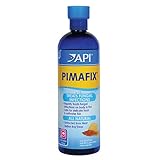
- Contains one (1) API PIMAFIX Antifungal Freshwater and Saltwater Fish Remedy 16-Ounce Bottle
- Rapidly and safely treats fungal infections on body and fins of fish
- Contains all-natural extract from West Indian Bay Trees to help with fungus and cottony growth
- Helps heal internal and external bacterial infections in freshwater, saltwater and reef aquariums
- Use daily for a week when treating infections
What it looks like
The classic sign is a localized white, gray-white, or wool-like cottony growth. It may be attached to the skin, fins, gills, eyes, or an existing wound. Lesions can begin as a small focal patch, expand outward, and merge with nearby growth. The material may look brown or darker when it traps mud, silt, or debris.
- On the skin: cottony growth may surround an abrasion, missing scales, bite wound, or ulcer.
- On the fins: damaged fin tissue may become coated, with progressive fraying or erosion.
- On the gills: growth can interfere with respiration and is more urgent than a small external patch.
- On the eye: cloudiness, tissue damage, or growth around the eye requires professional assessment.
- On eggs: water mold can spread from dead or nonviable eggs to viable eggs, potentially smothering or killing a substantial part of a hatch. Egg hygiene and removal of dead eggs are central to hatchery control.
Advanced disease can erode the epidermis, impair the fish’s ability to regulate water and salts, and worsen respiratory problems when the gills are involved. Eggs, fry, juveniles, weakened fish, and fish with extensive skin damage are especially vulnerable.
Why freshwater fish develop saprolegniasis
Saprolegnia usually takes advantage of an existing problem. Common predisposing factors include:
- scrapes, ulcers, scale loss, spawning injuries, netting, transport, or other handling trauma;
- poor water quality, inadequate filtration, low dissolved oxygen, or unsuitable temperature;
- crowding and chronic stress;
- poor nutrition or weakened immune function;
- parasitic, bacterial, viral, or other disease that damages the skin or gills;
- dead fish, dead eggs, uneaten food, silt, and decomposing organic material;
- poor sanitation in an aquarium, pond, or hatchery; and
- repeated or inappropriate medication, which can add stress without addressing the original problem.
Low temperature can be a risk in some situations, but simply raising the temperature is not a universal treatment. Temperature must remain appropriate for the species and life stage, and abrupt changes can cause additional stress.
How to assess a suspected case
Begin with the fish and its environment rather than treating a photograph. Record:
Rank #2

- Contains one (1) API PIMAFIX Antifungal Freshwater and Saltwater Fish Remedy 8-Ounce Bottle
- Rapidly and safely treats fungal infections on body and fins of fish
- Contains all-natural extract from West Indian Bay Trees to help with fungus and cottony growth
- Helps heal internal and external bacterial infections in freshwater, saltwater and reef aquariums
- Use daily for a week when treating infections
- species, age or life stage, and whether the fish is ornamental, pond-reared, hatchery stock, broodstock, or intended for human consumption;
- recent transport, spawning, netting, grading, fighting, or other injury;
- temperature changes, stocking density, feeding, filtration, aeration, and recent maintenance;
- water-quality measurements and any unusual odor, cloudiness, or organic buildup;
- recent medications or disinfectants;
- the number of affected fish and the pattern of deaths; and
- the lesion location, depth, rate of spread, and whether the cottony growth is attached to an ulcer or dead tissue.
A wet mount made from a skin, fin, or gill scraping may show broad, nonseptate filaments. That finding supports an oomycete or water-mold process but does not necessarily identify the species. Culture on low-nutrient water agar or another suitable mycology medium may help; species-level identification generally requires examination of sexual structures in culture. For severe, recurrent, unusual, or production-level disease, a fish-health laboratory may use culture, histopathology, PCR, quantitative PCR, or sequencing. Merck’s diagnostic guidance and this review of cottony fish lesions and differential diagnoses both support caution about diagnosing from appearance alone.
Crashes, No Sound, or Screen Glitches?
Random freezes, missing sound and display glitches usually trace back to one bad driver. Find and replace yours safely.Free scan · under a minuteWindows Errors? Fix Them Before They Spread
Repair common Windows errors and clear accumulated junk for a smoother, more stable PC - no reinstall needed.Free scan · no reinstallIn practice, a photograph can justify saying suspected saprolegniasis. It cannot reliably establish Saprolegnia infection, rule out a bacterial ulcer, or determine whether a second disease is present.
What to do immediately
- Check the environment. Measure the relevant water-quality parameters for the species, verify temperature and aeration, and look for overcrowding or decomposing material. Correct problems gradually and avoid sudden temperature or chemistry changes.
- Reduce additional stress. Handle fish as little as possible. If isolation can be done safely, move the affected fish to a properly prepared aquarium hospital tank rather than placing medication in a display aquarium. A hospital tank supports observation and treatment separation; it is not itself a cure.
- Remove sources of organic load. Promptly remove dead fish, dead eggs, uneaten feed, and decaying plant or animal material. In an egg-hatching system, remove nonviable eggs when feasible without damaging healthy ones.
- Look for the primary lesion. Inspect for missing scales, bites, ulcers, parasites, fin damage, gill disease, or signs of poor nutrition. Surface growth may return if the original injury or infection is left untreated.
- Improve oxygenation when appropriate. Gill disease and chemical treatments can increase respiratory risk. Provide strong, species-appropriate aeration, while ensuring that the equipment does not create injurious flow for weak or very small fish.
- Choose treatment by fish context. Ornamental-aquarium products, hatchery therapeutants, and food-fish drugs are not interchangeable. Confirm the species, life stage, invertebrate sensitivity, food-fish status, legal jurisdiction, and current label before using any chemical.
- Escalate when necessary. Contact an aquatic veterinarian or fish-health laboratory for mass mortality, gill involvement, deep ulcers, internal signs, valuable broodstock, endangered fish, food fish, repeated relapse, or failure to improve.
Treatment options depend on where the fish are kept
Home aquariums and ornamental freshwater fish
For an ornamental aquarium, a labeled commercial product may be reasonable when the fish has a superficial lesion and the diagnosis is considered likely, but no over-the-counter remedy should be presented as a universal cure for confirmed Saprolegnia. Correct water quality, sanitation, injury, and stress at the same time.
One example is API Fungus Cure. Its U.S. DailyMed label identifies acriflavine as the active ingredient and describes use for fungal infections and prevention of fungal growth on eggs. The label also states that it is not for fish intended for human consumption and identifies the product as an unapproved animal drug. It should therefore be discussed only as an ornamental-fish product, not as a food-fish treatment or proof that a cottony lesion is Saprolegnia.
sera mycopur is another freshwater aquarium product whose manufacturer specifically names Saprolegnia and spawn fungus. The manufacturer warns that it is incompatible with invertebrates. Read the current product instructions before use, account for fish and tank-mate sensitivity, and do not assume that a product suitable for one species, temperature, life stage, or aquarium setup is safe in another.
For either type of aquarium product:
- follow the current label exactly, including treatment duration and any water-management instructions;
- do not combine medications or increase the concentration because a lesion looks severe;
- check whether shrimp, snails, other invertebrates, plants, or sensitive fish must be removed or otherwise protected;
- maintain adequate aeration and watch closely for respiratory distress or unusual behavior;
- do not medicate a display tank automatically when a suitable isolation setup is available; and
- stop improvising and seek professional help if the lesion is deep, spreading rapidly, recurrent, or accompanied by deaths.
A freshwater aquarium water test kit is useful for investigating environmental stressors, but it is diagnostic support rather than a treatment. Test results should be interpreted for the species and system; a test kit cannot identify Saprolegnia.
Rank #3

- BOOST FISH HEALTH: Artemiss is an expellant; it provides a beneficial treatment against ailments including: dropsy, fungus, milky skin, mouth rot, fin/tail rot
- HOW IT WORKS: supports the immune system and stimulates and accelerates regeneration of damaged tissue until no trace of the wound remains; will not cause buildup of future resistance
- ACCEPTABLE TO USE: acceptable to care for all aquatic life; It is a great aid to use as a stress reducer when acclimating fish to a new environment
- HOW TO USE: Shake thoroughly prior to use and switch off UV sterilizer, protein skimmer or ozone generators; Keep filters operational; Add dosage to water; Best results will be achieved if product is used soon after problem is detected
- NOTE: This product is intended for use with all ornamental and aquarium fish only, and may not be used for fish intended for human consumption
Hatcheries, ponds, and commercial freshwater aquaculture
Production systems need a stricter regulatory and veterinary approach. In the United States, FDA aquaculture-drug materials list defined indications for some formalin products and for 35% PEROX-AID, a hydrogen-peroxide product. The listed uses include mortality associated with saprolegniasis in certain freshwater-reared coldwater, coolwater, and warmwater finfish, as well as saprolegniasis in freshwater-reared finfish eggs. Formalin products have their own specified indications for cultured finfish and eggs, with details varying by product and label. See the FDA approved aquaculture drugs information and its aquaculture-professional guidance.
Those approvals do not mean that any hydrogen peroxide, formalin, or disinfectant can be substituted. Use must follow the current product label, species and life-stage restrictions, veterinary direction where required, worker-safety procedures, discharge rules, and facility protocol. A commercial operator should source approved aquaculture therapeutants through the appropriate fish-health professional and regulator rather than adapt aquarium instructions or internet anecdotes.
Egg systems require particular care. Remove dead eggs when practical, maintain clean and well-oxygenated water, limit organic buildup, and use only a treatment protocol supported for that species, egg stage, facility, and jurisdiction. A treatment that is tolerated by an adult fish may harm eggs or fry.
The Tool Desk
Outbyte PC Repair FREERepair Windows errors before they cause bigger problemsFix Now →Outbyte Driver Updater FREEFix the driver behind crashes, sound loss and screen glitchesFind Drivers →Formalin, hydrogen peroxide, and other chemicals
Formaldehyde, peracetic acid, and hydrogen peroxide are among the chemicals used or studied for Saprolegnia control. A 2024 review emphasizes that treatment remains difficult, legal options are limited, and no single compound is universally safe and suitable across fish species and production systems. The review also discusses toxicity to fish, workers, non-target organisms, and the environment.
Formalin and peroxide require careful attention to aeration, water chemistry, temperature, species tolerance, handling, and disposal. Potassium permanganate, copper compounds, dyes, and other disinfectants can also injure fish or damage biological filtration when misapplied. Do not calculate a concentration from an anecdote, use a household product as a substitute for a labeled aquaculture product, or mix chemicals unless a qualified fish-health professional specifically directs it.
Why malachite green is not a routine recommendation
Malachite green has historically been effective against Saprolegnia, but its carcinogenicity and toxicological concerns have led to restriction or prohibition in many food-fish settings. It should not be used for fish entering the human food supply. Aquarium use, where legal, still requires careful attention to local rules, species sensitivity, plants, invertebrates, and the product label. It is not a general modern answer for a white patch.
Rank #4

- Contains one (1) API LIQUID SUPER ICK CURE Freshwater and Saltwater Fish Medication 4-Ounce Bottle
- Treats "ich" white spot disease in fish and secondary bacterial fish infections
- Quickly kills ich parasite, typically within 24 hours of first dose
- Use only in freshwater and saltwater aquariums not with reef aquariums
- Dose every day for five days when symptoms first start occurring
Prevention
For aquariums and ponds
- Keep temperature, dissolved oxygen, filtration, stocking density, and water quality appropriate for the species.
- Remove dead fish, dead eggs, uneaten feed, and decomposing material quickly.
- Quarantine new or returning fish and observe them before introducing them to established stock.
- Use gentle capture and transport methods to reduce scale loss and skin injury.
- Provide adequate nutrition and avoid chronic crowding or repeated environmental fluctuations.
- Inspect wounds and abnormal behavior early, before damaged tissue becomes heavily colonized.
- Clean nets, containers, and equipment between systems, while avoiding disinfectant residues entering the aquarium.
Prevention is more reliable than repeatedly treating visible growth. Chemical treatment may remove or suppress surface organisms while the wound, parasite, bacterial infection, or environmental stress remains.
What’s actually slowing this PC down?
Pick the symptom - the matching free tool is one click away.
For hatcheries
Hatchery prevention centers on egg hygiene, frequent removal of dead eggs, clean water, adequate oxygen, controlled handling, and a facility-specific health plan. Keep records of temperature, mortality, egg stage, treatment, and water quality. When an outbreak is unusually severe or treatment response is poor, laboratory confirmation can reveal a mixed infection or a different cause of mortality.
Independent reader supportYour contribution helps us test, update, and keep practical guides available for everyone.Conditions that can look like Saprolegnia
| What you see | Why it can be misleading | What helps distinguish it |
|---|---|---|
| Cottony white or gray growth on a wound | Saprolegnia is possible, but Achlya, other oomycetes, and true fungi can look similar. | History, wet-mount microscopy, culture, and—when needed—molecular testing. |
| White film or patch with skin erosion | Columnaris and other bacterial infections may produce pale lesions or a fuzzy appearance. | Examination of the underlying ulcer, lesion progression, microscopy, and bacterial testing. |
| Growth over a damaged area | The water mold may be secondary, while trauma, parasites, or bacterial disease is the primary problem. | Look for bite marks, missing scales, parasites, inflammation, ulcers, and signs affecting other fish. |
| Sudden deaths with little external growth | A visible water mold may be incidental or may not be the main cause. | Investigate water quality, gills, internal organs, infectious disease, and the mortality pattern. |
A surface treatment that makes the cottony material disappear but leaves the fish ulcerated or lethargic is not necessarily a successful treatment. Relapse commonly indicates an unresolved wound, unsuitable conditions, or a co-infection.
When to seek veterinary or laboratory help
Arrange professional evaluation promptly when:
- fish are gasping, breathing rapidly, or have growth on the gills;
- there are deep ulcers, extensive skin loss, eye involvement, or internal signs;
- multiple fish are affected or deaths are increasing;
- the fish are eggs, fry, juveniles, valuable broodstock, endangered animals, or food fish;
- the problem returns after treatment;
- water quality has been corrected but fish continue to deteriorate; or
- bacterial, parasitic, viral, or reportable diseases are plausible.
For severe cases, submit appropriately preserved samples through an aquatic veterinarian or fish-health diagnostic laboratory. A professional can determine whether the growth is primary or secondary and select a legal treatment for the species and production context.
Is Saprolegnia dangerous to people?
Saprolegnia in freshwater fish is not a typical contagious human fungal infection. The main concern is fish health and, in aquaculture, the safety and legality of treatment residues. Normal aquarium hygiene still applies: wash hands after handling aquarium water, use gloves when appropriate, and clean equipment between systems. People with wounds or weakened immunity should take extra care around any aquarium or pond water.
Recommended Free Tools
Practical decision checklist
- Confirm the fish species, life stage, intended use, and the extent of disease.
- Measure water quality, check temperature and oxygenation, and remove organic waste.
- Inspect for trauma, parasites, ulcers, gill disease, and other primary problems.
- Isolate affected fish only when the move can be made with less stress than leaving them in place.
- Remove dead fish and eggs and improve sanitation.
- For ornamental fish, use only a product labeled for that context and check sensitivity of invertebrates, plants, and fish.
- For food fish or hatchery stock, use only jurisdiction-approved, label-supported therapeutants and professional guidance.
- Seek diagnostic confirmation for severe, recurrent, unexplained, or production-level disease.
Saprolegnia is best managed as a sign of a compromised fish or system, not as an isolated white growth to be chemically erased. Diagnosis, sanitation, species-appropriate husbandry, and treatment within the correct regulatory context give fish the best chance of recovery.
Best Value

- For use in freshwater or marine aquaria.
- Easily absorbed through both skin and gills; ingestion not required.
- Does not adversely affect the filter bed and is easily removed with carbon.
- Safely and effectively treats several fungal, and bacterial fish diseases (dropsy, popeye, fin/tail rot, septicemia).
- When used in a medicated food mix, it is excellent for treating bacterial infections in tanks that contain invertebrates.
Frequently Asked Questions
Does every cottony white patch mean Saprolegnia?
No. White or cottony growth can also involve Achlya, other oomycetes, true fungi, columnaris and other bacterial infections, parasites, or damaged tissue with secondary colonization. A wet mount, culture, or more advanced testing may be needed for confirmation.
Can Saprolegnia spread from dead fish eggs to healthy eggs?
Yes. Saprolegnia can spread from dead or nonviable eggs to viable eggs. Removing dead eggs when feasible, maintaining clean oxygenated water, and following a species- and label-appropriate hatchery protocol are important.
Can I use an aquarium antifungal on fish raised for food?
No. Aquarium products are not interchangeable with approved food-fish or aquaculture drugs. In the United States, food-fish and hatchery treatments must follow the current FDA-approved indication, product label, facility protocol, and applicable veterinary or regulatory requirements.
Do these 3 things before closing this tab:
1Clear out junk files and repair common Windows errors2Fix the driver behind crashes, sound loss and screen glitches3Repair Windows errors before they cause bigger problemsWhen should a fish veterinarian or diagnostic laboratory be involved?
Seek help promptly for gill involvement, gasping, deep ulcers, eye disease, internal signs, multiple deaths, valuable or endangered fish, food fish, recurrent disease, or poor response after environmental correction and labeled treatment.
The Bottom Line
Bottom line: Saprolegnia is an opportunistic freshwater water mold that commonly colonizes injured, stressed, or dead tissue. Confirm the likely cause, correct water quality and sanitation, address the underlying wound or disease, and use only a treatment appropriate for the fish’s context, label, life stage, and jurisdiction. Aquarium medications must never be substituted for approved food-fish or hatchery therapeutants.
Quick Recap
Product prices and availability are accurate as of the date/time indicated and are subject to change. Any price and availability information displayed on Amazon at the time of purchase will apply.




