Windows Errors? Fix Them Before They Spread
Repair common Windows errors and clear accumulated junk for a smoother, more stable PC - no reinstall needed.Free scan · no reinstallOutdated Drivers Are Slowing You Down
One free scan finds every outdated or missing driver and matches the right update for your exact hardware.Free scan · exact hardware matchThe Otterhound is a rare, large British scent hound that suits an active, well-prepared household—not someone looking for a quiet or low-maintenance dog. Its affectionate temperament, webbed feet, waterproof rough coat, powerful nose, deep bay, and independent working style all shape the realities of ownership.
The Otterhound is a large, rare British scent hound with an affectionate nature, a powerful nose, a rough waterproof coat, and a famously deep bay. It can be a wonderful companion for an active household that has secure outdoor space and genuinely enjoys training, grooming, and a dog with an independent mind. It is a poor match for anyone seeking a quiet, easy-to-maintain, reliably off-leash, or apartment-friendly dog.
As an Amazon Associate I earn from qualifying purchases.
Otterhounds were developed to follow scent across land and water. Their webbed feet, substantial body, dense double coat, stamina, and strong voice are working adaptations—not decorative quirks. Modern Otterhounds are companions and participate in activities such as tracking, scent work, obedience, agility, therapy work, and conformation.
Recommended Free Tools
What is an Otterhound?
| Characteristic | Otterhound at a glance |
|---|---|
| Origin | Great Britain |
| Historical purpose | Following and hunting river otters; otter hunting is no longer a modern or acceptable ownership activity |
| Modern roles | Companion, tracking and scent work, obedience, agility, therapy work, barn hunt, lure coursing, and conformation |
| Breed group | FCI Group 6: scent hounds and related breeds; Section 1.1, large-sized hounds |
| Approximate adult size | Males: 27 inches and 115 pounds; females: 24 inches and 80 pounds |
| Life expectancy | Approximately 10–13 years |
| Coat | Rough, dense, naturally broken-looking, waterproof double coat |
| Voice | Deep, carrying bay; many individuals vocalize readily |
The size figures are American Kennel Club guidelines, not a pass-or-fail standard for every adult. Individual Otterhounds vary, and body condition matters more than reaching a particular number on a scale.
#1 Best Overall
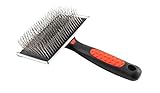
- EXTRA LONG PINS - Crafted from high-quality materials, this professional-grade "Tuffer Than Tangles" brush features extra-long stainless steel pins that easily penetrate deep into your pet's coat, removing dirt and debris from the undercoat.
- COMFORTABLE - The flat slicker design allows for gentle yet effective grooming, while the ergonomic handle ensures maximum comfort and control during use.
- ALL COAT TYPES - The Paw Brothers Extra Long Pin Flat Slicker Brush is suitable for all coat types and can be used on both dogs and cats. It's perfect for pet owners, as well as professional groomers.
- SIZE - Head 4.5in x 3in, Handle length 4.75in, Pins 1in length
- WHY RYAN'S PET SUPPLIES - Established in 1959, we have grown from humble beginnings as a family-operated four-page catalog to an international business featuring top quality products and services for pet professionals and pet lovers alike.
Otterhound history and rarity
Otterhounds were developed in medieval England to follow river otters, which were historically viewed as a threat to fish in rivers, streams, and stocked ponds. The work demanded a dog capable of maintaining a scent trail for long periods on land and swimming while following scent in water. The FCI historical summary describes working capability of up to 12 hours on a land trail and up to five hours on a water scent; these are historical breed-standard descriptions, not an exercise prescription for a household pet.
Otter hunting is banned, and the breed’s modern purpose is companionship and organized dog activities. The American Kennel Club recognized the Otterhound in 1909. The FCI records definitive recognition in 1974; its official standard is listed as valid from October 13, 2010, with the English standard document dated January 27, 2011.
Rarity is one of the most important practical facts for a prospective owner. The AKC and Otterhound Club of America describe the breed as exceptionally rare, and the club has cited an estimate of fewer than 800 Otterhounds worldwide. That should be treated as an approximate, club-reported estimate rather than a current worldwide census. Finding a carefully bred puppy may involve a long wait, extensive breeder research, and possibly travel.
The Tool Desk
Outbyte Driver Updater FREEScan for outdated or missing drivers - takes under a minuteDriver Scan →Outbyte PC Repair FREERepair Windows errors before they cause bigger problemsFix Now →Appearance: a working design, not a low-maintenance giant dog
An Otterhound is large, strong, and straight-limbed, with loose, long-striding movement. Its broad, powerful body and substantial head reflect endurance and water work. The breed’s large webbed feet are an especially important feature, helping it move through water and wet ground.
The coat is a rough double coat with a dense undercoat. The outer coat is harsh, waterproof, and naturally broken in appearance; the FCI standard describes a typical length of roughly 4–8 cm and allows a slightly oily texture. The texture helps protect the dog in cold, wet conditions, but it also catches mud, leaves, burrs, and other debris. The coat should not be treated as maintenance-free, and the breed should not be marketed as hypoallergenic.
Long, pendulous ears sit level with the corner of the eye and have a characteristic fold and substantial hair. The beard and moustache give the Otterhound its distinctive expression, but they also collect food, water, mud, and plant material. Large feet, wet furnishings, and a dripping beard are normal parts of living with this breed.
Otterhound temperament
Official breed descriptions portray the Otterhound as amiable, even-tempered, affectionate, sociable, and boisterous. The typical dog wants to be involved with its people and can bring a playful, slightly comic energy to the household. Its friendly nature does not make it passive or especially easy to direct, however.
Independent, scent-driven, and persistent
The Otterhound’s nose can compete successfully with its owner’s instructions. A fascinating scent may matter more than a familiar recall cue, and a determined hound can be difficult to retrieve once it is following a trail. Training should therefore focus on positive reinforcement, reliable leash habits, recall practice in controlled environments, and calm handling around distractions.
Rank #2

- 【Premium Dog Grooming Kit】Owning a professional dog slicker brush and a comb, you can effectively remove tangles, knots, and mats, significantly reducing brushing and drying time. Let you, as the groomer, give your furry companion a shiny, healthy coat , Goldendoodle Must Haves - The Best Dog Gifts - Merry Christmas
- 【Professional Slicker Brush for Dogs】Designed for medium-length and curly-haired pets with thick, difficult-to-manage coats, our slicker brush features extra-long angled pins that penetrate deeply to remove dead hair and loose undercoat. It is the best choice for deep combing undercoat for Goldendoodles, Poodles, Labradoodles, etc.Ergonomic handle minimizes hand and arm fatigue during grooming sessions, making it an essential tool for shedding season
- 【High Quality Dog Comb】Made of high quality stainless steel, this comb is durable, corrosion resistant and will not fade, good for avoiding static electricity.Rounded pin ends are gentle to the skin.it’s perfect to promote blood circulation and massage skin
- 【Optimize Combing Function】Pin Length ≈ 1in,Tilt Angle ≈ 45° Extra-long pins effortlessly reach through dense coats, while the angled design protects sensitive skin. This innovative structure simplifies detangling by effectively accessing the undercoat.Ideal for Poodles, Bichons, Labradoodles, Goldendoodles, and Other Doodle Breeds
- 【2-Year Warranty & Support】As a professional pet care brand, we are committed to providing safe, practical, and affordable solutions. Enjoy peace of mind with our 7*24 customer support and 2-year quality guarantee covering any manufacturing defects
The AKC specifically recommends patience, praise, food rewards, and clicker training. Punitive methods are a poor fit for a sensitive, independent dog and can damage cooperation. Short, rewarding sessions and activities that let the dog use its nose are usually more productive than repetitive drilling.
A very audible dog
Otterhounds have a deep bay that carries over considerable distance. Many individuals vocalize with other hounds, people, or in response to activity around them. They are not a sensible choice when household quiet or close neighbor relationships are a top priority. Training can improve manners and management, but it cannot reliably turn an Otterhound into a silent dog.
Children and other animals
The Otterhound Club of America describes the breed as capable of being a good family companion and potentially good with children and animals. Individual temperament, early socialization, training, and supervision remain decisive. A dog weighing 80–115 pounds can knock over a small child accidentally, even when friendly, so interactions with young children should be actively supervised.
Do these 3 things before closing this tab:
1Scan for outdated or missing drivers - takes under a minute2Clear out junk files and repair common Windows errors3Fix the driver behind crashes, sound loss and screen glitchesDo not assume that sociability eliminates the need for careful introductions to other pets. Use barriers, leashes, gradual introductions, and ongoing management where needed. The dog’s strong scenting and hunting heritage should be considered when evaluating its behavior around small animals.
Exercise and enrichment
An Otterhound generally needs daily exercise plus opportunities to sniff, investigate, learn, and work with its owner. A large yard alone is not enough. Some Otterhounds may simply rest under a tree rather than exercise themselves, while others will enthusiastically follow every interesting scent beyond the property line.
Good outlets include:
- Long walks in secure areas where sniffing is allowed
- Tracking and nose-work games
- Reward-based obedience and rally
- Agility adapted to the individual dog’s structure and physical condition
- Barn hunt, lure coursing, therapy work, or other supervised activities
- Appropriately supervised swimming and water retrieves
Exercise must be adjusted for age, growth, body condition, weather, orthopedic health, and veterinary advice. The breed’s historic endurance does not mean a puppy should be pushed through prolonged or repetitive impact, nor does it mean an older dog should be expected to match a young adult.
Fencing and off-leash safety
Secure containment is essential. An Otterhound following a scent can be difficult to call back, and an ordinary low fence may not contain every individual. Use a secure fenced area, supervise outdoor time, and build recall gradually with high-value rewards. Even a well-trained scent hound should not be assumed reliable off leash near roads, unfamiliar property, wildlife, or enticing trails.
Swimming and water safety
Webbed feet and a water-resistant coat suit the breed’s history, but they do not make an Otterhound immune to drowning, fatigue, cold water, currents, or poor conditions. Introduce swimming gradually and supervise every session. A large-dog life jacket can add flotation during appropriate, supervised water activity, but it does not replace an attentive handler or a safe swimming environment.
Rank #3

- 【Easy Desheding】: Swihauk self cleaning dog brush for long haired dogs with release bottom helps effortlessly reduce shedding. A must have dog brush for short haired dogs, cat brush for indoor cats, cat brush for shedding, slicker brush for dogs.
- 【Safe Design】: Soft and protective plastic round head bristles creating a comfortable feeling while deshedding without hurting your pet. Ideal puppy brush for small dogs, dog brush for shedding and grooming.
- 【Sturdy & Durable】: Premium stainless steel metal and compact design make our product sturdy and durable for long term use.
- 【Ergonomic Design】: Press bottom for easy cleaning, high-quality & lightweight TPR handle make your grooming effortlessly.
- 【Effective to Remove Loose Fur】: Swihauk pet grooming brush is effective to remove loose fur, suitable for dogs, cat with long and short hair, perfect for your lovely pet like puppies, golden retriever, rabbit, kitten, bunny, yokie and more.
Grooming an Otterhound
Plan on brushing about once or twice a week, with frequency adjusted for coat length, texture, matting, debris, and the individual dog. The AKC recommends a slicker brush and medium comb. Begin gently, work systematically through the coat, and check that the comb can pass through rather than brushing only the surface.
A practical starter setup includes a large slicker brush for dogs and a medium dog grooming comb. Use the brush carefully instead of raking aggressively against the skin. The comb is useful for verifying that you have reached the dense coat and for checking the beard, ears, furnishings, and areas where debris collects.
Routine grooming should include:
- Checking for mats, burrs, twigs, mud, and other embedded material
- Cleaning and drying the beard when it becomes wet or dirty
- Inspecting the long ears and keeping them free of trapped debris
- Checking the webbed feet and paw hair after outdoor activity
- Trimming nails every week or two, depending on wear
- Getting professional help promptly if mats are tight, skin is irritated, or the dog cannot be safely handled at home
The FCI standard describes a natural coat and says it should not be trimmed for exhibition. Pet grooming needs are different from show presentation, but routine care should still respect the coat’s protective function. A large-breed dog groomer may be useful for occasional help, especially because the dog’s size, beard, ears, and dense coat can make a full grooming session physically demanding. Frequency depends on coat texture, length, debris, and the dog’s tolerance.
Quick wins for a faster PC:
Fix the driver behind crashes, sound loss and screen glitchesFind Drivers →Clear out junk files and repair common Windows errorsFree Scan →Scan for outdated or missing drivers - takes under a minuteDriver Scan →Feeding and weight management
Most Otterhounds can do well on a high-quality commercial diet or a home-prepared diet formulated under veterinary supervision and appropriate to age, activity, and health. Fresh water should always be available.
There is no responsible universal calorie amount or feeding schedule for this breed. The right quantity depends on the dog’s age, reproductive status, activity, body condition, metabolism, food density, and medical history. Measure meals, include training treats in the daily calorie budget, and reassess portions as activity or body condition changes.
Weight deserves particular attention because some Otterhounds are prone to excess weight. Ask your veterinarian to show you how to assess body condition rather than relying only on a scale or the dog’s appetite. Do not assume that raised feeders, supplements, a breed-specific food, or a particular feeding device prevents bloat or orthopedic disease; use those choices only when they make sense for the individual dog and your veterinarian agrees.
Otterhound health: what owners should know
Otterhounds are not maintenance-free from a health standpoint. Their size makes orthopedic screening and weight control important, and the breed club continues to gather information about seizures. Prospective owners should evaluate breeder documentation rather than accepting general assurances that a line is “healthy.”
Recommended screening questions
The AKC identifies hip evaluation, elbow evaluation, participation in the CHIC DNA repository, and an Otterhound-specific Glanzmann’s thrombasthenia DNA test among the national breed club’s recommended health tests. The Otterhound Club of America’s breeder guidance gives these routes in more detail:
Rank #4

- ‘THE’ DOG BRUSH – you’ve found it! It’s THAT dog brush for shedding breeds. It’s THAT dog brush for detangling. It’s THAT brush groomers love and recommend. Chris Christensen Big G Slicker Brush is the original doodle brush for deshedding, detangling, and creating a finished look. Fluff, detangle, and style with one professional tool. Available in a coral color and three sizes to fit the requirements of a professional groomer and show exhibitor.
- DESHEDDING BRUSH – removes trapped undercoat with less strokes. The extra-long angled pins effectively reach down into the coat removing dead and loose undercoat. The hair remains trapped inside the brush until removed. Perfect for double-coated breeds, especially during the shedding season. Get maximum results, with less work when using the Big G Slicker. It is your workhorse.
- DETANGLING BRUSH – this slicker brush is ideal for removing fine knots from long-coated breeds and the tiny mats hidden in tight curly-coated breeds. With 30% more pins than other slickers, the Big G slicker works 30% harder for you. Brushing with this slicker brush is easier, faster and will make your job grooming painless.
- POODLE BRUSH – the long, dense pins are perfect for fluffing curly, cottony coats and fluffing and shaping heads, toplines, and legs. Ideal for Poodles, Bichons, Labradoodles, Goldendoodles, and other Doodle breeds.
- THOUGHT-OUT DESIGN – every pin is angled for gentle brushing and sits within a flexible cushioned pad allowing the pins to flex softly and glide through the coat. The unique handle design with a non-slip grip reduces hand and arm fatigue and the extreme curved back allows additional control, movement, and direction when brushing. Brushing multiple dogs has never been easier.
- Hips: Ask whether the parents have publicly verifiable evaluation through BVA, OFA, or PennHIP.
- Elbows: Ask for BVA or OFA elbow evaluation. Current club breeder guidance includes elbow screening, even though an older 2014 CHIC health statement listed elbow dysplasia as optional.
- Glanzmann’s thrombasthenia: Ask for the relevant OFA DNA-based evaluation performed through an approved laboratory.
- DNA repository: Ask whether the required blood sample was submitted to the OFA/CHIC DNA repository. Repository participation is not itself a guarantee that a dog is free of every inherited condition.
- Seizure history: Ask about seizures and epilepsy in the parents, siblings, offspring, and close relatives, and ask how the breeder records and communicates new information.
Ask to see actual results and confirm the registered identities of the dogs, rather than relying only on a verbal summary. Screening reduces risk; it cannot guarantee that every puppy will remain free of disease.
Seizure research and how to interpret it
The OHCA published a 2024 health survey and has continued collecting information about seizures. A club update reported 97 individuals whose owners had reported seizures, with 66 having completed the second part of the survey at the time of that update. Those figures describe survey participation and reported cases, not the prevalence of epilepsy in the breed. They should not be converted into a percentage or used to predict an individual puppy’s outcome.
Bloat and emergency planning
Like other large dogs, Otterhounds can experience bloat, including potentially life-threatening enlargement and twisting of the stomach. Learn the warning signs before bringing one home: a suddenly distended abdomen, repeated unproductive retching, unusual restlessness or distress, weakness, or collapse require immediate veterinary attention. Do not wait to see whether the problem resolves and do not attempt home treatment. Know the location and phone number of a 24-hour emergency clinic, particularly if you live far from veterinary services.
What’s actually slowing this PC down?
Pick the symptom - the matching free tool is one click away.
How to find a responsible Otterhound breeder
Because the breed is rare, the first available puppy is not necessarily the right puppy or breeder. Use the Otterhound Club of America’s referral and health information as a starting point, then verify everything independently.
Before putting down a deposit, ask for:
- Publicly verifiable hip and elbow results
- Glanzmann’s thrombasthenia DNA status and laboratory documentation
- DNA repository participation information
- Known seizure and epilepsy history in the line
- Veterinary records, vaccination and parasite-control information, and identification details
- A written contract explaining health commitments, registration terms, and what happens if you cannot keep the dog
- A lifetime return or rehoming policy
- Details about puppy raising, socialization, handling, and exposure to ordinary household experiences
- An explanation of how puppies are matched to homes rather than assigned solely by appearance or deposit order
A breeder should also ask you difficult questions. The OHCA cautions that an Otterhound’s size and needs may not suit every household. A breeder who never discusses noise, fencing, grooming, exercise, weight, and emergency care is not giving you a complete picture.
Prospective owners who want a structured reference can use an Otterhound book, a large-dog care manual, or a scent-hound training guide while researching. Such a resource can help you prepare questions, but it does not replace current breeder-club information, a contract review, or veterinary advice.
Independent reader supportYour contribution helps us test, update, and keep practical guides available for everyone.Is an Otterhound right for your family?
An Otterhound may be a good fit if you:
- Want a sociable, unusual, large scent hound rather than an instantly obedient dog
- Can provide daily exercise, sniffing, training, and interaction
- Have secure containment and a plan for leash and recall management
- Can tolerate a deep, loud bay
- Are comfortable with wet, muddy behavior and recurring beard and coat care
- Can manage a dog weighing roughly 80–115 pounds
- Have the budget for large-dog food, equipment, routine veterinary care, grooming, and emergencies
- Are willing to investigate health records and wait for an appropriate breeder or rescue placement
It may be a poor fit if you:
- Need a quiet dog for an apartment or close-quarters neighborhood
- Want a hypoallergenic, low-maintenance, or maintenance-free coat
- Lack secure fencing or cannot supervise outdoor activity
- Expect dependable off-leash reliability around every scent and distraction
- Cannot tolerate mud, water, beard cleanup, or regular brushing
- Want a dog that responds immediately to repetitive obedience training
- Cannot plan for the costs and risks associated with a very large, rare breed
Practical ownership preparation
Before an Otterhound arrives, prepare more than a bed and food bowl. Check that doorways, vehicles, crates, sleeping areas, and veterinary facilities can accommodate a very large dog. Budget for larger quantities of food and parasite prevention, sturdy walking equipment, grooming tools, routine examinations, orthopedic evaluation, and possible emergency treatment.
Pet insurance for large dogs can be one option for managing veterinary costs, but policies vary substantially. Compare hereditary-condition exclusions, waiting periods, deductibles, reimbursement limits, and emergency coverage before enrolling; do not assume a policy will cover a condition diagnosed before coverage begins. An emergency savings fund may be useful whether or not you purchase insurance.
Best Value

- 【Premium Dog Grooming Kit】Owning a professional dog slicker brush and a comb, you can effectively remove tangles, knots, and mats, significantly reducing brushing and drying time. Let you, as the groomer, give your furry companion a shiny, healthy coat , Goldendoodle Must Haves - The Best Dog Gifts - Merry Christmas
- 【Professional Slicker Brush for Dogs】Designed for medium-length and curly-haired pets with thick, difficult-to-manage coats, our slicker brush features extra-long angled pins that penetrate deeply to remove dead hair and loose undercoat. It is the best choice for deep combing undercoat for Goldendoodles, Poodles, Labradoodles, etc.Ergonomic handle minimizes hand and arm fatigue during grooming sessions, making it an essential tool for shedding season
- 【High Quality Dog Comb】Made of high quality stainless steel, this comb is durable, corrosion resistant and will not fade, good for avoiding static electricity.Rounded pin ends are gentle to the skin.it’s perfect to promote blood circulation and massage skin
- 【Optimize Combing Function】Pin Length ≈ 1in,Tilt Angle ≈ 45° Extra-long pins effortlessly reach through dense coats, while the angled design protects sensitive skin. This innovative structure simplifies detangling by effectively accessing the undercoat.Ideal for Poodles, Bichons, Labradoodles, Goldendoodles, and Other Doodle Breeds
- 【2-Year Warranty & Support】As a professional pet care brand, we are committed to providing safe, practical, and affordable solutions. Enjoy peace of mind with our 7*24 customer support and 2-year quality guarantee covering any manufacturing defects
Arrange veterinary care soon after adoption, establish a body-condition and weight-monitoring routine, and ask the veterinarian about an age-appropriate exercise plan. Discuss the dog’s health records, any breeder guarantees, and an emergency plan for bloat or other sudden illness.
Final suitability checklist
- ☐ I can live with a loud, carrying bay.
- ☐ I have secure containment and will not rely on off-leash obedience alone.
- ☐ I can provide daily exercise and nose-based enrichment.
- ☐ I accept regular brushing, beard care, ear and foot checks, and nail trimming.
- ☐ I can safely handle a dog of roughly 80–115 pounds.
- ☐ I have a plan for children, visitors, other pets, and scent-driven wandering.
- ☐ I can budget for food, grooming, veterinary care, and emergencies.
- ☐ I will verify hip, elbow, GT DNA, DNA repository, and seizure-history information.
- ☐ I understand that rare-breed availability may require patience and careful placement.
The Otterhound is best understood as a friendly but substantial working hound whose unusual coat, feet, nose, voice, and stamina all affect daily life. For the right owner, those traits are the appeal. For the wrong household, they become constant friction. Honest preparation is the key to deciding which experience you are likely to have.
Sources and standards
This guide reflects breed information and health guidance from the American Kennel Club, the Fédération Cynologique Internationale, and the Otterhound Club of America, including the club’s breeder guidance, older CHIC health statement, and 2024 health-survey updates. Health-screening recommendations and survey figures can change, so prospective owners should confirm current requirements directly with the breed club and their veterinarian.
Free tools Windows power users keep installed
One-click scans. No signup required.
Frequently Asked Questions
Are Otterhounds good family dogs?
Yes, an Otterhound can be an affectionate and sociable family companion. However, its size, loud bay, exercise needs, scent drive, and grooming demands require active supervision and household cooperation. Interactions with young children and other pets should be managed individually.
How much grooming does an Otterhound need?
Plan to brush an Otterhound about once or twice a week, adjusting for coat texture, length, mats, and debris. The beard, ears, feet, and furnishings need regular inspection, and nails commonly need trimming every week or two. Severe mats or difficult handling may require a professional groomer.
Can Otterhounds swim?
Otterhounds have webbed feet, a water-resistant coat, and a history of water work, but individual swimming ability and water safety still vary. Introduce swimming gradually, supervise every session, and consider a properly fitted flotation vest for suitable supervised activities.
What health tests should an Otterhound breeder provide?
Ask for publicly verifiable hip results through BVA, OFA, or PennHIP; elbow evaluation through BVA or OFA; an OFA DNA-based Glanzmann’s thrombasthenia evaluation from an approved laboratory; DNA repository participation; and clear information about seizures in the family line. A responsible breeder should provide records and discuss limitations of screening.
Why are Otterhounds so rare?
The Otterhound Club of America has cited fewer than 800 Otterhounds worldwide, but that is an approximate club-reported estimate rather than a current registry census. Because the breed is so uncommon, finding a responsible breeder may require patience and a long wait.
The Bottom Line
Bottom line: Choose an Otterhound for its affectionate, sociable character and scent-hound personality—not because it is easy. A secure home, daily enrichment, tolerance for noise and mess, consistent grooming, weight control, and careful breeder-health research are essential parts of responsible ownership.
Quick Recap
Product prices and availability are accurate as of the date/time indicated and are subject to change. Any price and availability information displayed on Amazon at the time of purchase will apply.




