Yes—but “new” needs a scientific qualification. Recent expeditions have reported dozens of previously unknown deep-sea animals, and researchers formally described three new snailfish collected nearly 4,000 meters below the surface. Other famous creatures, such as the pale “Casper” octopus, are important discoveries without yet being formally named species.
Scientists really are finding animals that look unlike anything most people expect from the ocean—but the phrase new deep-sea creature covers several different scientific milestones. A 2025 Southern Ocean expedition reported 30 previously unknown species, while researchers formally described three new snailfish collected nearly 4,000 meters below the surface. Other famous animals, including the pale “Casper” octopus and the so-called “headless chicken monster,” are scientifically important but should not automatically be called newly discovered species.
As an Amazon Associate I earn from qualifying purchases.
What does “new species” actually mean?
The most important distinction is between an animal being discovered and a species being formally described. Ocean Census uses “discovered” for an animal judged to be new to science from its visible characteristics and, when needed, genetic evidence. Formal description is a later taxonomic milestone: the evidence is published in a peer-reviewed journal, the species receives an official scientific name, and a preserved reference specimen called a holotype is deposited for future study.
Quick wins for a faster PC:
Clear out junk files and repair common Windows errorsFree Scan →Scan for outdated or missing drivers - takes under a minuteDriver Scan →| Term | What it means | Example |
|---|---|---|
| New sighting | An expedition observes an animal that has not previously been recorded at that location or depth. | A video-only observation of the “Casper” octopus. |
| Reported as new to science | Researchers have evidence that the animal does not match known species, but the formal taxonomic process may still be underway. | The spherical Chondrocladia sponge reported from the Southern Ocean. |
| Formally described | The evidence has been published, an official name assigned and a holotype deposited. | The three snailfish described by MBARI in 2025. |
| Range extension | A known animal is found in a location or environment outside its previously accepted range. | Botrynema brucei ellinorae recorded off Florida. |
| Taxonomic reassessment | New evidence changes scientists’ understanding of an animal’s identity or relationships. | The revised interpretation of the deep-sea jellyfish in the genus Botrynema. |
That distinction matters because a news release may use “new species” in a discovery-program sense even when some animals do not yet have published binomial names. It is accurate to say that an expedition reported or identified an animal as new to science unless the formal description has been documented.
#1 Best Overall

- 7 Deep Sea Figurines: Includes hatchet fish, anglerfish, viper fish, glass squid, giant isopod, gulper eel, and black dragonfish, bringing uncommon deep-ocean animals together in one themed set.
- Dimensions: Figurines range from 1.25 to 3.75 inches tall. TOOB measures 12.8 inches tall.
- Deep Ocean Play: Build screen-free underwater stories, midnight-zone adventures, creature encounters, sorting games, and small-world scenes with seven unusual animals from the deep sea.
- Classroom Science Use: Add the set to marine biology lessons, habitat projects, species identification, midnight-zone topics, school reports, dioramas, and oceanography activities.
- Safety And Material: Safety Tested and BPA Free, these hard plastic figurines are designed for kids ages 3+. The package carries a small-parts warning for children under 3 years.
The Southern Ocean’s spherical predatory sponge
The strangest find from the 2025 Southern Ocean expeditions may be a spherical sponge in the genus Chondrocladia, reported as Chondrocladia sp. nov. It was filmed at approximately 3,601 meters near the South Sandwich Islands.
Its unusual appearance is not the only reason it attracted attention. Many people picture sponges as stationary filter feeders that draw water through their bodies and remove tiny particles. Predatory Chondrocladia sponges use a very different strategy: tiny hooks on the surface can snag small prey. The round body gives the animal an almost “death-ball” appearance, but its feeding behavior is the more scientifically significant feature.
The same expeditions produced previously unknown scale worms, sea stars, crustaceans, gastropods and bivalves. Additional possible new species were still being assessed. In this case, the cautious wording is intentional: the expedition’s results demonstrate how much life is present in poorly sampled Antarctic waters, but not every specimen should be treated as a formally named species immediately after collection or filming.
Three snailfish formally described from nearly 4,000 meters
Researchers at the Monterey Bay Aquarium Research Institute, or MBARI, confirmed three deep-sea snailfishes as new to science. The specimens were collected during a 2019 expedition at approximately 4,000 meters at Station M, offshore of central California. Their formal descriptions appeared in 2025.
- The pink, rounded-headed bumpy snailfish, Careproctus colliculi.
- The black dark snailfish, Careproctus yanceyi.
- The elongated sleek snailfish, Paraliparis em.
The bumpy snailfish is a useful reminder that deep-sea animals do not have to look like movie monsters to be remarkable. Its soft, rounded form and pink coloration are very different from the stereotypical image of a frightening abyssal fish.
Scientists did not identify these three species from appearance alone. They used microscopy, measurements, micro-CT scans, and DNA sequencing. Micro-CT imaging can reveal internal anatomy and skeletal details without cutting apart a rare specimen, while DNA helps test whether visible differences correspond to a genetically distinct lineage.
There is still uncertainty about the bumpy snailfish’s exact distribution and depth range because only one confirmed specimen is known. A formal name therefore does not mean scientists already know everything about the species. It means the available evidence is sufficient to distinguish and describe it according to taxonomic standards.
Do these 3 things before closing this tab:
1Clear out junk files and repair common Windows errors2Fix the driver behind crashes, sound loss and screen glitches3Repair Windows errors before they cause bigger problemsWhat is behind the Ocean Census figure of 1,121?
In a May 2026 announcement, Ocean Census reported 1,121 previously unknown marine species discovered during the preceding year. The reported discoveries came from environments reaching approximately 6,575 meters and included a new deep-sea ghost shark from the Coral Sea and a bristle worm living inside the chambers of a glass sponge.
Rank #2

- 7-PIECE DEEP SEA CREATURE SET: Explore the mysterious world beneath the waves with seven miniature marine animals, including an anglerfish, viperfish, gulper eel and other unusual deep-sea creatures.
- DETAILED MINI OCEAN ANIMALS: Each soft plastic figure features sculpted textures, distinctive shapes and painted details inspired by the unusual adaptations of animals found in the deep ocean.
- 1.25–3.75 INCH ANIMAL FIGURES: The assorted sizes are easy for children to arrange during imaginative play and compact enough for classroom activities, science projects, dioramas and tabletop displays.
- ENCOURAGES OCEAN DISCOVERY: Introduce children to lesser-known marine animals while encouraging questions, storytelling and an interest in ocean life. Recommended for kids ages 3 and up.
- REUSABLE STORAGE CASE INCLUDED: Keep the seven figures together between adventures or take the collection to school, playdates and family trips. The mini animals also work as cake toppers and under-the-sea party favors.
This is a striking measure of the program’s discovery output, but it should not be read as meaning that 1,121 fully named species were all described in peer-reviewed literature during the same period. The number represents species reported as previously unknown through the program’s work; formal descriptions can require additional analysis, comparisons with museum material, publication and deposition of reference specimens.
The difference is similar to finding an unfamiliar animal during a survey and completing the legal-style paperwork of taxonomy. The first step reveals that something may be new. The second creates a durable, independently checkable scientific record.
The “Casper” octopus is famous—but not formally named
The pale, nearly translucent octopus nicknamed “Casper” became an internet and news sensation after the remotely operated vehicle Deep Discoverer observed one in 2016 at more than 4,000 meters. Its ghostlike appearance and apparently delicate body made it one of the most memorable deep-sea animals ever filmed.
The Tool Desk
Outbyte PC Repair FREERepair Windows errors before they cause bigger problemsFix Now →Outbyte Driver Updater FREEScan for outdated or missing drivers - takes under a minuteDriver Scan →However, NOAA’s 2026 retrospective emphasizes that its formal taxonomic placement remains uncertain. No specimen has been collected, so scientists cannot definitively determine the octopus’s species identity from video alone. Similar animals have continued to be observed, including one recorded in 2023 at approximately 2,300 meters in Papahānaumokuākea Marine National Monument.
Casper is therefore a valuable counterexample to the idea that every spectacular animal in a research video is automatically a new species. Video can document color, shape, movement, habitat and behavior exceptionally well. A physical specimen may still be needed to examine fine anatomy, preserve tissue for genetic work and compare the animal with related species.
The “headless chicken monster” is not a newly discovered species
Deep-ocean sea cucumbers in the genus Enypniastes are commonly called “headless chicken monsters.” They swim through the water using fin-like flaps, then settle on the seafloor and use oral tentacles to collect organic material from sediment.
Their unusual swimming style and pinkish, soft-bodied appearance make them excellent examples of deep-sea strangeness. But a memorable common name or a newly shared video does not mean the animal itself is a newly discovered species. In this case, the name refers to a group of known sea cucumbers, and individual sightings are better described as observations of Enypniastes or records from a particular area.
Free tools Windows power users keep installed
One-click scans. No signup required.
A jellyfish that changed its expected range
Another important finding involved a deep-sea jellyfish in the genus Botrynema. A specimen collected by NOAA’s Okeanos Explorer off Florida was identified as Botrynema brucei ellinorae, a form previously associated with Arctic and subarctic waters.
Rank #3
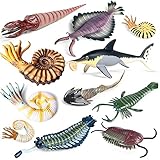
- Uncommonly Modeled Prehistoric Animals - Most children's models of prehistoric animals are of dinosaurs. The earlier animals are often neglected, and this set goes back to some of the earliest animals, twice the time back of dinosaurs, and represent animals that fossil hunters are more likely to find.
- Nice Collections of Marine Figures - This set contains Anomalocaris, Opabinia, Cameroceras, Cephalaspis, Eurypteroid, Cephalaspis, Ophthalmosaurus, Trilobita, 2 Nautilus, Australia Hornstone
- Solid, Detailed Sea Creatures - These ocean animal figurines are solid with no holes which makes them perfect for bath or water play. They would be fun toys for children and encourage imaginative play. These beautiful sea animal toys could also be used in a classroom display or library display, use them in the science center and water table, perfect for pretend play, sensory bins, etc.
- Nice Variety and Great Quality - Safe first! our product made of environmental PVC. They are a good value 11 different animals, all well formed and realistically detailed, with unique shapes and textures, solid and sturdy, the prehistoric toys looks like they are living.
- Awesome Gift - Such cute and different varieties of sea figures are worth to be collected, exquisite design and hand paint process, perfect Christmas birthday gift for kids and collector. Great for school project, education purposes, creative play, party favors, cake topper, bath toy, pool toy. Spark children's imagination and explore the wonderful deep sea creatures.
This is better understood as a surprising range extension and taxonomic reassessment than as a new-species discovery. It shows why collection records matter: a known animal found far outside its expected range can force scientists to reconsider how widely it lives, how populations are connected, and whether previous classifications accurately represent its relationships.
How scientists find and verify deep-sea animals
The deep sea cannot be studied effectively with a single method. Researchers combine observations, specimens, imaging and molecular evidence because each method answers different questions.
1. ROVs and crewed submersibles
Remotely operated vehicles and crewed submersibles carry cameras, lights, manipulators and scientific sensors into darkness that begins below the reach of sunlight. They record high-resolution video, precise depth data and behavior that would disappear if an animal were immediately removed from its habitat.
ROV footage can show whether a sponge is actively capturing prey, how a sea cucumber swims, or whether an octopus is associated with a particular seafloor environment. It can also reveal animals that are too fragile, too large or too mobile to collect easily.
2. Physical collection
Collecting a specimen allows scientists to examine external and internal anatomy, preserve tissue, compare it with museum specimens and perform genetic testing. A representative specimen may become the holotype used to anchor the formal description of a species.
Collection also has limits. Deep-sea animals can be gelatinous, delicate or damaged by pressure changes during recovery. Sampling is expensive and cannot cover every habitat, so the absence of a specimen does not mean the animal is unimportant; it means some taxonomic questions remain open.
3. Microscopy, measurements and CT scanning
Microscopes reveal small structures such as hooks, spines, pores and sensory features. Standard measurements help distinguish similar-looking species. CT and micro-CT scans provide three-dimensional views of internal anatomy and skeletal characters, often without destroying the specimen.
Crashes, No Sound, or Screen Glitches?
Random freezes, missing sound and display glitches usually trace back to one bad driver. Find and replace yours safely.Free scan · under a minuteWindows Errors? Fix Them Before They Spread
Repair common Windows errors and clear accumulated junk for a smoother, more stable PC - no reinstall needed.Free scan · no reinstallThese details are especially important in groups where several species have similar shapes or where soft bodies change appearance after collection.
Rank #4

- Authentic Internet Cryptid Lore: Inspired directly by the viral mythological documentaries, this model captures the eerie evolution of the "Sea Hand Monster"—the highly intelligent deep-sea titan that uses its human-like hand to deceive its prey.
- Intricate "Sea Hand" Details: Modeled after the iconic internet phenomenon, it features the exact striking design, showcasing a beautifully structured human hand rising from a detailed, scaled aquatic serpent body.
- Fluidly Posable Articulation: Built with precision interlocking joints, this 6-inch model features a multi-segmented spine that mirrors the lifelike, fluid movement of an underwater monster navigating the ocean deep.
- Premium Matte Display Finish: The dark gray finish adds a hauntingly premium aesthetic, accentuating every individual spinal ridge, webbed fin, and scale texture to look magnificent on shelves or desk setups.
- The Ultimate Gift for Lore Fans: A highly sought-after collectible and conversation piece for enthusiasts of online cryptid lore, dark fantasy miniatures, modern mythology, and unique sculptural oddities.
4. DNA sequencing
DNA sequencing helps test whether an animal is genetically distinct and clarifies its evolutionary relationships. Molecular evidence is most useful when combined with anatomy and collection data rather than treated as a replacement for them. A genetic difference still has to be interpreted in the context of known variation, related species and the quality of the sample.
5. Environmental DNA
NOAA’s environmental-DNA, or eDNA, work adds another route to discovery. Organisms release genetic material into seawater through mucus, waste, shed cells and decaying tissue. By sampling the water, researchers can detect evidence of animals that were not visually observed or physically collected.
eDNA is a powerful complement to conventional exploration, especially in large or difficult habitats. It does not, by itself, provide the complete body, behavior or anatomical comparison needed for every formal description. A water sample can suggest that an organism is present; imaging and specimens help explain what the organism is and how it lives.
Recommended Free Tools
Why the deep ocean produces such bizarre animals
“Bizarre” is an editorial description, not a scientific category. The animals seem strange partly because humans evolved in shallow, sunlit environments and are unfamiliar with adaptations to the abyss.
Deep-sea habitats combine:
- Permanent darkness: Animals may lose pigmentation, rely on touch and chemical signals, or produce their own light through bioluminescence.
- High pressure: Pressure rises by roughly one atmosphere for every 10 meters of seawater. Deep-sea animals have biochemical and cellular adaptations that allow them to function where surface organisms would be severely damaged.
- Low temperatures: Cold water slows chemical reactions and influences growth, metabolism and reproduction.
- Scarce and uneven food: Organic material may fall from the surface in a thin, unpredictable supply. Scavenging, suspension feeding, predation and unusual partnerships can all be advantageous.
- Patchy habitats: Trenches, seamounts, hydrothermal vents, cold seeps, whale falls and recently exposed Antarctic seafloor create isolated opportunities for specialization.
Those pressures help explain reduced pigmentation, gelatinous bodies, bioluminescence, symbiosis, unusual mouths and feeding structures such as the hooks on the predatory Chondrocladia sponge. The traits are not random oddities; they are solutions to specific environmental problems.
Independent reader supportYour contribution helps us test, update, and keep practical guides available for everyone.How deep can animals live?
There is no single depth at which all life stops. NOAA has reported a snailfish filmed at 8,336 meters, while the deepest zones below roughly 8,200 to 8,400 meters may impose a possible limit on fish with bony skeletons. Invertebrates can occur deeper than that proposed fish limit.
The boundary is not a simple line separating life from lifelessness. Different bodies, tissues and metabolisms respond differently to pressure, temperature and food availability. A trench may support specialized invertebrates even where bony fish cannot persist. Every new record also has to be checked carefully because depth measurements, animal identity and video interpretation can affect the conclusion.
Why finding these animals matters
Species discovery is not just a contest to find the strangest-looking animal. A name and a verified description give scientists a way to track a species, compare populations, study its role in an ecosystem and assess whether it is threatened.
Best Value

- Trevor Henderson-Inspired Design: Faithfully captures the “mythical ocean predator” aesthetic, with a skeletal-deep-sea-creature look to thrill horror fans.
- Fully Articulated & Poseable – Jointed head, limbs, and tail enable dynamic poses (swimming, lunging, etc.) for dioramas, displays, or creative play.
- Hyper-Detailed 3D Printing – Intricate scales, spines, and teeth; precise craftsmanship brings every eerie detail to life (no assembly required).
- Collector-Grade Durability – Sturdy, fade-resistant materials ensure long-lasting display; smooth finish (no rough edges) for safe handling.
- Unique Gift for Enthusiasts – Perfect for horror buffs, nautical collectors, Trevor Henderson fans, or anyone who loves surreal/deep-sea art (ideal for birthdays, Halloween, or collector showcases).
That work is especially urgent in places that are difficult to revisit and vulnerable to disturbance. Deep-sea habitats may face pressure from fishing, mining, climate-driven changes in surface productivity, pollution and other human activities before scientists have even completed a basic inventory. Documenting what lives there provides a baseline for future monitoring and conservation decisions.
At the same time, the large numbers reported by exploration programs should be interpreted carefully. A discovery announcement can reveal the scale of the knowledge gap without meaning that every record has completed formal taxonomy. Both facts can be true: researchers are encountering an extraordinary amount of previously unknown life, and the slower work of confirming, naming and describing it is still underway.
A quick checklist for reading the next deep-sea discovery headline
- Look for the exact wording. “Observed,” “reported as new to science” and “formally described” do not mean the same thing.
- Check whether there is an official scientific name. A genus followed by “sp. nov.” may indicate a proposed or newly recognized species in a report, not necessarily a completed binomial name.
- Ask whether a specimen exists. Video-only animals such as Casper may remain impossible to place confidently in a species-level classification.
- Separate a new animal from a new record. A known species found in an unexpected region may represent a range extension or taxonomic reassessment.
- Read the method, not just the photograph. Depth, location, morphology, CT scans, DNA and specimen deposition show how strong the identification is.
The most defensible conclusion is also the most exciting one: the deep ocean is still producing genuinely new species, but science becomes more—not less—interesting when discovery is separated from formal description. A strange shape may begin the story; careful observation, specimens, genetics and publication are what complete it.
Frequently Asked Questions
Is the Casper octopus a formally named new species?
Not necessarily. A video can document an animal’s appearance, behavior, depth and habitat, but species-level identification may require a physical specimen, anatomical comparisons and genetic evidence. The famous Casper octopus has not been formally placed because no specimen has been collected.
Were all 1,121 Ocean Census discoveries formally described species?
No. Ocean Census reported 1,121 previously unknown marine species in a May 2026 announcement, but that program-level discovery total should not be interpreted as 1,121 species all receiving official binomial names and peer-reviewed descriptions at the same time.
What’s actually slowing this PC down?
Pick the symptom - the matching free tool is one click away.
Is the headless chicken monster a newly discovered species?
No. “Headless chicken monster” is a common name for deep-ocean sea cucumbers in the genus Enypniastes. A new video or sighting is not automatically a newly discovered species.
What is the deepest fish scientists have recorded?
Researchers have filmed a snailfish at 8,336 meters. NOAA notes that depths below roughly 8,200 to 8,400 meters may impose a possible limit on fish with bony skeletons, although invertebrates can occur deeper.
The Bottom Line
Bottom line: Scientists are finding many bizarre deep-sea animals, including a predatory spherical sponge and three formally described snailfish. But famous video sightings and large discovery-program totals are not automatically lists of fully named species: “new sighting,” “reported as new to science,” “range extension” and “formally described” are different scientific claims.
Quick Recap
Product prices and availability are accurate as of the date/time indicated and are subject to change. Any price and availability information displayed on Amazon at the time of purchase will apply.
Do these 3 things before closing this tab:
1Repair Windows errors before they cause bigger problems2Scan for outdated or missing drivers - takes under a minute3Clear out junk files and repair common Windows errors



