Quick wins for a faster PC:
Fix the driver behind crashes, sound loss and screen glitchesFind Drivers →Clear out junk files and repair common Windows errorsFree Scan →Scan for outdated or missing drivers - takes under a minuteDriver Scan →Scientists have named Galahadosuchus jonesi, a previously unrecognized early relative of crocodiles, after studying a fossil collected in 1969 at Cromhall Quarry in southwest England. The fossil was not newly excavated: it is a partial skeleton that had been held as a museum specimen before researchers formally described it as a new genus and species in 2026.
Despite the shorthand “ancient crocodile,” Galahadosuchus was a non-crocodyliform crocodylomorph—not a modern-style crocodile. The distinction matters: it belonged to the broader evolutionary group that includes crocodiles, but it was an earlier kind of animal.

What is Galahadosuchus jonesi?
Galahadosuchus jonesi is a newly named species of early crocodylomorph described by Ewan H. Bodenham and coauthors in The Anatomical Record. The paper was first published online on February 12, 2026 (DOI: 10.1002/ar.70162). The authors formally designated the fossil specimen NHMUK PV R 10002 as the new species’ holotype—the reference specimen used to define the name.
The authors put that designation plainly: “We therefore designate NHMUK PV R 10002 as the holotype of Galahadosuchus jonesi n. gen. n. sp.”
What’s actually slowing this PC down?
Pick the symptom - the matching free tool is one click away.
#1 Best Overall
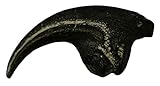
- The allosaurus was a large, theropod predator that lived roughly 156 to 130 million years ago and may have grown up to 39 feet (12 m) long
- Cast of the large toe ungual from the towering bipedal carnivorous dinosaur of the Jurassic
- The original claw was unearthed in the Morrison formation at the Cleveland-Lloyd Quarry in central Utah
- Detailed cast replica. 7 inches. Museum quality resin cast made in the USA
Why say it was “hiding in plain sight”?
The fossil was collected by Ron Croucher in 1969 at Cromhall Quarry, Gloucestershire, in southwest England. Its scientific recognition as a distinct animal came later, after detailed anatomical study. This is a taxonomic reassessment of an existing museum fossil, not a new 2026 excavation.
The specimen comes from a relatively high stratigraphic position at site 1 within the quarry’s Late Triassic fissure-fill deposits. The primary description characterizes the deposits as Late Triassic, spanning the Carnian–Rhaetian; it does not establish an exact numerical age for this specimen’s specific position. That is why an exact age such as 215 million years should not be treated as a paper-backed date for this fossil.
Rank #2

- TAKE HOME THE KING OF THE DINOSAURS: The legendary Tyrannosaurus Rex is one of the most popular dinosaurs in the world. With terrifying jaws and an immense size, this large carnivore has a collectible appeal to any dinosaur enthusiast!
- BRINGING THE PAST TO LIFE: The Smithsonian's specimen, USNM 555000 T-Rex skull, better known as, The Nation's T-Rex, is one of the largest and most complete T-Rex specimens ever discovered. Now you can take home a piece of this prehistoric treasure!
- MADE WITH CRETACEOUS QUALITY: Durably constructed with a heavyweight polystone resin. It is designed to last a lifetime and features hand-painted detailing. 1:10 replica this impressive skull replica leaves a big impact in a small desk-sized space.
- PERFECT FOR ANY DINO-ENTHUSIAST: Secured to a base and plaque, the skull will sit prominently on your shelf, desk, or table while also displaying information about the skull. This offers a unique visual display for any dinosaur collector!
- OFFICIAL SMITHSONIAN COLLECTIBLE: Full authorized and licensed by the Smithsonian Museum, this T-Rex replica skull is ideal for anyone fascinated by the Tyrannosaurus Rex. Take home your very own T-Rex skull, or gift one to the dino-lover in your home!
What parts of the animal have been found?
NHMUK PV R 10002 is a partial, semi-articulated postcranial skeleton: some bones remained associated, but the specimen is not a complete skeleton and does not include a described skull. The reported material includes:
- Vertebrae and ribs
- Shoulder and arm bones, including wrist and hand bones
- Pelvic and hindlimb material
- Foot bones
- Osteoderms, or bony plates in the skin
That assortment gives researchers substantial information about the animal’s trunk and limbs, while leaving important parts of its anatomy unknown.
Do these 3 things before closing this tab:
1Fix the driver behind crashes, sound loss and screen glitches2Clear out junk files and repair common Windows errors3Scan for outdated or missing drivers - takes under a minuteRank #3

- Realistic Fossil Replica: Museum-quality cast of an Early Eocene bat skeleton from the Lower Green River Formation, Lincoln County, Wyoming
- Historic Specimen: Represents one of the earliest known mammals, offering a glimpse into life approximately 50 million years ago
- Great Gift for Fossil Lovers: Appropriate for fossil collectors, educators, and anyone fascinated by prehistoric life and natural history
How is it different from Terrestrisuchus?
The researchers compared Galahadosuchus with early crocodylomorphs including Terrestrisuchus. The animals are morphologically similar, but the paper identifies differences across several parts of the skeleton rather than relying on a single feature.
| Anatomy or interpretation | What the paper reports |
|---|---|
| Vertebrae | Differences were identified in vertebral anatomy between the specimen and Terrestrisuchus. |
| Limb bones | The researchers report differences in limb bones. |
| Wrist bones | The radiale and ulnare—the two wrist bones highlighted in the paper—are shorter and stouter in Galahadosuchus. |
| Metacarpals | Differences were identified in the bones of the hand. |
| Calcaneum | The paper also reports a difference in this heel bone. |
The comparatively short, robust radiale and ulnare are singled out as distinguishing features. Together with the other anatomical differences, they support treating the specimen as a distinct taxon despite its resemblance to Terrestrisuchus.
Independent reader supportYour contribution helps us test, update, and keep practical guides available for everyone.What do scientists infer about how it moved?
The authors interpret Galahadosuchus as a gracile, cursorial terrestrial quadruped with an erect stance. In everyday terms, they infer a lightly built animal that walked on four limbs on land, holding its limbs in a relatively upright posture rather than sprawling out to the sides.
The paper notes that anatomical differences could indicate locomotor specializations, but says more work is needed to establish how those features relate to function. It does not demonstrate a particular running speed, hunting style, or prey animal.
Best Value
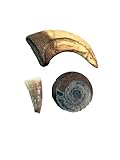
- Three-Item Fossil Set – Includes one Velociraptor claw replica, one Mosasaur tooth (B-grade), and one genuine small ammonite fossil
- Educational and Collectible – A great hands-on way to explore prehistoric life and paleontology
- Genuine Fossils Included – Both the Mosasaur tooth and ammonite are real fossil specimens
- Realistic Replica Claw – Velociraptor claw cast features high quality texture and curvature
- Ready for Display or Teaching – Great for collectors, educators, or science-themed gifts
Where does it fit on the crocodile family tree?
In the paper’s maximum-parsimony analysis, NHMUK PV R 10002 is recovered as the sister taxon of Terrestrisuchus, meaning the two are inferred to be each other’s closest relatives among the taxa in that result. Both cluster with the contemporaneous German species Saltoposuchus connectens in the family Saltoposuchidae in the reported analyses.
This placement describes evolutionary relationships; it does not make Galahadosuchus a member of the modern crocodile group. It is a crocodylomorph outside Crocodyliformes, the group that includes living crocodilians and their closer fossil relatives.
What does the name mean?
The genus name joins Galahad, the Arthurian figure associated with uprightness, with suchus, from Greek for crocodile. The authors say the name alludes to the animal’s upright posture. The species name jonesi honors David Rhys Jones, a teacher at Ysgol Uwchradd Aberteifi whose work inspired students, including lead author Ewan H. Bodenham.
What remains unknown?
The specimen and its anatomical description do not establish what Galahadosuchus ate or its precise ecological role. Nor does the study prove specific hunting behavior, speed, or a named prey species. Its inferred terrestrial, four-legged posture is the locomotor interpretation offered by the authors; the functional significance of its skeletal differences remains an open question.
Quick Recap
Product prices and availability are accurate as of the date/time indicated and are subject to change. Any price and availability information displayed on Amazon at the time of purchase will apply.




