What’s actually slowing this PC down?
Pick the symptom - the matching free tool is one click away.
Scottish Fold cats are known for forward-folding ears, rounded features, and affectionate, often quiet temperaments; the longhaired form is also called a Highland Fold. Their folded-ear trait is associated with inherited osteochondrodysplasia, a cartilage and skeletal disorder that can cause painful arthritis and restricted movement. The UK Animal Welfare Committee says all Scottish Fold cats are affected, although the signs and impact for an individual cat should be assessed by a veterinarian.
If you already care for a Fold, arrange regular veterinary checks and watch for changes in walking, jumping, climbing, play, or willingness to move; cats can hide pain. If you are considering one, weigh the welfare concern alongside the cat’s appealing traits, and distinguish registry breeding guidance from animal-welfare advice and rules that apply in particular places.
Scottish Fold facts at a glance
| Feature | What to know |
|---|---|
| Other names | Scottish Fold Longhair or Highland Fold for the longhaired form; naming conventions vary |
| Origin | CFA traces modern breed history to Susie, a farm cat in Scotland |
| Coat | Shorthair and longhair varieties, with many colors and patterns |
| Ears | Folds have ears that point forward and downward; Scottish Straights have straight ears |
| Typical temperament | Breed descriptions often call them affectionate, laid-back, quiet, and curious; individual cats vary |
| Key health concern | Osteochondrodysplasia, an inherited cartilage and skeletal disorder associated with the Fold trait |
CFA and TICA breed descriptions help explain how Scottish cats are classified and their expected appearance. Registry recognition or a breed standard does not establish that a cat is free of health or welfare concerns.
What is a Highland Fold?
Highland Fold is a name used for the longhaired form of the Scottish Fold. CFA uses Scottish Fold Longhair and Scottish Fold Shorthair for the coat varieties. Registry and everyday terminology can differ.
#1 Best Overall

- COUCH CORNER DESIGN: Specially shaped to snugly fit furniture edges, providing a convenient and stable vertical scratching space for cats of all sizes.
- NATURAL SISAL: Wrapped with natural sisal mat that cats love to scratch, helping keep claws healthy and your cat active.
- STURDY & STABLE BASE: Comes with a wide wooden base and reinforced support to prevent wobbling or tipping—perfect for energetic scratchers.
- PROTECT FURNITURE: It helps to redirect cat bad behavior and protect your sofa. Use included catnip if your cat ignores the scratcher.
- EASY CARE & ASSEMBLY: The scratcher comes with stable wooden structure, simply follow the manual to assemble easily and quickly.
Scottish Fold and Scottish Straight cats share general structural and personality traits in TICA’s description; their visible distinction is ear shape. A straight-eared cat bred from Scottish Folds is not automatically free of inherited risk: Cats Protection says straight-eared offspring can still be at risk of earlier-onset and faster-progressing arthritis and abnormal bone growth.
History of the Scottish Fold
CFA traces the breed’s history to Susie, a farm cat in Scotland. The folded-ear trait is associated with a dominant gene. These breed-history details do not lessen the welfare implications of the inherited cartilage disorder.
Appearance and physical traits
Scottish Folds are commonly described as rounded cats, with a rounded head, large eyes, and medium rounded body. The defining Fold ears point forward and downward. CFA describes longhair and shorthair varieties; straight-eared Scottish cats are also included in registry descriptions.
Folded ears are an outward feature of the same inherited trait associated with defective cartilage formation. The more important health considerations are the tail, feet, joints, gait, and ability to move comfortably. A short, thick, or inflexible tail, shortened or splayed feet, limping, or reduced activity warrant veterinary attention.
Free tools Windows power users keep installed
One-click scans. No signup required.
Scottish Fold temperament and household fit
Breed descriptions commonly portray Scottish Folds as affectionate, laid-back, quiet, and curious. These are general descriptions, not guarantees about an individual cat. Age, socialization, health, experience, and environment all influence behavior.
Rank #2
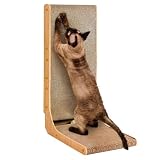
- HIGH QUALITY MATERIALS: The surface of the cat scratching board is made of non-toxic and high-density corrugated paper, which is durable enough to withstand cat scratching.
- INNOVATIVE DESIGN: Our cat scratcher for indoor cats features an L-shaped design. Please place it against wall and sofa to protect your furniture. The L-shaped cat scratcher provides more scratching area for cats to scratch in a variety of positions.
- MULTIFUNCTIONAL USE: Cats can scratch, relax and stretch on our cardboard cat scratcher. Our cat scratch pad also comes with a toy ball to play with. It provides a safe and comfortable environment for cats.
- MULTIPLE SIZES: We offer three sizes of cat scratching pad for you to choose from. The smallest size is specially for kittens. No matter what size your cat is, it enables your cat to scratch and play to its heart's content!
- EASY INSTALLATION: Our cat scratching board adopts a simple installation method and comes with instructions and necessary tools. We also provide an installation video so that you can install it quickly and easily.
A good home can provide:
- daily social contact and gentle interaction;
- predictable routines and safe places to retreat;
- age-appropriate play and enrichment;
- careful introductions to children and other animals;
- regular veterinary examinations; and
- observation of movement, grooming, climbing, and litter-box use.
A cat’s calm or inactive behavior does not establish that it is comfortable. Cats Protection notes that cats can hide pain, so a cat that plays less, moves reluctantly, or changes its usual habits should not simply be assumed to be placid.
The major health concern: osteochondrodysplasia
Osteochondrodysplasia is an inherited disorder involving cartilage and skeletal development associated with the Scottish Fold trait. The UK Government’s Animal Welfare Committee states that all Scottish Fold individuals are affected. It describes possible consequences including short, thick, inflexible tails, shortened and splayed feet, painful degenerative osteoarthritis, pain, and restricted activity. Cats Protection also describes cartilage-related disease in cats bred from Scottish Folds, including straight-eared offspring.
The signs and their timing can vary. Cats Protection notes that abnormalities can be visible on x-rays in young kittens and that limping may begin in kittenhood, but breed information cannot predict an individual cat’s course. This is a welfare concern, not an individual diagnosis; a veterinarian should assess a cat’s symptoms.
Windows Errors? Fix Them Before They Spread
Repair common Windows errors and clear accumulated junk for a smoother, more stable PC - no reinstall needed.Free scan · no reinstallOutdated Drivers Are Slowing You Down
One free scan finds every outdated or missing driver and matches the right update for your exact hardware.Free scan · exact hardware matchDifferent positions on breeding
CFA describes breeding Fold-eared cats with straight-eared cats and using DNA testing to select pairings, with the goal of reducing arthritic and bone conditions. The UK Government Animal Welfare Committee states that the disorder and associated welfare problems cannot be eliminated through selective breeding within the Fold breed or by outcrossing. These positions should not be conflated: registry breeding practices do not establish that a Fold kitten is free of the underlying concern.
Signs owners should watch for
Watch for changes such as:
- tail stiffness, thickening, or reduced flexibility;
- limping, a changed gait, or reluctance to move;
- less interest in play, climbing, or jumping;
- difficulty reaching elevated places;
- changes in grooming or litter-box habits; and
- new sensitivity to handling or a progressive decline in ordinary activity.
These signs are not diagnostic. Do not force a cat to jump or manipulate its tail to test it. Arrange a veterinary examination for new, persistent, painful, or worsening changes. Regular checks matter even if no obvious signs are present, because outward behavior alone may not reveal pain.
Rank #3

- 【Value 2-Pack – More for Less】 Get two high density L-shaped cat scratchers at a better price compared to buying one individually. Perfect for homes with multiple cats, or to place in different rooms.
- 【Size Options】 Large: 25.6 x 14.6 x 11.8 inches, thickness: 1.6 inches (base), 1.4 inches (body); Medium: 19.7 x 15.4 x 10.8 inches, thickness of cardboard: 1.4 inches
- 【Reversible Pad – Double the Life】 Double the use of your scratcher with the reversible design. Simply disassemble and reinstall to use the other side when the first gets worn out.
- 【Protect Your Furniture】 Keep your furniture safe from scratches! This cat scratcher helps prevent damage to couches, walls, and other surfaces by providing a dedicated scratching spot that cats love.
- 【Eco-Friendly】 Made from 100% recyclable corrugated cardboard, non-toxic and safe for both your cat and the environment. A sustainable choice for conscious pet owners.
How a veterinarian may investigate mobility changes
A veterinarian can take a history, examine the cat, and assess its movement and affected areas. X-rays may help identify skeletal changes; the veterinarian will determine what evaluation is appropriate. Ask the veterinarian about treatment options if pain or reduced mobility is suspected. Cats Protection mentions veterinary-supervised pain-relief trials; do not give human painkillers or start medication or supplements without veterinary direction.
Coat care and routine care
Grooming
Regular brushing helps reduce matting and hairballs. CFA describes weekly combing for shorthair cats and more frequent attention for longer coats. The right frequency depends on coat length and the individual cat. Keep sessions gentle and stop if the cat appears uncomfortable.
Everyday feline care
Scottish Folds need routine care, including:
- a nutritionally complete diet appropriate for the cat’s life stage;
- weight monitoring and regular veterinary checks;
- routine nail and dental care as advised by a veterinarian;
- safe scratching surfaces and daily enrichment; and
- checking ears for debris, odor, irritation, or signs of infection.
If ear cleaning is needed, use a veterinarian-approved solution and seek veterinary advice about any irritation or odor. Routine care supports general health but does not remove the inherited welfare concern.
Making the home easier for a mobility-limited cat
If jumping or climbing becomes difficult, ask your veterinarian about adapting the home. Cats Protection suggests ramps, cat walks, and cat trees as possible ways to support access to elevated places. Tailor changes to the cat, and make sure any ramp or climbing surface is stable. Home adaptations can help with access but are not a treatment for osteochondrodysplasia or a substitute for veterinary care.
Breeding ethics and rules in Scotland and the UK
The welfare question is whether breeding for folded ears is acceptable given the associated inherited disorder. CFA describes Fold-to-Straight pairings and DNA testing as breeding practices intended to reduce arthritic and bone conditions. The UK Animal Welfare Committee states that the disorder and welfare problems cannot be eliminated through selective breeding or outcrossing.
Rank #4
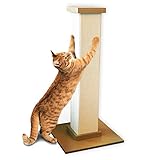
- 32″ height allows cats to stretch fully and tone muscles
- Sturdy 16″ by 16″ base eliminates tipping and wobbling
- Fibrous and durable woven sisal naturally inspires scratching
- Superior to carpeted posts that may snag nail
- Assembles with two included screws
Rules and registration positions are jurisdiction-specific. Scottish Government guidance for licensed cat breeders in Scotland says it is the government’s view that breeding Scottish Folds would likely breach a licensing condition where breeding risks welfare harm. The guidance also notes that GCCF does not accept Scottish Folds for registration. Cats Protection says breeding is not banned in the rest of the UK, while also noting the GCCF registration position. These statements concern breeding guidance and pedigree registration; they do not establish a global ban on the breed or ownership.
A registry standard explains classification or show requirements; it is not a health guarantee. Be wary of anyone who presents folded ears as purely cosmetic or dismisses mobility concerns.
Independent reader supportYour contribution helps us test, update, and keep practical guides available for everyone.Questions to ask before acquiring a Scottish Fold
Focus on welfare, records, and transparency as well as appearance.
- What is the cat’s classification? Ask whether it is folded-eared or straight-eared and what naming convention is being used.
- What veterinary records are available? Ask for the cat’s history and whether any mobility concerns have been examined.
- What testing or health information is documented? Ask what was tested and request records rather than relying on verbal assurances. Testing or a straight-ear label does not establish freedom from the broader welfare concern.
- How does the cat move? Observe ordinary walking and play without forcing jumps. Note stiffness, limping, reluctance to move, or difficulty climbing.
- How does the breeder explain the health issue? A transparent discussion should acknowledge the inherited cartilage and skeletal concern and the differing positions on breeding.
- What pairing was used? Ask which cats were bred together and what health considerations informed the decision. CFA describes Fold-to-Straight pairings, while the UK Animal Welfare Committee says outcrossing cannot eliminate the problem.
- Can your veterinarian examine the cat? Arrange an independent examination and understand the seller’s written health policy before committing.
Adoption is another option. Rescue organizations may have Scottish Folds, straight-eared Scottish cats, or mixed-breed cats needing homes. Whatever the source, ask about veterinary history and monitor mobility.
Is a Scottish Fold the right cat for you?
A Scottish Fold may appeal to someone seeking a cat described as affectionate, quiet, and curious, but prospective owners should take the inherited welfare concern seriously. Existing owners should arrange regular veterinary monitoring and seek advice about any change in movement or activity.
Recommended Free Tools
Best Value
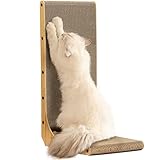
- Product Specifications - L shape size: 26.8 x 16.6 x 11.5 inch, thickness of cardboard: 1.6 inch. Thicker than other L shaped cat scratchers, more scratch-resistant.
- Irresistible to Cats - Cat scratching pads can help protect your furniture from claw damage, reducing unwanted scratching of other household objects.
- Unique design - L shape scratcher provides not only save space but also a place for cats to lounge and turn it into a cat wall scratcher ( Vertical ) , cat lounge/bed ( Horizontal) or cat house ( Prone ).
- Carefree Choice - Made of non-toxic corrugated paper and no harmful materials. Perfectly healthy for your adorable cats.
- Environmentally Friendly - Made of 100% eco-friendly and recyclable heavy duty cardboard, take it now!
Before deciding, consider:
- Can I provide regular veterinary care and follow up if mobility changes?
- Can I notice and respond to subtle changes in movement or behavior?
- Am I comfortable with the welfare concerns and differing breeding guidance?
- Would adoption or a straight-eared cat better match my priorities?
Frequently Asked Questions
What are Scottish Fold cats like?
Breed descriptions often call them affectionate, laid-back, quiet, and curious. These are general tendencies, not promises about an individual cat, and reluctance to move may be a sign of pain rather than temperament.
What health problems do Scottish Fold cats have?
The main concern is osteochondrodysplasia, an inherited cartilage and skeletal disorder associated with the Fold trait. It can involve abnormal tails and feet, painful arthritis, and limited movement. A veterinarian should assess symptoms in an individual cat.
How do I care for a Scottish Fold cat?
Provide routine veterinary checks, regular coat care, ear checks, and a home suited to the cat’s mobility. Contact a veterinarian about changes in gait, jumping, climbing, play, or willingness to move.
Are Scottish Fold cats banned?
There is no basis to describe the breed as globally banned. Scottish Government guidance says breeding Scottish Folds would likely breach a licensing condition in Scotland when welfare harm is expected. Cats Protection says breeding is not banned in the rest of the UK; GCCF does not accept the breed for pedigree registration.
Quick wins for a faster PC:
Scan for outdated or missing drivers - takes under a minuteDriver Scan →Repair Windows errors before they cause bigger problemsFix Now →Fix the driver behind crashes, sound loss and screen glitchesFind Drivers →Can a straight-eared Scottish cat be free of the inherited concern?
Not necessarily. Cats Protection says straight-eared cats bred from Scottish Folds can still be at risk of earlier-onset and faster-progressing arthritis and abnormal bone growth. Ear shape alone does not establish an individual cat’s health.
What should I do if my Fold is reluctant to jump or move?
Arrange a veterinary examination, especially if the change is new, persistent, painful, or worsening. Do not force jumps or manipulate the tail to test it. A veterinarian can assess the cat and discuss appropriate options.
Does breeding a Fold with a Straight eliminate the health concern?
No. CFA describes Fold-to-Straight pairings as a breeding approach intended to reduce arthritic and bone conditions. The UK Animal Welfare Committee says the disorder and associated welfare problems cannot be eliminated through selective breeding or outcrossing.
Quick Recap
Product prices and availability are accurate as of the date/time indicated and are subject to change. Any price and availability information displayed on Amazon at the time of purchase will apply.
The Tool Desk
Outbyte Driver Updater FREEFix the driver behind crashes, sound loss and screen glitchesFind Drivers →Outbyte PC Repair FREEClear out junk files and repair common Windows errorsFree Scan →



