
Some links on this page are affiliate links: if you buy through them we may earn a commission, at no extra cost to you.
Book a complete veterinary examination soon after bringing home a rescued older cat, even if the cat appears healthy. The visit should document medical history, weight and body condition, perform a thorough physical examination, review infectious-disease and vaccine status, and create a diagnostic baseline tailored to the cat. Cats older than 10 years are considered senior by AAHA/AAFP; clinicians may begin senior screening at ages 7–10.
Why the first examination matters
Rescue records may be incomplete, exposure history may be uncertain, and cats often hide pain or illness. A first examination gives the veterinarian a starting point against which future changes can be measured. It also identifies problems that affect introductions to other pets, vaccination decisions, nutrition, dental treatment, parasite prevention and the design of a safe home.
As an Amazon Associate I earn from qualifying purchases.
What’s actually slowing this PC down?
Pick the symptom - the matching free tool is one click away.
AAHA/AAFP’s 2021 senior-care guidance labels cats older than 10 years as senior. Its diagnostic recommendations begin consideration earlier, at approximately 7–10 years, because a veterinarian may reasonably start screening before the formal life-stage cutoff.
Prepare before the appointment
Gather every record available from the shelter, rescue group, previous owner and referring veterinary practice. Give the clinic copies or photographs before the visit if possible.
Popular on Amazon

- Pet Carrier: 17.5” L x 11” W x 11” H, Recommended max load of 16 lbs cats small dogs. Please do not choose your carrier based on weight--please reference your pet's length and height in selecting a pet carrier size.
- Fits for under-seat dimensions of most airlines. Every airline has a specific set of rules and regulations, please contact with airline before flying with your cats small dogs.
- Mesh windows for ventilation, top and side entry with locking zippers for safety. Carrying handles, adjustable shoulder strap which can also be used as seatbelt, and back strap can fasten the pet carrier to your luggage.
- Pet carrier comes with a removable base insert, which creates a solid surface for your pet to stand on, along with a removable & hand washable cozy fleece pet bed, which offers a cozy sleeping space for your traveling cats small dogs.
- "Toys for pets, of textile materials". Mostly used as a Toy of Fabric Pet Home for pets playing and relaxing.
- Adoption paperwork, previous diagnoses, hospitalizations and surgery reports.
- Vaccination certificates, laboratory results and dates of parasite treatments.
- A complete list of prescription medicines, over-the-counter products and supplements, including doses.
- The current food, feeding schedule, treats and any recent appetite or weight change.
- Observations about drinking, urination, stool, vomiting, grooming, sleep and behavior.
- Notes about gait, jumping, stairs, hiding, vocalizing or other possible pain or mobility changes.
- Short videos of breathing, walking, eating, litter-box use or unusual behavior that may not occur in the clinic.
Use a secure carrier. Start carrier acclimation before the appointment by leaving it open in a familiar room with bedding and treats, rather than introducing it only on the day of travel. Carrier acclimation is part of AAHA/AAFP preventive-care education and can make future examinations less stressful.
What the veterinarian should examine
A detailed history
The clinician will ask about previous medical and surgical information, all current medicines and supplements, diet, appetite, water intake, urination, stool, behavior, mobility and signs noticed since rescue. Explain what is known and what is unknown; uncertainty itself helps the veterinarian judge exposure and testing needs.
Quick wins for a faster PC:
Fix the driver behind crashes, sound loss and screen glitchesFind Drivers →Clear out junk files and repair common Windows errorsFree Scan →Ask the practice to record body weight, body-condition score and muscle-condition score. A single weight is less informative than a series of comparable measurements. Declining muscle or a gradual weight change can be an important early signal even when appetite appears normal.
A full physical examination
AAHA/AAFP states, “All cats need a full thorough physical examination.” The veterinarian should assess:
Also popular on Amazon
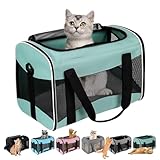
- [PRODUCT DIMENSIONS] Pet travel carrier size : 17x11x11 inches, recommended up to 15 lb pets, it is suitable for large, medium cats and small dogs. Please don't choose your airline cat carrying case based on weight, please refer to your pet's length and height when choosing a pet carrier size.
- [AIRLINE APPROVED] This cat carrier is designed with airline approved, it can fit comfortably under most flight seats, we can take our pets wherever we want. Dog travel carrier offers two attachment loop handles that can be used as a dual harness or as a luggage strap for balanced carry and secure transport.
- [EXCELLENT MATERIAL] Collapsible cat carrier is made of polyester fabric, supported by a steel ring, washable, wear-resistant and durable. The three sides and the top of this pet carrier are nylon mesh, scratch-resistant and not easy to damage, it can not only check your pet in real time, but also ensure enough air circulation.
- [SAFE AND COMFORTABLE] Dog travel bag has metal zippers on the top and side entrances, durable and not easy to deform, it allows your pets to enter and exit easily. The cat carrying case is equipped with an anti-escape safety buckle, which can effectively prevent pets from accidentally falling. It is suitable for car rides and vet rides.
- [PORTABLE AND FOLDABLE] Pet travel carrier comes with a detachable and hand washable wool pet bed, it can provide a comfortable sleeping space for your traveling pet. The cat travel case comes with an adjustable shoulder strap and handle for easy portability. When not in use, you can fold it up for storage.
- Demeanor, alertness, signs of pain and handling tolerance.
- Hydration, temperature, heart rate, pulse and breathing.
- Heart and lungs, including abnormal sounds.
- Eyes and ears.
- The mouth, gums, teeth and oral tissues.
- Skin, coat, parasites, wounds, lumps and grooming condition.
- Abdomen and peripheral lymph nodes.
- Neurologic status, gait, joints, range of motion and mobility.
- Body condition and muscle mass.
Physical findings determine whether imaging, additional laboratory work or a more urgent follow-up is appropriate. A normal-looking cat should not automatically receive every available test, while an abnormal finding may justify more extensive investigation.
Senior laboratory screening: what may be offered
For cats in the senior range, AAHA/AAFP lists a complete blood count (CBC), serum biochemistry, urinalysis, total thyroxine (T4), symmetric dimethylarginine (SDMA) or another renal index, blood-pressure measurement, retroviral testing and fecal examination. The guidance emphasizes that diagnostics must be tailored to the individual cat’s history and physical examination.
Free tools Windows power users keep installed
One-click scans. No signup required.
| Assessment | What it can contribute to the baseline | Important qualification |
|---|---|---|
| CBC | Information about red cells, white cells and platelets. | Interpret alongside examination findings and other tests. |
| Serum chemistry | Screening information about organ function, glucose and electrolytes. | The listed minimum panel includes total protein, albumin, globulin, alkaline phosphatase, ALT, glucose, BUN, creatinine, potassium, phosphorus, sodium and calcium. |
| Urinalysis | Helps evaluate urine concentration and urinary abnormalities. | Collection method and hydration can affect interpretation. |
| T4 | Assesses thyroid status in an older cat. | A result is interpreted with clinical signs and other laboratory findings. |
| SDMA or another renal index | Adds information to kidney assessment. | It complements, rather than replaces, urinalysis and chemistry. |
| Blood pressure | Identifies hypertension that may require monitoring or treatment. | Stress and technique can influence readings, so trends may matter. |
| Retroviral testing | Clarifies FeLV and FIV status when records or exposure history are uncertain. | Discuss the meaning of a result with the veterinarian, particularly after recent exposure or prior vaccination. |
| Fecal examination | Looks for intestinal parasites. | Testing and prevention should reflect lifestyle, geography and exposure. |
These tests are a framework, not an automatic package. The veterinarian may recommend fewer tests for a low-risk cat with reliable recent records or additional tests when weight loss, abnormal examination findings, medication use, chronic disease or rapid change is present. Ask what decision each proposed test will change, whether the result can be repeated for trend monitoring, and how stressful or invasive the procedure is.
FeLV and FIV: deciding whether to test
Discuss feline leukemia virus (FeLV) and feline immunodeficiency virus (FIV) testing when rescue records are missing, incomplete or old, or when the cat may have had relevant exposure. Results can affect introductions to resident cats, temporary separation, vaccination planning and treatment decisions.
Also popular on Amazon

- High Quality Design:Sturdy steel cage structure and wooden support board maintain good spatial stability and shape. Breathable mesh windows on four sides,which can ensure good air circulation and views,make pets have a comfortable and safe travel.It can also be easy for you to check on your pets.There is a front pocket to store pet toys,treats,etc.
- Dimension and Weight:Made of durable tear-resistant fabric.Four easy entrances for pets. Dimensions: 17 inch x 11 inch x 11 inch (L*W*H), suitable for pets up to 16 lbs.Please don't choose your carrier based on weight only,consider your pet's length and height when choosing a carrier.
- Airline Approved & Safty:Can be placed under the seats of most airplanes(Four non-slip feet on the bottom to prevent movement), and comfortably on the seat next to you in a car or bus.It has a adjustable shoulder strap.Can also be fastened to the car seat with a safety belt or shoulder strap to keep your pet safe.
- Easy to Clean :You can clean the stains and dirt on the surface with a soft cloth.Soft mat inside the pet carrier is removable and washable.You can take it out and wash it easily to solve all stains.
- Easy to Collapsible & Lightweight:When not in use,fold it into a flat,space saving and easy to store.Only 2.2lbs,it's easier to carry around.It can also used as a toy of pet house,allowing pets to play in a safe space to relax and rest.
Do not interpret a result in isolation. Tell the veterinarian about any known prior vaccination, the timing of possible exposure and the source of the test. The clinician may explain whether confirmation or repeat testing is appropriate in the context of the cat’s history and the initial result.
Vaccination review for an older rescue cat
Vaccination decisions depend on documented history, age, health, lifestyle, likely exposure, the product label and local law. A healthy senior cat may still benefit from core vaccines, but AAHA/AAFP says the risk–benefit balance for seniors should be considered in light of overall health.
Windows Errors? Fix Them Before They Spread
Repair common Windows errors and clear accumulated junk for a smoother, more stable PC - no reinstall needed.Free scan · no reinstallCrashes, No Sound, or Screen Glitches?
Random freezes, missing sound and display glitches usually trace back to one bad driver. Find and replace yours safely.Free scan · under a minuteRabies timing follows the vaccine label and applicable local requirements. Other protocols should be individualized to the cat’s infectious-disease exposure risk rather than copied from another household. Every vaccination visit should include a thorough physical examination and client education. If records are absent, ask the veterinarian to explain the safest way to establish protection without assuming that an undocumented vaccine was given.
Parasites and zoonotic risks
The veterinarian should assess fleas, ticks, intestinal parasites and, where relevant, heartworm exposure. Travel history and geography can change the risk profile. A fecal examination and an appropriate broad-spectrum prevention plan may be recommended.
Also popular on Amazon

- AIRLINE APPROVED CARRIER - With airline-approved design, you can take your pet to go to everywhere. This pet carrier provides two connecting loop handles for balanced carrying as a dual seat belt or luggage strap to secure transport
- SAFETY DESIGN - The adjustable shoulder strap help you hands-free carrying and makes it more safe and convenient pet carrier bag for your travel
- DURABLE - This cat carrier is made of durable and lightweight polyester fabric. The four-side mesh will not only give a safe and comfortable travel for your pet, but also easy for you to check on your pet
- PORTABLE & FOLDABLE - This dog carrier is easy to carry and store, which has a padded shoulder strap and handles
- BOTH SIZES AND WEIGHTS - The mediun cat carrier is designed for small and medium pets within 15" x 9" x 9"(smaller than product) and 15 lbs. Please do not choose your carrier only based on weight. Reference your pets' length and height in selecting a carrier size.If carried on board, the maximum dimensions should not exceed 18IN*11IN*11IN.
Indoor-only status does not eliminate parasite risk. Fleas and other organisms can enter on people, other pets, clothing or shared environments. Ask which products are suitable for this cat’s age, health and household, how often they should be applied, and which symptoms or product reactions warrant a call to the clinic. Discuss zoonotic risks so that people in the home can follow sensible hygiene and litter-box precautions.
Mouth, teeth and eating comfort
Oral examination should look for painful periodontal disease, fractured teeth, tooth-resorption lesions, oral masses, inflamed tissues and difficulty eating. A cat may continue to eat despite substantial dental pain, so appetite alone does not rule out a problem.
Recommended Free Tools
If disease is found, discuss professional dental treatment, what anesthesia and dental imaging would involve, expected recovery and realistic home care. Senior-care guidance supports preventive dental care when there are no contraindications. Home brushing or other care should be introduced gradually and should not replace treatment of painful disease.
Independent reader supportYour contribution helps us test, update, and keep practical guides available for everyone.Mobility, cognition and the senior home
Ask specifically about arthritis, stiffness, reluctance to jump, difficulty climbing stairs, altered grooming, litter-box accidents, nighttime vocalizing, confusion, hiding and other behavior changes. Record what happens at home rather than waiting for the cat to demonstrate it in the examination room.
Also popular on Amazon
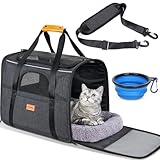
- 【 Spacious & Comfortable Cat Carrier 】The large cat carrier provides ample space for your feline friend to move, turn, and stretch during travel. Measuring 17.3 x 12.2 x 13.4 inches, it is wider and taller than most cat carriers, ensuring your pet feels comfortable and at ease while on the go.
- 【Balanced Mesh Design】Unlike other cat carrier hard, our cat carrier soft strikes the perfect balance with 40% mesh surface area. This ensures your pet can observe the surroundings and breathe easily while feeling safe and secure at the same time. The cat carrier large is suitable for pets in all kinds of situations.
- 【Built-in Dual-Sided Cushion】The detachable pad offers two distinct comforts: a cool side for summer and a super-soft, warm side for winter. You can easily flip it to match the season, providing the perfect temperature for your pet in any weather.
- 【Includes Foldable Bowl】Designed for on-the-go use, our foldable bowl carries 410g of food or 20oz of water. After use, simply collapse it and attach it directly to your pet's collar or leash, perfect for keeping your pet fueled and hydrated anywhere.
- 【Safe & Durable】Safety is our top priority, and the pet carrier for cat is equipped with a secure buckle to prevent your pet from escaping. The cat carrier soft is made of reinforced snow silk fabric and hard mesh material, ensuring durability and preventing any tearing during long-distance travel.
Practical modifications can reduce effort and improve access:
- Provide low-entry litter boxes where the cat spends time.
- Keep food, water and resting places on one level if stairs are painful.
- Use nonslip surfaces and stable steps or ramps where jumping is difficult.
- Place resources in quiet, easy-to-reach locations.
- Monitor appetite, drinking, elimination, weight and mobility between visits.
Nutrition and hydration should be discussed in the context of body condition, muscle mass, dental comfort and any diagnosed disease. Do not change diet or add supplements without checking that the plan fits the examination and laboratory findings.
Do these 3 things before closing this tab:
1Clear out junk files and repair common Windows errors2Scan for outdated or missing drivers - takes under a minute3Repair Windows errors before they cause bigger problemsHow often should a senior rescue cat see a veterinarian?
AAHA/AAFP recommends a minimum of annual examinations for cats generally and at least every six months for seniors. Its senior diagnostic table recommends testing at least yearly for cats older than 10 years, with testing every six months recommended.
More frequent reassessment may be appropriate when results are abnormal, a chronic disease is present, medicines change, the cat is frail, or weight or behavior changes rapidly. At each visit, compare the new weight, body-condition score, muscle-condition score, examination findings and relevant laboratory values with the established record.
A practical decision framework when tests or treatments are offered
When several options are possible, ask the veterinarian to compare them using these questions:
- How urgent is the concern, and which clinical signs support acting now?
- How do the cat’s age, frailty and other conditions change the balance of benefit and risk?
- What do the prior records and exposure history already establish?
- What decision will the result change?
- How invasive, stressful or difficult to repeat is the procedure?
- Can the result be compared with future measurements to identify a trend?
- Are local laws or vaccine-label requirements involved?
This approach keeps the visit focused on decisions that improve the cat’s health rather than collecting tests without a plan.
The essentials to remember
A rescued senior cat needs a complete first examination even when the cat appears well. History, weight, body and muscle condition, dental status, pain and mobility are as important as blood tests. A commonly considered senior screen includes CBC, chemistry, urinalysis, T4, renal indices, blood pressure, FeLV/FIV testing and fecal examination, adjusted to the individual. Vaccines, parasite prevention, dental care, nutrition and home setup belong in the same care plan, followed by at least annual care and usually six-monthly senior reviews.





Leave a Reply