Senvelgo (velagliflozin) is a prescription oral solution for cats in the United States. It is an SGLT2 inhibitor, not insulin, and its US indication is to improve glycemic control in otherwise healthy cats with diabetes mellitus that have not previously been treated with insulin. The US label dose is 1 mg/kg (0.45 mg/lb) once daily. The product carries a boxed warning because diabetic ketoacidosis (DKA) and euglycemic DKA can occur and can be fatal, so it is only appropriate when a veterinarian has examined the cat, selected it for treatment, and arranged monitoring.
This article follows the US prescribing information (DailyMed, version 5, published April 2, 2026). The UK product information changed in July 2026 and is covered separately at the end.

As an Amazon Associate I earn from qualifying purchases.
Any sign of illness in a cat on Senvelgo calls for a prompt veterinary call. The specific signs are listed under side effects below.
What Senvelgo is and how it works
Velagliflozin inhibits sodium-glucose cotransporter 2 (SGLT2) in the kidney. Normally the kidney reabsorbs glucose back into the blood; blocking SGLT2 reduces that reabsorption and increases the amount of glucose lost in urine, which lowers blood glucose. The drug works without replacing insulin.
#1 Best Overall
The FDA states that SGLT2 inhibitors may be suitable for some diabetic cats that still make insulin but do not respond to it normally. Deciding which cat fits that description is a clinical decision made by the veterinarian who examines the cat.
Who may and may not start Senvelgo
Eligibility is a clinical judgment, not the result of one test. No test lets a veterinarian confirm whether a cat still makes enough insulin. The decision rests on history, physical examination, laboratory results, and the veterinarian’s judgment.
Cats treated with insulin
The US label lists Senvelgo as contraindicated in cats that have previously been treated with insulin, cats that are currently receiving insulin, and cats with insulin-dependent diabetes.
Quick wins for a faster PC:
Fix the driver behind crashes, sound loss and screen glitchesFind Drivers →Repair Windows errors before they cause bigger problemsFix Now →Scan for outdated or missing drivers - takes under a minuteDriver Scan →Conditions that rule out starting
The label says not to start treatment in cats with any of the following:
- Anorexia, dehydration, or lethargy at the time of diagnosis
- Ketonuria or ketonemia, suspected DKA, or a history of DKA
- Clinical suspicion of pancreatitis within the previous month
- Chronic or unresponsive diarrhea
- Cachexia
- Bilirubin above 0.5 mg/dL
- Creatinine above 2 mg/dL
Conditions that need close monitoring
- Creatinine of 1.6 to 2 mg/dL: the label requires close monitoring, with particular attention to dehydration and weight loss.
- IRIS stage 3 or 4 chronic kidney disease: safety and effectiveness have not been evaluated in these cats.
- Concurrent disease: the label calls for screening for urinary tract infection and assessment for pancreatitis, infection, neoplasia, and acromegaly.
Workup before the first dose
The label directs the veterinarian to confirm that the cat is alert, active, eating, and drinking, and to complete:
Rank #2
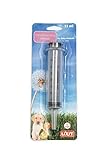
- PERFECT FOR BABY PETS: The Lixit hand feeding syringes are the perfect tool to help baby birds and small animals when they are not eating. If your baby pet is suffering from decreased appetite or Illness this syringe can help safely and comfortably administer food.
- QUALITY CONSTRUCTION: Lixit syringes are made from pharmaceutical grade plastic with a rubber plunger seal. The tapered tip allows for tubbing to be added.
- FOOD AND MEDICINE: The syringe is designed for both liquid and paste. It can be used to administer food or medicine.
- THE PERFECT SIZE: The 35ML features clear markings from 5 to 35ML allowing you to measure exactly how much food or medicine is needed.
- A physical examination and history
- A complete blood count (CBC) and serum chemistry
- Serum fructosamine
- Urinalysis, including ketones
If more than one week passes between diagnosis and the first dose, the label calls for a new examination and an updated history.
Dosage and how to give each dose
The US label dose is 1 mg/kg (0.45 mg/lb) once daily, regardless of blood glucose level. These are the label’s instructions. The prescribing veterinarian decides whether a particular cat receives the drug and confirms the dose for that cat.
Giving a dose
- Weigh the cat and note its weight in pounds. Use a current weight, not an old one from a previous visit.
- Draw the dose with the dosing syringe supplied with the product. Its scale is marked in pounds, and the label says to round down to the nearest pound. For example, a cat weighing 10.7 lb is read at the 10 lb mark.
- Give the dose at approximately the same time each day.
- Give it directly into the mouth, or with a small amount of wet food. The label says not to mix Senvelgo into food.
- Record each dose and any vomiting, appetite change, or change in urination or drinking so you can share it at the next visit.
Vomiting and missed doses
| Situation | What the label says |
|---|---|
| Cat vomits within 30 minutes of a dose | The same dose can be repeated |
| Cat vomits more than 30 minutes after a dose | Do not repeat the dose; wait for the next scheduled dose |
| Dose is missed | Give it as soon as possible on the same day |
Vomiting is also one of the warning signs listed below. Call your veterinarian about any vomiting before deciding whether to repeat a dose. For a dose missed beyond the same day, ask your veterinarian rather than adjusting the schedule yourself.
Monitoring during treatment
The FDA stresses that monitoring continues regardless of how long the cat has been on Senvelgo or how well it appears to respond. The label’s schedule is:
| When | What the label calls for |
|---|---|
| 2 to 3 days after starting | Urine ketone check |
| About 7 days after starting | Urine ketone check |
| Any time the cat shows signs of illness | Urine ketone check |
| Week 1 | Physical exam, blood glucose curve, serum fructosamine, body weight |
| Week 4 | Physical exam, blood glucose curve, serum fructosamine, body weight |
Urine ketone checks
Ask your veterinarian to show you how to collect a urine sample and which ketone test method to use. If ketones are present in the urine, the label calls for discontinuing Senvelgo and promptly starting insulin under veterinary care, even if blood glucose is normal.
Rank #3

- Small 3ml Syringe for Liquid, Oral, Scientific Labs, Measurement, Dispensing, with Cap
- plastic syringes for liquid, measuring and dispensing fluids, lab use and experiments.
- Individually sealed, clean, safe and sterile, good for pet oral feeding, essential oil, science lab, industrial, applications of inks, perfume, lubricants, sealants, etc.
- Syringe with cap can be easy to use and storage liquid.
- Warm note: the syringes are for industrial use only
Poor control in the first four weeks
The label says to discontinue Senvelgo and consider insulin for poor control during the first four weeks. Poor control is indicated by one or more of the following:
- Weight loss
- Average blood glucose of at least 300 mg/dL
- Fructosamine above 450 µmol/L
Why a normal glucose reading is not reassurance
Euglycemic DKA can develop when blood glucose is not high, so a normal glucose reading does not rule it out. Glucose in the urine is also not a reliable measure of glycemic control while a cat is on Senvelgo, and it can persist for two to three days after the drug is stopped.
Side effects and warning signs
The label’s safety data come from a 180-day multicenter field study of 252 cats. The reactions below were reported in that study. They describe the study population and do not predict the risk for an individual cat.
| Reaction reported in the 180-day field study | Cats affected (of 252) | Percentage |
|---|---|---|
| Diarrhea or loose stool | 132 | 52.3% |
| Weight loss | 111 | 44% |
| Vomiting | 92 | 36.5% |
| Increased urination | 46 | 18.3% |
| Increased thirst | 42 | 16.7% |
| Elevated blood urea nitrogen | 39 | 15.5% |
DKA and euglycemic DKA
The label reports DKA or euglycemic DKA in 18 of 252 cats (7.1%). Twelve of those cases were euglycemic. All but five occurred within two weeks of starting the drug.
“Euglycemic DKA is a life-threatening emergency that is characterized by euglycemia, metabolic acidosis, and ketoacidosis.”
Special offer. See more information about Outbyte and uninstall instructions. Please review EULA and Privacy policy.Rank #4
 12Pack 60ml Syringe for Liquid - Large Plastic Syringes Without Needle for Food Thick Liquids and Irrigation Water, Lip Gloss Filling, Feeding Dogs Meds, Measuring ( 12 Pack 60 ml / cc )
- Great Value Set: The set includes 12 packs 60ml sterile big syringes (no needles), 12pcs syringe tip caps and 6pcs 3ml droppers. Suitable for different scenarios. (Eliminate profiteering and waste, provide customers with real prices and products)
- Individually Sterile Sealed: Each 60cc syringe is sterilized in the epoxy ethane space, sealed and packed individually to ensure that the syringe is sterile. Ensuring the highest level of cleanliness and safety
- Easy to Use: The plunger head of the syringe and the tube wall are tightly sealed with good airtightness, leaving no residual liquid after injection. The plunger is easy to push and pull, with clear and accurate capacity markings. It is easy to measure and dispensing liquids
- Safe and Tasteless: Catheter tip syringes are made of high-quality food grade polypropylene material and rubber to ensure the durability and safety of the product, safe and tasteless, non-toxic. Tips: Syringes should not be used for medical purposes
- Multiple Uses: Suitable for jello food make, lip gloss for filling,, oil , Labs medicine science experiment, refilling inks, fake props, feeding pet dog cat, irrigation plants, lubricants making, industrial lab
FDA Center for Veterinary Medicine, Dear Veterinarian letter on Senvelgo
The FDA notes that serious events can occur even when glucose is stable and despite screening and monitoring. As the FDA describes treatment, it requires stopping Senvelgo, giving prompt insulin, giving a carbohydrate such as dextrose regardless of glucose concentration, and providing nutritional support. Suspected DKA is an emergency for a veterinary clinic. It is not something to manage at home.
Deaths and euthanasia
The label’s table lists death or euthanasia in 13 of 252 cats (5.2%). Its footnotes describe differing causes, so these cases should not be read as all caused by Senvelgo.
Stop the drug and call your veterinarian immediately if your cat
- Shows less interest in food or stops eating
- Has decreased energy or any change in normal activity
- Vomits or has diarrhea
- Becomes weak
- Has difficulty walking or standing
Do not wait for a glucose reading to decide whether to call. These signs are the reason to call.
Recommended Free Tools
Other precautions
- Reduced food intake: the label advises considering temporary discontinuation during reduced food intake, such as around surgery or with poor appetite. Make that decision with your veterinarian.
- Propylene glycol products: the label advises caution with other propylene glycol products. Check with your veterinarian or pharmacist before giving any other medication that contains it.
What the study data show
The label’s 180-day field study enrolled 252 cats. FDA’s Dear Veterinarian letter summarizes a six-month field study in which Senvelgo was over 80 percent effective in improving glycemic control. The letter’s web page does not show a publication date, so treat that percentage as FDA’s summary of its field data rather than a current, precise rate. Field-study results describe the cats studied and do not guarantee the same outcome for an individual cat.
Best Value

- SQUEEZE BOTTLE - 60ml nursing bottle for newborn kittens and puppies, 2.1 ounce capacity, small animal feeding bottle is easy to squeeze and easy to control the amount of milk.
- SMALL ANIMAL FEEDER SET - 1ml for small nipples, 3ml, 5ml, 10ml for medium and large nipples, 60ml feeding bottles can be freely combined with (small, medium, large) nipples.
- 5 REPLACEABLE NIPPLES - Different sized nipples to meet the needs of small animal at every stage, the soft rubber-tipped nipple prevents scratching the gums of newborn kittens and puppies.
- 5ML BROWN FEEDER - The brown 5ml syringe is made of light-safe material to prevent photosynthesis of medication, use a separate dedicated feeder for better use when your pet is sick.
- NEWBORN KITTENS & PUPPIES GIFT - Suitable for newborn and not yet teething small animals, kittens, puppies, hamsters, chinchillas, squirrels, rabbits, etc. you will be a very gentle owner, take care of it, love it and grow with it.
Alternatives to discuss with your veterinarian
Insulin and Senvelgo are not interchangeable for every cat. The factors that usually shape the choice include:
- Insulin dependence or prior insulin treatment, which excludes Senvelgo under the US label
- Route and burden: insulin is injected, while Senvelgo is an oral liquid given once daily
- Comorbidities and screening results, such as kidney function, bilirubin, suspected pancreatitis, and diarrhea
- Different risks: hypoglycemia with insulin, compared with DKA and euglycemic DKA with an SGLT2 inhibitor
- Monitoring demands, including urine ketone testing
- The treating veterinarian’s assessment of the individual cat
The FDA notes that Bexacat is another SGLT2 inhibitor, available as a tablet. Senvelgo is an oral liquid. Each product has its own label and eligibility rules, so a cat’s suitability for one does not establish its suitability for the other.
UK labeling update (separate from the US label)
The UK Veterinary Medicines Directorate announced a product-information update for Senvelgo on July 21, 2026. These UK changes are not part of the US label described above:
The Tool Desk
Outbyte PC Repair FREERepair Windows errors before they cause bigger problemsFix Now →Outbyte Driver Updater FREEFix the driver behind crashes, sound loss and screen glitchesFind Drivers →- The UK indication now reads “reduction of hyperglycaemia in cats with non-insulin-dependent diabetes mellitus.”
- New patient-selection precautions were added.
- Vomiting is categorized as common, meaning 1 to 10 animals per 100 treated.
The UK update notes that sporadic vomiting usually resolves without specific therapy, while acute or more frequent vomiting may signal DKA or another severe condition. UK owners should follow the UK product information and their veterinary surgeon’s instructions.
Quick Recap
Product prices and availability are accurate as of the date/time indicated and are subject to change. Any price and availability information displayed on Amazon at the time of purchase will apply.




