
Some links on this page are affiliate links: if you buy through them we may earn a commission, at no extra cost to you.
Most healthy, well-adjusted dogs can safely sleep in their owner’s bed when both dog and person rest well, the dog is house-trained and parasite-controlled, and no one is at risk from guarding, aggression, allergies, mobility problems, or an infant sleeping nearby. Sharing a mattress is a household preference—not a dominance test.
A separate dog bed, crate, pen, or gated area is the safer choice for puppies who cannot be supervised, dogs that guard beds or people, dogs that bite or startle when moved, dogs with serious behavior or mobility problems, and every home where a sleeping infant is on or near the bed.
As an Amazon Associate I earn from qualifying purchases.
Start with the household risk check
Decide from the individual dog and household rather than from a universal rule. Bed-sharing is usually reasonable only when every answer in the first column is true.
| Question | If the answer is yes | If the answer is no or uncertain |
|---|---|---|
| Is the dog healthy, house-trained, and current on veterinary and parasite care? | Sharing may be reasonable. | Use a separate sleep area until a veterinarian addresses the problem. |
| Can the dog be gently moved or asked to get off without growling, snapping, freezing, or biting? | There is no obvious handling warning. | Do not share the bed; seek qualified behavior help. |
| Does everyone sleep comfortably? | Keep monitoring sleep quality. | Use a separate bed or scheduled access. |
| Can the dog climb on and off without pain or a dangerous jump? | Provide steps or a ramp if needed. | Choose a low, supportive surface on the floor. |
| Is there no sleeping infant on or beside the mattress? | Continue with the other checks. | Keep the dog off the bed and away from the infant’s sleep surface. |
| Are allergies and asthma controlled? | Wash bedding and watch for symptoms. | Sleep separately and discuss exposure with a clinician. |
One failed check is enough to choose a separate space for now. You can reassess after treatment, training, or a change in household circumstances.
Popular on Amazon
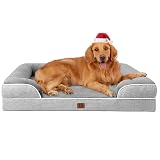
- Polyurethane Foam: The EHEYCIGA orthopedic dog bed features memory foam and egg crate foam to provide even support and pressure relief. It offers a good balance of softness and support, making it particularly suitable for elderly dogs to alleviate joint pressure.
- SOFA BED DESIGN: This bolster dog bed is designed with 3-sided bolsters to offer additional support for your pet’s neck and head, promoting restful sleep. The surrounding sides encourage your dog to snuggle in and enjoy a comfortable night's rest.
- WATERPROOF COVER: A waterproof film is positioned between the fleece surface and the bottom fabric, ensuring the dog bed remains dry. However, the sides are not waterproof.
- EXTREME COMFORT & MULTIPLE SIZES: The sleeping surface is covered with cozy fleece, creating a soft and inviting sleeping area for your pet. Whatever the size of your dog, we have a dog bed suitable for medium, large, and extra-large breeds.
- CARE INSTRUCTIONS: Remove foam, machine wash cover separately in cold water only, on a delicate cycle.Do not bleach, tumble dry low, and reshape as needed. Do not machine wash or dry the foam core. Allow the bed to expand for 24-48 hours after unpacking.
Bed-sharing is not a dominance test
Veterinary behaviorist Nicholas Dodman of Tufts has written that there is no reason most dogs should not sleep in their owners’ beds if both parties prefer it. The idea that a dog becomes dominant by occupying a mattress comes from an outdated interpretation of captive-wolf studies, not from a rule that predicts behavior in family dogs.
What matters is what the dog does around the bed. A relaxed dog that moves when invited, accepts handling, and does not control access is different from a dog that blocks a person, stiffens over a pillow, or reacts when disturbed. Giving a dog a bed does not create aggression, but allowing guarding to continue can make a dangerous pattern easier to rehearse.
The Tool Desk
Outbyte Driver Updater FREEFix the driver behind crashes, sound loss and screen glitchesFind Drivers →Outbyte PC Repair FREEClear out junk files and repair common Windows errorsFree Scan →Signs the bed has become a resource
- Growling, lip lifting, snapping, or biting when a person approaches or moves the dog.
- Freezing, hard staring, or suddenly stiffening over a person, blanket, or section of the mattress.
- Blocking a partner or child from getting into bed.
- Repeatedly refusing a cue to get off, especially when paired with threats.
- Startling aggressively after being touched or woken.
Do not punish a warning growl or physically drag the dog off. Close the bedroom door or use another sleep area, then contact your veterinarian and a qualified behavior professional. Pain, fear, anxiety, or a learned guarding habit may all be involved.
Health and safety risks to weigh
Infants and medically vulnerable sleepers
A dog should not be on a bed while an infant is sleeping in or near it. Tufts warns of accidental suffocation and injury: a dog can roll onto a baby, push the baby against bedding, or react unpredictably to infant movement. A bassinet or crib with its own safe sleep surface is not made safer by adding a pet nearby. Use a closed door, secure gate, or another adult-supervised arrangement to keep the dog out of the infant’s sleep space.
Use additional caution when a person has a weakened immune system, significant respiratory disease, severe allergies, or limited ability to move the dog quickly. Ask the person’s medical professional about the relevant exposure rather than assuming that a clean dog is risk-free.
Also popular on Amazon

- MEMORY FOAM: The EHEYCIGA orthopedic dog bed features memory foam and egg crate foam to provide even support and pressure relief. It offers a good balance of softness and support, making it particularly suitable for elderly dogs to alleviate joint pressure.
- SOFA BED DESIGN: This bolster dog bed is designed with 3-sided bolsters to offer additional support for your pet’s neck and head, promoting restful sleep. The surrounding sides encourage your dog to snuggle in and enjoy a comfortable night's rest.
- WATERPROOF COVER: A waterproof film is positioned between the fleece surface and the bottom fabric, ensuring the dog bed remains dry. However, the faux linen sides are not waterproof.
- EXTREME COMFORT & MULTIPLE SIZES: The sleeping surface is covered with cozy fleece, creating a soft and inviting sleeping area for your pet. Whatever the size of your dog, we have a dog bed suitable for medium, large, and extra-large breeds.
- CARE INSTRUCTIONS: Our dog bed features a removable and washable cover with a zipper closure, making it easy to clean. Remove the foam insert, and the cover can be washed in a machine. Please note that the foam insert is not washable. Allow the bed to expand for 24-48 hours after unpacking.
Allergies, dander, and dust
Dogs carry dander, pollen, and dust into bedding. VCA identifies bed-sharing as a possible allergy aggravator, even when the dog itself appears clean. Symptoms can include congestion, sneezing, itchy eyes, wheezing, or eczema flares. Washing sheets and blankets regularly, keeping the dog off pillows, vacuuming the bedroom, and using a washable cover can reduce exposure, but they do not eliminate allergens. If symptoms persist, a separate sleeping area is the most direct intervention.
Do these 3 things before closing this tab:
1Repair Windows errors before they cause bigger problems2Fix the driver behind crashes, sound loss and screen glitches3Clear out junk files and repair common Windows errorsFleas, ticks, mites, and ringworm
Close contact increases the opportunity for parasites and skin infections to move between animals and people. CDC materials identify fleas, ticks, ringworm, and mite-related skin infections among the concerns associated with close pet contact. Keep preventive care current for the dog’s species, region, lifestyle, and veterinary advice. Inspect the coat after outdoor activity, wash bedding, and treat an infestation promptly. If anyone develops an unexplained rash or the dog has hair loss, intense itching, or visible parasites, stop bed-sharing until a veterinarian or clinician has evaluated the problem.
Sleep disruption
A dog may improve a person’s sense of comfort or security, and some owners sleep better with rhythmic breathing or a dog’s warning ability nearby. The opposite is also common: movement, scratching, licking, snoring, temperature, and early-morning waking can fragment sleep. The American Kennel Club cites a survey in which 21% of dogs were reported to snore at night and keep owners awake; the page does not provide the survey details, so treat that figure as an attributed report rather than a general prevalence estimate. Track your actual sleep for a week. If either person is tired, irritable, or waking repeatedly, use adjacent beds or scheduled cuddling instead of sharing the mattress.
Pain, falls, and incontinence
Soft mattresses and repeated jumping are difficult for older, arthritic, very small, or injured dogs. A fall can worsen a joint or spinal problem. Dogs with urinary or fecal incontinence can soil bedding and develop skin irritation. Ask your veterinarian about pain control, ramps, steps, and a low sleeping surface. A supportive orthopedic-style bed on the floor is often safer than preventing every jump after it has begun.
Why puppies usually need a crate, pen, or gated area
Puppies cannot reliably control elimination, avoid chewing hazards, or get off a high bed safely. They also need uninterrupted rest and close supervision while they learn household rules. Tufts advises using a crate or pen when a puppy cannot be supervised. Cornell lists crates as useful for puppies, newly adopted dogs whose behavior is not yet known, destructive behavior, house-training, travel, hospitalization, and emergencies.
Recommended Free Tools
Also popular on Amazon

- Cradled Comfort & Support: This orthopedic dog bed is built with CertiPUR-US certified egg crate foam that conforms closely to your dog's body, delivering soft yet supportive cushioning to help dogs relieve joint and muscle pressure. Designed to offer optimal orthopedic comfort and help dogs to seek deeper sleep, especially suitable for senior dogs with anxiety and large dogs with arthritis.
- Waterproof & Machine Washable: This dog bed cover features a waterproof inner liner that prevents liquids from soaking into the foam. The soft outer cover is fully removable and machine washable. Cleaning is simple: unzip and remove the bottom foam and bolsters, zip the cover closed, then machine wash it on a gentle cycle and tumble dry low. Two cover designs ship at random - removable and unremovable bolster covers. For the unremovable bolster cover, you don’t need to remove the bolster for cleaning (the bottom foam still needs to be removed). Same great quality!
- Safe & Cozy Dog Sofa Design: Crafted with your pet's daily comfort in mind, our orthopedic dog bed features OEKO-TEX Standard 100 certified fabric for a soft, gentle surface.The 3-sided bolster design provides a secure nest and extra support for your dog's head and neck, promoting a cozy resting posture and deeper sleeping. Additionally, the non-slip bottom keeps the xlarge dog bed firmly in place during naps and play, ensuring it stays where you put it.
- Size for Pet, Style for Home: Available in a range of stylish colors to complement your home. This dog couch bed comes in a full spectrum of sizes to fit all breeds pets from Mini to XXL, from small kittens to giant breed dogs. Our XL size dog bed (42"L x 30"W, with a 34"L x 26"W sleeping area) features a 3.5" thick supportive base and 5" bolsters, a suitable choice for dogs up to 32" long and 90 lbs, such as labradors, golden retrievers, and german shepherds.
- Built to Last, Loved for Years: The doggy bed arrives vacuum-packed. After opening, gently tap the bolsters and lay out the foam base, then allow 48 hours for the dog bed to reach full shape and loft. Designed for daily life and favored by pet owners, Comfort Expression dog bed maintains its dependable support through years of lasting comfort. More than just a cozy pet bed, it's a lasting companion for your pet's comfort, delivering enduring value.
A crate is management, not a punishment or an all-day substitute for exercise and companionship. Choose a size that lets the puppy stand, turn around, lie down, and stretch, while avoiding excess room that encourages toileting at one end. Put it near the family or in the bedroom at night if that helps the puppy settle, and provide age-appropriate toilet breaks, exercise, training, and social contact.
Introduce the crate with positive reinforcement
- Place the crate in a quiet but social location and leave the door secured open.
- Toss treats or a portion of the puppy’s meal inside. Let the puppy enter and leave without pressure.
- Feed meals in the crate, initially with the door open, then close it for a few seconds while the puppy is eating.
- Increase closed-door time in small increments while you remain nearby. Open the door during calm behavior, not in response to frantic scratching.
- Practice brief absences only after the puppy can relax with you in the room. Return before distress escalates, then build duration gradually.
- Use the crate for travel, veterinary stays, and emergencies so it remains a familiar safe place.
Cornell cautions that a dog showing excessive barking, pacing, panting, drooling, or elimination when confined should not simply be forced to remain crated alone. Reduce the difficulty, consult a veterinarian about anxiety or pain, and seek behavior guidance. A pen or gated puppy-proof room may be a better management option.
Benefits and drawbacks for an adult dog
| Possible benefit | Possible cost | What to monitor |
|---|---|---|
| Companionship, comfort, and a stronger daily bond | Interrupted sleep from movement, scratching, licking, or snoring | Both dog and person should wake rested. |
| A sense of security or warning of unusual sounds | Allergy symptoms from dander, pollen, and dust | Track congestion, wheezing, itchy eyes, and skin flares. |
| Warmth and closeness for a calm dog | Fleas, ticks, ringworm, and mite-related skin infections | Maintain prevention and inspect skin and coat. |
| Convenient observation of a sick or recovering dog | Guarding, overprotective behavior, or startle-related bites | Test whether the dog willingly moves when invited. |
| Routine for a relaxed, house-trained dog | Falls, joint strain, or bedding accidents | Provide a low surface and reassess mobility. |
These are trade-offs, not predictions. A small, calm dog may sleep unnoticed, while a large dog may disrupt every night; the reverse can also be true. Your observations should decide.
How to share a bed more safely
If the risk check is favorable, set clear rules before the dog climbs up. Consistency prevents confusion and gives you an easy exit when circumstances change.
- Schedule a health check. Address pain, itching, coughing, gastrointestinal illness, urinary problems, and behavior changes. Follow veterinary advice for flea, tick, and other parasite prevention.
- Teach invitation-based access. Use a cue such as “up” and reward the dog for waiting. Teach “off” with a treat delivered to a floor bed; never shove or pull a reluctant dog.
- Provide a nearby option. Put a comfortable dog bed beside yours. Reward the dog there so choosing the floor is worthwhile.
- Protect the mattress. Use a washable cover and launder sheets and blankets regularly. Keep outdoor gear, wet coats, and visibly dirty paws off the bedding.
- Make climbing safe. Use a stable ramp or steps only if the dog can use them confidently. Block access when you are away if jumping is unsafe.
- Watch the first weeks. Note sleep interruptions, guarding, scratching, accidents, itching, and morning stiffness. Change the arrangement at the first sign of a safety problem.
Alternatives that preserve closeness
Dog bed beside your bed
This is the simplest compromise. Your dog remains within sight and reach, while each of you has a defined surface. Choose a low, supportive bed for an older or arthritic dog and keep it away from drafts and household traffic.
Also popular on Amazon

- VET-RECOMMENDED ORTHOPEDIC SUPPORT: Does your large or senior dog seem stiff after long rest? Veterinarian-recommended high-density orthopedic egg-crate foam distributes weight evenly. It cushions pressure points on joints and spine—from a 15 lb dachshund to a 90 lb lab.
- 32-TIME RECOGNIZED & CERTIFIED SAFE: Need a senior dog bed trusted by experts? Recognized across 32 awards, magazine features, and TV appearances; OEKO-TEX (24.HCN.46956) certified fabric + CertiPUR-US certified foam—zero harmful chemicals. 9 sizes from 20" to 52" fit puppies to giant breeds up to 150 lbs. Give your pet the safe, supported rest they deserve.
- ORIGINAL SOFA-SHAPE BOLSTER DESIGN: Tired of dog beds for large sized dogs that imitate the look but miss the comfort? As the original creator of the sofa-style pet bed, our 4-sided bolster design surrounds your pet with security and neck support; lowered front entry lets senior or stiff pets climb in and out with ease. Owners say it looks like a mini sofa that fits right into the living room.
- UNZIP-AND-WASH COVER: Hate beds where the main cushion insert gets soaked and clumps in the wash? Our washable cover unzips from the egg-crate base insert—just remove it, machine-wash the cover with bolsters on gentle cycle, and zip back on. The one-piece egg-crate base insert stays in place—no shifting, no clumping.
- PREMIUM FLANNEL FLEECE & NON-SKID BASE: Every size gets the same premium comfort. In size Small/Medium, the soft flannel fleece is especially gentle on flat-faced and short-nosed breeds; the non-skid dot-grip bottom stays put on hardwood or tile.
Crate in the bedroom or family room
A crate in the bedroom provides proximity without mattress access. A crate in the family room can work for a dog that settles better around daytime activity. Continue positive reinforcement and avoid using confinement as a response to misbehavior.
Pen or gated area
A pen or gate gives a puppy or newly adopted dog more room than a crate while limiting access to stairs, cables, and bedrooms. Add a bed, water when appropriate, safe enrichment, and a toilet plan. Check that gates cannot be climbed, pushed over, or opened by a curious dog.
Scheduled cuddling
Invite the dog up for a short morning or evening cuddle, then cue “off” and reward the floor bed. This preserves physical contact without making overnight bed access the only way to obtain attention.
Quick wins for a faster PC:
Repair Windows errors before they cause bigger problemsFix Now →Scan for outdated or missing drivers - takes under a minuteDriver Scan →Moving a dog out of your bed
Change the arrangement gradually unless there is an immediate safety risk. Sudden removal can create frustration, especially when the dog has practiced sleeping beside you for years.
- Place the new bed or crate next to your mattress and make it valuable with treats, chews, and calm praise.
- Begin with daytime naps on the new surface. Reward lying down and settling.
- At bedtime, invite the dog onto the new surface before lights out. Return the dog quietly whenever it gets up.
- Move the bed a few inches farther away every few nights once the dog settles reliably.
- If whining, pacing, panting, drooling, destruction, or elimination appears, pause the progression and consult your veterinarian or a behavior professional.
For guarding, biting, an infant’s arrival, or another urgent danger, keep the dog out of the bed immediately and use a secure alternative while professional help is arranged.
Also popular on Amazon

- WARM PLUSH SURFACE - The dog bed is designed with a luxury plush Sherpa top and a slip-resistant bottom, providing extra coziness for dogs to sleep comfortably
- WATERPROOF & MACHINE WASHABLE COVER - This removable cover is constructed with a three-layer fabric design for ultimate comfort and protection. The top layer is made of soft, luxurious plush to keep your dog cozy. Sandwiched in the middle, a TPU waterproof barrier effectively blocks liquids from seaching the inner foam, ensuring it stays dry. The sides are reinforced with durable, scratch- and bite-resistant technical fabric for long-lasting use. It is recommended to clean up in time to protect the health of the dog
- RELIEVE STRESS WITH EGG-FOAM - The orthopedic dog beds filled with 3 inch thick High-Density egg foam, to help dog relieve pressure on the spine, muscles, and joints when resting and relaxing on the pet bed
- DESIGNED FOR PETS - Rectangle shaped mattress is perfect for pets to stretch out when its sleep. It also can be placed on living room, any elevated dog bed & dog bed trampoline or in a crate & pet house
- ABOUT PACKAGING - PLEASE NOTE that the pack was compressed,we suggest putting it for 48 hours to best status after openning
Common situations and the safest response
“My dog growls when I move him.”
Stop sharing the bed. A growl is a warning that the dog is uncomfortable; punishing it can remove the warning without removing the risk. Use a separate sleeping area and arrange a veterinary and behavior evaluation, particularly if the change was sudden.
“My puppy cries when the crate door closes.”
Shorten the sessions, return to feeding with the door open, and rebuild duration in tiny steps. Check toilet, exercise, temperature, and social needs. Persistent panic signs require professional guidance rather than forced confinement.
“My dog is calm, but I wake up exhausted.”
Your sleep is a valid safety criterion. Try a dog bed beside the mattress for a week, keep a consistent bedtime routine, and compare sleep quality. If the dog’s snoring or movement remains disruptive, keep separate sleeping surfaces.
“My older dog cannot get onto the mattress.”
Do not lift or encourage repeated jumps without veterinary advice. Use a low, supportive bed, and ask about pain, ramps, and mobility changes. New difficulty rising, climbing, or turning should be medically assessed.
“There is a baby in the room.”
Keep the dog off the bed and away from the infant’s sleep surface. Use a secure door or gate and supervise every dog–baby interaction when the baby is awake.
What the available evidence can—and cannot—tell you
Historical CDC data summarized from sources published between 1974 and 2010 reported that 18% of dogs slept in their owner’s bed. That figure describes the cited historical data, not a current worldwide rate or a recommendation.
A preliminary peer-reviewed study in the Journal of Environmental Research and Public Health (2022) concluded that pets may pose zoonotic-transmission risk, particularly during direct contact while sleeping in the same bed. It supports sensible hygiene and prevention, not an automatic ban for every healthy household.
Professional guidance converges on the same practical principle: evaluate the dog’s behavior, the people’s health, the quality of sleep, and the physical setup. A preference for a separate bed is equally valid and can provide closeness without sharing a mattress.





Leave a Reply