
Some links on this page are affiliate links: if you buy through them we may earn a commission, at no extra cost to you.
No—not every cat needs another cat. Domestic cats vary widely: some seek feline company, some tolerate it, and some are healthier and calmer living alone. A second cat is not a guaranteed fix for boredom or loneliness.
The right decision depends on your cat’s temperament and history, the newcomer’s personality, the space and resources in your home, and your ability to introduce them gradually. Use behavior and welfare—not a general rule about what cats “need”—to decide.
As an Amazon Associate I earn from qualifying purchases.
Quick wins for a faster PC:
Scan for outdated or missing drivers - takes under a minuteDriver Scan →Repair Windows errors before they cause bigger problemsFix Now →Fix the driver behind crashes, sound loss and screen glitchesFind Drivers →Cats are socially flexible, not uniformly social or solitary
It is misleading to label all cats as either solitary animals or animals that require a feline group. Individual cats differ. One may seek contact with another cat, while another may avoid unfamiliar cats and become stressed when a new animal enters its territory.
The AAFP/ISFM environmental-needs guidance notes that cats who enjoy living with other cats are often related or have lived together since kittenhood. Positive exposure to other cats early in life, followed by comfortable ongoing experiences, can make cohabitation easier. These are tendencies, not guarantees: a cat that once lived with siblings may still dislike a particular newcomer, and a cat raised alone may accept a carefully matched companion.
Popular on Amazon
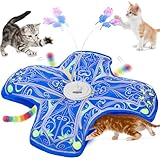
- Top-Tier Dual Interactive Fun: Qraxond's new indoor cat toy has dual motors, controlling random rotation of butterfly and plush tail swing rod accessories, bringing fun, exciting play for kittens and adult cats. Hide-and-Seek: The animal tail-shaped plush hides under the cover cloth, rotating irregularly to appear/disappear, creating a hide-and-seek game. It mimics real prey, bringing unpredictable chases to stimulate the cat's brain and senses. Irregular Rotating Butterfly: The top has an auto-rotating butterfly that rotates, pauses or swings to simulate real flight, keeping the cat engaged. Various interactions ensure the cat gets enough exercise to avoid obesity
- 3 Adjustable Speed Modes: Customize the excitement with separate buttons for the butterfly and tail. Choose from 3 settings: Steady (Blue Light), Active (Purple Light), and Random (Yellow Light). Suitable for high-energy cats to burn off steam or for calm cats to enjoy gentle play. Keep your feline entertained and prevent boredom, especially when they are home alone
- Touch-Sensitive Activation: Your Cat's in Control! With smart touch-sensor technology, just tap the device to fire up the fun mode, it will kick off a 5-minute automatic play session instantly. Right after the play session ends, it switches directly to touch-sensitive standby mode, where the purple indicator light flashes every 20 seconds. Simply tap again to reactivate it for another 5-minute cycle. This smart loop ensures your cat gets sufficient exercise and prevents overstimulation
- Large Rechargeable Battery: Enjoy long-lasting play with the built-in 2500mAh battery. It charges fully in just 2.5 hours via the included USB cable (use a 5V adapter only). The efficient auto on/off cycle extends battery life, making it convenient for busy pet owners while ensuring your cat gets healthy, moderate exercise
- Realistic Bird Chirping: Elevate the hunt with lifelike sound. The built-in speaker emits authentic bird chirps to attract your cat's attention and stimulate their prey drive. Combined with the random motions of the butterfly and tail, it creates an irresistible and engaging play experience that keeps your cat happily chasing even when they're by themselves
Familiarity is more informative than the idea of a “cat personality”
Look at what your cat has actually shown. Has it relaxed around a known cat, groomed or played with one, or chosen to rest nearby without being pressured? Those observations are more useful than assuming that every young cat needs a playmate. Conversely, repeated hissing, hiding, blocking, or attempts to escape around other cats are important evidence that your resident cat may prefer distance.
Shared space does not automatically mean friendship
Cats can appear to share a home peacefully while avoiding one another. They may use the same food station or sleeping area at different times rather than forming a social bond. The AAFP/ISFM guidance specifically cautions that gathering around a shared resource does not, by itself, prove that cats enjoy one another’s company.
Do these 3 things before closing this tab:
1Scan for outdated or missing drivers - takes under a minute2Clear out junk files and repair common Windows errors3Fix the driver behind crashes, sound loss and screen glitchesWhat one cat still needs every day
A single-cat household can meet a cat’s welfare needs when the environment supports security, activity, choice, and predictable interaction with people. Merck Veterinary Manual guidance recommends providing multiple core resources so a cat can navigate its environment and minimize encounters with stressors. In practice, that means making essential activities possible without forcing the cat into one contested location.
Also popular on Amazon

- A NEW CHOICE FOR INDOOR ENTERTAINMENT: Endless fun for your cat! Designed for indoor environments, this interactive toy ball rolls quickly across the carpet and emits an appealing cat-attracting chittering sound. Not only does it stimulate your cat's hunting instincts, it also allows them to enjoy outdoor chasing indoors while reducing the risk of furniture scratching
- INTELLIGENT INTERACTION AND FUN: This automatic cat toy is your pet's new playmate. It has two modes: ① Normal mode (green light), which runs for five minutes and then automatically shuts off. ② Intelligent mode (blue light), after running for five minutes the exercise ball automatically enters the dormant mode, when your cat touches it again, the exerciser will interact with your cat again. So whether it's a long game or a short interaction, this interactive cat ball meets the needs of both you and your pet, allowing your pet to entertain itself while you're busy
- TWO SPEEDS FREELY SWITCHING: The BABORUI interactive cat toy offers two speeds, fast and slow, which can be freely switched at any time. Even if your cat is cute and short-legged, it can still keep up with the pace of the exercise ball
- TRIPLE FUN, TRIPLE HAPPINESS: This cat toys for indoor cats comes with three fun tails that provide your cat with triple the fun. They can have endless fun chasing and catching the ball, while the sound of the bells on the tails will further stimulate their curiosity and desire to chase
- SAFE MATERIAL, LASTING AND DURABLE: We understand that your pet's safety is of utmost importance to you. The shell of this kitten toys is made of safe silicone material, so you don't need to worry even if your pet chews it. The durable design means it can withstand daily wear and tear, providing long-lasting companionship for you and your pet
- Safe places: Offer quiet retreats where your cat can rest undisturbed, plus options to move away from household traffic. Hiding is not a failure if the cat can emerge, eat, drink, eliminate, and play normally.
- Separated resources: Keep food, water, toileting areas, resting places, scratching surfaces, and play areas arranged so the cat has choices. Separation matters even when there is only one cat because people, children, dogs, noise, and visitors can become stressors.
- Predatory-behavior outlets: Schedule play that allows stalking, chasing, pouncing, and catching. An interactive wand toy can provide a useful outlet when used safely and put away after play; it supports activity but does not substitute for a relationship a cat genuinely seeks.
- Predictable human contact: Short, positive interactions at regular times are often more helpful than constant handling. Let the cat approach, and stop when it shows that it wants space.
- Choice and control: Let the cat decide where to rest, when to engage, and how quickly to investigate novelty. Forced contact can turn an otherwise manageable situation into a source of stress.
If these needs are not being met, adding another cat can increase competition rather than solve the underlying problem. Improve the resident cat’s routine and environment first, then reassess its behavior.
How a multicat home can create tension
Intercat tension is not limited to dramatic fights. The 2024 AAFP intercat-tension guidelines emphasize that conflict is often subtle and overlooked. A cat may quietly avoid a room, wait to use a resource, change its route through the house, or spend more time hiding. Other possible changes include altered play, appetite, grooming, sleep, or toileting. A fight is an obvious sign; persistent low-level avoidance can be just as important.
Competition and blocked access
Even cats that once got along can develop tension after a disruption, a move, illness, or the arrival of another animal. If one cat can guard a doorway, staircase, litter area, food station, or favorite resting place, the other may have fewer safe choices. A peaceful-looking household can still be stressful when one cat must pass close to another to reach an essential resource.
Also popular on Amazon

- [Trending Interactive Entertainment]: Potaroma's new indoor cat toys provide an engaging, stimulating play experience for kittens and older cats alike. This automated toy features a rotating butterfly on the top, a removable cover, an enticing feather wand hidden under the cover, consisting a hide-and-seek game. This interactive toy is a great birthday gift for enriching your pet's daily life. Even when left at home alone, your cat can play by itself independently like having a party
- [Advanced Electronic Irregular Motion]: Powered by a smart motorized system, this electric cat toys deliver irregular movements to keep your cat entertained. The play experience includes spinning, chasing, and hunting elements that mimic real-life prey, especially the chasing feather that pops out unpredictably, stimulating your kitty's brain and senses
- [Multi Modes for Indoor Fun]: Features a range of captivating movement modes that stimulate cat's natural instincts to chase, pounce, and play. 3 rotating modes of chasing feather; Simultaneous or seperate working of chasing feather and spinning butterlfy; What's more, the cover can be removed to expose the chasing feather completely for more fun. The diverse play options ensure your cat gets the mental and physical stimulation and enough exercise to eliminate boredom
- [Durable]: Built to withstand even the most aggressive play sessions, thanks to its durable design and high-quality materials. The motors inside the toy are designed to move smoothly and resist wear and tear. Whether your cat loves to chew, scratch, or paw at their toys, Potaroma's cat toy can handle it all. Experience the magic of Potaroma's interactive cat toy, making it a must-have for cat owners seeking a durable and entertaining option for their pets
- [Rechargeable & Large Capacity Battery]: Provide hours of fun for your furry friend. With a built-in rechargeable battery that offers a long-lasting charge, your kitten can enjoy uninterrupted self playtime for up to several days. No need for frequent recharging, making it a convenient choice for busy pet owners. Keep your cat entertained and happy with our innovative cat toys, featuring a battery that's as powerful as your cat's curiosity
What to watch for
- One cat repeatedly leaves when the other enters.
- A cat waits, circles, or changes its route before approaching food, water, litter, or a resting place.
- Staring, stalking, chasing, swatting, or blocking occurs, even without injury.
- Hiding, overgrooming, appetite changes, or toileting outside the usual area appears after the cats begin sharing space.
- Interactions become less relaxed over time instead of gradually improving.
These signs do not prove that a cat is lonely, spiteful, or “acting out.” They indicate that the environment or relationship needs assessment. A new or persistent behavior change also warrants veterinary advice because pain and illness can look like social or emotional problems.
Compare the factors before adopting a second cat
There is no validated compatibility score that can guarantee two cats will become friends. Treat the following as questions to investigate, not points to add up.
| Factor | Questions about your resident cat | Questions about the prospective cat and home |
|---|---|---|
| Social history | Has your cat lived comfortably with related or unrelated cats? How did it respond to unfamiliar cats? | What is known about the newcomer’s previous households, and has it shown relaxed behavior around cats? |
| Temperament and energy | Is your cat cautious, easily startled, playful, assertive, or easily overwhelmed? | Would the newcomer’s age, activity level, and play style fit without constant pursuit or avoidance? |
| Space and escape routes | Can your cat retreat, rest, eat, drink, and use the litter area without being cornered? | Can you create separate areas and several routes so either cat can avoid an unwanted encounter? |
| Resources | Are essential resources already arranged to reduce pressure and crowding? | Can you provide each cat access to resources and maintain separation when needed? |
| Care capacity | Can you continue individual play, observation, grooming, and veterinary care? | Can everyone in the household support a gradual introduction and ongoing monitoring? |
A shelter or rescue counselor may be able to describe a candidate cat’s behavior and arrange a careful match. Ask for honest information about previous cohabitation, conflict, and recovery from stress rather than relying on appearance or breed assumptions.
Also popular on Amazon

- 🐱 Trigger Natural Hunting Instincts - Concealed feather wand mimics real prey with unpredictable pop-up motion + realistic mouse squeak. Satisfies your cat's predator drive even when you're away
- 🤖 3 Smart Modes for Every Personality - Normal/Active/Interactive modes adapt to lazy loungers or energy balls. Motion sensor auto-activates on touch; auto-sleep saves battery
- Beat Boredom & Anxiety - Mental stimulation + physical exercise in one. Reduces destructive scratching, over-grooming, and midnight zoomies. Perfect for solo play while you work
- ⚡ 2-Hour Charge = Weeks of Fun - Built-in 1200mAh battery eliminates disposable battery costs. USB-C charging (cable included) - eco-friendly & travel-ready
- 🛡️ Built for Rough Play - Thickened padded mat withstands pouncing & clawing. Replaceable feather wand extends toy lifespan. Rounded edges protect paws
How to introduce cats without forcing a friendship
When you do add a cat, treat the introduction as a series of small, reversible steps. The goal is calm coexistence; affectionate behavior is welcome but not required. There is no universal timetable. Move forward only when both cats remain relaxed at the current step, and return to an earlier step if tension rises.
- Prepare a separate base room. Set up food, water, a litter area, resting places, hiding spots, scratching options, and play materials for the newcomer. Keep the resident cat’s routine as stable as possible.
- Begin with scent, not face-to-face contact. Exchange bedding or gently rub a cloth on each cat’s cheek area and place it near the other cat’s room. Allow investigation without pushing the cloth toward the cat.
- Pair the other cat’s scent with good experiences. Feed, play, or offer treats on opposite sides of a closed door, at a distance where both cats can remain comfortable. If either cat refuses food or becomes agitated, increase the distance and slow down.
- Allow controlled visual contact. Use a secure barrier or a partially opened door so the cats can see each other without physical access. Keep sessions brief and end while behavior is still calm.
- Try short, supervised meetings. Give both cats room to move away. Use toys or treats to create positive associations, but never hold a cat in place or force nose-to-nose contact.
- Expand access gradually. Increase shared time and territory in small increments while preserving separate retreat areas and resources. Do not leave the cats unsupervised until their interactions have been consistently relaxed.
- Maintain individual attention. Continue play, rest, feeding, and affection in ways that let each cat opt in. A new cat should not displace the resident cat’s familiar routines.
When to pause or step back
Stop a session if you see sustained staring, stalking, blocking, repeated chasing, hissing that does not ease, swatting, or either cat attempting to hide or flee. Separate them calmly; do not punish, spray, or shout. Resume later from the last stage at which both cats were comfortable. If tension persists, ask a veterinarian or qualified feline behavior professional for an individualized plan.
Independent reader supportYour contribution helps us test, update, and keep practical guides available for everyone.If the cats never become friends
Some pairs achieve only tolerance. That can be an acceptable outcome if each cat can eat, drink, sleep, play, eliminate, and move through the home without chronic fear or blocked access. The Scottish Government welfare code states that cats in multicat households that do not like one another should be able to avoid one another.
Also popular on Amazon

- Ball Cat Toy: Multi-level cat toy with 3 tiers and 6 spinning balls—keeps indoor cats active, curious, and entertained
- Enrichment: Encourages batting, swatting, and chasing to satisfy hunting instincts and enhance everyday enrichment
- Durable & Safe: Sturdy, non-slip base and a secure safety bar for hours of safe independent play
- Feline Favorite: Designed for older kittens and adult cats alike; great for multi-cat homes or gifting; not recommended for kittens under 12 weeks
- Expandable: Enjoy on its own or pair with Catstages Topper Toys (sold separately) for even more interactive chaos
In practical terms, provide separate zones and routes, prevent one cat from guarding essential resources, and monitor both cats for subtle behavior changes. Permanent separation within the home may be kinder than repeated forced interaction. If you cannot provide safe separation, consult a professional about rehoming options rather than allowing ongoing distress.
Do not diagnose loneliness from one behavior
Vocalizing, sleeping more, following you, destructive scratching, or changes in toileting can have many explanations, including pain, illness, fear, environmental frustration, or a disrupted routine. A behavior that is new, severe, or persistent should be discussed with a veterinarian before you conclude that your cat needs a companion.
A UK cohort study has examined associations between single-cat or multicat living and measures such as overweight or obesity, abscesses or cat bites, negative owner interactions, and periuria. The available study description does not establish the findings, effect sizes, or causation, so it cannot support a claim that one household type produces any of those outcomes. Your cat’s observed welfare and a professional assessment are more useful than assuming a health outcome from the number of cats in the home.
When a second cat is a sensible choice
Adopting another cat can be reasonable when the resident cat has shown comfortable social behavior, the newcomer’s temperament and energy appear compatible, and the home can provide separated resources, escape routes, and a patient introduction. It is also important that the household can afford and sustain care for two individuals, including veterinary attention and time for separate interaction.
Wait, improve enrichment, or seek advice first when your cat is already hiding, avoiding resources, showing unexplained behavior changes, or reacting intensely to cats outside the home. A companion should be chosen for demonstrated compatibility, not as an automatic treatment for boredom.





Leave a Reply