
A shy dog can become safer, more comfortable and better able to cope, but transformation is not a switch that turns every fearful dog into a social butterfly. The practical goal is to reduce overwhelming encounters, give the dog meaningful choices and teach, in tiny steps, that previously worrying situations can predict good things.
Start by learning your dog’s individual signals and triggers. Then combine management (preventing avoidable panic) with gradual desensitization and reward-based counterconditioning. Work at the dog’s pace, never punish fear, and involve a veterinarian or qualified behavior professional when fear is worsening or creates a safety risk.
As an Amazon Associate I earn from qualifying purchases.
What a “shy dog transformation” really means
“Shy” is a convenient description, not a diagnosis. Fear can appear as a dog avoiding eye contact, turning its head away or staying at the edge of a room. More obvious signals include cowering, backing away, freezing, shaking, panting, pacing, heightened vigilance, growling, snapping or lunging. The same dog may show different signs with strangers, children, other dogs, unfamiliar places, handling, noises or being left alone.
Free tools Windows power users keep installed
One-click scans. No signup required.
A useful transformation is a change in comfort and coping: the dog can notice a trigger without panicking, recover more quickly, choose to retreat instead of escalating, or accept a reward and re-engage with its guardian. Some dogs remain reserved around certain people or situations. The veterinary and animal-welfare guidance available for fearful dogs does not establish a universal timeline, a success percentage or a guarantee that fear will disappear around every trigger.
#1 Best Overall

- New communication tool about you and your puppy.
- Pet Dog Training Clickers for Puppy, Cat, Potty, Bird, Horse, Pet, Trainer Training Tools, Behavior Aids
- Just press to mark desired behavior, then reward for faster learning.
- The spring wrist length : 16cm/6.3inches and can strength to 25cm/9.84inches.
- Package include : Black + Blue,each color 1 pcs.
Because fear can be influenced by health, genetics, early experience and the immediate environment, treat this article as general guidance rather than an assessment of your individual dog.
Read the dog’s signals before asking for progress
Early signs mean “increase space”
Subtle avoidance is important information. A dog that looks away, licks its lips, yawns, lowers its body, stops taking food, keeps its weight over its rear legs or repeatedly checks an exit may already be uncomfortable. If you wait for a growl, you have usually missed earlier warnings.
Escalating signs require an immediate safety response
Cowering, freezing, trembling, frantic panting, pacing, growling, snapping and lunging indicate that the dog needs distance and relief, not correction. Do not punish a growl or other warning. Punishment can suppress the signal without changing the fear and may make a future bite less predictable. Keep people and animals out of reach, leave the situation calmly and arrange qualified help when these behaviors occur.
What’s actually slowing this PC down?
Pick the symptom - the matching free tool is one click away.
Keep a trigger record
For several days, note what happened immediately before the behavior, the distance or intensity of the trigger, the dog’s body language, whether it could eat, and how long recovery took. Patterns help you choose a starting point that is genuinely manageable instead of relying on a generic label such as “nervous.”
Rank #2

- ▼Come in 4 pack button clickers with wrist strap in 4 different colors:Black, Green, Orange, Yellow, each color 1 PCS
- ▼Can be used to train the dog basic obedience, small trick, and correct the bad behavior; Scientific method of training your pet safely and easily.
- ▼Stop barking and dog obdeience. Train your dog quiqly just by simply pressing the clicker and command.
- ▼Well constructed and durable, metal clicker will not rust or break.
- ▼Big button for easy clicking and loud sound. Easy to use in any position.
First priority: create safety and choice at home
Set up a retreat
Give the dog a quiet place where nobody follows, reaches in or demands interaction. A bedroom, gated area or another calm room can work. The Humane Society of Huron Valley also describes a crate as a possible safe place, but only when the dog is comfortable using it; a crate is not automatically helpful for a fearful dog. Keep water available and make the retreat easy to reach.
Let the dog control contact
Ask visitors to ignore the dog at first: no staring, leaning over, calling, touching or blocking an exit. The dog should be able to approach, retreat and re-approach without being lured into contact. If it chooses to stay away, respect that choice. Brief, calm interactions are more useful than a long greeting that ends in panic.
Manage predictable triggers
Management prevents the repeated overwhelming encounters that make learning harder. Use curtains or visual barriers for window reactivity, walk at quieter times, choose routes with room to move away, and skip settings that reliably exceed the dog’s capacity. Cornell’s guidance specifically gives avoiding a dog park as an example for a dog afraid of other dogs. Avoidance is not failure; it is a way to protect the dog while you build skills.
Quick wins for a faster PC:
Repair Windows errors before they cause bigger problemsFix Now →Scan for outdated or missing drivers - takes under a minuteDriver Scan →Clear out junk files and repair common Windows errorsFree Scan →How gradual behavior change works
Desensitization and counterconditioning are complementary. Desensitization presents a mild version of a trigger and increases intensity or proximity only while the dog remains comfortable. Counterconditioning pairs that trigger with something the dog values, commonly a favorite food reward, so the situation begins to predict a positive consequence.
Rank #3
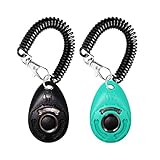
- EASY TO USE - Simple push button with distinct clicking sound.
- Comes with an elastic wrist band so you can leave it on your wrist or clip it to the leash or your pants.
- Not only train the dog but also the cat, bird, chicken, sheep a new behaviors like sit, fetch, roll over, lie down.
- For effective pet training ALWAYS reward with a treat after clicking.
- Can be used to train the dog basic obedience, small trick, and correct the bad behavior; Scientific method of training your pet safely and easily.
The American Veterinary Society of Animal Behavior describes management alongside behavior work and emphasizes that this process is slow. UC Davis and Cornell similarly caution against rushing, punishment and “flooding” (forcing a dog to remain with an overwhelming trigger until it stops reacting). Flooding can intensify fear or teach the dog that escape is impossible.
A practical, dog-paced progression
- Choose one trigger. Work on a specific concern, such as a person wearing a hat or a dog visible across a street, rather than “all strangers.”
- Find the comfort starting point. Begin far enough away, or at a low enough intensity, that the dog can look at the trigger and still eat, move normally and respond to you. If it freezes, bolts, barks continuously or refuses food, the setup is too difficult.
- Pair and pause. The instant the trigger appears, deliver several small pieces of a highly valued treat. When the trigger disappears, the treats stop. Keep the session brief.
- Repeat without pressure. Use the same easy setup over multiple calm repetitions. Do not require the dog to approach, sit, make eye contact or accept petting as proof of progress.
- Change one variable. Only after the dog is consistently relaxed should you reduce distance, increase movement, add a second person or extend the exposure slightly. Make one change at a time.
- Back up at the first sign of strain. Increase distance, lower the trigger’s intensity or end the session. A setback is information about the training level, not stubbornness.
Everyday exercises that build confidence without forcing contact
Calm noticing
From a comfortable distance, allow the dog to notice a trigger. Feed while it looks calmly, then move away before tension rises. This teaches that observing does not require confrontation and that the guardian can create space.
Treat-and-retreat
For a cautious visitor, have the person toss a treat past the dog rather than hand-feeding or coaxing it closer. The dog can collect the food and retreat, preserving control over distance. Stop if the dog will not eat or begins showing stress signals.
Do these 3 things before closing this tab:
1Scan for outdated or missing drivers - takes under a minute2Clear out junk files and repair common Windows errors3Fix the driver behind crashes, sound loss and screen glitchesConsent-based petting
When the dog voluntarily approaches, offer a brief touch on a less-sensitive area, then stop and observe. If the dog leans back, turns away or leaves, the interaction is over. Consent-based handling is especially important for dogs worried about hands, grooming or veterinary procedures.
Rank #4

- MANUAL AUDIBLE CLICKER: Produces an audible click when manually pressed. The clicker contains no electronics, batteries, remote-control functions, or Electronic Stimulation features.
- INDIVIDUAL RESPONSE TO SOUND MAY VARY: Dogs and other animals may respond differently to audible clicker sounds. Introduce the clicker gradually and discontinue use if the animal shows discomfort or fear.
- COMPACT HANDHELD DESIGN: Small finger-clicker design is intended to be carried and operated by the user. Review the product images and compact size before ordering to confirm it meets your expectations.
- 5-INCH VELCRO FINGER STRAP: Includes an approximately 5-inch adjustable Velcro strap designed to position the clicker on the user's finger or hand. The strap is worn by the user and is NOT intended to be worn by the pet.
- TEAL CLICKER ACCESSORY: Includes one Teal manual finger clicker and training instructions. Remote transmitter, receiver collar, batteries, and other training-system components are NOT included.
Enrichment and easy wins
Sniffing games, food puzzles, scatter-feeding and simple reward-based training can provide safe choices and predictable success. Keep difficulty low enough that the dog can solve the activity; frustration is not confidence building. The Humane Society Silicon Valley’s 2025-06-19 shy-dog guide includes enrichment, positive reinforcement and leash desensitization/counterconditioning as related skills.
Choosing practical options by control and safety
| Option | Best use | Control over trigger | Important limitation |
|---|---|---|---|
| Quiet room or gated retreat | Immediate decompression at home | High | It provides safety but does not by itself teach the dog about a trigger. |
| Comfortable crate | A portable retreat for a dog that already relaxes in one | High when voluntary | Do not confine a dog that panics in a crate; use another safe space. |
| Distance-based walks | Seeing people, dogs or places below the fear threshold | Moderate to high if routes and timing are chosen carefully | Busy paths can remove the distance needed for learning. |
| Food rewards | Pairing a manageable trigger with something valuable | Depends on trigger distance and the dog’s appetite | Treats do not “cure” anxiety and are ineffective when the dog is too frightened to eat. |
| Qualified behavior support | Worsening, complex or safety-related fear | Professional assessment and a tailored plan | Credentials, location and the method used should be verified before booking. |
Common mistakes that slow or reverse progress
Forcing greetings
Holding a dog in place, allowing strangers to crowd it or insisting that it “say hello” removes the dog’s escape option. It can turn a manageable concern into a defensive reaction.
Using punishment
Scolding, leash corrections or aversive equipment may add pain or threat to an already frightening situation. The sources from Cornell, UC Davis and veterinary behavior guidance recommend reward-based work instead.
Recommended Free Tools
Moving too fast
Reducing distance because the dog succeeded once, adding several triggers in one session or continuing after the dog stops eating can push it over threshold. Progress is measured by relaxed behavior and recovery, not by physical proximity alone.
Best Value

- Stronger Bark Control with 3X Ultrasonic Emitters: Unlike single-emitter devices, our upgraded dog bark deterrent features three synchronized ultrasonic heads—delivering 3X the coverage to quickly stop barking, biting, and jumping behaviors. Ideal for anti barking training, safer than bark collar, more effective than a dog whistle, offers a humane, high-performance dog training solution
- 6-in-1 Safe & Humane Training Modes:Our dog bark deterrent device features dual ultrasonic frequencies (fixed 25kHz and variable 20-30kHz), combining 4 ultrasonic modes plus an audible beep and LED flashlight for versatile training. Whether for daily training or stubborn, persistent barking, this anti bark device adapts to different dogs providing effective bark control without causing pain or distress. Perfect for training at home or to stop neighbors dog bark that disturbs your peace
- 23 FT Extended Range & Night Safety: Bark Control Anytime, Anywhere: Stop barking and bad behavior from up to 23 feet away with our powerful dog bark deterrent device — perfect for your yard, neighbor’s yard, outdoor walks, and off-leash areas. Whether you're relaxing at home or out for a stroll, enjoy safe, long-distance control to correct disruptions quickly. The built-in LED flashlight adds safety for evening walks, and low-light training
- Fast Charge & Long Battery Life – Always Ready for Training:With a Type-C fast charging port, our dog bark deterrent device reaches a full charge in just 2 hours and provides up to 30 days of regular use on a single charge, along with 180 days of standby time. Whether you're correcting anti barking behavior or training your dog in public places, you’ll always be prepared for any situation. Forget the hassle of frequent charging and enjoy reliable, long-term barks no more support
- Ultra-Compact Design for Everyday Convenience:50% smaller than standard dog bark deterrent devices, our anti barking device is ultra-compact and lightweight, fitting effortlessly into your pocket, bag, or hand. Whether you're on daily walks, outdoor adventures, or dealing with unexpected situations in public places, this portable design helps you stop barking and encourage good behavior anywhere, anytime. Say goodbye to constant noise and enjoy a barks no more experience with your dog
Assuming one safe place fits every dog
Some dogs settle in a crate; others relax more in an open room behind a gate. Watch what the individual dog chooses and keep the retreat free from interruption.
When to involve a veterinarian or behavior professional
Arrange veterinary advice when fear appears suddenly, is worsening, interferes with eating or ordinary care, or is difficult to manage. A veterinarian can consider medical contributors and discuss whether referral to a veterinary behaviorist is appropriate. Seek qualified behavior help when the dog growls, snaps, lunges or has caused injury; when children, visitors or other animals cannot be kept safe; or when repeated attempts at home produce no workable improvement.
Ask prospective professionals about credentials, experience with fear cases, use of desensitization and counterconditioning, safety planning and how they respond when a dog is over threshold. Avoid anyone promising a fixed transformation, dominance-based compliance or a guaranteed number of days.
How to judge progress realistically
Use observable measures rather than a goal such as “be friendly.” Track whether the dog can remain farther from a trigger, eat in its presence, recover sooner, choose a retreat, accept handling for a few seconds or pass a trigger with fewer signs of distress. Review notes weekly, not after every single encounter. Sleep, illness, pain, weather, crowded environments and an unusually intense trigger can all change the dog’s capacity on a given day.
A plateau means the plan may need a smaller step, better management or professional adjustment. A regression is a reason to reduce difficulty and protect safety, not to punish or test the dog repeatedly. Some triggers may always require distance and management; that can still be a successful, humane outcome.
A simple safety checklist
- Identify the dog’s earliest stress signals and the situations that cause them.
- Provide an undisturbed retreat and allow voluntary approach.
- Use barriers, timing and distance to prevent avoidable overwhelming encounters.
- Carry high-value, bite-sized treats for planned exposures.
- Pair a mild trigger with rewards and change only one difficulty variable at a time.
- Stop or back up when the dog freezes, panics, stops eating or escalates.
- Never punish growling, snapping, avoidance or other fear signals.
- Get veterinary or qualified behavior support when fear worsens or safety is uncertain.
The realistic outcome
A shy dog’s transformation is best understood as a gradual expansion of safety, choice and coping. Your job is not to make the dog perform sociability; it is to prevent unnecessary fear, notice what the dog is communicating and arrange learning at a level it can handle. With patience and appropriate support, many dogs become more comfortable in selected situations while remaining individuals with their own boundaries.
Quick Recap
Product prices and availability are accurate as of the date/time indicated and are subject to change. Any price and availability information displayed on Amazon at the time of purchase will apply.





Leave a Reply