
Recommended Free Tools
Tarsiers are unusual primates in the family Tarsiidae, recognized for enormous eyes, acute hearing, insect-heavy diets and powerful leaps through forest understory. Most are active at night, but behavior, habitat, social life and conservation status differ among species. The safest way to understand them is to separate traits shared across the family from findings documented for a named species, such as the spectral tarsier or western tarsier.
1. Tarsiers are primates, not rodents or marsupials
A tarsier is a primate belonging to the family Tarsiidae. That places it in the same broad mammalian order as lemurs, monkeys, apes and humans, although tarsiers form their own distinctive branch. Their common name covers multiple species rather than one single animal.
| # | Preview | Product | Price | |
|---|---|---|---|---|
| 1 |

|
HANSA - Tarsier | $39.24 | Buy on Amazon |
| 2 |

|
Squishmallows 5-Inch Zaine Tarsier Jazwares Mini Plush | $11.99 | Buy on Amazon |
| 3 |
|
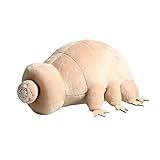
YUKOUQIAN Tardigrade Stuffed Animal Tardigrade Plush Toy 10 inch for Girls Boys Christmas... | $9.99 | Buy on Amazon |
| 4 |

|
Hansa Plush 6" Baby Tarsier | $26.90 | Buy on Amazon |
As an Amazon Associate I earn from qualifying purchases.
Taxonomists have revised tarsier classifications as new evidence and field observations have accumulated. Species boundaries and the number of recognized species have changed, so a precise family-wide count should always be tied to a particular taxonomic authority and date. A source that lists one number is not necessarily contradicting another; the difference may reflect how populations are divided into species.
This taxonomic caution matters when reading claims about range, behavior or threats. A statement documented for one island species cannot automatically be applied to every tarsier. When a fact below is species-specific, it is identified as such.
#1 Best Overall
- Dimensions: 3.94in X 3.94in X 5.91in (LxWxH)
- Weight: 0.13lb
2. Most tarsiers are active at night
Reference accounts describe tarsiers as primarily nocturnal. Darkness helps them hunt animal prey while reducing exposure to some daytime predators, and their sensory anatomy is well suited to moving through dim forest vegetation.
Not every species follows an identical schedule
“Mostly nocturnal” is more accurate than “strictly nocturnal.” The western tarsier account allows for some crepuscular activity, meaning activity around dawn or dusk. A species may therefore be seen outside the darkest part of the night without abandoning the general night-active pattern.
Activity timing can also vary with local conditions, food availability and disturbance. Unless a study identifies a particular species and population, avoid treating one observation schedule as a rule for all tarsiers.
3. Their eyes are exceptionally large for their bodies
Large forward-facing eyes are the feature most people notice first. Relative to body size, tarsier eyes are exceptionally large, giving the animals a distinctive, almost spherical-eyed appearance.
The size is functionally relevant in a night hunter. Large eyes can gather more available light and support visual detection in darkness. The eyes are also relatively fixed in their sockets, so the animal relies on substantial head movement to shift its view. This combination helps a tarsier monitor prey and its surroundings while perched in vegetation.
Avoid the popular “larger than the brain” shortcut
Some retellings claim that each tarsier eye is larger than its brain. The reference material used for this article does not establish that comparison robustly, so it should not be presented as a verified fact. The defensible description is that the eyes are unusually large in proportion to the animal’s body.
4. Tarsiers eat animal prey
Tarsier diets are made entirely of animal matter in the reference accounts. Insects and other arthropods are common prey, and some accounts also describe small vertebrates. This makes tarsiers active hunters rather than fruit-eating primates.
PC Slower Than It Used to Be?
A free scan shows the junk files, broken settings and background clutter dragging Windows down - then fixes them in one click.Free scan · Windows 10 & 11Crashes, No Sound, or Screen Glitches?
Random freezes, missing sound and display glitches usually trace back to one bad driver. Find and replace yours safely.Free scan · under a minuteRank #2
- Squeeze, cuddle, repeat! Squishmallows are the softest, cutest plush toys around!
- Your new cuddle buddy awaits! Meet Zane the Tariser! Squishmallows have a style and personality all their own, encouraging fun and imaginative play!
- Snuggle up with the squishiest friend in town! These super soft, collectible plush toys make great cuddle companions! The squishy plush is perfect to bring on long car rides, airplanes or to sleepovers!
- Give the gift of endless snuggles! Perfect for boys and girls of all ages! Makes a great gift for kids who love stuffed animals! A perfect gift for Christmas, holidays, Easter, birthday party and more!
- Officially licensed Squishmallows merchandise. Polyester. Measures approximately 5 inches.
How a night hunt works
A tarsier can remain motionless on a branch, use its hearing and vision to locate movement, then make a rapid pounce. The prey list reflects what a small forest predator can capture: insects and other invertebrates are frequent targets, while an opportunity may include a small vertebrate.
Diet details should still be attached to a species and habitat. The availability of prey changes between islands, forest types and seasons. “Tarsiers eat insects and sometimes small vertebrates” is a useful general description; it is not a promise that every species takes every item or that prey proportions are identical.
What not to assume
Do not describe fruit as a normal tarsier food based solely on the fact that tarsiers are primates. The cited family and species accounts characterize them as animal-eaters, so fruit-based diet charts misrepresent their ecology.
5. They cling to trunks and launch powerful leaps
Tarsiers are adapted for vertical clinging and leaping in the forest understory. Their hands and feet can grip vegetation, allowing an animal to hold onto a trunk or branch while it scans for prey. When it commits to a target or another perch, it uses a forceful jump rather than walking long distances along the ground.
Free tools Windows power users keep installed
One-click scans. No signup required.
Why the understory matters
The understory is the layer of shrubs, saplings and lower branches beneath the main canopy. It offers a network of surfaces close enough for repeated leaps and places where insects and small vertebrates may be encountered. A tarsier’s movement is therefore three-dimensional: cling, rotate or pivot on a support, then cross a gap in a single bound.
An observation of one species moving close to the ground should not be turned into a universal height limit. The spectral-tarsier assessment discusses clinging and leaping adaptations in the understory, but it does not establish one standard elevation at which every tarsier travels.
6. Their anatomy combines night senses with a jumping body plan
The most conspicuous features work together. Large eyes support visual hunting in low light; acute hearing helps detect prey that may be hidden by leaves; and elongated hind limbs are associated with leaping.
Rank #3
- High-quality materials: The cute tardigrade stuffed animal is made of soft and fluffy fabric. It feels very comfortable and very soft. The tardigrade plush is 10 inches in length.
- Use vacuum packaging; Take out the tardigrade plush doll, please press left and right, it will return to its original shape within 24 hours.
- Child Companion: The tardigrade plush toy can accompany the child to sleep, play and hug , and accompany the child's happiness every day.
- Holiday gifts: Tardigrade stuffed animal can be used as children’s birthday gifts or gifts between friends. You can watch TV with the plush tardigrade doll, rest, relax, and sleep in the living room.
- High-quality service: If you receive a tardigrade plush but you are not satisfied or have quality problems, you can apply for return or exchange. If you have any questions, I will solve your problem as soon as possible.
Eyes and hearing divide the search job
Vision can reveal a moving insect or the outline of a perch, while hearing can indicate movement that cannot be seen directly. These descriptions explain the likely function of the senses without claiming that a source measured the exact performance improvement produced by each feature.
Hind limbs provide launch power
Long hind limbs give the body a jumping-oriented profile. In combination with a gripping hold, they help the animal move between supports quickly. The anatomy is best understood as a coordinated system rather than as isolated “superpowers”: secure contact with a perch, sensory detection of prey and a controlled leap all contribute to successful hunting.
Because the reference material does not provide a consistent current range of body sizes for the whole family, this article does not attach a family-wide weight or length statistic to the description.
7. Forest is central habitat, but habitat use varies by species
Tarsiers are associated with forest environments. The spectral-tarsier assessment lists forest habitats and also records some use of modified landscapes. That does not mean every cleared area, plantation or farm can sustain a tarsier population.
Why “modified landscape” needs qualification
A modified landscape may retain enough trees, cover and prey for a particular population, or it may be connected to remaining forest. Other converted land may lack shelter, food or safe routes between territories. The presence of an individual in a disturbed site is therefore not proof that the habitat is suitable for long-term survival.
Habitat statements should name the species whenever possible. Island geography, vegetation structure and the degree of forest conversion can produce very different conditions for different tarsiers.
Independent reader supportYour contribution helps us test, update, and keep practical guides available for everyone.8. Social behavior is not the same across all tarsiers
Tarsier social life is species-specific and incompletely documented. It is unsafe to say that all tarsiers live as permanent pairs, solitary hunters or identical family groups.
Rank #4
- HANSA - Baby Tarsier Plush Toy
- Teaching tag includes information on habitat, lifestyle, eating habits and more
- Completely hand sculpted with a hand finished face
- Hand cut, custom designed fabric
- True to life realism
What is known for the spectral tarsier
The IUCN assessment for the spectral tarsier describes social groupings as likely, but some of that interpretation is based on analogy rather than a complete direct record of every population. Group-size and home-range figures in that account are estimates, so they should be presented as such rather than as fixed biological constants.
Why comparisons need named species
The western tarsier account and the spectral-tarsier assessment do not provide a basis for declaring one universal tarsier social system. Differences in territory, pair association, spacing and group contact may reflect real species differences or simply uneven study effort. A careful article identifies the animal being discussed and separates observation from inference.
Quick wins for a faster PC:
Fix the driver behind crashes, sound loss and screen glitchesFind Drivers →Repair Windows errors before they cause bigger problemsFix Now →Scan for outdated or missing drivers - takes under a minuteDriver Scan →9. Conservation status must include the species and assessment date
There is no single conservation category that automatically applies to every tarsier. The IUCN Red List assessment for the spectral tarsier lists it as Vulnerable, based on an assessment published in 2008. The assessment page itself says that the listing needs updating, so it should not be presented as a current family-wide verdict in 2026.
What drove that 2008 assessment
For the spectral tarsier, the assessment’s justification included at least 30% habitat conversion over 20 years, approximately three generations. That figure belongs to the named species and the 2008 assessment framework; it is not a current statistic for all tarsiers.
How to read an old listing responsibly
- Check the species name, not just the common name “tarsier.”
- Record the assessment year beside the category.
- Do not silently extend a spectral-tarsier estimate to other islands or species.
- Treat the assessment’s stated need for updating as a real limitation on present-day certainty.
Habitat loss is a central concern in the cited conservation account. Forest conversion can remove feeding sites, shelter and the connected understory routes needed for clinging and leaping. The biological effect depends on the scale and pattern of conversion, not merely on whether a landscape is labeled “modified.”
How the nine facts fit together
Tarsiers are best understood as specialized, night-active primates rather than as miniature monkeys with exaggerated eyes. Their sensory equipment helps them find animal prey in darkness; their gripping limbs and long hind legs support leaps through lower forest vegetation; and their habitat and social arrangements depend on the species in question.
Do these 3 things before closing this tab:
1Scan for outdated or missing drivers - takes under a minute2Repair Windows errors before they cause bigger problems3Fix the driver behind crashes, sound loss and screen glitchesThe same framework prevents common errors. Calling every tarsier strictly nocturnal ignores western tarsier observations at twilight. Calling them fruit eaters conflicts with accounts describing an entirely animal diet. Assigning one social pattern or one conservation category to the whole family overlooks species-level evidence. Finally, using a 2008 spectral-tarsier figure as though it were a present-day global measurement confuses a dated assessment with a current census.
When a fact matters, identify the tarsier, the place and the date behind it. That simple habit keeps descriptions accurate while leaving room for taxonomic revisions and future conservation updates.
Quick Recap
Product prices and availability are accurate as of the date/time indicated and are subject to change. Any price and availability information displayed on Amazon at the time of purchase will apply.





Leave a Reply