What’s actually slowing this PC down?
Pick the symptom - the matching free tool is one click away.
In the United States, Semintra (telmisartan 10 mg/mL oral solution) is labeled for controlling high blood pressure in cats. The U.S. label’s schedule is an initial dose twice daily for 14 days, then once daily—but only your veterinarian can determine or change your cat’s dose. Telmisartan is also discussed in feline kidney-disease guidelines for proteinuria, a separate clinical use with different dosing guidance.
What is telmisartan used for in cats?
Telmisartan is an angiotensin II receptor blocker (ARB). The U.S. Semintra label covers control of systemic hypertension in cats; the medicine relaxes blood vessels to lower blood pressure. Semintra is available by or on the order of a licensed veterinarian.
Kidney disease and hyperthyroidism are the two most common causes of feline high blood pressure identified by the FDA. Some heart diseases are also associated with hypertension, and in some cats no cause is identified. If hypertension is untreated, it can damage the eyes, kidneys, heart, brain, and central nervous system.
Telmisartan also has a role in chronic kidney disease (CKD) care when a cat has persistent proteinuria—excess protein in the urine. That is a distinct treatment consideration, not the same as the U.S. product label’s hypertension indication. The 2026 iCatCare CKD consensus says persistent urine protein-to-creatinine ratio (UPC) above 0.4 merits consideration of a renal diet and renin-angiotensin-aldosterone system (RAAS) inhibition, but only in cats that are not dehydrated and have stable CKD.
Windows Errors? Fix Them Before They Spread
Repair common Windows errors and clear accumulated junk for a smoother, more stable PC - no reinstall needed.Free scan · no reinstallOutdated Drivers Are Slowing You Down
One free scan finds every outdated or missing driver and matches the right update for your exact hardware.Free scan · exact hardware match#1 Best Overall
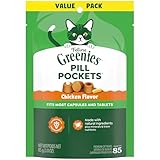
- Easy Treating: Feline Greenies Chicken Treats are easy to use cat pill pockets, just put the pill or capsule of your cat's medicine inside the moldable pocket, pinch closed until the pill is hidden, and share with your adult cat for a hassle-free treatment experience
- Cats are smart - but you're smarter: Treats for cats with delicious chicken flavor, this pill wrap for cats helps mask the taste of the medicine
- Feline Greenies Pill Pockets Delectable Cat Treats are the #1 vet recommended choice for giving pills
- Greenies Pill Pockets For Cats are made with all natural, real ingredients plus minerals & trace nutrients, with no artificial flavors, artificial preservatives, or fillers, so you can feel good about treating your pet daily with their routine medication
- Convenient Feline Greenies Pill Pockets: These cat snacks are a great-tasting treat for adult cats
What is the dose of Semintra for cats?
The U.S. FDA-approved label specifies an initial dose of 1.5 mg/kg (0.68 mg/lb) by mouth twice daily for 14 days, followed by 2 mg/kg (0.91 mg/lb) by mouth once daily. If Semintra causes hypotension (low blood pressure), the label allows the veterinarian to reduce doses in 0.5 mg/kg steps, to a minimum of 0.5 mg/kg once daily. These are label instructions, not a dose calculation or recommendation for an individual cat.
The CKD consensus gives different clinical dosing guidance for proteinuria: 1 mg/kg by mouth every 24 hours. For hypertension, it lists 2 mg/kg every 24 hours as a sole agent; if telmisartan is combined with amlodipine, it advises starting at no more than 1 mg/kg every 24 hours. These guideline regimens should not be substituted for the U.S. Semintra label schedule. The veterinarian selects and adjusts treatment based on the cat’s diagnosis and condition.
Can I give my cat telmisartan with food?
The U.S. label says to give the solution directly into the mouth, or next to or on top of a small amount of food. Do not mix it into food. Use the dosing syringe supplied with the package; it is marked in 0.1 mL increments. The label directs rounding the measured volume to the nearest 0.1 mL, then rinsing the syringe with water and allowing it to air-dry.
If a cat vomits within 30 minutes of a dose, the label says the dose may be given again. Ask the prescribing veterinarian what to do for your cat, and follow any specific instructions they have provided.
Free tools Windows power users keep installed
One-click scans. No signup required.
Rank #2

- Easy Treating: Feline Greenies Chicken Treats are easy to use cat pill pockets, just put the pill or capsule of your cat's medicine inside the moldable pocket, pinch closed until the pill is hidden, and share with your adult cat for a hassle-free treatment experience
- Cats are smart - but you're smarter: Treats for cats with delicious chicken flavor, this pill wrap for cats helps mask the taste of the medicine
- Feline Greenies Pill Pockets Delectable Cat Treats are the #1 vet recommended choice for giving pills
- Greenies Pill Pockets For Cats are made with all natural, real ingredients plus minerals & trace nutrients, with no artificial flavors, artificial preservatives, or fillers, so you can feel good about treating your pet daily with their routine medication
- Convenient Feline Greenies Pill Pockets: These cat snacks are a great-tasting treat for adult cats
What are the side effects of telmisartan in cats?
Vomiting, diarrhea, and decreased activity are among the common side effects identified in FDA owner guidance. The label also cautions about appetite loss and weight loss. Contact the prescribing veterinarian about side effects or new illness, particularly vomiting, poor appetite, weight loss, weakness or lethargy, or signs of dehydration.
Reported reactions in the 28-day field study
The U.S. label reports results for 288 enrolled cats: 192 received Semintra and 96 received vehicle control. Cats had a median age of 14 years (range 7–20). At least one adverse reaction was recorded in 114/192 Semintra-treated cats (59.4%) and 42/96 controls (43.8%). The figures below are observations in this study, not a prediction of an individual cat’s risk.
| Adverse reaction | Semintra (n=192) | Vehicle control (n=96) |
|---|---|---|
| Vomiting | 46/192 (24.0%) | 14/96 (14.6%) |
| Diarrhea | 18/192 (9.4%) | 4/96 (4.2%) |
| Lethargy | 13/192 (6.8%) | 3/96 (3.1%) |
| Weight loss | 13/192 (6.8%) | 5/96 (5.2%) |
| Decreased appetite/inappetence | 13/192 (6.8%) | 7/96 (7.3%) |
| Non-regenerative anemia | 11/192 (5.7%) | 2/96 (2.1%) |
| Dehydration | 10/192 (5.2%) | 4/96 (4.2%) |
Reported reactions in the five-month safety study
In a separate five-month, open-label study of 107 cats, 94/107 (87.9%) had at least one adverse reaction. Reported events affecting at least 5% of cats were:
- Weight loss: 37/107 (34.6%)
- Vomiting: 32/107 (29.9%)
- Dehydration: 18/107 (16.8%)
- Non-regenerative anemia: 17/107 (15.8%)
- Anorexia: 14/107 (13.1%)
- Diarrhea: 12/107 (11.2%)
- Lethargy: 12/107 (11.2%)
- Decreased appetite/inappetence: 11/107 (10.3%)
The studies differed in duration, design, and reporting, so their rates should not be compared as though they measure the same risk. Three cats in the five-month study had progressive CKD; the label says treatment, concurrent disease, or inadequate hypertension control may have contributed, and does not establish a single cause.
Quick wins for a faster PC:
Scan for outdated or missing drivers - takes under a minuteDriver Scan →Repair Windows errors before they cause bigger problemsFix Now →Fix the driver behind crashes, sound loss and screen glitchesFind Drivers →Rank #3

- Easy Treating: Feline Greenies Salmon Treats are easy to use cat pill pockets, just put the pill or capsule of your cat's medicine inside the moldable pocket, pinch closed until the pill is hidden, and share with your adult cat for a hassle-free treatment experience
- Cats are smart - but you're smarter: Treats for cats with delicious salmon flavor, this pill wrap for cats helps mask the taste of the medicine
- Feline Greenies Pill Pockets Delectable Cat Treats are the #1 vet recommended choice for giving pills
- Greenies Pill Pockets For Cats are made with all natural, real ingredients plus minerals & trace nutrients, with no artificial flavors, artificial preservatives, or fillers, so you can feel good about treating your pet daily with their routine medication
- Convenient Feline Greenies Pill Pockets: These cat snacks are a great-tasting treat for adult cats
What precautions matter before and during treatment?
The U.S. label says to monitor cats for anemia when treatment begins and warns about inappetence and weight loss, particularly in cats with a history of vomiting, poor appetite, or weight loss. Tell the veterinarian about your cat’s other medicines and supplements, pregnancy or breeding status, anemia, serious health conditions, vomiting or diarrhea, appetite decline, and weight loss. Keep the medicine secured to prevent accidental ingestion. Pregnant women should avoid contact with the product.
The label says safety has not been evaluated in cats younger than 9 months, cats with hepatic disease, pregnant or lactating cats, cats intended for breeding, or cats receiving other antihypertensive medicines. It also has not been evaluated in cats with systolic blood pressure above 200 mm Hg. “Not evaluated” does not establish either harm or safety for these situations; the veterinarian must weigh the uncertainty.
Independent reader supportYour contribution helps us test, update, and keep practical guides available for everyone.How often should my cat’s blood pressure and kidney values be checked?
FDA owner guidance calls for regular veterinary blood-pressure checks and dose adjustment as needed. For cats with kidney disease, it advises early checks of kidney values; for all cats starting treatment, it advises monitoring for anemia and declining appetite or weight loss.
The 2026 iCatCare CKD consensus gives clinicians a more specific reassessment schedule for RAAS inhibition. It calls for checking clinical signs, systolic blood pressure, creatinine, and potassium after 1–2 weeks; reviewing clinical signs, blood pressure, and UPC at about four weeks after starting or changing treatment; and then monitoring every three months. A creatinine rise of more than 25–30% may warrant review and dose adjustment. For hypertension, the guideline’s target is ideally systolic pressure below 140 mmHg, or otherwise below 160 mmHg, with effectiveness reassessed 1–2 weeks after starting or adjusting treatment. These are veterinary monitoring recommendations, not a home-testing protocol.
Rank #4

- Delicious Pill Wrap for Pets: Vetoquinol Pill Wrap features a flavorful paste designed for easily wrapping pills of any size or shape to turn medication time into stress-free daily pet care
- Easy-to-Swallow Paste: This shapeable pill paste conveniently wraps around any pill shape or size, creating a pocket-paste wrap treat option that stays moist and easy-to-swallow for daily use
- Great for Dogs & Cats: Vetoquinol Pill Wrap serves as tasty wrap treats for cats and dogs, providing an easy-to-use pill paste that fits seamlessly into daily pet care and pet training routines
- Shapeable Pill Paste: For best results, pinch off what you need from this oral paste container to cover pills completely, making it ideal for quick medication routines
- Everyday Health for Pets: Made with a commitment to transparency, rigorous review, and dependable standards, every product we create supports happier and healthier moments for your pet
RAAS inhibition can cause hypotension, high potassium (hyperkalaemia), and worsening azotaemia (buildup of nitrogen-containing waste in the blood). The veterinarian uses follow-up findings and the cat’s clinical condition to decide whether treatment should continue or change.
How does telmisartan compare with other CKD hypertension treatments?
The 2026 iCatCare consensus lists amlodipine, a calcium-channel blocker, as often effective alone for CKD-associated hypertension. It also discusses telmisartan as a sole agent and advises a lower starting regimen when it is combined with amlodipine. ACE inhibitors are listed as options in CKD care, but the guideline does not generally recommend them alone for hypertension, particularly when hypertension is marked. If proteinuria persists, a clinician may consider an ARB or ACE inhibitor after blood pressure is controlled.
The choice is not simply one medicine versus another. The prescribing veterinarian considers whether the main treatment target is hypertension, proteinuria, or both, as well as blood-pressure response, kidney function, hydration, other medicines, potential side effects, and monitoring needs.
Which guidance applies to my cat?
The dosage schedule above is from the U.S. Semintra label, identified as approved under NADA 141-501. Drug approvals, indications, labels, and dosing can differ by country. The CKD recommendations are clinical guidance from the 2026 iCatCare consensus, not a replacement for the product leaflet or your veterinarian’s instructions. This overview cannot diagnose your cat or determine an individual prescription; follow the prescribing veterinarian and the current leaflet supplied with the medicine.
Do these 3 things before closing this tab:
1Scan for outdated or missing drivers - takes under a minute2Repair Windows errors before they cause bigger problems3Fix the driver behind crashes, sound loss and screen glitchesQuick Recap
Product prices and availability are accurate as of the date/time indicated and are subject to change. Any price and availability information displayed on Amazon at the time of purchase will apply.




