
Tennessee has four venomous snake groups: copperheads, timber rattlesnakes, western pygmy rattlesnakes, and western cottonmouths. The Tennessee Wildlife Resources Agency (TWRA) specifically calls the timber rattlesnake the largest and most dangerous of the four, but “danger” also depends on how often people encounter a species and how severe its venom can be. Copperhead envenomation is the most common in Tennessee, while timber rattlesnake bites can be severe and western pygmy rattlesnakes are rarely involved in envenomations.
Every snake deserves distance. Do not handle, corner, provoke, or try to kill one. If a bite occurs, seek emergency medical care immediately rather than waiting for symptoms.
As an Amazon Associate I earn from qualifying purchases.
What Tennessee’s “four dangerous snakes” actually means
The number four refers to the state’s four venomous snake groups, not a scientific ranking of four species from largest to smallest. TWRA’s list includes northern and southern copperheads, the timber rattlesnake, the western pygmy rattlesnake, and the western cottonmouth. Tennessee also has many nonvenomous snakes, so seeing a snake does not automatically mean you are in danger.
Recommended Free Tools
TWRA identifies the timber rattlesnake as “the largest and most dangerous of the 4 venomous snakes in Tennessee.” That statement is specific to the timber rattlesnake’s overall status in the agency’s profile; it does not establish a complete ranking of the other three by size or medical risk.
#1 Best Overall

- 🐍COMPREHENSIVE OUTDOOR EMERGENCY KIT-This 40-piece emergency kit includes a compact extractor tool, CPR mask, tourniquet, razor, marker, sting relief pads, prep wipes, iodine wipes, bandages, cotton tips, gloves, whistle, tweezers, and carabiner—organized to support outdoor preparedness during unexpected emergencies.
- ✋EASY ONE-HAND OPERATION-Engineered for quick response. The included suction tool is designed for simple, one-hand use, making it easy to operate even when you’re alone or under pressure.
- 📘STAY ORGANIZED & INFORMED-Extra support in a compact package: This survival kit includes a step-by-step instruction manual and a marker for noting important details, all packed into a lightweight bag measuring just 5.5 × 4 × 2 inches and weighing only 6 oz—easy to carry in your backpack, car, or travel gear.
- 🎒YOUR ADVENTURE SAFETY COMPANION-Whether you’re camping under the stars, fishing by the lake, or hiking new trails, this compact first aid kit offers peace of mind in the outdoors. Perfect for hiking, camping, backpacking, fishing, and travel.
- 🛡️ALWAYS READY WHEN NEEDED-This snake bite kit is a sturdy, reliable outdoor first aid accessory designed for hikers, campers, and travelers. It comes with a compact suction tool, bandages, gloves, and other essentials to keep you prepared during outdoor activities. For best outcomes in any emergency, seek professional assistance right away.
How the four compare
| Snake group | Size information established by the cited sources | Tennessee distribution | Useful field marks | What is known about encounters or bites |
|---|---|---|---|---|
| Timber rattlesnake | 36–60 inches, according to TWRA | Occurs across Tennessee | Heavy body, triangular head, vertical pupils, tail rattle, black chevron crossbands; gray is common and a rust-colored stripe is typical | TWRA calls it the largest and most dangerous of the four; bites can be quite severe |
| Copperhead | Adults generally about 1.5–3 feet, according to CDC/NIOSH | Occurs across Tennessee | Reddish to golden-tan body, hourglass bands, facial pit between each eye and nostril | Tennessee Poison Center identifies copperhead envenomation as the most common in the state |
| Western cottonmouth | Adults generally typically over four feet, according to CDC/NIOSH; no Tennessee-specific sample is established here | Western Tennessee, including counties on the northern Highland Rim | Dark tan, brown, or nearly black adult with vague dark crossbands; juveniles have stronger bands and a yellow tail; adults may show a white mouth lining when defensive | No complete four-way frequency or severity ranking is established by the cited sources |
| Western pygmy rattlesnake | Not stated in the cited Tennessee material | A detailed Tennessee range was not established in the cited material | Venomous rattlesnake group member; do not rely on an uncertain visual identification | Tennessee Poison Center says it is rarely involved in envenomations |
Size, distribution, frequency of encounters, and medical severity are different measurements. A smaller snake can still deliver a medically important bite, and a large snake may avoid people entirely.
1. Timber rattlesnake: Tennessee’s largest and most dangerous venomous snake
TWRA lists the timber rattlesnake at 36 to 60 inches (3 to 5 feet). It is large and heavy-bodied, with a triangular head, vertically oriented pupils, and a rattle at the end of the tail. Black, chevron-shaped crossbands run down the body. Color varies, but gray with a black tail is common, and a rust-colored stripe along the back is typical.
Where timber rattlesnakes live
Look for the habitat rather than searching for a snake: mature wooded forests, rocky south-facing hillsides, bluffs, ledges, swamps, cane thickets, wooded stream corridors, and some rural areas all appear in TWRA’s habitat description. A trail through rocky woodland can therefore pass through suitable habitat even when no snake is visible.
Quick wins for a faster PC:
Scan for outdated or missing drivers - takes under a minuteDriver Scan →Repair Windows errors before they cause bigger problemsFix Now →Fix the driver behind crashes, sound loss and screen glitchesFind Drivers →Why the rattle is not a perfect warning system
A rattle is a useful warning, but silence does not prove that a snake is absent. A snake may be concealed, moving away, or not rattling at that moment. Never approach to count rattle segments or estimate age. Segments can break off, and shedding rates vary, so segment counts cannot reliably date an individual.
Rank #2

- Complete Venom Extractor Kit: Archer MedTech Brand Ven-Ex venom extractor kit with Bonus keychain CPR shield included for first aid emergency preparedness
- Convenient for Outdoor Activities: Keep a Ven-Ex bite and sting extractor kit handy for all of your outdoor activities as a handy addition to your First Aid Supplies, car glovebox, backpack, and more
- Effective Bee and Wasp Sting Relief: This bee sting kit can be helpful in extracting bee, wasp or spider venom from the wound site, and the pump is easy to use even with only one hand
- Portable and Compact Design: Ven-Ex snake bite kit is light, compact and highly portable, coming in a hard-shell case with two sizes of extraction cups and a tourniquet band to help control the spread of the venom until it can be extracted
- Reliable First Aid Tool: Ven-Ex snake bite kit by Archer MedTech is a sturdy, reliable First Aid tool for extracting subcutaneous venom from snake bites, bee stings, wasp stings, and similar injuries. Note, venom extractors work well to pull venom from just beneath the skin but not from within the muscle tissue. Effectiveness will vary depending upon where the bite or sting occurred and how deep it is. Always seek professional medical attention immediately
Conservation pressures
TWRA reports regional declines linked to habitat loss and fragmentation, road mortality, and persecution. Leaving a timber rattlesnake undisturbed protects you and reduces pressure on a species that plays a natural role in Tennessee ecosystems.
2. Copperhead: the most common Tennessee envenomation
Copperheads occur throughout Tennessee. CDC/NIOSH describes copperheads generally as reddish to golden tan, with distinctive hourglass-shaped bands and a heat-sensing facial pit between each eye and nostril. Adults are generally about 1.5 to 3 feet long.
Tennessee Poison Center says copperhead snake envenomation is the most common envenomation in Tennessee. “Most common” does not mean harmless: swelling, pain, tissue injury, and other complications still require prompt medical assessment. Do not try to determine whether a bite is serious by looking at the snake or waiting for symptoms.
The Tool Desk
Outbyte PC Repair FREERepair Windows errors before they cause bigger problemsFix Now →Outbyte Driver Updater FREEFix the driver behind crashes, sound loss and screen glitchesFind Drivers →Copperheads may be encountered near woodland edges, rocks, leaf litter, and other cover. Because their pattern can blend into the ground, watch where you place hands and feet instead of relying on a quick glance at the trail.
Rank #3
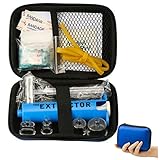
- Keep a bite and sting extractor kit handy for all of your outdoor activities. It's a handy addition to your First Aid Supplies, car glovebox, backpack, etc. Rattlesnake Bite Kit is essential for backcountry camping, fishing, hiking or just a day at the local park
- This bee sting kit can be helpful helpful in extracting bee, wasp or spider venom from the wound site. The pump is easy to use even with only one hand
- Venom extractor includes four sizes of extraction vessels that attach to the pump handle. Choose the size that best suits your current needs. As a rattle snake bite kit, bee sting kit and venom extractor this versatility is essential
- Snake bite kit is light, compact and highly portable. It comes in a hard-shell case with four sizes of extraction cups and a tourniquet band to help control the spread of the venom until it can be extracted
- Snake bite kit by WAEKIYTL is a sturdy, reliable First Aid tool for extracting subcutaneous venom from snake bites, bee stings, wasp stings, etc. Note, venom extractors work well to pull venom from just beneath the skin but not from within the muscle tissue. Effectiveness will vary depending upon where the bite/sting occurred and how deep it is. Always seek professional medical attention immediately
3. Western cottonmouth: a western Tennessee species
TWRA places Tennessee cottonmouths in western Tennessee, including counties on the northern Highland Rim. The agency says the white lining revealed when a cottonmouth opens its mouth defensively is the source of the common name.
CDC/NIOSH describes adult cottonmouths generally as typically more than four feet long, dark tan, brown, or nearly black, with vague dark crossbands. Juveniles usually show stronger bands and a yellow tail. Those are general cottonmouth characteristics, not a Tennessee-specific measurement or field census.
An open mouth is a defensive display, not an invitation to move closer for a photograph. Give the snake a clear route away and retreat slowly. Water, marsh, stream, and wet lowland habitat can support cottonmouths, but habitat alone cannot confirm an identification.
What’s actually slowing this PC down?
Pick the symptom - the matching free tool is one click away.
4. Western pygmy rattlesnake: small does not mean risk-free
TWRA includes the western pygmy rattlesnake among Tennessee’s venomous snake groups. The Tennessee Poison Center says this species is rarely involved in envenomations. The cited Tennessee material does not establish a reliable state-specific length, detailed distribution, or complete visual profile, so avoid guessing those details from memory or from an online photograph.
Rank #4

- 【First Aid Kit Survival Sets】Camping supplies comes with snake bite kit, bandage adhesive strips, scissors, emergency blanket, compass whistle and other multi-use items for any possible potential emergency, it’s a great emergency kit for basic supplies
- 【Durable First Aid Bag】It was made by high quality EVA bag, water resistant and shockproof and wear resistant. Thanks to its compact dimensions, it is ideal for taking with you when travelling, hiking, skiing, camping, in the car, backpack, handbag and outdoor adventures. Perfect for extended use
- 【Top Practical Stings Bites Survival Tools】Snake bite kit by WAEKIYTL is a sturdy, reliable First Aid tool for extracting subcutaneous venom from snake bites, bee stings, wasp stings, etc. Note, venom extractors work well to pull venom from just beneath the skin but not from within the muscle tissue. Effectiveness will vary depending upon where the bite/sting occurred and how deep it is. Always seek professional medical attention immediately
- 【Comprehensive First Aid Treatment】The first aid kit contains more than enough supply to treat a single family or a group of friends under emergency circumstances. A dainty first aid set ideal for home, travel, and on the go use. Perfect for any emergency needs. When outdoor travel in cold weather, when in the process of sports accidental falls, sprains, or when accidental burns at work, survival first aid kit can give the first time emergency treatment
- 【Multipurpose Emergency Blanket】Perfect for emergency situations where warmth or protection from all-weather conditions is required. Helps prevent hypothermia and shock by retaining of a user's body heat. our blankets can help block rain, snow, and moisture to keep you dry in damp, wet, cold, rainy environments
If you see a small snake with a possible rattle, treat it as venomous until you are safely away. Do not pick it up to verify the species. A secure distance is more valuable than a perfect identification.
Why “most dangerous” has several meanings
There is no single number that captures danger. A useful risk assessment separates at least four questions:
- How often are people bitten? Tennessee Poison Center identifies copperhead envenomation as the most common in Tennessee.
- How severe can a bite be? The same center notes that timber rattlesnake envenomations can be quite severe.
- How likely are you to encounter the snake? Copperheads are statewide; TWRA also says timber rattlesnakes occur across the state, while cottonmouths are concentrated in western Tennessee.
- Can you identify it safely? Often you cannot. Poor visibility, juvenile patterns, darkness, and a rapidly moving snake make confident identification difficult.
The cited sources do not provide a fully comparable four-way table covering size, distribution, encounter rate, and medical severity. National statistics also should not be mistaken for Tennessee counts: CDC/NIOSH estimates 7,000–8,000 venomous snakebites in the United States each year and about five U.S. deaths annually. The page does not display the estimate’s year, and it is not a Tennessee-specific total. CDC/NIOSH also reports lasting effects in 10%–44% of people bitten by rattlesnakes; that range is national guidance, not a Tennessee timber-rattlesnake study.
PC Slower Than It Used to Be?
A free scan shows the junk files, broken settings and background clutter dragging Windows down - then fixes them in one click.Free scan · Windows 10 & 11Crashes, No Sound, or Screen Glitches?
Random freezes, missing sound and display glitches usually trace back to one bad driver. Find and replace yours safely.Free scan · under a minuteHow to reduce your risk on a Tennessee summer outing
Before leaving
- Choose sturdy hiking boots and long pants for outdoor work or hiking. Ordinary boots are not snake-proof, but covering more skin reduces routine contact with vegetation and rocks.
- Carry a charged phone, water, and a basic first-aid kit. Tell someone your route when hiking in remote country.
- Learn the trail’s terrain and weather. Heat, darkness, and rushing to beat a storm make it harder to see where you place your hands and feet.
On the trail
- Watch the ground near rocks, logs, leaf litter, and stream edges.
- When hiking in rocky areas, check before putting a hand into a crack or crevice. Use a trekking pole or another tool to inspect cover rather than reaching blindly.
- Avoid tall grass and leaf piles when possible. Do not climb among rocks or wood piles where snakes may be resting.
- Step onto a log only after checking the far side; do not place a hand on top of it for balance.
- If you see a snake, stop, back away slowly, and give it a broad route to leave. Never throw objects, prod it, or block its escape.
What to do if you encounter a snake
TWRA’s advice is simple: “If you do see a snake, it is safest for you and the snake to leave it alone.” CDC/NIOSH likewise says, “Do not touch or handle any snake.” Stay several body lengths away, keep children and pets beside you, and wait for the snake to move off the path if there is room to do so. If the trail is narrow, turn around rather than attempting to pass close to it.
Best Value

- Used in variety of occasions:Keep a DLY brand bite and sting extractor kit handy for all of your outdoor activities. It's a handy addition to your First Aid Supplies, car glovebox, backpack, etc. Rattlesnake Bite Kit is essential for backcountry camping, fishing, hiking or just a day at the local park.
- Easy to use:This bee sting kit can be helpful helpful in extracting bee, wasp or spider venom from the wound site. The pump is easy to use even with only one hand.Just need to press the bar to the bottom to absorb venom, DO NOT REPEAT IT!
- Reasonable design:On the package of venom tool includes three kinds of round suction cup, a oval suction cup and a tourniquet. it will control the spread of venom effectively, and works for the venom absorption in every parts of the body.
- Easy to take:Snake bite kit is light, compact and highly portable. dimensions is 4.92 x 3.14 x 1.18 inch ( 16. 8 x 11 x 5cm) and weight only 0.44 pounds. So easy to carry, can be placed in a backpack, cars, hiking or camping gear.
- Ask for medical advice immediately:Snake bite kit is a sturdy, reliable First Aid tool for extracting subcutaneous venom from snake bites, bee stings, wasp stings,Absorbing pus in the wound, etc. Note, venom extractors work well to pull venom from just beneath the skin but not from within the muscle tissue. Effectiveness will vary depending upon where the bite/sting occurred and how deep it is. Always seek professional medical attention immediately.
Do not rely on a photograph taken at close range. If you can safely take a photo from a distance, it may help clinicians or wildlife personnel, but identification should never delay treatment.
Snakebite first aid: act immediately
Any suspected venomous snakebite is an emergency. Do not wait for pain or swelling to become severe. Call emergency services or get to an emergency department as soon as possible.
- Move away from the snake. Reach safety without trying to capture or kill it.
- Call for emergency medical help. Tell responders that a snakebite is suspected and where you are.
- Remove rings, watches, bracelets, and tight clothing before swelling develops.
- Keep the bitten limb still and relaxed while arranging transport. Avoid unnecessary walking.
- Wash the bite gently and cover it with a clean, dry dressing.
- Note the time of the bite and any changes in swelling, pain, bleeding, breathing, vision, or weakness. Do not delay transport to collect details.
CDC/NIOSH and Tennessee Poison Center warn against tourniquets or other tight ligatures, ice, electric shock, cutting the wound, sucking out venom, and knife use. Do not apply a folk remedy and do not drive yourself if emergency transport is available. Never pick up or trap the snake for identification.
Free tools Windows power users keep installed
One-click scans. No signup required.
Common mistakes to avoid
- Assuming a harmless-looking snake is safe to handle: visual identification from a distance is difficult, especially for juveniles and in poor light.
- Believing every rattlesnake will rattle: a hidden or quiet snake can still bite.
- Using a size test: length, body thickness, or head shape alone cannot confirm a species.
- Waiting for symptoms: treatment is safer when started promptly.
- Trying to kill the snake: many bites happen when people approach a snake that is already moving away.
Frequently asked questions
Which Tennessee snake is officially considered the largest and most dangerous?
TWRA identifies the timber rattlesnake as the largest and most dangerous of Tennessee’s four venomous snake groups and lists it at 36–60 inches long. That agency statement does not rank the other three by every measure of danger.
Are cottonmouths found throughout Tennessee?
No. TWRA places cottonmouths in western Tennessee, including counties on the northern Highland Rim. Copperheads and timber rattlesnakes are the groups the agency describes as occurring across the state.
What is the most common venomous snakebite in Tennessee?
Tennessee Poison Center says copperhead envenomation is the most common in Tennessee. Common does not mean minor; a suspected bite still needs emergency medical evaluation.
Should I catch a snake so the hospital can identify it?
No. CDC/NIOSH and Tennessee Poison Center advise against handling or trapping the snake. A distant photograph can help only if it is safe and does not delay emergency care.
Do these 3 things before closing this tab:
1Clear out junk files and repair common Windows errors2Fix the driver behind crashes, sound loss and screen glitches3Repair Windows errors before they cause bigger problemsQuick Recap
Product prices and availability are accurate as of the date/time indicated and are subject to change. Any price and availability information displayed on Amazon at the time of purchase will apply.





Leave a Reply