The Thai Ridgeback is an athletic dog from eastern Thailand, known for a strip of hair growing backward along its spine. It is intelligent and loyal to its family, but often independent and wary of unfamiliar people, with strong jumping ability and prey drive. It is usually best suited to an experienced owner who can provide early socialization, patient training, daily exercise, and secure containment.
In a prepared home, a Thai Ridgeback can be a devoted companion and watchful guardian. Without consistent management, its independence, athleticism, and chase instinct can become difficult to handle.
As an Amazon Associate I earn from qualifying purchases.
Thai Ridgeback at a glance
| Characteristic | Details |
|---|---|
| Origin | Eastern Thailand |
| FCI classification | Group 5: Spitz and primitive types; Section 7: Primitive Type—Hunting Dogs |
| FCI breed number | 338 |
| Height | Males: 22–24 in (56–61 cm); females: 20–22 in (51–56 cm). The FCI standard allows a tolerance of ±1 in (2.5 cm). |
| Typical weight | About 35–75 lb, according to the AKC breed profile; standards call for weight proportionate to height. |
| Coat | Short, smooth, and close-lying |
| Accepted colors | Red, black, blue, and very light fawn (Isabella) |
| Life expectancy | Approximately 14–15 years, according to the AKC breed profile |
| Exercise | PetMD recommends at least one hour daily for most adults, with mental stimulation |
| Best suited to | Experienced owners who can provide training, structure, and secure fencing |
History and original purpose
The Thai Ridgeback developed in eastern Thailand, where geographic isolation and limited transportation helped preserve the breed with relatively little outside influence. Historical descriptions date back at least to the 17th century; the FCI standard refers to Thai archaeological documents written approximately 360 years ago.
Quick wins for a faster PC:
Fix the driver behind crashes, sound loss and screen glitchesFind Drivers →Repair Windows errors before they cause bigger problemsFix Now →These dogs were practical all-purpose village animals. They hunted, guarded homes, and accompanied carts. Their survival depended on independent decision-making rather than constant direction from a handler. That history helps explain why a Thai Ridgeback may be highly intelligent without being eager to repeat an exercise simply because its owner asked.
#1 Best Overall

- Size Instruction: This large dog harness fits chest girth: 27-37 in, neck girth: 19-25 in. Perfect for German Shepherds, Labradors for hiking, walking, or daily outdoor adventures. Breed suggestions are for reference; please measure your dog's chest, neck, and weight for the best fit.
- Military-standard Materials: WINGOIN harness large size dog is made of military nylon and adopts an upper and lower two-layer structure. The outer camouflage pattern is 1000D nylon with sturdy stitching for extra durability, and the inner layer is a mesh material with excellent breathable, comfortable fit and no harm to the dog.
- Fast Wearing: The no pull dog harness for large dogs with a unique 4 quick-release buckles design, allowing you to put it on from the side of the dog’s neck instead of the head. This way of dressing can reduce the dog's resistance effectively, helping you to put it on or take it off quickly
- Sturdy Handle and 2 D-rings : 2 stainless steel D-rings, allow you to control the puller with little effort and training your dog to walk beside you. Dog harness with handle sewn tough, large enough to grab the harness. Three perfect combinations of use, not only slow down the impact of the dog's running but also make it easier for the owner to control the pet's running and walking
- Reflective Strip Design: The dog walking harness has a unique reflective strip design, which can alert pedestrians and vehicles when walking your dog in the evening, keeping your dog safe
The word primitive describes the breed’s classification and historical development. It does not mean that Thai Ridgebacks are wild or undomesticated.
The defining ridge
The ridge is a permanent pattern of hair growing in the opposite direction from the rest of the coat. It begins near the withers and runs toward the pelvis. Under the FCI and UKC standards, it should be clearly defined, symmetrical on both sides of the backbone, and contained within the width of the back.
Several ridge shapes and lengths are permitted. Crowns or whorls at the front of the ridge can be acceptable. The ridge is not the same thing as raised hackles: raised hackles are a temporary reaction to excitement, fear, or arousal, while the Thai Ridgeback’s ridge is part of its coat pattern.
Some purebred puppies are born ridgeless or with an atypical or plush coat. A ridgeless puppy is not automatically a mixed breed, but absence of a ridge is a disqualification under the FCI and UKC conformation standards. The AKC describes ridgeless or plush-coated puppies as pet-quality rather than suitable for conformation breeding.
Appearance and size
The Thai Ridgeback is medium-sized, muscular, and athletic rather than bulky. Its body is slightly longer than it is tall, with an FCI body-length-to-height ratio of 11:10. The chest is deep, the head is wedge-shaped, and the ears are erect, triangular, and set on top of the head.
The tail is carried vertically or with a slight curve. The coat is short and smooth. Long hair is disqualifying under the FCI and UKC standards.
The accepted solid colors are:
- Red
- Black
- Blue
- Very light fawn, often called Isabella
A black mask is preferred but not required in red dogs. White, brindle, merle, and parti-color are not listed as accepted colors in the FCI or UKC standards. The standard generally calls for dark-brown eyes, although amber eyes are permitted in blue dogs.
Temperament
A well-bred, properly socialized Thai Ridgeback is typically devoted to its family and observant of its surroundings. It may be affectionate at home while remaining noticeably reserved with visitors. Many individuals are wary of unfamiliar people rather than openly friendly.
Rank #2

- Large Dog Harness - Recommended Breeds: Medium to Large Dogs, such as Siberian Husky, Labrador, German Shepherd, Akita, Chow Chow, Schnauzer Giant,American Pit Bull Terrier, etc. Please measure your dog's neck and check girth carefully before purchasing this present for your puppy. Make your puppy stand out with this Classic Black Harness!
- No Pull, No Choke - Our non-pulling dog harness is specially designed with 2 metal leash rings for safer dog walks. Use the chest attachment clip to stop your dog from pulling on walks, perfect for dog training or dogs who tend to pull. The back one is great for casual walks, jogging, hiking, etc
- Easy to Use - This hassle-free overhead harness is easy to put on and take off with its 2 fast-release buckles. Slide the harness over your dog's head, buckle it up, adjust the straps, and here you go! Grab the top handle for additional control. Lightweight and easy to clean
- Fully Adjustable - This adjustable harness features 4 easy adjusting straps around the body. You can use its 2 neck straps and 2 chest straps to create a perfect fit for your dog with some room of growth. No worries about slipping out or choking
- Safe and Comfortable - Your dog will enjoy the daily walk in this comfort dog harness! Made of sturdy polyester oxford and padded with soft cushion to protect your dog's skin. Breathable air mesh keeps your dog cool during outdoor activities. Super bright reflective strips ensure a safe walk both day and night
The breed’s common traits include:
- Strong loyalty to its household
- Independence and self-direction
- High intelligence
- Protective or watchful behavior
- Excellent jumping and climbing ability
- Strong prey drive
- Suspicion of unfamiliar people or situations
These traits should not be reduced to “naturally aggressive.” The FCI and UKC standards disqualify aggression and extreme shyness. Behavior still varies with genetics, early handling, socialization, training, and the individual dog.
Care is needed around cats, rabbits, small dogs, and other small animals. A Thai Ridgeback may live successfully with another pet, especially when raised with it, but its prey drive means peaceful coexistence should never be assumed. Supervision and management remain important.
Training and socialization
Training should start as soon as the puppy comes home. The most useful approach is reward-based, consistent, and calm. Short sessions work better than repetitive drills that give the dog an opportunity to disengage.
PC Slower Than It Used to Be?
A free scan shows the junk files, broken settings and background clutter dragging Windows down - then fixes them in one click.Free scan · Windows 10 & 11Outdated Drivers Are Slowing You Down
One free scan finds every outdated or missing driver and matches the right update for your exact hardware.Free scan · exact hardware match- Begin puppy socialization early. Introduce the puppy gradually to people, surfaces, sounds, handling, vehicles, and calm, vaccinated dogs.
- Teach practical behaviors first. Prioritize name recognition, recall foundations, leash walking, settling on a mat, leave it, drop it, and polite greetings.
- Use rewards strategically. Food, play, and access to interesting activities can be more effective than physical corrections.
- Practice around distractions. A dog that responds in the living room may ignore a cue when it sees a squirrel, cat, or unfamiliar visitor.
- Manage what training has not solved. Use gates, leashes, long lines, crates, and secure fencing instead of relying on obedience alone.
Intelligence does not guarantee obedience. Thai Ridgebacks often understand what is being asked but decide for themselves whether complying is worthwhile. Owners who expect instant, reliable off-leash control may become frustrated.
Exercise and containment
PetMD recommends at least an hour of exercise each day for most adults, although individual requirements vary. A brisk walk may be part of the routine, but many dogs also need opportunities to run, explore, solve problems, and use their noses.
Suitable activities include hiking, running, fetch, swimming, agility, rally, obedience games, and controlled hunting-related work. Mental exercise matters because an under-stimulated Ridgeback may invent its own projects, such as escaping, dismantling barriers, or patrolling the house.
Do not underestimate this breed’s athleticism. Thai Ridgebacks can jump and climb, and a standard low garden fence may not contain one. PetMD cites American Thai Ridgeback Association guidance recommending fencing of approximately 6 feet. Inspect gates, latches, gaps, and nearby objects that could serve as launch points.
What’s actually slowing this PC down?
Pick the symptom - the matching free tool is one click away.
Off-leash exercise is safest in a secure fenced area. Prey drive and independent behavior can make an unsecured dog unreliable even after substantial training.
Rank #3
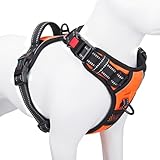
- [UPDATED VESION, EASY TO PUT ON & TAKE OFF] This dog harness has 3 buckles( One is on the neck with Lockable, two are on the chest), NO NEED go through dog’s head. This will let your dog loves to wear harness!
- [NO PULL WITH 2 HOOK LOOPS] There are 2 sturdy metal hook loops for leash attachment. If you use the front hook on the chest, it will reduce the pulling a lot and make going for a walk more enjoyable. As usual, most people like to use the back hook.
- [REFLECTIVE MATERIAL] The reflective material will be really nice when it gets dark. Also, your dog will be saw easily. This reflective material can make drivers have long time to react, which ensure your dog’s safety!
- [USEFUL & SOFT HANDLES] You will like this handle on the back,it is helpful in controlling dogs a bit closer to you when they are trying to lunge at something. Also, it is convenient to assist dogs into the car.
- [100% BEST CUSTOMER SERVICE] If any products quality really exits, a refund or replacement will be available.
Grooming and routine care
The short coat is easy to maintain. Weekly brushing is generally enough to remove loose hair, with more frequent brushing during heavier seasonal shedding. The breed sheds year-round, so “short-haired” does not mean “no shedding.”
Routine care should include:
- Weekly brushing
- Nail trimming as needed
- Regular ear checks
- Tooth brushing and other dental care
- Bathing when the dog is dirty or has a veterinary need
- Regular checks of the ridge and skin for lumps, irritation, or drainage
The Thai Ridgeback is not hypoallergenic. Its short coat and lack of a dense undercoat may be easier for some allergy sufferers than certain heavily coated breeds, but it still produces allergens.
Health concerns
Dermoid sinus
Dermoid sinus is the most distinctive health concern associated with the breed. It is a congenital tract or opening in the skin that can extend into deeper tissues near the spine. It may look like a tiny midline opening, an unusual swirl of hair, a lump, swelling, or a draining area.
Free tools Windows power users keep installed
One-click scans. No signup required.
It can occur along the head, neck, back, or tail. A 2022 veterinary case report documented multiple sacro-coccygeal dermoid sinuses in a Thai Ridgeback, showing that the condition is not confined to the neck or mid-back.
Some dermoid sinuses become infected; deeper tracts can create more serious complications, including neurological problems. Diagnosis may require radiographs, CT, or MRI. When treatment is indicated, surgical removal is the usual definitive option.
The hair ridge and dermoid sinus susceptibility are genetically associated in ridgeback dogs. Research has linked the ridge to a duplication involving FGF3, FGF4, FGF19, and ORAOV1. This association does not mean that every ridged Thai Ridgeback will develop a dermoid sinus.
Other concerns
Hip dysplasia can occur, although the AKC describes it as rare in its Thai Ridgeback profile. The Orthopedic Foundation for Animals includes Thai Ridgebacks in its disease database, but breed-specific screening recommendations are not necessarily a complete list of every possible health issue. A breeder’s openness about family health, veterinary examinations, and congenital abnormalities matters.
If you notice a new lump, persistent swelling, an opening, discharge, pain, or sensitivity along the spine or tail, arrange a veterinary examination. Do not assume that an unusual mark is simply part of the ridge.
Rank #4

- 【No Pull & No Choke Design】: This harness simply goes through the dog's head, snaps on the belly and that's the end of it. Besides, the D-ring on the chest strap is used for no pull dog training and guiding direction, and the O-ring on the back is used for daily dog walking. The triangular design on both sides of this no pull harness helps to distribute the pulling force, so you don't have to worry about the dog choking when suddenly pulling.
- 【Soft Velvet Padded & Durable】: With soft thicken and wider fleece pads used beneath the strap of neck, back and handle atop, this dog harness could reduce friction from movement and protect the health of the dog's skin. It also uses superior nylon material to ensure long-lasting use.
- 【Leash Double Handle & Elastic Band】: You can use the top handle for casual dog walking, and the center handle for controlling the direction of the dog, easily guiding it through crowded areas and preventing storming in case of accidents. And the springy design of the leash really absorbs the pull from large strong dogs without tugging on your wrist and shoulder.
- 【Neck & Chest Adjustable】: SlowTon dog harness is equipped with adjustable loop for both neck and chest girth, and the quick-release buckle allows for quick donning. No matter what kind of breed and shape, it provides proper length after adjusting to fit your dog's neck and chest, which is perfectly designed for walking, jogging, running, hiking and training.
- 【Tangle-free Leash & Reflective】: The heavy-duty 360°swivel metal hook ensures no tangle. Plus, it has an elastic bungee and 2 padded handles, which is great for walking training of city dogs, or wandering off in country. Furthermore, its super bright reflective strips ensure a safe walk both day and night. And it comes with 2 hook and loop straps, a regular one Support Dog and the reflective one DO NOT PET.
Finding a responsible breeder
Because the breed is very rare outside Thailand, buyers may encounter long waiting lists, international transport, or breeders using rarity as a sales tactic. “Rare” says nothing by itself about health, temperament, or breeding quality.
Before committing to a puppy, ask for:
- Veterinary records for the puppy
- Publicly verifiable health results for both parents where available
- An explanation of the parents’ temperaments and behavior with strangers, dogs, and small animals
- Information about whether each puppy has a normal ridge, is ridgeless, or has an atypical coat
- Specific information about dermoid sinus checks and any congenital findings
- A contract explaining the breeder’s return or rehoming policy
OFA health information can be useful, but a CHIC number does not mean that a dog passed every test. OFA defines CHIC certification as completion of the recommended screenings with results made publicly available; the listing itself is not a guarantee that all results are normal.
Be cautious if a seller refuses to show records, promises that the breed is completely free of health problems, markets a ridgeless puppy as show-standard, or claims that tongue spots prove purity. A black tongue marking may be preferred by the standard, but it is not a standalone breed-identification test.
Recommended Free Tools
Recognition and breed status
The FCI accepted the Thai Ridgeback on a definitive basis on May 26, 2003. It is FCI breed number 338 and is not subject to an FCI working trial. The United Kennel Club recognized the breed on January 20, 1996, placing it in the Sighthound & Pariah Dog Group.
In the United States, the Thai Ridgeback is recorded through the AKC Foundation Stock Service rather than being fully AKC-registrable as an AKC-recognized breed. The AKC’s current acceptable-domestic-registries page lists the American Thai Ridgeback Association for Thai Ridgebacks; check current registry information because status can change.
Is a Thai Ridgeback right for you?
This breed may suit an experienced owner who wants an athletic, independent companion and is prepared to manage a watchful dog with a strong chase instinct. It can do well with an active household, structured training, secure fencing, and thoughtful introductions to visitors and other animals.
It may be a poor match if you want a dog that welcomes everyone, can safely roam off leash, requires little exercise, or follows commands with minimal repetition. Apartment living is not automatically impossible, but it becomes much harder without reliable daily exercise, careful management, and a safe place for the dog to move.
Do these 3 things before closing this tab:
1Scan for outdated or missing drivers - takes under a minute2Clear out junk files and repair common Windows errors3Fix the driver behind crashes, sound loss and screen glitchesFAQ
Are Thai Ridgebacks good family dogs?
They can be loyal family companions when well socialized and responsibly trained. They are often reserved with strangers and may be challenging around small pets, so family suitability depends on the individual dog, supervision, and the household’s experience.
Best Value

- 【Heavy-duty Dog Harness】 Specially designed for powerful robust dog. The heavy-duty harness is crafted from durable nylon, reinforced with sturdy stitching and equipped with two sturdy triangular rings
- 【Four-point Adjustment, Easy To Wear】 There are 4 simple size adjusters for the neck and chest that can also be easily adjusted to fit your dog perfectly. The chest is fitted with two buckles that can be fully opened for easy wearing
- 【Molle System】featured Molle strips on both sides, allowing your dog to carry essential gear. Ideal for service, law enforcement, hunting, or outdoor activities. Perfectly compatible with Molle pouches on the market, it is easy to upgrade your gear
- 【Anti-lost ID Tag】Write down your dog’s information on ID tag. When someone finds your lost dog, they can contact you with the information above
- 【Bonus Dog Leash】: A free 5ft dog leash is included. Featured with comfortable foam handle, strong climbing rope, and tangle-free hook
Are Thai Ridgebacks aggressive?
The breed is not accurately described as universally aggressive. It is often protective, independent, and wary of unfamiliar people. Stable temperament and appropriate socialization are important; aggression and extreme shyness are disqualifying under major breed standards.
Do all Thai Ridgebacks have a ridge?
No. Purebred puppies can be born ridgeless or with an atypical coat. However, absence of a ridge is disqualifying under FCI and UKC conformation standards, and a ridgeless puppy should not be sold as show-standard.
How much exercise does a Thai Ridgeback need?
PetMD recommends at least one hour of daily exercise for most adults, plus mental stimulation. Hiking, running, fetch, swimming, agility, obedience games, and scent-based activities can all be useful.
The Tool Desk
Outbyte PC Repair FREEClear out junk files and repair common Windows errorsFree Scan →Outbyte Driver Updater FREEScan for outdated or missing drivers - takes under a minuteDriver Scan →Can a Thai Ridgeback live with cats?
Some can, particularly when carefully raised and introduced, but the breed’s prey drive makes this unpredictable. Use gradual introductions, supervision, barriers, and separate safe areas rather than assuming the dog will ignore a cat.
Are Thai Ridgebacks easy to train?
They are intelligent but independent. They generally respond best to patient, reward-based training and clear routines. Understanding a cue does not always mean the dog will choose to obey it, especially around prey or unfamiliar distractions.
Do Thai Ridgebacks shed?
Yes. Their short, smooth coat is low maintenance, but they shed year-round and may shed more during seasonal changes. Weekly brushing is usually sufficient.
What is a dermoid sinus in a Thai Ridgeback?
It is a congenital skin tract or opening that can extend into deeper tissues, sometimes near the spine. A small opening, unusual hair swirl, lump, swelling, or drainage along the back, neck, head, or tail should be checked by a veterinarian.
The Bottom Line
The Thai Ridgeback is striking, athletic, and deeply loyal, but it is not a low-effort companion. Plan for early socialization, consistent reward-based training, daily activity, strong fencing, and careful management around strangers and small animals. If you can work with an independent temperament—and choose a breeder who is transparent about health and puppy quality—the breed can be an exceptionally devoted member of the family.
Quick Recap
Product prices and availability are accurate as of the date/time indicated and are subject to change. Any price and availability information displayed on Amazon at the time of purchase will apply.




