
Windows Errors? Fix Them Before They Spread
Repair common Windows errors and clear accumulated junk for a smoother, more stable PC - no reinstall needed.Free scan · no reinstallOutdated Drivers Are Slowing You Down
One free scan finds every outdated or missing driver and matches the right update for your exact hardware.Free scan · exact hardware matchThere is no defensible, evidence-based ranking of the ten oldest horse breeds. “Oldest” can mean an ancient horse type, a population that stayed geographically isolated, an archaeological animal identified with a modern breed, the date a breed was formally recognized, or the first surviving stud book. Those milestones can be separated by thousands of years, so putting them on one precise list would create false certainty.
The best-supported examples include Arabian type, the Icelandic horse, the Mongolian horse, the Caspian horse and the Akhal-Teke. They illustrate different kinds of historical evidence rather than five places in an objective age ranking.


As an Amazon Associate I earn from qualifying purchases.
Why a “10 oldest horse breeds” ranking is misleading
A modern horse breed is usually understood as a recognizable population maintained for particular traits, often with an organized registry. Ancient people did not necessarily use that system. They selected horses for riding, transport, warfare, farming or local survival, and populations could mix whenever animals or people moved.
Quick wins for a faster PC:
Fix the driver behind crashes, sound loss and screen glitchesFind Drivers →Repair Windows errors before they cause bigger problemsFix Now →Scan for outdated or missing drivers - takes under a minuteDriver Scan →That creates several different clocks:
- Ancient type or tradition: Written or cultural evidence describes horses with recognizable qualities over a long period.
- Population continuity: A population remains in a region, sometimes under unusual isolation, even if its exact starting date is unknown.
- Archaeological identification: A skeleton or depiction is judged to resemble an ancestor or early form of a modern breed. The identification may be uncertain.
- Conservation or rediscovery: A population thought to have disappeared is found again and documented.
- Registry history: A stud book or breed association begins keeping formal pedigrees. This is a record-keeping date, not an origin date.
These measures answer different questions. A stud book from the twentieth century does not make a horse “young,” and a 3,400 BC archaeological attribution does not prove an unbroken modern pedigree back to that year.
#1 Best Overall
What the strongest documented examples actually show
| Horse | Evidence type | Documented detail | What the date does—and does not—prove |
|---|---|---|---|
| Arabian | Historical type and later registry | A 2013 PLOS ONE study says Arabian type was bred for over 3,500 years; it lists a United States stud book from 1908. | The 3,500-year statement concerns a historical type. The 1908 date concerns American pedigree records. Neither supplies one exact breed-origin year. |
| Icelandic | Population isolation | The same 2013 study describes the Icelandic horse as isolated for more than 1,000 years. | Isolation indicates long-term separation, not a precisely dated foundation of the modern breed. |
| Mongolian | Landrace and regional continuity | The 2013 study identifies the Mongolian horse as a landrace with many types shaped by geography and purpose. | It should not be treated as one closed, uniform, registry-defined breed with a single birth date. |
| Caspian | Archaeology, rediscovery and conservation | The Fédération Equestre Internationale reports a cemetery horse dated to 3400 BC that is believed to be an early Caspian type, and records rediscovery in northern Iran in 1965. The Caspian Horse Society also describes the 1960s rediscovery. | The archaeological identification is qualified. It is not proof that today’s Caspian population descends continuously from that individual. |
| Akhal-Teke | Breed tradition and pedigree records | The Akhal-Teke Association of America says the first official Akhal-Teke stud book was published in 1941. | 1941 marks formal record keeping, not the beginning of Turkmen horse history. |
Five historically important horses, presented without a false ranking
Arabian: a long-lived type with a much later registry
The Arabian is often placed first in internet lists because its historical reputation is exceptionally old. The 2013 PLOS ONE study states that Arabian type was bred for over 3,500 years. That wording matters: it refers to a type and breeding tradition, not to a modern registry proving every present-day Arabian has an uninterrupted pedigree to a particular ancient animal.
The same study lists 1908 for the United States stud book. That is a useful contrast. A stud book records officially recognized parentage in a specific registry and country; it cannot be used as the breed’s origin date. A reader comparing “3,500 years” with “1908” is not seeing a contradiction—only two different historical milestones.
Descriptions of Arabian history also cross geography and political eras. When a claim says “Arabian,” ask whether it means horses selected in the Arabian Peninsula, a broader desert-horse type, or animals entered in a modern national registry. Without that clarification, an apparently exact age is broader than the evidence allows.
What’s actually slowing this PC down?
Pick the symptom - the matching free tool is one click away.
Icelandic: more than a millennium of isolation
The Icelandic horse provides a different kind of evidence. The 2013 PLOS ONE study notes that the population was isolated for more than 1,000 years. Geographic isolation can preserve a distinctive population and make its history easier to distinguish from that of neighboring horses, but it still does not identify the exact year a breed was founded.
“More than 1,000 years” is therefore best read as a minimum duration for isolation in the study’s account. It does not mean that every individual line remained genetically unchanged, nor that a registry existed throughout that period. The useful historical conclusion is narrower: Icelandic horses represent a long-separated population whose modern identity cannot be reduced to the date of a recent pedigree organization.
Mongolian horse: an old landrace, not one standardized breed
The Mongolian horse shows why the word breed itself needs care. The PLOS ONE study describes it as a Mongolian-origin riding horse and a landrace, with many types shaped by geography and purpose. A landrace is a locally adapted population rather than a single, tightly standardized line maintained to one written specification.
In practical terms, a Mongolian horse from one region and job may differ from one selected elsewhere for endurance, riding, pack work or another need. Treating all of those types as a single closed breed and assigning one origin year would erase the very variation the study emphasizes. The Mongolian horse belongs in a discussion of ancient horse populations, but not as a precisely dated entry in a league table.
Recommended Free Tools
Caspian: an ancient attribution followed by twentieth-century rediscovery
The Caspian has one of the most striking archaeological stories, and also one of the clearest warnings about uncertainty. The Fédération Equestre Internationale reports that a horse believed to be an early Caspian type was found in a cemetery dated to 3400 BC. The phrase “believed to be” is essential. It describes an interpretation of archaeological evidence, not a laboratory demonstration of continuous descent into the present.
The same FEI account reports that the Caspian was rediscovered in northern Iran in 1965. The Caspian Horse Society likewise describes the rediscovery during the 1960s. Rediscovery is a conservation milestone: it tells us when modern investigators located and began documenting a surviving population. It does not mean the population originated in 1965, nor does it by itself connect every modern Caspian to the 3400 BC cemetery horse.
Those two dates can both be true because they refer to different events. One is an uncertain archaeological identification; the other is a modern rediscovery. A careful article must keep them separate instead of presenting “3400 BC” as an uncontested breed birth date.
Akhal-Teke: ancient Turkmen tradition, formal stud book in 1941
The Akhal-Teke is associated with the horse traditions of Turkmenistan and surrounding Central Asian regions. The Akhal-Teke Association of America records 1941 as the publication year of the first official Akhal-Teke stud book. That fact is valuable because it gives readers a verifiable point in the history of formal pedigree management.
Free tools Windows power users keep installed
One-click scans. No signup required.
It is not, however, evidence that the breed began in 1941. Horses and horse-keeping traditions can predate organized registries by centuries. The association’s date should therefore be labeled exactly as a stud-book milestone. Claims that convert it into an origin date confuse documentation with ancestry.
Rank #4
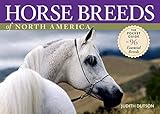
- Used Book in Good Condition
How to judge any claim that a horse is “the oldest”
Check what “old” refers to
Look for the noun attached to the number: is it an ancient type, a population, a bloodline, an archaeological specimen, an isolated island herd or a registry? If the wording shifts from one category to another without warning, the comparison is not like-for-like.
Separate a minimum from an exact date
“More than 1,000 years” is a minimum duration, not a foundation year. “Over 3,500 years” describes the duration of a breeding tradition in the cited account, not an exact starting point. A date such as 3400 BC may date a cemetery, while the breed identification remains uncertain.
Ask whether the population was standardized
Landraces and regional horse types can be ancient without having a single closed pedigree. The Mongolian example demonstrates why a list should not silently treat a diverse population as if it were a modern registry breed.
Identify who made the claim
A scholarly paper, an international equestrian federation and a breed association can each provide useful information, but they are not interchangeable authorities. The PLOS ONE figures come from a 2013 scientific study; the 1941 stud-book detail comes from the Akhal-Teke Association of America; the qualified Caspian archaeological statement comes from the FEI. Naming the source and date lets readers understand the scope of each claim.
Why a complete top ten cannot be supplied responsibly here
A genuine ten-item ranking would require the same kind of breed-specific evidence for ten populations: clearly defined terms, primary archaeological or historical documentation, geographic context, and an explanation of whether the claim concerns continuity, isolation, rediscovery or registry history. The available material establishes five strong examples but does not provide equivalent, checked documentation for five additional entries.
Filling the remaining places with familiar names would invite the exact error this subject needs to avoid: repeating an unsourced origin story as though it were a measured date. A shorter, transparent selection is more informative than a numerically complete list that mixes incompatible evidence.
How to read future lists and spot overconfident wording
- “The oldest breed in the world” should be followed by a definition of oldest and a named source.
- “Descended directly from horses found in 3400 BC” requires evidence of continuous lineage, not merely a resemblance or an attribution by a modern organization.
- “The breed was established in [registry year]” may describe the opening of a stud book rather than the beginning of the population.
- “Unchanged for thousands of years” is an especially strong claim. Isolation or tradition alone does not demonstrate zero genetic or demographic change.
- “Ancient horse” and “ancient breed” are not synonyms. An archaeological horse can be ancient even when the modern breed label is much newer.
The most accurate answer to the title’s question is therefore conditional: Arabian type has a documented breeding tradition exceeding 3,500 years in the cited 2013 study; Icelandic horses were isolated for more than 1,000 years; the Caspian has a qualified 3400 BC archaeological attribution and a 1965 rediscovery; the Mongolian horse is an old, varied landrace; and the Akhal-Teke’s first official stud book dates to 1941. These facts illuminate different histories, not a single ten-place age scale.
Quick Recap
Product prices and availability are accurate as of the date/time indicated and are subject to change. Any price and availability information displayed on Amazon at the time of purchase will apply.





Leave a Reply