
Recommended Free Tools
Some links on this page are affiliate links: if you buy through them we may earn a commission, at no extra cost to you.
The best saltwater fish for a beginner is usually an ocellaris clownfish, percula clownfish, firefish, pajama cardinalfish, royal gramma, neon goby, or—if the aquarium has a mature sand bed—a yellow watchman goby. These species are relatively adaptable, commonly accept prepared foods, and are manageable in the right marine aquarium.
However, “beginner fish” does not mean “suitable for an unprepared tank.” Every marine aquarium should be fully cycled, show zero ammonia and nitrite, maintain stable salinity and temperature, and provide enough space and habitat for the fish at adult size. The list below separates genuinely dependable first choices from species that are beginner-compatible only under specific conditions.
As an Amazon Associate I earn from qualifying purchases.
Quick wins for a faster PC:
Fix the driver behind crashes, sound loss and screen glitchesFind Drivers →Repair Windows errors before they cause bigger problemsFix Now →Scan for outdated or missing drivers - takes under a minuteDriver Scan →What makes a saltwater fish beginner-friendly?
A hardy fish is not automatically easy to keep. A species may tolerate ordinary aquarium conditions yet still be a poor first choice because it jumps, needs a mature algae supply, becomes aggressive, requires a group, or outgrows the aquarium.
For this list, a practical beginner fish is one that generally combines several of these traits:
Popular on Amazon

- COMPLETE GLASS AQUARIUM KIT*: The kit includes a 55-gallon glass tank with two hinged hoods for easy access, white LED lights, a Tetra Whisper PF60 Power Filter with two Tetra Large Bio-Bag Filter Cartridges, a 200-watt Tetra heater, a thermometer, a fish net, a Tetra AquaSafe water conditioner sample, a TetraCare brochure and an aquarium set-up brochure.
- ENERGY-EFFICIENT LEDS: The hinged hoods house energy-efficient white LEDs that create a natural underwater shimmer effect.
- FILTER SYSTEM INCLUDED: The quiet, powerful 3-in-1 Tetra Whisper PF60 Power Filter performs mechanical, chemical and biological filtration for cleaner water and healthier fish.
- WITH HEATER & THERMOMETER: The included 200-watt heater and thermometer are essential for tropical fishkeeping and help maintain water temperature.
- SIZE: The 55-gallon tank measures approximately 48.5 inches wide by 12.8 inches deep by 20.8 inches high.
- It commonly adapts to aquarium conditions and accepts suitable prepared or frozen foods.
- It is not excessively aggressive toward compatible tank mates.
- Its adult size and activity level can fit a realistically sized home aquarium.
- Its diet and habitat can be provided without specialist equipment or a continuously replenished live-food population.
- Captive-bred specimens are commonly available, where that is relevant.
Those criteria still do not override species-specific care. The Ornamental Aquatic Trade Association (OATA) gives broad marine starting ranges of 1.020–1.025 specific gravity, 24–26°C, pH 7.9–8.3, zero ammonia, zero nitrite, and nitrate no higher than 50 mg/L. Stability matters as much as hitting a number, and an individual species may require narrower or different conditions.
LiveAquaria’s care guidance also notes that captive-bred fish are generally accustomed to aquarium conditions and prepared foods, which can make acclimation easier. That is a useful preference—not a guarantee for every fish, species, seller, or shipment.
PC Slower Than It Used to Be?
A free scan shows the junk files, broken settings and background clutter dragging Windows down - then fixes them in one click.Free scan · Windows 10 & 11Crashes, No Sound, or Screen Glitches?
Random freezes, missing sound and display glitches usually trace back to one bad driver. Find and replace yours safely.Free scan · under a minuteQuick shortlist: the strongest first choices
If you want a practical starting point rather than all 28 options at once, begin by investigating:
- Ocellaris clownfish: the most broadly dependable choice for many new marine aquarists.
- Percula clownfish: similar to the ocellaris, with a smaller adult profile and captive-bred availability.
- Firefish or purple firefish: peaceful and colorful, provided the aquarium has a secure lid and hiding places.
- Pajama cardinalfish: peaceful and easy to feed, but a group needs an appropriately sized aquarium.
- Royal gramma: a cave-dweller that is manageable when kept singly and given visual barriers.
- Neon goby: a small, peaceful fish that suits a calm reef aquarium.
- Yellow watchman goby: an entertaining sand-bed fish for an established aquarium with suitable substrate and floor space.
- Tailspot blenny: a personable nano-reef option once the rockwork supports algae or the aquarist can provide an appropriate substitute diet.
“First choice” does not mean all of these species belong together. A peaceful fish may still defend a cave, fight its own kind, or be bullied by a more assertive tank mate.
The 28 best saltwater fish for beginners
The table uses three practical tiers:
- Best first fish: relatively forgiving, manageable, and widely suited to beginner systems once the aquarium is ready.
- Good beginner fish with conditions: a sound choice when the aquarium provides the required sand, rockwork, algae, social group, maturity, or footprint.
- Beginner-compatible but not universally easy: possible for a prepared beginner, but with meaningful aggression, reef-safety, jumping, dietary, or space concerns.
Tank context below is intentionally more useful than a single universal gallon number. Aquarium dimensions, adult size, swimming behavior, social requirements, filtration, aquascaping, and tank mates all affect the real minimum. A retailer’s “10-gallon minimum” is not a universal stocking rule.
| Fish | Tier | Best system and practical context | Why beginners consider it | Main caveat |
|---|---|---|---|---|
| Ocellaris clownfish Amphiprion ocellaris |
Best first fish | Reef or fish-only aquarium sized for the adult fish; commonly kept as a compatible pair. | Hardy, widely available captive-bred, adaptable, and usually willing to eat prepared foods. Reef compatible. | A pair establishes a territory and may harass very timid tank mates. Do not add multiple unrelated clownfish to a small aquarium. |
| Percula clownfish Amphiprion percula |
Best first fish | Peaceful reef aquarium with suitable space for a pair or compatible community. | Small adult size, prepared-food acceptance, and captive-bred availability make it a strong beginner option. | Keep a compatible pair rather than several unrelated clownfish in a confined aquarium. |
| Pink skunk clownfish Amphiprion perideraion |
Best first fish | Peaceful community reef with appropriate tank mates. | A relatively small clownfish suited to a calmer community than many more assertive clownfish. | It still becomes territorial, and temperament varies by species and individual. |
| Firefish Nemateleotris magnifica |
Best first fish | Small peaceful reef with rockwork, a secure shelter, and a fitted lid. | Colorful, peaceful, generally hardy, and usually willing to eat common marine foods. | It is an accomplished jumper. An uncovered aquarium is an avoidable failure point. |
| Purple firefish Nemateleotris decora |
Best first fish | Peaceful reef with cover, rockwork, and similarly calm tank mates. | Small, attractive, and generally peaceful, with the same broad strengths as the red or standard firefish. | Use a secure lid and provide somewhere to retreat. It should not be housed with boisterous or aggressive fish. |
| Pajama cardinalfish Sphaeramia nematoptera |
Good with conditions | Peaceful community reef; a group needs a suitably sized aquarium. LiveAquaria recommends at least 30 gallons for a group. | Peaceful, hardy, slow-moving, and easy to feed. | Plan the social group and total stocking before purchase. A group is not automatically appropriate for a small aquarium. |
| Banggai cardinalfish Pterapogon kauderni |
Good with conditions | Captive-bred reef aquarium; select a bonded pair or follow experienced stocking advice. | Calm, distinctive, and manageable when sourced captive-bred and given compatible tank mates. | Social hierarchy and aggression can become problems when incompatible groups are placed in a small tank. |
| Royal gramma Gramma loreto |
Best first fish | Reef or fish-only aquarium with caves, overhangs, and visual barriers; usually one per aquarium. | Small, colorful, and generally manageable. It is somewhat more sociable than many related basslets. | It is territorial toward similar fish and should usually be kept singly. |
| Chalk bass Serranus tortugarum |
Good with conditions | Peaceful reef or fish-only aquarium with rockwork and non-aggressive tank mates. | A small, adaptable basslet-like fish that is a more practical beginner choice than larger groupers. | Do not crowd it with similar cave-dwelling fish or aggressive companions. |
| Orchid dottyback Pseudochromis fridmani |
Good with conditions | Reef with caves and hiding places; generally one per aquarium. | One of the more manageable dottybacks and commonly available captive-bred. | It remains territorial, may intimidate timid fish, and can prey on very small ornamental shrimp. |
| Yellowtail blue damsel Chrysiptera parasema |
Good with conditions | Hardy reef with rockwork and compatible, appropriately assertive tank mates. | Smaller and generally less aggressive than many damsels. | It is still a damsel: territorial behavior is normal, particularly in a confined aquarium. |
| Azure damsel Chrysiptera hemicyanea |
Good with conditions | Reef with rockwork, territories, and tank mates selected for compatibility. | Colorful and durable, making it manageable in a carefully planned community. | Do not market it as universally peaceful. Individual temperament and aquascape matter. |
| Talbot’s damsel Chrysiptera talboti |
Good with conditions | Relatively peaceful community reef with rockwork. | One of the calmer damsel choices and a more credible beginner recommendation than domino, three-stripe, or large aggressive damsels. | It still defends territory and needs compatible companions. |
| Green chromis Chromis viridis |
Good with conditions | Larger peaceful reef aquarium capable of supporting a group; OATA recommends at least five chromis. | Generally peaceful and attractive in a school. | Do not buy one simply because it is small at the store. The group requirement increases space, filtration, and bioload demands. |
| Neon goby Elacatinus oceanops |
Best first fish | Small peaceful reef with rockwork and calm tank mates. | Small, peaceful, and commercially bred. It may also display cleaner behavior. | Avoid combining multiple similar gobies unless the aquarium, sex pairing, and social arrangement make that appropriate. |
| Yellow watchman goby Cryptocentrus cinctus |
Good with conditions | Sand-bed reef with stable fine sand, rubble, a tight lid, and enough floor space. LiveAquaria recommends 30 gallons or larger. | Hardy, entertaining, and a natural partner for some pistol shrimp. | It needs a suitable burrowing area and can jump. A newly set-up or unstable sand bed is a poor fit. |
| Court jester goby Koumansetta rainfordi |
Beginner-compatible but not universally easy | Mature algae-rich nano reef that can sustain grazing or provide suitable supplemental foods. | Peaceful and reef compatible. | It forages on filamentous algae and small crustaceans, so it is not an effortless first fish for a sterile new tank. |
| Clown goby Gobiodon oceanops |
Good with conditions | Small established reef with peaceful tank mates and suitable coral structure. | Tiny, peaceful, and manageable in an appropriately stocked small reef. | It may perch among corals and disturb or irritate some colonies. Choose it for a reef-specific plan, not as a universal community fish. |
| Yellow coral goby Gobiodon okinawae |
Good with conditions | Small established reef with peaceful companions. | Remains small—OATA gives this goby as an example of a species reaching only about 4 cm—and is generally manageable. | Provide appropriate perches and review compatibility with the specific coral community and other gobies. |
| Tailspot blenny Ecsenius stigmatura |
Good with conditions | Mature nano reef with algae-bearing rockwork or a dependable algae-based diet. | Small, personable, and usually compatible with other fish. | It can become territorial with similar blennies and may not thrive in a brand-new, algae-free aquarium. |
| Bicolor blenny Ecsenius bicolor |
Good with conditions | Established reef with algae-rich rockwork or supplemental algae foods. | Colorful, perches on rockwork, and is generally tolerant of other species. | Do not casually combine it with another blenny occupying the same niche. |
| Lawnmower blenny Salarias fasciatus |
Beginner-compatible but not universally easy | Mature algae-rich reef with sustained natural growth or a reliable substitute diet. | Useful and interesting in an aquarium that genuinely produces enough algae. | A poor choice for a sterile new tank. Many blennies need algae-rich foods, and larger blennies can reach about 15 cm. |
| Midas blenny Ecsenius midas |
Good with conditions | Peaceful established reef with rockwork and more swimming room than the smallest blennies require. | Attractive and generally manageable with compatible fish. | It is larger and more active than the smallest blennies. Plan space and avoid assuming that all blennies coexist. |
| Possum wrasse Wetmorella spp. |
Beginner-compatible but not universally easy | Peaceful established reef with hiding places and calm tank mates. | Small and suitable for a quiet aquarium. | It is shy, and wrasses vary widely in diet, adult size, jumping risk, and compatibility. It is conditional—not as universally easy as an ocellaris clownfish. |
| Six-line wrasse Pseudocheilinus hexataenia |
Beginner-compatible but not universally easy | Reef with assertive tank mates, carefully planned introduction order, and a secure top. | Small and hardy; adults remain around 8 cm according to OATA. | It is territorial and may harass peaceful fish or compete with other wrasses. It is a poor choice for a timid community. |
| Melanurus wrasse Halichoeres melanurus |
Beginner-compatible but not universally easy | Larger established reef with a covered top and a suitable sand bed for sleeping. | Robust and active when its habitat and diet are properly provided. | It needs more room and planning than the smallest beginner fish. Wrasse requirements vary substantially by species. |
| Coral beauty angelfish Centropyge bispinosa |
Beginner-compatible but not universally easy | Established reef or fish-only aquarium; OATA recommends at least 120 litres for a single smaller dwarf angelfish. | One of the easier dwarf angelfish for a prepared aquarist, with an attractive adult size and active behavior. | Individual fish may nip corals or clams. Dwarf angels should generally be added last after compatibility has been considered. |
| Flame angelfish Centropyge loricula |
Beginner-compatible but not universally easy | Established, appropriately sized larger reef or fish-only aquarium with careful stocking. | Colorful and potentially manageable for a prepared beginner. | It may nip corals and is less suitable as a first-ever marine fish than clownfish, firefish, or cardinalfish. |
Choose by aquarium type
For a peaceful community reef
Start by looking at ocellaris or percula clownfish, neon gobies, royal grammas, firefish, purple firefish, and pajama cardinalfish. Pink skunk clownfish, Talbot’s damsels, and carefully selected Banggai cardinalfish can also work when their social and territorial needs are addressed.
Use the aquascape to create separate visual territories. A royal gramma needs caves; firefish need a secure retreat; clownfish often claim a particular area. A fish that is peaceful in open water can become defensive when another fish repeatedly enters its chosen shelter.
For a small or nano reef
Small systems magnify mistakes because there is less swimming room, fewer places to retreat, and less water volume to absorb overfeeding or equipment problems. Consider a neon goby, clown goby, yellow coral goby, tailspot blenny, or a single small clownfish only after checking the aquarium’s dimensions and total stocking plan.
A yellow watchman goby can suit a smaller reef only when the aquarium has the necessary sand-bed footprint and stability; the cited retailer guidance recommends 30 gallons or larger. A court jester goby, tailspot blenny, bicolor blenny, or lawnmower blenny should not be used to solve an algae problem in a new tank unless its food supply is already dependable.
For a mature algae-rich system
Tailspot blennies, bicolor blennies, lawnmower blennies, and court jester gobies become more realistic once the aquarium has established rockwork and sustained natural foods. “Mature” means more than an aquarium that has completed its initial nitrogen cycle: the system must also support the fish’s feeding behavior.
If natural algae is insufficient, provide an appropriate supplemental diet and observe whether the fish actually eats it. Do not assume that a blenny will automatically switch from grazing to whatever flakes happen to be offered.
For a larger established aquarium
Green chromis, Midas blennies, melanurus wrasses, coral beauties, and flame angelfish need more careful planning. Green chromis should be kept as a group, while wrasses and dwarf angelfish bring additional concerns about jumping, territory, adult activity, and reef compatibility.
These fish may be manageable for a beginner who has already built a stable system and researched the exact species. They are not the best livestock for someone buying their first marine fish before learning how the aquarium behaves.
Captive-bred fish are often the better first purchase
When available from a responsible source, captive-bred fish deserve priority. They may already recognize pellets, flakes, or frozen foods and may transition to aquarium conditions more readily than wild-collected specimens. Ocellaris clownfish, percula clownfish, Banggai cardinalfish, neon gobies, and orchid dottybacks are among the species on this list for which captive-bred availability is particularly relevant.
The Tool Desk
Outbyte Driver Updater FREEScan for outdated or missing drivers - takes under a minuteDriver Scan →Outbyte PC Repair FREEClear out junk files and repair common Windows errorsFree Scan →Availability varies by species, region, season, and seller. A captive-bred label does not remove the need to inspect the fish, ask what it is eating, confirm that it is eating reliably, and assess whether the seller handles and ships livestock responsibly. If you are comparing sources, look for captive-bred saltwater fish and verify the retailer’s current practices rather than assuming every listing has the same standard.
Prepare the aquarium before buying fish
1. Cycle the aquarium completely
Do not add fish simply because the water looks clear or the equipment is running. The biological filter must be established and capable of processing waste. Test the aquarium and confirm that ammonia and nitrite are zero before livestock is added.
Add fish slowly. Every new fish and increase in feeding adds waste, and the biological filter needs time to adjust. A fully cycled aquarium can still become unsafe after overstocking or overfeeding.
2. Measure salinity and temperature accurately
Use a reliable instrument rather than estimating salinity from how the water looks. A marine aquarium refractometer is one practical option; a suitable saltwater hydrometer can also be used when handled and calibrated correctly.
Free tools Windows power users keep installed
One-click scans. No signup required.
For the broad OATA marine starting guidance, aim for 1.020–1.025 specific gravity, 24–26°C, and pH 7.9–8.3. Keep temperature and salinity stable during water changes and evaporation management. Species-specific guidance takes priority over these broad ranges.
Also popular on Amazon
- PERFECT FOR BEGINNERS AND SEASONED AQUATIC HOBBYISTS: User-friendly setup designed for quick aquarium assembly and maintenance.
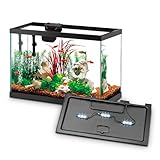
- COMPLETE STARTER KIT: Includes a 10-gallon glass rectangle aquarium, low profile hood with cool white LED lighting and feeding door, SmartClean filtration, EcoRenew cartridge, preset heater 50W, thermometer, fish net, premium fish food and a water conditioner.
- SIMPLE MAINTENANCE: SmartClean internal power filter provides quick and easy water changes to help improve water quality.
- IDEAL TEMPERATURE: Preset heater keeps your aquarium temperature at a constant 78 degrees, appropriate for most tropical fish.
- DURABLE GLASS CONSTRUCTION: Ensures clarity and durability, providing a safe environment for your fish. Made from high-quality materials for long-lasting use.
3. Test the water regularly
A basic marine setup should allow you to monitor ammonia, nitrite, nitrate, pH, salinity, and temperature. A saltwater aquarium test kit is useful not just during cycling but whenever a fish behaves unusually, equipment fails, feeding increases, or a water change is delayed.
OATA’s broad guidance places nitrate no higher than 50 mg/L, but lower and stable nitrate may be preferable depending on the aquarium’s inhabitants. Test results are only useful when the kit is in date, used correctly, and interpreted alongside the fish’s behavior and the aquarium’s maintenance history.
4. Match the habitat to the fish
- Rockwork and caves: important for royal grammas, dottybacks, basslets, damsels, gobies, blennies, and firefish.
- Fine sand and rubble: needed by burrowing species such as yellow watchman gobies, and a suitable sand bed is important for melanurus wrasses that bury themselves to sleep.
- Established algae: important for lawnmower blennies, tailspot blennies, bicolor blennies, and court jester gobies.
- Secure cover: essential for firefish and prudent for gobies, wrasses, and other fish that may jump. A suitable aquarium lid or mesh cover can prevent a fish from leaving the aquarium.
- Open swimming room: particularly important for active species such as Midas blennies, melanurus wrasses, and green chromis groups.
5. Plan food by species
Clownfish commonly accept quality marine pellets or flakes, supplemented with suitable frozen foods. Gobies may need fine meaty foods or access to a mature sand-bed prey population. Blennies often require algae-rich foods, while wrasses and basslets typically need appropriately sized meaty foods.
There is no single food that is ideal for every fish on this list. Choose marine fish food according to the species’ diet, and offer only what the fish can consume promptly. Excess food becomes pollution, destabilizes water quality, and can create an algae problem without solving a specialist grazer’s nutritional needs.
6. Acclimate carefully and quarantine when possible
Follow the seller’s acclimation instructions and avoid exposing the fish to sudden temperature or salinity changes. Quarantine is a useful disease-risk reduction step before a fish enters the display aquarium, particularly when the tank already contains valuable livestock, but quarantine is not a guarantee that disease cannot enter.
Observe the fish before purchase or shipment when possible. A good candidate should be alert, breathing normally, free of obvious wounds or spots, and eating a suitable food. Ask what it has been eating; a fish that accepts the food you can provide is usually easier to establish than one that has not fed reliably.
Independent reader supportYour contribution helps us test, update, and keep practical guides available for everyone.Compatibility rules that prevent common beginner mistakes
- Buy for adult size, not store size. Juveniles can make a large species look suitable for a small aquarium.
- Account for social requirements. Green chromis should not be treated as solitary fish, while some territorial species are best kept singly.
- Do not confuse peaceful with harmless. Royal grammas, dottybacks, damsels, clownfish, and wrasses may all defend territory.
- Introduce assertive fish deliberately. Six-line wrasses, damsels, dottybacks, and clownfish can make later additions difficult. Dwarf angelfish should generally be added last, according to OATA guidance.
- Consider the reef. Coral beauty and flame angelfish may nip corals or clams. Clown gobies may irritate some coral colonies.
- Provide a lid before the fish arrives. Firefish are especially well known for jumping, but they are not the only fish that can leave an aquarium.
- Do not stock by a simple fish-per-gallon formula. Dimensions, filtration, aquascape, feeding, aggression, adult size, and swimming behavior matter more than a single headline number.
Saltwater fish commonly mistaken for beginner choices
Some marine fish are peaceful or popular but should not be presented as ordinary first fish:
- Mandarins: often depend on a mature, continuously replenished population of live prey such as copepods. Their peaceful temperament does not make them easy.
- Tangs: many species become large, active swimmers that need substantially more space than a typical beginner aquarium provides.
- Groupers, triggers, lionfish, and puffers: adult size, predatory behavior, bioload, or aggression can make them unsuitable for a standard beginner community.
- Seahorses and pipefish: specialist feeding, flow, habitat, and compatibility needs make them poor default recommendations.
- Most butterflyfish: diet, reef compatibility, adult size, and sensitivity vary widely and commonly require more experience.
OATA’s care-sheet guidance treats these groups separately and emphasizes species-level research. A dedicated aquarist can succeed with some of them, but they do not belong on a broad list of ordinary first fish without strong qualifications.
A sensible first-stocking approach
Choose one compatible plan rather than collecting isolated “easy” species. For example, a peaceful reef might be built around a pair of captive-bred ocellaris clownfish, or around a neon goby and a royal gramma, depending on the aquarium’s size, aquascape, and existing livestock. Another system might suit a yellow watchman goby once the sand bed is ready.
After each addition, monitor behavior, feeding, and water parameters before adding anything else. If a fish hides continuously, refuses food, breathes heavily, is chased relentlessly, or develops physical symptoms, stop stocking and investigate rather than adding another fish to distract it.
There is no responsible universal answer to “How many fish can I keep?” The answer depends on the adult size and behavior of the exact species, the number of fish, the aquarium’s dimensions and filtration, feeding quantity, maintenance routine, and whether the animals can establish separate territories.
What’s actually slowing this PC down?
Pick the symptom - the matching free tool is one click away.
Source note: The water-quality ranges and general marine husbandry principles above follow OATA marine care guidance. Species-specific notes also draw on OATA’s group guidance and LiveAquaria’s retailer care profiles, including its retailer-specific 30-gallon starting suggestions for pajama cardinalfish groups and yellow watchman gobies. Those figures are not universal stocking laws.
Frequently Asked Questions
What is the easiest saltwater fish for a beginner?
For many new marine aquarists, the ocellaris clownfish is the strongest all-around first choice because it is adaptable, commonly captive-bred, and usually accepts prepared foods. It still requires a cycled aquarium, stable water, compatible tank mates, and enough space for an adult pair or individual fish.
Can I add saltwater fish to a brand-new aquarium?
No. Wait until the aquarium is fully cycled and testing confirms zero ammonia and zero nitrite. Clear water does not prove that the biological filter is ready. Add livestock slowly because the filter must adjust to every increase in fish waste and feeding.
Which beginner saltwater fish can live in a nano tank?
Small gobies, clown gobies, yellow coral gobies, tailspot blennies, and some individual clownfish may suit a nano aquarium, but only when adult size, dimensions, habitat, and total stocking are appropriate. A small tank is less forgiving of overfeeding, aggression, and equipment failure.
Do beginner saltwater fish need a lid?
Jumping species such as firefish require a secure lid or mesh cover. Covers are also prudent for gobies, wrasses, and other fish that may leap when startled. Close gaps around equipment and plumbing rather than relying on a partially covered top.
Are mandarin fish good for beginners because they are peaceful?
Usually not. Mandarins commonly depend on a mature, continuously replenished supply of live prey such as copepods. Peaceful behavior does not compensate for a specialist feeding requirement, so they should not be treated as ordinary first fish.
Should I buy captive-bred saltwater fish?
When available from a responsible source, captive-bred fish are often the better beginner purchase because they may already accept prepared foods and be more accustomed to aquarium conditions. Still check that the individual is healthy and eating, and verify the seller’s current handling and shipping practices.
The Bottom Line
Bottom line: Start with the fish that fits the aquarium you can actually maintain—not the fish that looks smallest or most colorful at the store. Ocellaris and percula clownfish, firefish, pajama cardinalfish, royal grammas, and neon gobies are among the most dependable starting points. Yellow watchman gobies, blennies, wrasses, damsels, and dwarf angelfish can also work, but only when their sand, algae, territory, group, lid, reef-safety, or space requirements are already covered.
Do these 3 things before closing this tab:
1Clear out junk files and repair common Windows errors2Fix the driver behind crashes, sound loss and screen glitches3Repair Windows errors before they cause bigger problems




Leave a Reply