The Tool Desk
Outbyte PC Repair FREEClear out junk files and repair common Windows errorsFree Scan →Outbyte Driver Updater FREEFix the driver behind crashes, sound loss and screen glitchesFind Drivers →Cats.com names nine breeds as its picks for the easiest to train: Abyssinian, American Shorthair, Somali, Oriental Shorthair, Turkish Van, Maine Coon, Bengal, Siamese, and Manx. Treat the list as an editorial shortlist for breed research, not a guarantee. No standardized, scientific ranking of cat trainability by breed exists in the sources reviewed here, and the veterinary and cat-association sources that address the question say that an individual cat’s motivation, preferred reward, and environment shape learning more than breed does.
Can you train a cat?
Yes. Cats can learn cues, simple tricks, and routines such as coming when called, sitting on a mat, or accepting handling for grooming. Their learning depends on motivation. A cat that finds a reward worth working for will repeat a behavior; a cat that is distracted, frightened, or bored will not, regardless of breed.
The Zoetis Petcare article, attributed to veterinarian Heather Berst, states that any breed can be trained and that breed is not the most important factor. It points instead to the individual cat’s personality, what it finds rewarding, the training method, its energy level, and its curiosity. TICA’s guidance, under the heading “Can Cats Really Be Trained?”, reaches a similar conclusion: training is possible for most cats, but progress varies from one animal to the next.
The nine breeds on the list
The table below sets out what each source says about each breed. Cats.com’s descriptions are anecdotal: they report owner experience and general temperament, not controlled comparisons. CFA breed descriptions add temperament color but do not measure trainability. Where a source says nothing about a breed, the table says so rather than filling the gap.
Do these 3 things before closing this tab:
1Scan for outdated or missing drivers - takes under a minute2Repair Windows errors before they cause bigger problems3Fix the driver behind crashes, sound loss and screen glitches#1 Best Overall

- New communication tool about you and your puppy.
- Pet Dog Training Clickers for Puppy, Cat, Potty, Bird, Horse, Pet, Trainer Training Tools, Behavior Aids
- Just press to mark desired behavior, then reward for faster learning.
- The spring wrist length : 16cm/6.3inches and can strength to 25cm/9.84inches.
- Package include : Black + Blue,each color 1 pcs.
| Breed | What Cats.com says | Other sources in this roundup |
|---|---|---|
| Abyssinian | Playful, extroverted, energetic, and intelligent; owners report fetch, leash walking, and tricks | CFA: busy, active, agenda-driven, and affectionate |
| American Shorthair | Responds to positive reinforcement; calm; good at problem-solving | CFA: even temperament |
| Somali | Energetic, playful, and curious; owners report games such as fetch and hide-and-seek | Not stated |
| Oriental Shorthair | Intelligent, people-focused, affectionate, vocal, and interactive; owners report leash walking, fetch, and responses to verbal cues | Not stated |
| Turkish Van | Athletic, energetic, and playful; fetch is reported as a game some learn | Not stated |
| Maine Coon | Calm and adaptable; learns with treats, praise, and consistent handling | CFA: gentle, easygoing, and active |
| Bengal | Included on the list; no trait description given | Not stated |
| Siamese | Included on the list; no trait description given | Zoetis Petcare: listed among breeds often considered receptive to training |
| Manx | Included on the list; no trait description given | Not stated; no comparative trainability measure in the sources |
Two points follow from the table. First, none of these sources ranks the nine breeds against one another, so the list does not establish an order from easiest to hardest. Second, the only trait that recurs across several entries is the reported response to play and food-based rewards, which is an individual-level observation rather than a breed-level measurement.
What actually predicts success
Most of the variation in how quickly a cat learns comes from factors you can control or observe in the individual animal:
Rank #2

- Cat Training Clicker Kit - Includes a finger ring clicker and a retractable target stick with yellow ball, giving you two tools for guiding and interacting with your cat during training or play.
- Finger Ring Clicker for Clear Feedback - The included finger clicker produces a crisp, easy-to-press sound, helping guide your cat during training or interactive play without startling them.
- Eye-Catching Yellow Target Ball - The bright yellow ball at the tip of the target stick catches your cat’s attention and supports guided movement for interactive sessions.
- Retractable Stick for Convenient Use - The stainless steel target stick extends and retracts smoothly, allowing adjustable length for comfort, while keeping the target clicker compact and easy to store or carry.
- Versatile Training Accessory - Suitable for kittens and adult cats, this dual clicker kit can be used for a variety of interactive play or guided training sessions, and can also be used with other small pets.
- Motivation and preferred reward. Cats differ in what they will work for.
- Temperament and confidence. A shy or fearful cat needs slower, quieter sessions.
- Energy and curiosity. Some cats engage best in short bursts of play; others need a quieter setting.
- Method and timing. Rewards delivered immediately after the behavior work better than delayed ones.
- Environment. A calm room with few distractions makes sessions more productive.
- Health. Pain or illness can make a cat seem untrainable when the real problem is physical.
The Feline Veterinary Medical Association toolkit reports a preference study cited as follows: 63% of cats preferred a reward other than food. The breakdown reported in the toolkit is 50% social interaction, 37% food, 11% toys, and 2% scent. The toolkit attributes these figures to a study of cat preferences but does not give that study’s author or year, so cite them as the toolkit’s figures rather than as an independently verified finding. The practical point is that a cat that ignores treats may respond well to attention or play.
How to teach a behavior
The Feline Veterinary Medical Association toolkit supports reward-based training with individualized reinforcers, in a safe and focused setting, using short and frequent sessions. TICA’s guidance adds reading body language and respecting boundaries. Rene Knapp, a long-time TICA member writing for The International Cat Association, puts it directly: “The most effective method for training cats is positive reinforcement — rewarding good behavior with treats, praise, or playtime.”
PC Slower Than It Used to Be?
A free scan shows the junk files, broken settings and background clutter dragging Windows down - then fixes them in one click.Free scan · Windows 10 & 11Crashes, No Sound, or Screen Glitches?
Random freezes, missing sound and display glitches usually trace back to one bad driver. Find and replace yours safely.Free scan · under a minuteRank #3

- INSIDE THE PACKAGE: Created by a professional animal behaviorist, this complete cat clicker training kit includes everything you need to get started: an all-in-one integrated clicker tool with a 22 inch extendable target stick and a 43-page illustrated training manual with 15 guided lessons to help you confidently train your cat from day one.
- TARGET STICK WITH UPDATED DESIGN: The CAT SCHOOL all-in-one clicker features a new and improved design with a quieter clicker sound and a stronger, more durable construction—perfect for sound-sensitive cats and everyday training use. This versatile tool works as both a target stick and a detachable clicker, giving you flexible training options. Extend the target stick up to 22 inches to easily guide your cat between positions. The large, bright yellow ball tip is easy for cats to see, track, and touch—boosting confidence, accuracy, and calm focus during training.
- QUIET, DETACHABLE CAT-FRIENDLY CLICKER: Designed with your cat’s sensitive ears in mind, this quiet clicker delivers a sound your cat can comfortably learn from. Use it attached to the target stick or slide it off for handheld use. The clicker fits comfortably in your hand and includes a secure finger loop to wear on your finger once removed from the base.
- IMPROVES CAT BEHAVIOR: Clicker training is a positive, rewarding way to teach skills and encourage good behavior. Regular training sessions help increase activity, reduce boredom and stress, and may curb unwanted behaviors like scratching or biting—while strengthening the bond between you and your cat.
- OUR COMMITMENT TO YOUR SUCCESS: Your cat’s training success matters to us. Gain access to supportive video tutorials created by an animal behaviorist and trusted by thousands of successful students. Our proven system helps make training fun, enriching, and rewarding—for both you and your cat.
- Choose one behavior. Start with a single, simple cue such as touching a target stick with the nose or coming to a named call.
- Pick the reward the cat actually wants. Test a small treat, a short play session, and a brief petting session, and note which one produces the fastest response.
- Keep sessions short. Stop after a few minutes or after the first sign of distraction.
- Mark the behavior at the moment it happens. A clicker or a consistent word such as “yes” signals the exact moment; deliver the reward immediately after.
- End on success. Stop the session while the cat is still engaged, even if the behavior was only partly achieved.
- Repeat across several days. Add distance, duration, or a new location only after the cue is reliable at home.
Punishment has no place in this approach. Do not push a cat through fear, overstimulation, or discomfort, and do not continue a session when the cat or the caregiver is frustrated.
When training stalls
- The cat walks away or ignores the reward. Switch to a different reward or shorten the session. Re-check that the reward is valued by this cat.
- The cat hides, flattens, or hisses. Stop, give the cat space, and resume later at a lower difficulty. These are signs of fear or overstimulation, not defiance.
- Progress stops after a previous gain. Consider a change in routine, a new stressor in the home, or an underlying health problem. The veterinary toolkit advises a veterinary assessment when pain, illness, fear, or frustration appears to interfere with learning.
- A breed-based expectation is not being met. Breed descriptions are averages at best. Judge progress against the individual cat’s previous performance.
Equipment: what is worth buying
- Clicker (optional). The veterinary toolkit describes a clicker as a conditioned reinforcer, and TICA gives guidance on click timing. It is useful for precise marking but not required.
- Treats (optional). Useful when the cat values food, but not every cat prefers it, as the preference figures above show.
- Harness and leash. Only relevant if you are teaching leash walking. Choose a harness that fits snugly without restricting movement, and introduce it indoors before going outside.
No specific product is recommended here. The categories above are widely sold, and the sources reviewed do not evaluate particular models or brands.
Rank #4
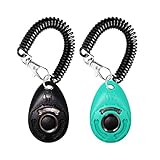
- EASY TO USE - Simple push button with distinct clicking sound.
- Comes with an elastic wrist band so you can leave it on your wrist or clip it to the leash or your pants.
- Not only train the dog but also the cat, bird, chicken, sheep a new behaviors like sit, fetch, roll over, lie down.
- For effective pet training ALWAYS reward with a treat after clicking.
- Can be used to train the dog basic obedience, small trick, and correct the bad behavior; Scientific method of training your pet safely and easily.
Use the nine-breed list as a starting point for research, then let the individual cat’s responses set the pace.
Quick Recap
Best Value
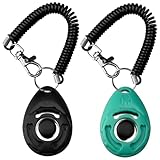
- Instant Attention & Clear Sound: This dog clicker for training produces a sharp, consistent sound that’s perfect for clicker training dogs, puppies, cats, and even birds or horses. Works great as a dog clicker to stop barking and reinforce positive behaviors quickly.
- Lightweight, Durable & Easy to Carry: Made from sturdy, lightweight materials, this pet training clicker is built to last. Comes with a convenient wrist strap so your dog training tools are always within reach during walks, obedience classes, or home sessions.
- Simple One-Button Operation: Whether you’re a new dog trainer or a pro, the large button makes this puppy training clicker and cat training clicker easy to use—just press to mark desired behavior, then reward for faster learning.
- Versatile for Multiple Pets & Purposes: More than just a dog training clicker—this tool is perfect as a cat clicker trainer, training clicker for puppies, or even a clicker cat trainer. Works for potty training, obedience, tricks, and behavior correction.
- Positive Reinforcement Training Made Easy: Trusted by professionals, this dog training & behavior aids device supports humane, reward-based training. Ideal as puppy training tools, dog training aids, or dog training clickers to create a strong bond with your pet.
Product prices and availability are accurate as of the date/time indicated and are subject to change. Any price and availability information displayed on Amazon at the time of purchase will apply.




