The Tool Desk
Outbyte PC Repair FREEClear out junk files and repair common Windows errorsFree Scan →Outbyte Driver Updater FREEScan for outdated or missing drivers - takes under a minuteDriver Scan →Community-centered lifesaving works when local people, government and partner organizations act together on the risks that actually exist around them. This article applies that idea to drowning prevention and response, the field with the strongest primary evidence behind it. That means supervision of young children, water-safety skills, safe rescue and resuscitation training, and coordination with public services. The evidence is about human drowning. It supports no claims about other lifesaving fields.
What “community-centered” means in drowning prevention
The World Health Organization (WHO) published practical guidance in 2022, Preventing drowning, built around three interventions. They are day-care for young children, basic swimming and water-safety skills, and safe rescue and resuscitation training. The guidance states that all three are “implemented at community level.”
| # | Preview | Product | Price | |
|---|---|---|---|---|
| 1 |

|
NRS Public Safety Rapid Responder PFD | $259.99 | Buy on Amazon |
| 2 |
|
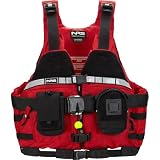
NRS Rapid Rescuer PFD (Universal) Red | $271.96 | Buy on Amazon |
| 3 |

|
Mustang Survival Operations Support Water Rescue Vest - X-Large/XX-Large | $139.99 | Buy on Amazon |
| 4 |

|
Force 6 RescueOps - Red - Red | $299.00 | Buy on Amazon |
| 5 |

|
NRS Big Water V Personal Floatation Device | $179.95 | Buy on Amazon |
Prevention here starts before any emergency. A supervised place for a toddler to be during the day, a child who can float and reach safety, and a bystander who knows a safe way to help are all parts of one system. They are not competing alternatives.
WHO’s drowning fact sheet (updated 1 May 2026) adds barriers that control access to hazards, such as covering wells and fencing pools. WHO’s 2014 global report on drowning also recommended pre-positioned rescue equipment, including lifebuoys, as a community action.
#1 Best Overall
- SUPERIOR SAFETY - US Coast Guard Type V approval ensures maximum protection for rapid response and public safety operations, providing critical buoyancy in challenging water conditions.
- ENHANCED DURABILITY - Constructed with robust 400-denier ripstop nylon, this PFD withstands rigorous use, offering long-lasting reliability for demanding water rescue scenarios.
- OPTIMAL FIT - Featuring an 8-point adjustment system (4 side, 2 shoulder, 2 waist), this PFD provides a secure, customizable fit for various body types, ensuring comfort and stability.
- HIGH VISIBILITY - Available in Safety Yellow, Black, and Red, this PFD enhances visibility in diverse environments, crucial for rapid identification during emergency operations.
- FUNCTIONAL DESIGN - Equipped with a MOLLE accessory attachment system and two front lash tabs, this PFD allows for convenient and secure carrying of essential rescue tools.
Why the need remains large
- Progress: WHO’s 13 December 2024 news release reported a 38% fall in the global drowning death rate since 2000. WHO Director-General Dr Tedros Adhanom Ghebreyesus called it “proof that the simple, practical interventions that WHO recommends work.”
- Remaining burden: the same release estimated 300,000 drowning deaths in 2021. Almost half were among people under 29, and one quarter among children under five.
- Who is most affected: the fact sheet states that 92% of drowning deaths occur in low- and middle-income countries. Global estimates can be revised, so check the current fact sheet for updated figures.
- Uneven adoption: WHO reported in 2024 that only 33% of countries offered national bystander programs in safe rescue and resuscitation. Only 22% had built swimming and water-safety training into school curricula.
WHO’s Global status report on drowning prevention 2024 is the benchmark publication for tracking these trends. It treats measurement and multisectoral collaboration as central to further progress.
The building blocks of a community approach
Supervised care for young children
Community childcare for preschool-age children can reduce drowning risk by keeping them supervised during the hours when they are most likely to wander toward water. It matters because children under five account for nearly a quarter of deaths, according to the 2026 fact sheet.
Rank #2
- Constructed with 400-denier Ripstop Nylon to handle unexpected snags and debris
- Quick-release buckles w/ nylon webbing secure the pockets shut
- Two huge front pockets stretch to hold anything from a GPS to a VHF
- Four-panel chest design for enhanced comfort and freedom of movement
- Interconnected webbing creates a harness for maximum security in live bait scenarios
Swimming and water-safety skills
Instruction for school-age children carries its own risks, so WHO attaches conditions. Curricula should be safety-tested and taught in safe training areas. Learners should be screened, and student-instructor ratios should be set with safety in mind. Lessons alone are not a complete answer. They work alongside supervision and hazard control.
Safe rescue and resuscitation training
The word “safe” matters. This training prepares people to respond without becoming a second victim. It does not invite untrained people to enter hazardous water. Rescue equipment such as a throw bag or lifebuoy can help trained responders. It does not replace training or a risk assessment of the specific site. The evidence reviewed does not point to a preferred design or brand.
What’s actually slowing this PC down?
Pick the symptom - the matching free tool is one click away.
Rank #3
- SUPERIOR COMFORT - Crafted with lightweight nylon and foam, this USCG-approved vest ensures all-day comfort for extended wear during water rescue operations and other activities.
- USCG APPROVED - Meets stringent US Coast Guard standards (UL1123 - 160.064 Type III), providing reliable buoyancy of 15.5 lbs for optimal safety in marine environments.
- DURABLE CONSTRUCTION - Built with high-quality nylon materials, this Mustang Survival vest withstands rigorous use in demanding water rescue and support scenarios, ensuring longevity.
- OPTIMAL MOBILITY - Designed for a full range of motion, this vest allows unrestricted movement, crucial for effective performance during search and rescue or industrial tasks.
- ADJUSTABLE FIT - Features a front zipper closure and adjustable straps to accommodate chest sizes from 30" to 56", ensuring a secure and customized fit for various body types.
Hazard control
Covering wells, fencing pools and creating protected swimming areas remove exposure instead of relying on someone to react in time.
Why coordination turns separate efforts into collective impact
WHO’s Global Alliance for Drowning Prevention, established in 2023, describes a global-to-local strategy for 2025–2035. It aims to coordinate efforts across levels and set shared goals. It also aims to identify multisectoral partners, pool resources where useful, and tailor evidence-informed approaches to local needs. It explicitly centers the people affected. Community action is framed as connected to policy and public services, not a substitute for them. Project status is time-sensitive, so check WHO’s current program page.
Rank #4
- 26 lbs, 11.8 kg of flotation
- US Coast Guard Type V certified
- Laser-cut Hypalon MOLLE pockets designed to fit radios inside or mount them outside
- MOLLE pockets are 8.5"x5" and fit most radios.
- Chest badge and back nameplate - hook and loop MOLLE patch areas on the left and right chest
A practical way to compare options is to ask five questions of any program:
| Question | What to look for |
|---|---|
| What risk and age group does it address? | Supervision for preschoolers, hazard access, swimming ability, or emergency response capacity |
| Does it fit the local setting? | Childcare, schools, swimming areas, waterways, boating and flood contexts need different partners |
| Is it delivered safely? | Tested curricula, safe locations, screening, instructor ratios |
| Who is coordinating? | Participants, local partners, and links to public policy and services |
| What kind of outcome evidence exists? | Activity counts, observed health outcomes, or modeled projections |
A worked example: northern Iran
A 2013 evaluation by the WHO Eastern Mediterranean Regional Office described a community-based drowning prevention program in northern Iran. More than 360 community volunteers were trained in first response, including CPR, and about 2,100 health workers received education. Local government partners established 31 protected swimming areas and identified more than 200 hazards.
Do these 3 things before closing this tab:
1Fix the driver behind crashes, sound loss and screen glitches2Clear out junk files and repair common Windows errors3Scan for outdated or missing drivers - takes under a minuteBest Value
- Contouring foam panels create a more comfortable and adaptive fit
- Highly adjustable to fit a and a range of body types
- Flotation collar helps keep your head above water while floating on your back
- Four heavy-duty front buckles make entry, exit and adjustment simple and quick
- Webbing loops for leg straps add extra security in big water
It shows volunteers, health services and local government sharing delivery. These are process measures, though. They do not by themselves prove a particular reduction in deaths, and a program in one country should not be assumed to transfer unchanged to another.
The projected economic case
The 2026 WHO fact sheet summarizes an investment case for scaling two interventions, day-care for preschool children and basic swimming skills, through 2050. The modeled results are:
- 774,000 fewer child drownings
- 178,000 fewer severe, life-limiting injuries from non-fatal drowning
- More than US$400 billion in savings, a return WHO models at nine times the cost of scaling
These are projections from a model. They are not measured results, and they are not a guaranteed return for any single community.
How to read community-lifesaving claims
- Separate counts of people trained or areas created from observed changes in deaths and injuries.
- Look for the publisher, year and scope behind every statistic, because estimates and coverage figures change.
- Be wary of any program presented as a single fix. The evidence supports a combination of measures matched to local risk.
- Choose a qualified local lifesaving or water-safety training provider. The evidence here is global and does not name providers for any particular country.
The Bottom Line
The evidence points to a layered approach. Supervision, skills, safe response and hazard control, backed by local partners and public services, can reduce drowning. The global decline since 2000 shows progress, and the gaps in national programs show how much remains undone.
Quick Recap
Product prices and availability are accurate as of the date/time indicated and are subject to change. Any price and availability information displayed on Amazon at the time of purchase will apply.




