
Some links on this page are affiliate links: if you buy through them we may earn a commission, at no extra cost to you.
The binturong (Arctictis binturong) is a tree-dwelling mammal from South and Southeast Asia that is neither a bear nor a cat. It is a member of the civet family, has one of the most unusual tails in the carnivoran order, and leaves scent marks that can smell remarkably like buttered popcorn.
Pronounced approximately bin-TUH-rong in US English, this shaggy forest animal is also called a “bearcat” because of its appearance. Here are 10 facts that explain what makes the binturong so unusual—and why protecting it matters to tropical forests.
As an Amazon Associate I earn from qualifying purchases.
Recommended Free Tools
At a glance: The binturong is a large, mostly nocturnal viverrid that spends much of its time in trees. It eats plenty of fruit, uses a muscular prehensile tail for climbing, can delay implantation after mating, and is assessed as Vulnerable by the IUCN assessment cited in recent literature.
10 fascinating facts about the binturong
-
It is neither a bear nor a cat
The common name bearcat describes the binturong’s stocky, bear-like appearance—not its ancestry. Taxonomically, the species is Arctictis binturong, a member of the family Viverridae and the order Carnivora. Viverrids include civets and genets, so the binturong is much closer to those animals than to either bears or domestic cats.
Popular on Amazon
 TigerHart Arsenio The Anteater - 18 Inch Stuffed Animal Plush
- Soft plush fabric ; Super cute ; Comes comes with its own story
- This plush stuffed animal is securely sewn from high quality polyester and acrylic fabrics and filled with white polypropylene plush filling
- Recommended for ages 3+ ; No phthalates, lead, BPA, or heavy metals ; We have our products and components tested in accredited labs for compliance with CPSIA and ASTM F963-11 safety standards ; Please hand wash with light soap and cold water and let air dry
- Size and weight ; Product measures 18 x 8 x 4.5 in inches ; 45.72 x 20.32 x 11.43 in centemeters ; Product weighs approximately 0.518 in pounds, 0.2331 in kilograms
- Manufacturer warranty ; 90 day manufacturer warranty for all manufacturer's defects
Arctictis binturong is the only living species in its genus. The English word “binturong” is associated with Malay forms including bĕnturong, although the deeper history of the name is not completely settled; it is more accurate to describe the etymology as uncertain than to say its source is definitively unknown. The Smithsonian National Zoo identifies its taxonomy and common name, while Merriam-Webster discusses the word’s Malay origins.
-
Its appearance is a mash-up of several familiar animals
A binturong has a low, muscular body, shaggy dark-brown to black fur, tufted ears, long white whiskers, and a heavy tail that is nearly as long as its body. Its flat-footed gait can look bear-like when it walks on the ground.
Do these 3 things before closing this tab:
1Fix the driver behind crashes, sound loss and screen glitches2Repair Windows errors before they cause bigger problems3Scan for outdated or missing drivers - takes under a minuteSpecial offer. See more information about Outbyte and uninstall instructions. Please review EULA and Privacy policy.It is tempting to call it a bear-cat-raccoon hybrid, but that is only a visual comparison. The animal is not a hybrid and does not occupy some taxonomic halfway point between those species.
Adults are roughly 2–3 feet (0.6–0.9 meters) long in body length, with the tail adding nearly another body length. The Smithsonian gives a broad weight range of approximately 24–79 pounds (11–36 kilograms). Females are generally larger than males. Those figures vary among sources because measurements differ by sex, population, age, and whether captive animals are included, so a range is more informative than a single supposed average. See the Smithsonian species profile for its standard measurements.
-
It belongs to Carnivora, but it is a fruit-loving omnivore
The order Carnivora includes animals whose ancestors shared important anatomical features—not only animals that eat meat. Binturongs are highly omnivorous and can be strongly frugivorous, especially where fruit is abundant.
Fruit and berries may make up much of the diet, with figs especially important in some forests. Binturongs also eat leaves, eggs, carrion, fish, birds, rodents, worms, and insects. Their placement in Carnivora does not make them “vegetarian carnivores”; taxonomy, teeth, claws, and ancestry are different questions from what an animal chooses or is able to eat. The San Diego Zoo and Smithsonian both describe this broad diet.
Recommended: Fix Windows Errors and Clear Junk Files in Minutes - Free Scan →Recommended: Update Every Outdated Driver on Your PC in One Scan - Free →Special offer. See more information about Outbyte and uninstall instructions. Please review EULA and Privacy policy. -
Its tail is an extra climbing limb
The binturong’s tail is not just a long balancing rod. It is muscular and prehensile, meaning it can wrap around a branch and grip it. A leathery patch near the tip provides additional traction, allowing the tail to help stabilize the animal as it moves through the canopy.
A binturong can even keep its tail anchored while sleeping. Among living carnivorans, it is one of only two species generally recognized as having a truly prehensile tail; the other is the kinkajou. That claim needs this taxonomic limit: many mammals outside the order Carnivora also have prehensile tails, so the binturong is not one of only two animals in the world with one. The distinction is discussed in the Journal of Zoology study of tail prehensility in carnivorans.
-
It can climb down a tree headfirst
Descending a tree is difficult for a heavy, clawed mammal. Binturongs have an unusual hind-foot adaptation that helps: they can rotate their hind feet into a position that lets the claws grip the trunk or branch while the animal moves headfirst downward.
Also popular on Amazon
 Wild Republic Bobcat Plush, Stuffed Animal, Plush Toy, Gifts for Kids, Cuddlekins, 8 Inches,Multi
- Prowl the great outdoors and have fun with your inner feline attitude with this realistic Bobcat stuffed animal.
- Someone of any age, young and old, will be sure to enjoy the lifelike features of this soft, plush toy.
- Why let the fun stop because of a mess? Cuddlekins stuffed animals are made of high-quality materials and surface washable.
- This 8 inch plush toy is the perfect size to tag along with any adventure.
- These realistic stuffed animals provide you with a lifelong friend that will always be there for support on all of your good and bad days.
Popular accounts sometimes describe this as a precise 180-degree ankle rotation. The safer description is that the hind feet can rotate into a head-first climbing position; the exact anatomical mechanism should not be overstated without a binturong-specific anatomical study.
Free tools Windows power users keep installed
One-click scans. No signup required.
Special offer. See more information about Outbyte and uninstall instructions. Please review EULA and Privacy policy.Binturongs are generally slow, deliberate climbers rather than leaping specialists. They spend much of their time above ground but may climb down when traveling between trees or moving through fragmented habitat. Their size and heavy bodies make a controlled descent more practical than repeated leaps. The Los Angeles Zoo and Animal Diversity Web describe this hind-foot behavior.
-
Its scent marks can smell like buttered popcorn
The most famous binturong fact is also the one that needs the most careful wording. Binturong urine or scent-marking trails can smell like buttered popcorn; it is not accurate to say that every part of the animal smells like popcorn all the time.
The aroma is associated with 2-acetyl-1-pyrroline, often abbreviated 2-AP. The same compound contributes to the smell of popcorn, toasted bread, and cooked rice. In a 2016 study, researchers analyzed urine from a captive population of 33 binturongs. They detected 2-AP in all of the sampled animals, found it in greater abundance in males, and found an association between its concentration and androstenedione, a reproductive hormone precursor. Read the study’s abstract through PubMed.
Human descriptions of the odor vary, and the chemical was measured in captive urine samples. That makes “popcorn-scented urine” more precise than the blanket statement “binturongs smell like popcorn.”
What’s actually slowing this PC down?
Pick the symptom - the matching free tool is one click away.
Special offer. See more information about Outbyte and uninstall instructions. Please review EULA and Privacy policy. -
The smell is a message, not simply a defense mechanism
Binturongs are generally solitary, so chemical communication can convey information without requiring two animals to meet. A scent mark may help advertise an animal’s presence, sex, reproductive condition, or use of a territory.
Binturongs have perineal glands and also use urine in scent deposition. A 1974 Smithsonian study documented perineal-gland marking, urination, tail-soaking, and the transfer of odor to surfaces as the animal moved. Later chemical work identified the popcorn-associated compound in urine. These are complementary observations, not contradictory explanations: binturongs have scent glands, and their urine also carries distinctive chemical information.
Researchers have proposed that bacteria or other microorganisms may help produce 2-AP when urine contacts the animal’s skin or fur, or when it reaches the surrounding environment. That microbial mechanism remains a proposed explanation rather than a settled fact. The strongest evidence supports scent communication and marking; claims that the odor definitely repels predators are less firmly established. The marking behavior is described in the Smithsonian scent-marking study, and the chemical findings are summarized by Duke University’s research report.
-
Its vocal repertoire includes chuckles, hisses, and screams
A binturong is not a silent canopy dweller. Reported sounds include snorts, chuckles, purrs, hisses, growls, screams, wails, and howls.
Special offer. See more information about Outbyte and uninstall instructions. Please review EULA and Privacy policy.Also popular on Amazon
 Douglas Lil' Baby Possum Plush Stuffed Animal
- Our Lil’ Baby Possum baby stuffed animal is a lovable plush representation of North America’s only marsupial; Crafted in soft gray-tipped materials and stuffed with resilient polyester fill, this cuddly friend will be around for hugs and fun for years to come.
- This lifelike stuffed animal features dark eyes and a pale, white face; His pink ears, feet, nose, and long tail lend to his realistic appearance.
- This baby possum plush offers cozy companionship for children ages 24 months and up. Easy to clean and made to last through endless snuggles.
- Designed in Keene, New Hampshire, U.S.A. by Douglas Cuddle Toys, makers of lovable plush toys for over 60 years.
- Size - 6 Inches Long
Some zoo descriptions associate purring or chuckling with contentment, while other calls can occur during fear, irritation, aggression, or mating. A “chuckle” should not automatically be translated as human-like happiness: animal vocalizations are context-dependent signals, and the same broad category of sound may mean different things in different situations. The Smithsonian’s binturong profile provides the range of reported calls and their observed contexts.
-
Females can delay implantation after mating
Female binturongs are among the mammals capable of embryonic diapause, also called delayed implantation. After fertilization, the embryo can remain unattached to the uterine wall for a period before active pregnancy proceeds.
This adaptation separates mating from the timing of active gestation and birth. It may help a female give birth when food or other environmental conditions are more favorable, but it does not mean she consciously chooses when to become pregnant.
Once active gestation begins, commonly cited figures are about 90–92 days. A captive reproductive study reported a mean gestation of 91.1 days, with a range of 84–99 days. Captive records showed breeding throughout the year, with births peaking from January through March.
Crashes, No Sound, or Screen Glitches?
Random freezes, missing sound and display glitches usually trace back to one bad driver. Find and replace yours safely.Free scan · under a minutePC Slower Than It Used to Be?
A free scan shows the junk files, broken settings and background clutter dragging Windows down - then fixes them in one click.Free scan · Windows 10 & 11Special offer. See more information about Outbyte and uninstall instructions. Please review EULA and Privacy policy.Baby binturongs are commonly called binlets or bintlets. The spelling varies among reputable educational sources, and neither term should be treated as a formal zoological designation. Newborns have their eyes closed and spend their first days hidden in their mother’s fur. Litters range from one to six, although two is approximately average in the cited captive study. Details come from the Smithsonian reproductive study, the Journal of Mammalogy report, and the Smithsonian species profile.
-
Its droppings help move seeds through the forest
Because binturongs eat so much fruit, they are important seed dispersers. They carry seeds away from parent trees in their digestive tracts and deposit them elsewhere in their droppings, potentially helping plants colonize suitable sites.
A 2013 experiment fed fruit to 10 captive binturongs and examined the resulting seeds. About 90.4% of seeds passed intact in under nine hours, and 99.4% passed intact in under 33 hours. Seeds of papaya and chiku, or sapodilla, germinated at roughly similar rates to control seeds, while longan germination was lower after gut passage. However, all three fruit species germinated approximately three days faster after passing through a binturong.
Research on Bornean figs also found that binturong dispersal sites often overlapped with canopy locations suitable for fig establishment. This helps explain why the animals may be particularly effective dispersers for some figs and other forest plants.
Quick wins for a faster PC:
Fix the driver behind crashes, sound loss and screen glitchesFind Drivers →Repair Windows errors before they cause bigger problemsFix Now →Special offer. See more information about Outbyte and uninstall instructions. Please review EULA and Privacy policy.The claim needs an important qualification: binturongs are not the only animals that disperse strangler-fig seeds, and strangler figs cannot accurately be described as plants that categorically require binturongs in order to germinate. Birds and other mammals can also disperse viable seeds. Gut passage may improve germination or dispersal effectiveness for some species under some conditions, but the results vary by plant and setting. The captive seed experiment is available from the Lee Kong Chian Natural History Museum; the Bornean fig research is available through PubMed Central.
Also popular on Amazon
Sale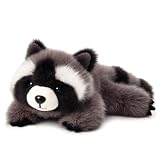 Mushymallow Adorable Raccoon Stuffed Animal Soft Birthday Gifts for Kids | Cute Plush Toy Pocket-Sized Stuffed Raccoon for Boys Girls Adults Christmas Birthday Gifts Desk Decor
- CUTE RACCOON DESIGN: This fluffy stuffed raccoon is well-designed. It is made of ultra soft plush that feels great to the touch and is a delight to hold. The belly and limbs of the stuffed raccoon are filled with some weighted beans, allowing this cute raccoon to change positions, sit, lie down, or stand.
- PROPER SIZE TO CARRY: This adorable stuffed raccoon is the right size to sit in the palm of your hand. The cosy touch makes all the stress disappear when you knead it. It also has a light aroma to soothe your body and mind, great to keep on your desk, in your car or in your bag to accompany you through your work and leisure time.
- GOOD GIFT CHOICE: This small plush toy raccoon with vivid expression and realistic design is a sweet gift for your friends, kids, parents and lover on Christmas, Thanksgiving and birthday to show your love and care for them!
- GREAT QUALITY: We choose soft fabrics and use exquisite sewing to make this cute plush raccoon, so that it can stay with you for a longer time. We designed a variety of images to choose from, you can bring them all home.
- CONSIDERATIONS: In order to keep this cute plush toy with you longer, we recommend gentle hand washing to clean it.Put it under the hot sun for a long time to dry naturally, this plush will recover better!
-
It is vulnerable, but retaining forest can make a difference
Binturongs range across tropical forests of South and Southeast Asia, with records from India, Nepal, Bhutan, Bangladesh, southern China, Myanmar, Thailand, Laos, Cambodia, Vietnam, Malaysia, Indonesia, and the Philippines—especially Palawan. This is a broad regional range, not one continuous area in which binturongs are equally common. Their current occurrence varies greatly by country, forest condition, and local threats.
They are usually described as mostly nocturnal and solitary. They spend much of their time in trees but can descend to the ground, and their activity patterns are not fixed. Recent ecological work suggests they may become more strongly nocturnal near forest edges or in disturbed forests, potentially avoiding people.
The main threats are:
- forest loss and degradation;
- logging and conversion of forest to non-forest land;
- indiscriminate snaring and hunting;
- capture for the pet trade;
- use in traditional medicine; and
- bushmeat hunting in some areas.
As of August 9, 2026, the latest global assessment located for this article is the IUCN assessment cited in recent literature, which lists the binturong as Vulnerable. The assessment estimated an inferred decline of approximately 30% over three generations, or about 18 years. That is an extinction-risk assessment—not a 2026 global population census—so its date and limitations matter. The IUCN assessment document provides the conservation context.
Special offer. See more information about Outbyte and uninstall instructions. Please review EULA and Privacy policy.A 2024 synthesis of binturong ecology offers a more useful picture than simply dividing habitat into “safe” and “destroyed.” The species was detected in degraded forests and near edges when enough forest remained. Its models found persistence associated with landscapes retaining more than roughly 40% forest cover within a 20-kilometer radius. The same study found avoidance of oil-palm plantations at both landscape and local scales, so the finding should not be interpreted as evidence that binturongs generally thrive in plantations.
That result is preliminary. The researchers noted small sample sizes and the difficulty of detecting a semi-arboreal animal with ground-based camera traps. Still, it points toward a practical conservation lesson: retaining connected forest cover may protect both binturongs and the seed-dispersal services they provide. The findings are reported in the 2024 Oryx synthesis.
Why Palawan binturongs deserve special attention
Palawan binturongs are genetically distinctive compared with populations elsewhere in the region. The cited genetic research supports treating them as a valuable, distinctive lineage, but it does not establish them as a separate species or subspecies.
The Palawan Bearcat Study Program, operating since 2017, uses camera trapping and radio-tracking to investigate the animals’ distribution, movements, and habitat needs. Field projects such as this are especially important because binturongs are difficult to monitor: they are mostly nocturnal, spend much of their time above the ground, and can be missed by conventional ground-based surveys. Learn more through the Palawan Bearcat Study Program and the genetic diversity study.
What has changed since the original 2013 feature?
The classic “10 fun facts” framing remains a good way to meet the binturong, but several claims are now better understood. A 2016 chemical study identified 2-acetyl-1-pyrroline in binturong urine, sharpening the explanation for the popcorn odor. Seed research has shown that binturongs can be effective dispersers without being the only animals involved in strangler-fig regeneration. More recent ecological work has also examined how the species uses fragmented and degraded forests.
The result is a more accurate picture of an animal whose oddities are all connected. Its tail helps it navigate the canopy, its scent marks let a mostly solitary mammal communicate, its fruit-heavy diet moves seeds, and its dependence on forest cover links those traits to conservation. The original feature can be read at WIRED, but the scientific details above reflect the later studies and assessments.
The Bottom Line
Bottom line: The binturong is a civet relative—not a bear or cat—with a prehensile tail, delayed implantation, a surprisingly complex scent-marking system, and urine that can smell like buttered popcorn. It is also an important forest seed disperser. Protecting connected tropical forest and reducing hunting and snaring helps preserve both this unusual mammal and the ecological work it performs.





Leave a Reply