Recommended Free Tools
The giant phantom jelly is real—but the “33-foot” part refers to its mouth arms, not its bell. Stygiomedusa gigantea is a deep-ocean scyphozoan with oral arms that can exceed 10 meters (33 feet). Anatomical evidence also suggests that it develops live young internally and releases them through its mouth, although scientists have not directly filmed the entire process in the wild.
The “33-foot” giant phantom jelly is not a jellyfish with a 33-foot-wide bell. The measurement refers to its enormous mouth, or oral, arms, which can extend beyond 10 meters (33 feet). Its reddish-brown bell is more than 1 meter (3.3 feet) across. Even more remarkable, the species is believed to develop live young inside internal brood chambers and release them through its mouth—but no one has directly filmed the complete birth process in the wild.
As an Amazon Associate I earn from qualifying purchases.
What is the giant phantom jelly?
The giant phantom jelly is Stygiomedusa gigantea, a large scyphozoan jellyfish in the family Ulmaridae. It is currently the only recognized species in the genus Stygiomedusa. The names Stygiomedusa fabulosa and Stygiomedusa stauchi are generally treated as synonyms in major taxonomic databases.
The Tool Desk
Outbyte PC Repair FREERepair Windows errors before they cause bigger problemsFix Now →Outbyte Driver Updater FREEScan for outdated or missing drivers - takes under a minuteDriver Scan →Its accepted scientific name is attributed to Browne, 1910. The animal’s common name suits its appearance: a broad, dark reddish-brown bell and four enormous, flowing oral arms make it look like a drifting apparition in the deep ocean.
#1 Best Overall

- QUIET AQUARIUM FILTER: The Tetra Whisper IQ Power Filter with Stay Clean technology contains a sound shield for quiet filtration less than 40 dB.
- SELF PRIMING: Submerged motor starts up with no priming required.
- CAPACITY: The Tetra Whisper IQ 20 Power Filter works in filters up to 20 gallons (130 GPH).
- STAY CLEAN TECHNOLOGY: By maintaining healthy pH levels, creates easier maintenance for healthier fish.
- CARTRIDGE REFILLS: Change cartridges monthly; uses large-sized Tetra Whisper Bio-Bag Filter Cartridges (refills sold separately).
How large is it really?
| Part of the animal | Reported size | Why it matters |
|---|---|---|
| Bell | More than 1 meter (3.3 feet) across | This is the rounded, jellyfish-like body that pulses through the water. |
| Oral arms | More than 10 meters (33 feet) long | These flexible structures extend from the mouth region and form a huge curtain around the animal. |
Calling it a “33-foot jellyfish” without explanation is misleading. The extraordinary length belongs to the oral arms, not the bell and not the animal’s width.
The giant phantom jelly also lacks the conventional long marginal tentacles that many people associate with jellyfish. Its mouth-associated arms are the dominant feature. They trail and fold through the water, giving the animal a much larger functional reach than its bell alone would suggest.
Where does the giant phantom jelly live?
Stygiomedusa gigantea is a deep-ocean species usually found in the mesopelagic and bathypelagic zones—the dim “twilight” and darker “midnight” regions of the sea. These depths are difficult to study: sunlight is weak or absent, pressure is extreme, and research vehicles can inspect only a tiny fraction of the water column.
PC Slower Than It Used to Be?
A free scan shows the junk files, broken settings and background clutter dragging Windows down - then fixes them in one click.Free scan · Windows 10 & 11Outdated Drivers Are Slowing You Down
One free scan finds every outdated or missing driver and matches the right update for your exact hardware.Free scan · exact hardware matchA global review assembled 110 observations representing 118 individuals recorded between 1899 and 2009. Those records came from every ocean basin except the Arctic. That does not amount to a population census. The records reflect where ships, submersibles, trawls, and remotely operated vehicles happened to operate, so the species may be more widespread—or more unevenly distributed—than the sightings suggest.
Depth also appears to vary with geography. At middle and lower latitudes, records generally fall in mesopelagic or bathypelagic waters. At high southern latitudes, the animal has been recorded considerably shallower. Researchers have proposed that temperature, light exposure, and the species’ porphyrin pigments could help explain this pattern, but these remain interpretations rather than settled explanations.
Why are sightings so rare?
The animal is difficult to encounter for two separate reasons. First, most of its habitat is far below the surface. Second, even deep-sea expeditions sample only narrow paths through a vast ocean.
Rank #2

- QUIET AQUARIUM FILTER: The Tetra Whisper IQ Power Filter with Stay Clean technology contains a sound shield for quiet filtration less than 40 dB.
- SELF PRIMING: Submerged motor starts up with no priming required.
- CAPACITY: The Tetra Whisper IQ 45 Power Filter works in tanks up to 45 gallons (215 GPH).
- STAY CLEAN TECHNOLOGY: By maintaining healthy pH levels, creates easier maintenance for healthier fish.
- CARTRIDGE REFILLS: Change cartridges monthly; uses large-sized Tetra Whisper Bio-Bag Filter Cartridges (refills sold separately).
Older specimens were sometimes collected in nets. Net collection can damage or distort a soft-bodied jelly, making it difficult to understand how the living animal actually holds its arms or moves. Modern remotely operated vehicles, or ROVs, provide a better view of intact behavior and body shape.
One notable recent observation came from MBARI’s ROV Doc Ricketts, which recorded a giant phantom jelly in Monterey Bay in November 2021 at approximately 990 meters (3,200 feet). The footage showed the animal alive in its natural environment, including the scale and movement of its oral arms.
What does a giant phantom jelly eat?
Scientists presume that the giant phantom jelly feeds on plankton and small fish, but its diet and hunting mechanics have not been documented in enough detail to describe a single, definitive strategy.
The four oral arms are not simply oversized versions of the fine stinging tentacles familiar from many jellyfish. They extend from the mouth region and can spread into a broad, flexible curtain. That arrangement could give the animal a wide area in which to intercept, hold, or envelop drifting prey in the open water column.
Observations in the Gulf of Mexico suggest that the large oral lobes may help trap or retain prey. Two observed animals also appeared to cling to subsea structures. Those observations support the idea that the arms are important to feeding and positioning, but they do not prove exactly how the animal captures or digests every type of prey.
A fish may use the jelly as a moving refuge
One of the most unusual observations involves the pelagic brotula Thalassabathia pelagica. Researchers watched the fish hover above the jelly’s bell and move in and out of its expansive oral arms.
Rank #3

- WITH ROTATING BIO-WHEEL: Patented Bio-Wheel technology provides excellent wet/dry biological filtration.
- MULTI-STAGE FILTRATION: Delivers mechanical, chemical and biological aquarium filtration to maintain a clean aquatic environment.
- MARINELAND FILTRATION PRODUCTS: Count on Marineland brand for the most reliable, technically advanced aquariums and accessories on the market.
- COMPATIBILITY: Use with Marineland Rite-Size Filter Cartridges (see individual filter for sizing recommendations).
- FIVE SIZES: Available in 75 GPH, 100 GPH, 150 GPH, 200 GPH and 350 GPH sizes.
In the open midnight zone, there may be very little physical cover. The jelly’s bell and arms could therefore offer the fish a temporary moving refuge from predators or a place to remain near food-rich structures. The association is documented, but it is too early to call it proven mutualism or obligate symbiosis. The available observations do not establish that the fish depends exclusively on the jelly, or that the jelly receives a definite benefit in return.
Does it really give birth through its mouth?
Probably—but the headline needs a qualification. The claim comes primarily from anatomy and historical interpretation, not from a modern recording of the entire reproductive process.
A 1959 Nature paper by F. S. Russell described a deep-sea jellyfish as viviparous, meaning that it produces live young rather than simply releasing eggs that develop entirely outside the parent. Later anatomical summaries described four brood chambers associated with the stomach.
In the proposed arrangement, developing young form inside cyst-like or chorion-enclosed structures within an invagination of the stomach. The embryo may receive nutrients through contact involving the parent’s gastrovascular system or stomach lumen. After internal development, the young were interpreted as being released alive through the oral opening—the same general opening used for feeding.
What is known, and what is inferred?
- Strongly supported: the animal has specialized internal brood chambers and has historically been classified as viviparous.
- Supported anatomical interpretation: young develop internally and are released alive through the oral opening.
- Not directly observed in the wild: the complete sequence, timing, physiology, and precise nutritional pathway of development.
The most accurate plain-English version is: the giant phantom jelly is believed to release live young through its mouth after they develop in internal brood chambers. “Gives birth through its mouth” is a memorable shorthand, but it should not be presented as though scientists recently filmed a complete birth.
Some modern identification material still describes the reproductive life cycle as unknown. That is not necessarily a contradiction. The anatomy provides evidence for internal development and live release, while the animal’s actual reproductive behavior in the deep sea remains poorly observed.
Rank #4
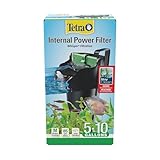
- INTERNAL POWER FILTER: Tetra Whisper Internal Power Filter for 5- to 10-gallon aquariums uses medium Whisper BioBag filter cartridges that are easy to change.
- QUIET 85 GPH MOTOR: The internal pump efficiently filters up to 85 gallons per hour.
- POWERFUL FILTRATION: Water flows through the cartridge floss, trapping debris and fish waste, while Ultra-activated carbon helps remove odor and discoloration.
- SPACE-SAVING DESIGN: Your aquarium can be 1” from the wall with the internal filter designed to clip directly on your aquarium wall and be hidden by décor.
- EASILY ADJUSTABLE: Adjustable clip allows for a variety of setups to easily adjust to high or low water levels.
What scientists still do not know
- Global abundance: there is no robust estimate of how many giant phantom jellies exist.
- Lifespan: researchers do not have a reliable figure for how long an individual lives.
- Reproductive rate: the timing and frequency of reproduction are not established.
- Population structure: it is unclear how connected populations are across ocean basins.
- Seasonal behavior: available records cannot yet show whether the species makes regular seasonal movements.
- Feeding behavior: direct feeding observations are too scarce to settle how the arms are used in every situation.
- Reproductive physiology: the internal anatomy is better documented than the living process, including embryo nutrition and the timing of release.
Even the apparent worldwide distribution must be interpreted carefully. A map of sightings is also a map of research effort. The deep ocean remains sparsely observed, and areas visited by research vessels or industrial ROVs are not a random sample of the planet’s underwater habitats.
Do these 3 things before closing this tab:
1Fix the driver behind crashes, sound loss and screen glitches2Repair Windows errors before they cause bigger problems3Scan for outdated or missing drivers - takes under a minuteCan people keep a giant phantom jelly as a pet?
No. This is a wild deep-sea animal, not an aquarium species or a realistic pet. Its extreme depth habitat, size, pressure requirements, specialized biology, and poorly understood care needs make private ownership impractical. The species is best appreciated through carefully collected specimens, scientific records, and ROV footage.
Readers who want broader context may find a jellyfish field guide or a general deep-sea creature reference book more useful than searching for a species-specific pet-care guide. No commonly available reference should be assumed to provide comprehensive coverage of Stygiomedusa gigantea itself.
Why this jelly matters to deep-sea science
The giant phantom jelly shows how much can be learned—and how much remains uncertain—from a small number of encounters. Its size and distinctive anatomy make it recognizable, yet basic questions about its feeding, reproduction, abundance, and life cycle remain open.
ROV encounters are especially valuable because they preserve the animal’s natural shape and behavior. A few minutes of intact footage can answer questions that a damaged net specimen cannot, such as how the oral arms move, whether the animal holds a structure, and how another animal interacts with it.
So the responsible version of the famous story is not that scientists have solved the biology of a monster jelly. It is that Stygiomedusa gigantea has mouth arms longer than a bus, lives in a poorly observed part of the ocean, may shelter a fish, and appears to release internally developed young through its mouth—an extraordinary conclusion supported by anatomy but still awaiting direct behavioral confirmation.
Best Value

- UNASSEMBLED REPLACEMENT CARBON FILTER Keeps aquarium water crystal clear – removes odors and discoloration
- CATCHES DEBRIS Dense dual-sided mesh filters debris and fish waste
- FITS TETRA WHISPER WATER FILTERS Color coded to make it simple to remember which replacement cartridge size to purchase
- CONVENIENT Easy to assemble and easy to replace
- USAGE Change monthly or sooner if needed
Reference note: a species-specific book or product was not verified here. A general marine-life reference is an adjacent resource, not a substitute for primary research on the giant phantom jelly.
Frequently Asked Questions
Is the giant phantom jelly really 33 feet wide?
The 33-foot measurement refers to the giant phantom jelly’s oral, or mouth, arms. Its bell is more than 1 meter (3.3 feet) across, not 33 feet wide.
Has anyone filmed the giant phantom jelly giving birth through its mouth?
Scientists have not directly filmed the complete birth process in the wild. Anatomical evidence supports the interpretation that young develop in internal brood chambers and are released alive through the oral opening.
Quick wins for a faster PC:
Repair Windows errors before they cause bigger problemsFix Now →Scan for outdated or missing drivers - takes under a minuteDriver Scan →Clear out junk files and repair common Windows errorsFree Scan →Can a giant phantom jelly be kept as a pet?
No. It is a wild deep-sea species with extreme habitat requirements and no established private-aquarium care protocol.
What fish lives with the giant phantom jelly?
Researchers have observed the pelagic brotula Thalassabathia pelagica moving around and within the jelly’s oral arms. This may provide shelter, but proven mutualism or obligate symbiosis has not been established.
The Bottom Line
The giant phantom jelly is real, but the headline needs precision: its 33-foot measurement applies to its oral arms, not its bell. Anatomical evidence indicates that it may develop live young in internal brood chambers and release them through its mouth, while the complete reproductive process has not been directly observed in the wild.
Quick Recap
Product prices and availability are accurate as of the date/time indicated and are subject to change. Any price and availability information displayed on Amazon at the time of purchase will apply.
Free tools Windows power users keep installed
One-click scans. No signup required.




