
Orcas (killer whales) are the only animals identified in the cited evidence as confirmed predators of great white sharks. A five-animal countdown would overstate what scientists have documented. Reports from California and South Africa show that orcas can kill white sharks, but the observations are few, and a documented attack on a not-fully-grown shark does not prove that every adult great white is helpless against an orca.
What animal can actually kill a great white shark?
The best-supported answer is the orca, also called the killer whale. The Natural History Museum identifies killer whales as the only known predators of great white sharks in its explainer on orca diets. That wording matters: it describes the limit of documented knowledge, not a claim that scientists have observed every predator that might exist.
As an Amazon Associate I earn from qualifying purchases.
The available record contains several notable encounters rather than a large dataset. A Canadian federal assessment records one reported orca attack on a white shark off California and says that at least two orcas killed white sharks at South African hotspots. After those killings, white sharks disappeared from the areas for a period. The observations establish predation, but they do not establish how often it happens or whether it is common across the species’ range.
Where orca attacks on white sharks have been documented
The Southeast Farallon Island observation
The Natural History Museum’s 2022 account describes an observation from the 1990s near Southeast Farallon Island, off California. An orca rammed a great white shark, brought it to the surface, turned it upside down and later ate it. Researchers think the inverted position induced tonic immobility, a temporary state in which the shark becomes unusually still and less able to respond.
#1 Best Overall
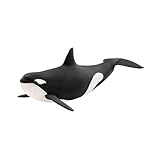
- SO REALISTIC, THEY MIGHT JUST MOVE - From feathers to fur, claws to paws - every schleich WILD LIFE figurine is crafted with precise details to spark curiosity and inspire play
- BIG ADVENTURES THROUGH FREE PLAY The world is your kid's playground! Free play sparks creativity, boosts problem-solving, and fuels imagination, so they can learn through endless fun!
- TRUSTED BY EXPERTS, LOVED BY KIDS - “Schleich playsets and figurines inspire kids to play imaginatively: an essential part of healthy childhood development so often overlooked in today’s fast-paced world.” - Dr. Sandra Stone, open-ended play expert
- STEP INTO THE WILD SIDE OF WILD LIFE - Adventure awaits! Swing through the jungle with the monkeys, spot the lions on safari, hear the howl of the wolf through the trees. Our Wild Life play sets include grassland, woodland, forest creatures and more.
- IMAGINATION WITHOUT LIMITATION - Schleich toys come in all shapes and sizes to bring every story to life. We value sustainability which is why we have created diverse worlds of durable toys built-to-last that can be treasured for generations to come.
This sequence is more informative than a simple report that a shark was found dead. It describes a possible control technique, the shark’s change in position and the subsequent feeding. It still represents one observed incident, not a standard procedure that every orca uses in every encounter.
South African shark killings
The Canadian Committee on the Status of Endangered Wildlife in Canada (COSEWIC) assessment for the white shark’s Atlantic population records at least two orcas killing white sharks at South African hotspots. The assessment also notes that sharks left those areas for a time afterward. A local disappearance following predation is evidence of a strong ecological effect, but it cannot by itself tell us how many sharks were killed, how long the avoidance lasted or whether all white sharks would respond in the same way.
The same assessment records a separate reported attack off California. Taken together, the California and South African accounts show that the interaction has occurred in more than one region rather than being confined to a single unusual sighting.
Free tools Windows power users keep installed
One-click scans. No signup required.
Starboard’s solo hunt
A 2024 Natural History Museum explainer reports footage of an orca known as Starboard attacking a great white without assistance in South Africa. The orca was later seen with the shark’s liver. The shark in that observation was not fully grown, and the account says the individual hunting sequence took minutes.
Dr Alison Towner, lead author of the work discussed in that account, called the event “astonishing predation” and said it represented “unprecedented behaviour underscoring the exceptional proficiency of the killer whale.” The observation is valuable because it documents a lone orca, but it should not be turned into a universal rule about solo attacks or assumed to describe how an entire population hunts.
Rank #2

- Distinctive Orca Markings: Features iconic black and white coloration with characteristic patches above and behind the eyes, giving this killer whale figure a recognizable species appearance.
- Dimensions: Measures 6 inches long x 3 inches tall. Suitable for animal play, classroom projects, dioramas, themed scenes, and display.
- Imaginative Sea Play: Create screen-free whale encounters, pod adventures, wildlife stories, sensory-bin scenes, travel play, and pretend marine journeys with this orca toy.
- Classroom And Projects: Use the figure for marine-life lessons, dolphin-family topics, ocean conservation discussions, Montessori activities, school assignments, and habitat dioramas.
- Safety And Material: Safety Tested and made from BPA Free PVC, this standard Safari Ltd. animal figure is designed for kids ages 3+ and carries a small-parts warning.
How an orca can overpower a shark
Ramming and controlling the body
The Farallon observation describes a direct physical attack: the orca rammed the shark and forced it to the surface. Bringing a shark into a controlled position can limit its ability to maneuver and keep it from escaping into deeper water. The documented behavior shows control of the encounter, not merely a bite exchanged between two large predators.
Turning the shark upside down
Sharks can enter tonic immobility when held or oriented in an inverted position. The Natural History Museum says researchers think this explains why the great white became still after the orca turned it over. A motionless shark is easier to hold and feed on than one that is swimming, rolling and striking.
Selective feeding
The 2024 South African account says Starboard was seen with the shark’s liver. That detail indicates that the orca removed and consumed a particular organ, rather than necessarily eating the entire carcass. It also illustrates why photographs or video of an orca carrying part of a shark should be interpreted alongside the full observation: the presence of a liver is evidence of feeding, but does not reveal the complete sequence or the amount eaten.
Time is part of the story
The reported solo hunt took minutes. That is a description of one observed event, not a benchmark for every attack. Different conditions—including the shark’s size, the orca’s experience, visibility, current and whether other whales are nearby—could affect how an encounter unfolds. The available sources do not provide a reliable average duration.
Why the shark’s size changes the conclusion
Great white feeding changes as the animal grows. The COSEWIC assessment says white sharks below 2.5 metres tend to take relatively small demersal prey, while larger individuals take larger nektonic prey. That larger-prey category includes pinnipeds, odontocetes and large elasmobranchs.
Rank #3

- 【Safe Materials】Made of handmade soft PVC. Non-toxic and durable soft rubber; This product has passed the test CPSC-accepted testing and is suitable for children under 12 years old.
- 【Play in Water or on Land】 Ideal for bath toys, storytelling, teaching, daycare, pre-school, pretend play, role-playing, presentations, games, party gifts, swimming pool and beach toys.
- 【Very Cool Theme Party】When throw a nautical party you can make a theme cake with this lifelike figurine .Highly realistic. Exact jaw and skin details make you feel the charm of Ocean Life! Exquisite design and hand paint process.
- 【Perfect Gift】 The whale replica is soft and sturdy enough that it won't hurt your kids. You can twist the jaw, the Fin and play it rough without any worries! Ideal gift for boys kids and collectors
- 【Entertainment Learning 】Inspire children to learn about the many creatures of the ocean! Ideal for education on Ocean species, environmental awareness, and natural history, Children can learn and understand about the Shark's types and habits more happily.
This ecology tells us what white sharks eat; it does not make them invulnerable. It also provides essential context for the South African footage. The shark attacked by Starboard was not fully grown, so the observation demonstrates that an orca can kill a white shark of that size. It does not demonstrate that a lone orca can effortlessly defeat every mature great white in every circumstance.
Size is only one variable. The sources do not give a size comparison between Starboard and the shark, a complete measurement of the shark or a population-wide estimate of how often such encounters end in a kill. Those missing details are reasons to describe the event precisely, not to fill the gaps with a speculative ranking.
Why a list of five predator animals would be misleading
The title “five animals that can conquer a great white shark” implies five confirmed species and a meaningful ranking. The cited sources support one confirmed predator. Other animals sometimes mentioned in discussions of marine predators are either documented as prey of great whites, lack evidence of predating them or are discussed in an entirely different predator–prey relationship.
| Animal or group | What the cited sources establish | What they do not establish |
|---|---|---|
| Orca (killer whale) | Confirmed predation is documented in California and South Africa; the Natural History Museum calls orcas the only known predators of great white sharks. | A universal ability to kill every adult great white, a typical group size for attacks or a reliable kill rate. |
| Other shark species | The COSEWIC assessment notes that large white sharks eat large elasmobranchs, but that is information about white sharks as predators. | No named shark species is established by these sources as a predator of great white sharks. |
| Sperm whales | The International Whaling Commission says killer whales have been observed attacking sperm-whale pods and that large sharks are thought to be potential predators of sperm-whale calves. | Evidence that sperm whales prey on great white sharks. |
| Pinnipeds, such as seals | Large white sharks are reported to include pinnipeds among their prey. | Evidence that pinnipeds kill great white sharks; the cited material points in the opposite predator–prey direction. |
| Large elasmobranchs generally | They are listed among the larger prey taken by big white sharks. | A documented case of a large ray or another elasmobranch killing a great white. |
“Not established” is not the same as “impossible.” It means that these sources do not document the claim strongly enough to present it as a fact. A responsible article must separate an observed kill from a hypothetical contest based on body size, jaw strength or internet anecdotes.
Independent reader supportYour contribution helps us test, update, and keep practical guides available for everyone.Can an orca kill an adult great white?
The evidence does not justify a blanket yes or no for every adult. At least one South African observation involved a shark that was not fully grown, while the Farallon account describes a great white without giving the detail needed to classify its maturity precisely in this context. The documented attacks prove that orcas can kill white sharks, but they do not supply a test of every size and age class.
What’s actually slowing this PC down?
Pick the symptom - the matching free tool is one click away.
Rank #4

- Orca Figurine: Dive into the marine adventure with the orca, the giant of the oceans. Educational and fun for children fascinated by marine life
- PAPO creations allow children aged 3 to have fun while discovering and developing their imagination.
- This collectible figurine can be given as a gift and used as a decorative element to enhance the ambiance of a room.
- PAPO relies on French talent and craftsmanship and has joined the ACFJF (Association of French Toy Creators and Manufacturers). The creations are imagined, designed and developed in France.
- PAPO FIGURINE: Nearly three decades after its creation, PAPO remains a benchmark for imaginative play with more than 750 carefully detailed figurines spread across a wide variety of universes.
An adult great white remains a large, powerful predator. The fact that it normally hunts sizeable prey does not tell us how it would fare against an orca, because the encounter involves different weapons and tactics: the orca can ram, control the shark’s orientation and exploit tonic immobility. The sources do not report a controlled comparison of adult sharks and orcas, so claims that one side would always win go beyond the evidence.
How common are these kills?
No named statistic in the cited material quantifies the frequency of orca kills of great white sharks. The record consists of a small number of documented observations and an assessment describing shark disappearances after killings in South Africa. That is enough to establish that predation occurs, but not enough to calculate a rate, estimate the proportion of the orca population that hunts sharks or conclude that most white sharks face this threat.
Rare events can still matter ecologically. If sharks leave an area after orca attacks, their absence may alter where they feed and how other animals use the habitat. However, the sources do not provide a complete before-and-after population study, so the duration and geographic reach of any ecosystem effect should be described cautiously.
How to evaluate a future claim about a “great white killer”
When a video, headline or social-media post names another predator, use the following checks before treating it as a confirmed answer:
Outdated Drivers Are Slowing You Down
One free scan finds every outdated or missing driver and matches the right update for your exact hardware.Free scan · exact hardware matchWindows Errors? Fix Them Before They Spread
Repair common Windows errors and clear accumulated junk for a smoother, more stable PC - no reinstall needed.Free scan · no reinstall- Identify the species precisely. “Whale,” “shark” or “sea predator” is too broad. A claim about an orca cannot be transferred automatically to another cetacean.
- Look for direct evidence of predation. A chase, bite or dead animal does not always show which animal caused the death or whether feeding occurred.
- Check the shark’s maturity and size. The South African solo observation involved a shark that was not fully grown, an important qualification.
- Separate one event from a general behavior. Starboard’s reported solo hunt is an individual observation, not proof that all orcas hunt white sharks alone.
- Read the source’s wording. “Only known predator” communicates the current documented record; it does not mean scientists have ruled out every undocumented interaction.
- Reject invented rankings. If a source supplies one confirmed predator and speculation about several others, a five-place list creates certainty that the evidence does not contain.
What the evidence means for great white sharks
Great white sharks occupy the role of powerful hunters in their ecosystems, and their diet expands toward larger prey as they grow. Orca attacks reveal that this position is not absolute: a larger, highly coordinated or exceptionally skilled marine predator can turn the encounter around using control tactics rather than a prolonged contest of bites.
The most defensible conclusion is therefore narrow and useful. Orcas are the only confirmed animal predators of great white sharks identified by the cited Natural History Museum and Canadian assessment material. Their attacks have been recorded in more than one region and include ramming, inversion and selective feeding. The observations are striking precisely because they are unusual; they should not be inflated into a five-animal ranking, a universal adult-shark defeat claim or a numerical kill rate that has not been measured.
Quick Recap
Product prices and availability are accurate as of the date/time indicated and are subject to change. Any price and availability information displayed on Amazon at the time of purchase will apply.





Leave a Reply