Quick wins for a faster PC:
Fix the driver behind crashes, sound loss and screen glitchesFind Drivers →Repair Windows errors before they cause bigger problemsFix Now →A fish smaller than a finger can climb a wet, nearly vertical rock face beside a waterfall almost 50 feet high. The African shellear Parakneria thysi makes the ascent at Luvilombo Falls in the Democratic Republic of the Congo, using specialized fin pads and repeated bursts of movement.
A fish smaller than a finger can climb a wet, nearly vertical rock face beside a waterfall almost 50 feet high. The African shellear Parakneria thysi makes the ascent at Luvilombo Falls in the Democratic Republic of the Congo, using specialized fin pads and repeated bursts of movement.
As an Amazon Associate I earn from qualifying purchases.
A study published April 2, 2026, in Scientific Reports provides the first photographic and cinematographic documentation of this behavior in the species—and the first documented case of waterfall climbing by an African kneriid fish. Local communities reportedly knew about the migration for more than 50 years, but the new research gives scientists their first formal visual record.
Do these 3 things before closing this tab:
1Clear out junk files and repair common Windows errors2Scan for outdated or missing drivers - takes under a minute3Repair Windows errors before they cause bigger problemsWhere the shellears climb
The fish gather at Luvilombo Falls on the Luvilombo River, a tributary of the lower Lufira in the upper Congo Basin. The waterfall is approximately 15 meters high, or about 49 feet.
#1 Best Overall

- QUIET AQUARIUM FILTER: The Tetra Whisper IQ Power Filter with Stay Clean technology contains a sound shield for quiet filtration less than 40 dB.
- SELF PRIMING: Submerged motor starts up with no priming required.
- CAPACITY: The Tetra Whisper IQ 20 Power Filter works in filters up to 20 gallons (130 GPH).
- STAY CLEAN TECHNOLOGY: By maintaining healthy pH levels, creates easier maintenance for healthier fish.
- CARTRIDGE REFILLS: Change cartridges monthly; uses large-sized Tetra Whisper Bio-Bag Filter Cartridges (refills sold separately).
Despite the dramatic description, the shellears do not swim straight upward through the waterfall’s strongest central flow. They climb the wet rock in the splash zone beside the main cascade, where water keeps the surface slippery but may be less forceful than the falling curtain itself.
Thousands of small- to medium-sized fish may gather around the falls. Researchers observed the behavior during field expeditions in 2009, 2018, and 2020, particularly during major floods near the end of the rainy season and the beginning of the dry season. The most notable observations occurred around April and May.
How a fish grips a waterfall
The shellear’s climbing equipment is built into its fins. The undersides of its pectoral and pelvic fins contain thickened, cushion-like pads covered with tiny hook-shaped projections called unculi.
The projections are longer and denser on the pectoral fins than on the pelvic fins. The pectoral fins appear to provide the main grip, while the pelvic fins add support as the fish works its way up the rock.
This is not a suction trick. The researchers did not find comparable adhesive structures on the fish’s abdomen, so the evidence points to fin-based attachment rather than the body sticking to the rock. The fish braces its fins against the surface, then moves the rear half of its body in side-to-side undulations. The result resembles swimming turned vertically against a rock wall.
Rank #2

- QUIET AQUARIUM FILTER: The Tetra Whisper IQ Power Filter with Stay Clean technology contains a sound shield for quiet filtration less than 40 dB.
- SELF PRIMING: Submerged motor starts up with no priming required.
- CAPACITY: The Tetra Whisper IQ 45 Power Filter works in tanks up to 45 gallons (215 GPH).
- STAY CLEAN TECHNOLOGY: By maintaining healthy pH levels, creates easier maintenance for healthier fish.
- CARTRIDGE REFILLS: Change cartridges monthly; uses large-sized Tetra Whisper Bio-Bag Filter Cartridges (refills sold separately).
The study also describes anatomical differences in the pectoral girdle, fin rays, pelvic girdle, and related muscles when P. thysi is compared with the related genus Kneria. These traits may help reinforce the fish’s ability to live and move in torrential water. Some of their precise functions remain to be tested, so the paper describes them as likely adaptations or pre-adaptations—not as fully proven explanations for every part of the climb.
The climb takes about 9 hours and 45 minutes
“Climb in 10 hours” is a useful rounding of the researchers’ estimated journey time of approximately 9 hours and 45 minutes. But the fish are not moving continuously for ten hours. Most of the time is spent resting.
| Part of the journey | Estimated time | What happens |
|---|---|---|
| Active upward movement | About 15 minutes | The fish grip the wet rock and advance in short bursts. |
| Short pauses | About 30 minutes | The fish pause briefly between movements. |
| Longer rests | About 9 hours | The fish rest on roughly nine horizontal ledges, for about an hour at a time. |
During active movement, researchers estimated climbing speeds of approximately 1.5 to 3 centimeters per second. Sudden jets of water can knock fish loose. Some individuals fall while navigating overhangs—even when they are moving upside down—and may have to start the ascent again.
Not every shellear appears able to make the climb
The fish observed climbing were approximately 37 to 48 millimeters in standard length. The species can grow to roughly 96 millimeters, meaning the climbers were generally less than half the maximum recorded length.
The researchers’ size analysis suggests that this is a partial migration linked to body size. As a shellear grows, its weight increases faster than the relative area of its gripping pads. Larger individuals therefore have more weight to support without a proportionate increase in fin-based attachment area.
Rank #3
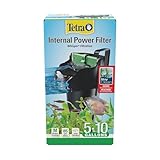
- INTERNAL POWER FILTER: Tetra Whisper Internal Power Filter for 5- to 10-gallon aquariums uses medium Whisper BioBag filter cartridges that are easy to change.
- QUIET 85 GPH MOTOR: The internal pump efficiently filters up to 85 gallons per hour.
- POWERFUL FILTRATION: Water flows through the cartridge floss, trapping debris and fish waste, while Ultra-activated carbon helps remove odor and discoloration.
- SPACE-SAVING DESIGN: Your aquarium can be 1” from the wall with the internal filter designed to clip directly on your aquarium wall and be hidden by décor.
- EASILY ADJUSTABLE: Adjustable clip allows for a variety of setups to easily adjust to high or low water levels.
That does not mean every small fish will complete the route or that no large fish can climb. It means climbing ability appears to be constrained by size, and the waterfall migration is not a behavior performed equally by every individual in the population.
The Tool Desk
Outbyte Driver Updater FREEFix the driver behind crashes, sound loss and screen glitchesFind Drivers →Outbyte PC Repair FREEClear out junk files and repair common Windows errorsFree Scan →Locally, the fish are known in the Sanga language as Tulumbu in the plural and Kalumbu in the singular. The names come from a verb meaning “to stick,” a reference to their ability to cling to wet rock.
Why are the fish climbing?
Scientists know considerably more about how the shellears climb than why they do it. The study documents the behavior and describes anatomical features that help explain it, but it does not establish the migration’s biological purpose.
Several explanations are possible:
- moving to upstream habitat after flooding;
- reaching areas with better feeding opportunities;
- reducing exposure to predators;
- reaching spawning or breeding habitat; or
- recolonizing habitat separated by seasonal changes in the river.
These are hypotheses, not conclusions. The available research does not prove that the fish are climbing to mate, feed, escape predators, or find a particular kind of upstream habitat. Their numbers appear to increase toward late afternoon and evening and decline after sunrise, but the reason for this pattern is also unresolved.
A migration route under pressure
The waterfall is more than a spectacular backdrop. It is part of a physical connection between downstream and upstream river habitats. The fish depend on wet splash-zone rock, suitable ledges, and enough water to maintain the route.
Rank #4

- Powerful Pump: 300 GPH water pump effectively filters 55-150 gallons; ideal for large aquariums, turtle tanks, and ponds.
- Enhanced Aeration: Equipped with an adjustable valve to increase oxygen levels, promoting healthier, more active fish and turtles.
- Double Deep Filtration: Dual-stage black biochemical sponge removes odors and impurities; keeps water clear and fresh.
- Dynamic Water Flow: Boosts wave size and surface movement; improves circulation for a healthier aquatic environment.
- Adjustable Body: The aquarium filter features a detachable design. For tanks under 15 inches tall, you can lay the filter flat or remove the lower half of the filter sponge for a better fit.
The Luvilombo River faces serious human pressures. The Scientific Reports paper identifies seasonal water withdrawal for cropland irrigation as a major concern. During the dry season, the river can reportedly dry out completely downstream of the diversion, disrupting ecological continuity.
Large gatherings also make the fish vulnerable to illegal fishing, including seining with mosquito nets. Removing fish while they congregate at the falls could interfere with the migration even if the waterfall itself remains untouched.
The falls lie in or near the boundary between Upemba National Park and Kundelungu National Park. The researchers suggest that carefully managed ecotourism could increase awareness and support conservation, but the study does not document a current commercial tourism program, a revenue-sharing arrangement, or a verified operator.
Independent reader supportYour contribution helps us test, update, and keep practical guides available for everyone.What this discovery does—and does not—show
- It does show that Parakneria thysi repeatedly climbs the wet rock beside Luvilombo Falls.
- It does show that the fish use fin pads bearing microscopic hook-like unculi, supported by body undulation and repeated rests.
- It does show that smaller individuals are most strongly associated with the observed climbing behavior.
- It does not show that the species was newly discovered.
- It does not show that the fish climbs continuously for ten hours.
- It does not show that suction holds the fish to the rock.
- It does not yet show why the migration occurs or how many fish complete it each year.
The research turns a long-standing local account into documented science, while leaving an important question open: what is waiting for these tiny fish above the falls?
Recommended Free Tools
Frequently Asked Questions
Is the African shellear a newly discovered fish?
No. The species was already known. What is new is the first formal scientific documentation, including photographic and cinematographic evidence, of its waterfall-climbing behavior.
Best Value

- WITH ROTATING BIO-WHEEL: Patented Bio-Wheel technology provides excellent wet/dry biological filtration.
- MULTI-STAGE FILTRATION: Delivers mechanical, chemical and biological aquarium filtration to maintain a clean aquatic environment.
- MARINELAND FILTRATION PRODUCTS: Count on Marineland brand for the most reliable, technically advanced aquariums and accessories on the market.
- COMPATIBILITY: Use with Marineland Rite-Size Filter Cartridges (see individual filter for sizing recommendations).
- FIVE SIZES: Available in 75 GPH, 100 GPH, 150 GPH, 200 GPH and 350 GPH sizes.
Does the fish climb nonstop for 10 hours?
Not continuously. Researchers estimate about 15 minutes of active movement, 30 minutes of short pauses, and roughly nine hours resting on horizontal ledges, for a total journey of approximately 9 hours and 45 minutes.
Why do shellears climb the waterfall?
The study does not establish the purpose. Upstream habitat, feeding, predator avoidance, breeding, and recolonization after flooding are possible explanations, but none has been proven.
Do the fish use suction to stick to the waterfall?
The evidence indicates that the fish use cushion-like pads on their pectoral and pelvic fins. These pads carry tiny hook-like projections called unculi. The abdomen does not appear to provide a comparable adhesive surface.
Windows Errors? Fix Them Before They Spread
Repair common Windows errors and clear accumulated junk for a smoother, more stable PC - no reinstall needed.Free scan · no reinstallOutdated Drivers Are Slowing You Down
One free scan finds every outdated or missing driver and matches the right update for your exact hardware.Free scan · exact hardware matchThe Bottom Line
The African shellear Parakneria thysi climbs the wet rock beside a roughly 15-meter waterfall using gripping pectoral and pelvic fins covered in tiny hook-like unculi. The estimated journey lasts about 9 hours and 45 minutes because the fish move in brief bursts and spend most of the time resting. Scientists have documented how the fish climb, but the purpose of the migration remains unknown—and the river route is threatened by water diversion and illegal fishing.
Quick Recap
Product prices and availability are accurate as of the date/time indicated and are subject to change. Any price and availability information displayed on Amazon at the time of purchase will apply.




