What’s actually slowing this PC down?
Pick the symptom - the matching free tool is one click away.
Diabetes alone does not rule out anesthesia for a healthy, stable dog or cat. The key is to plan around the individual patient’s glucose status, insulin and meal routine, procedure, and concurrent disease—then monitor closely and resume feeding and usual diabetes care as soon as recovery allows.
Can diabetic dogs and cats be anesthetized?
Yes. The American Animal Hospital Association (AAHA) states that anesthesia is not contraindicated in healthy diabetic dogs and cats; a procedure may also treat a concurrent condition or a complication that is contributing to insulin resistance. That does not mean every diabetic patient is ready for an elective anesthetic. The attending veterinarian should assess metabolic stability and other illness first, and postpone and stabilize the patient when ketoacidosis or another significant problem makes proceeding unsafe, if the procedure can wait. AAHA’s diabetic-anesthesia guidance
Plan food and insulin for the patient and procedure
There is no single fasting or insulin rule that fits every diabetic patient. AAHA’s 2020 anesthesia guidance says diabetic patients may or may not be fasted, depending on veterinarian preference and anticipated procedure time; insulin should be adjusted to food intake. Schedule early when practical, since a morning procedure can make it easier to limit disruption to the usual meal-and-insulin routine. AAHA’s 2020 anesthesia and monitoring guidelines
AAHA’s 2019 article notes that evidence on whether a small meal before anesthesia reduces regurgitation is contradictory. Use the clinic’s protocol and the clinician’s assessment of aspiration risk, expected fasting duration, glucose trend, and the pet’s normal insulin schedule. Do not give, omit, or alter insulin solely by applying a generic online dose table.
Crashes, No Sound, or Screen Glitches?
Random freezes, missing sound and display glitches usually trace back to one bad driver. Find and replace yours safely.Free scan · under a minuteWindows Errors? Fix Them Before They Spread
Repair common Windows errors and clear accumulated junk for a smoother, more stable PC - no reinstall needed.Free scan · no reinstall#1 Best Overall

- Designed specifically for small animals, it precisely controls the delivery of oxygen and anesthetic gases to ensure safe and stable surgical procedures and meet the high standards of veterinary clinics.
- The lightweight and mobile design adapts to a variety of scenarios such as operating rooms and treatment areas, making it convenient for veterinarians to perform anesthesia operations at any time and improve work efficiency.
- Intuitive control interface, modular design, simplified debugging and maintenance processes, and low-noise operation reduce interference with animals and medical care.
- It is suitable for animals of different sizes and types, such as cats, dogs, birds and rodents. It is an ideal choice for pet hospitals, wildlife rescue institutions and other institutions.
- Whether it is a routine operation or a complex operation, the device can provide stable and reliable anesthesia support, helping veterinarians improve the quality of diagnosis and treatment and ensure the health of animals.
- Record the most recent meal, insulin type and dose, and administration time.
- Decide whether food is appropriate before the procedure and when it can be offered afterward.
- Set an insulin plan that accounts for actual food intake and the expected time under anesthesia.
- Assess blood glucose and evaluate for dehydration, concurrent disease, or ketoacidosis when indicated.
Choose drugs, fluids, and preparation with glycemia in mind
Consider the whole patient rather than diabetes as an isolated diagnosis. Review concurrent disease and hydration, and provide fluid support when hypovolemia or dehydration is identified, tailoring fluid management to the patient and procedure. AAHA notes that alpha-2 agonists and ketamine can cause transient hyperglycemia; these are considerations for protocol selection, not categorical prohibitions. Short-acting or reversible approaches and local anesthetic techniques may be useful when clinically appropriate. AAHA’s diabetic-anesthesia guidance
Monitor glucose during anesthesia
AAHA’s 2019 article recommends checking blood glucose every 30–60 minutes during anesthesia. The appropriate response depends on the patient’s trend, prior insulin, food intake, procedure, and clinic protocol. The article includes the following sample approach; its dose and dextrose bands are not a universal prescription.
Rank #2
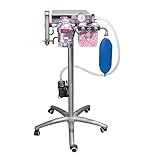
- Accommodates animals within body weight 100kg,such as cats, dogs, monkeys, pigs etc
- Tec 3 ISO Vaporizer made in Britain is available.
- Quick oxygen flush allows to rescuing animals during surgery.
- Easy-to-view inhalation/exhalation valves allow easy monitoring of respiration for animal safety.
- With scavenging/adjustable pressure limiting valve.
| Blood glucose in AAHA’s example | Example response in the 2019 article |
|---|---|
| Less than 100 mg/dL | No insulin; 2.5–5% IV dextrose at 1–2 mL/kg/h. |
| 100–200 mg/dL | One-quarter of the typical insulin dose; 2.5–5% IV dextrose at 1–2 mL/kg/h. |
| Greater than 200 mg/dL | Half the dose; add dextrose once glucose falls below 150 mg/dL. |
| Greater than 300 mg/dL | Regular insulin or the full typical dose; no dextrose. |
These are AAHA article examples, not thresholds to apply without clinical judgment. Follow current institutional guidance and the attending veterinarian’s patient-specific plan. The article also advises considering ketonuria with persistent hyperglycemia. In this setting, avoiding hypoglycemia matters: AAHA says mild hyperglycemia is preferable to hypoglycemia. AAHA’s diabetic-anesthesia guidance
Maintain standard anesthetic monitoring and body temperature
Diabetes-specific glucose checks complement—not replace—routine anesthesia monitoring. The 2025 American College of Veterinary Anesthesia and Analgesia (ACVAA) guideline summary lists ECG, noninvasive blood pressure, pulse oximetry, capnography, and temperature among minimum monitoring recommendations for small-animal anesthesia and sedation. Use monitoring suited to the patient and procedure, with staff able to recognize and respond to changes. ACVAA guideline summary
Rank #3

- CT & MRI compatible Vet Anesthesia Machine
- Accessorize both sides of frame with a vast array of products to maximize utility
- Safety Pop-off Valve as standard configuration
- Easy convert between rebreathing circuit & bain circuit
- High precision tech 3 vaporizer
Prevent hypothermia with patient-appropriate warming. AAHA lists warmed IV fluids, insulation, circulating warm-water blankets, warm-air systems, and purpose-designed heating surfaces. Avoid unsuitable heat sources that can burn an anesthetized patient, who may not be able to move away or signal discomfort. AAHA’s diabetic-anesthesia guidance
Independent reader supportYour contribution helps us test, update, and keep practical guides available for everyone.Support recovery, feeding, and the return to routine
Once the patient is sufficiently recovered, offer food as soon as practical and address nausea when appropriate. Coordinate postoperative insulin with whether the pet actually eats and with the veterinarian’s plan. Provide appropriate analgesia and reassess glucose after anesthesia. If insulin was given during anesthesia but the patient cannot eat, AAHA recommends careful monitoring and consideration of dextrose support. AAHA’s diabetic-anesthesia guidance
Quick Recap
Best Value

- Complete ready for use.
- Isoflurane.
- Warranty 2 years.
Rank #4
- Quick Assembly: Complete ready for use system that requires only 10 minutes to be assembled for immediate operation
- Anesthetic Agent Compatibility: Designed for use with Isoflurane anesthetic agent for veterinary procedures
- Warranty Coverage: Includes 2 years warranty coverage for quality assurance and customer support
- Manufacturing Origin: Made in USA 2025 with quality construction standards
- Veterinary Application: Specially designed simple, safe, and stable anesthesia machine for small animal anesthetic operations in veterinary hospitals, clinics, labs, and research facilities
Product prices and availability are accurate as of the date/time indicated and are subject to change. Any price and availability information displayed on Amazon at the time of purchase will apply.




