Raising a bucket calf starts with finding out whether it received colostrum, then following one consistent liquid-feeding plan while offering clean water and calf starter. Keep its pen dry, clean, and well ventilated, watch it closely each day, and base weaning on solid-feed intake and health—not age alone. If the calf’s history is unclear or it shows signs of illness, contact a veterinarian promptly.
Start by checking the calf’s history and colostrum
A bucket calf is commonly an orphan or newborn calf started on a bottle or a bucket fitted with a nipple. Ask the seller when the calf was born, whether it received colostrum, what it has been fed, and whether it has had any health problems. Oklahoma State University’s 4-H bucket calf guidance stresses confirming colostrum before routine feeding. If the calf is newborn and its history is uncertain, the University of Maine Cooperative Extension advises treating it as though it may not have received colostrum and seeking an appropriate source or substitute; contact a veterinarian or extension educator for help.
Colostrum supplies antibodies, and a newborn calf’s ability to absorb them declines with time. Donna M. Amaral-Phillips of University of Kentucky Extension recommends 4 quarts of high-quality colostrum (3 quarts for Jersey calves) within 4–6 hours of birth, followed by another 2 quarts 6–8 hours after the first feeding. This is specific guidance for newborn calves, not a dose to apply automatically to an older calf. Her guidance notes that antibody absorption is no longer present by 24 hours after birth. See University of Kentucky Extension’s 5 C’s of calf management.
Choose one liquid-feeding plan and follow it consistently
Whole milk or calf-specific milk replacer can serve as the calf’s liquid feed. Choose a suitable plan with your veterinarian or extension educator, especially if the calf is small, sick, very young, or of unknown age. Do not combine quantities from different feeding programs: the right amount depends on factors such as the calf’s size, age, breed, health, weather, and the replacer’s concentration.
#1 Best Overall
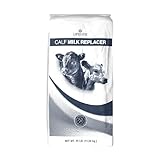
- 20:20 Milk Replacer for Calves: Balanced with 20% protein and 20% fat to fuel steady growth, healthy weight gain, and vitality in young calves.
- Free from Additives: Made without artificial ingredients, formulated for clean-label and restricted-use protocols.
- Complete Calf Nutrition: Delivers essential nutrients including amino acids, vitamins, and trace minerals to support immunity, bone development, and digestive health.
- Uniform Growth and Daily Consistency: Ensures reliable performance across feedings - supporting both small-scale calf care and large herds.
- Fast-Mix Powder: Dissolves smoothly in warm water with a whisk in under 60 seconds. No clumps, no mess - ideal for quick feeding.
Mix and serve replacer exactly as directed
Use a calf-specific product and follow its label for proportions, water temperature, mixing, and feeding. Measure consistently; changing the concentration or serving temperature can disrupt a routine. The University of Maine Cooperative Extension also advises following the product’s mixing and temperature directions. Oregon State University Extension gives one practical example of 2–4 quarts of milk or replacer twice daily, served at 101–105°F. Treat that as an example from its care sheet, not a universal prescription. See Oregon State’s new calf care guidance and Maine Extension’s guidance for calves of unknown age.
Understand the trade-off between traditional and higher-liquid programs
Merck Veterinary Manual describes traditional programs that limit liquid feed to encourage starter intake and may wean calves at around 4–8 weeks. Higher-liquid, or accelerated, programs provide more liquid feed to support faster early growth, but tend to delay solid-feed intake and rumen development; they therefore require later, gradual weaning. Neither approach is a universal fit. Use one coherent program suited to the calf and adjust it with qualified advice. See Merck Veterinary Manual’s guidance on feeding young dairy calves.
Rank #2

- MILK REPLACER WITH PROBIOTICS: Suitable for up to 9 young animal species including puppies, kittens, calves, lambs, goats, foals, piglets, llamas, and crias; providing probiotics and balanced nutrition to support healthy growth and development.
- MADE WITH PROTEIN AND FAT: Contains 24% protein and 24% fat; supporting fast, healthy growth, strong muscle development, and overall vitality for young animals during critical early stages of life.
- ALL MILK FORMULA WITH PROBIOTICS: Made with high-quality all-milk protein; supporting healthy growth, proper development, and overall performance for young animals during critical early stages of life.
- SUPPORTS HEALTHY DIGESTION FOR YOUNG ANIMALS: Powered by Opti-Gut probiotics; promoting gut health, nutrient absorption, and digestive balance to support overall growth, vitality, and wellbeing for young animals.
- EASY TO MIX FORMULA: Designed for quick and convenient preparation; ensuring fast mixing, effortless feeding, and optimal consumption so young animals receive balanced nutrition efficiently for healthy growth and development.
Offer fresh water and calf starter early
Keep a separate pail of clean, fresh water available; milk or replacer does not meet all of a calf’s water needs, particularly in hot weather. Water also supports starter intake and rumen function. Keep the water pail separate from the milk bucket so milk residue does not contaminate the drinking water, as UNH Extension explains. Replenish it daily and clean it as needed.
Offer fresh calf starter in a clean feeder early. Kentucky Extension recommends starter and free-choice water beginning at about three days of age. Replace feed that becomes stale or contaminated. Fermentable starter feeds support rumen development; hay can provide physical fiber but does not induce the rumen papillae development needed for weaning, according to Merck Veterinary Manual. Use starter designed for calves and avoid relying on hay alone to prepare a calf for weaning.
Rank #3

- 22:20 Milk Replacer for Calves: Delivers 22% protein and 20% fat to promote daily weight gain, energy, and strong frame development in calves from day one.
- Enhanced with LifePulse Herbal Blend: Natural plant extracts calves love, plus plasma, oregano, and essential oils to support immunity, improve digestion, and defend against respiratory challenges.
- Immune and Digestive Boosters: Plasma promotes gut health and resilience, while oregano provides natural protective properties that support growth and stress recovery.
- Formulated for Transition Periods: Ideal for bridging the gap between colostrum and starter feed, reducing nutritional setbacks during vulnerable early life stages.
- Fast-Mix Powder: Dissolves smoothly in warm water with a whisk in under 60 seconds. No clumps, no mess - ideal for quick feeding.
Wean when the calf is ready, not just when it reaches an age
Age is only one consideration. A calf should be healthy, growing, and eating enough solid feed before milk is withdrawn. Maine Extension offers roughly 1.5–2 pounds of calf grain per day for several days as a practical readiness guide. Treat that as a program-dependent guidepost, not a rule for every calf or ration. Higher-liquid programs generally call for a later, more gradual transition because calves may take longer to establish solid-feed intake.
During the transition, keep starter and water available and watch appetite and condition. If the calf is ill, losing condition, or not eating reliably, get veterinary advice rather than pressing ahead with weaning.
Rank #4

- FORMULATED WITH EASILY DIGESTIBLE ALL MILK PROTEINS - Supports optimal growth and performance in calves. A high protein formula helps provide the necessary energy young calves need to thrive.
- SUPPORT FOR NEWBORN CALVES, BEGINNING AT BIRTH - Contains prebiotics to help support digestive health. Added vitamins and minerals help support immune health, setting the stage for a strong start at life.
- HIGHLY PALATABLE - Specifically formulated with a proprietary blend of herbs and natural flavors to encourage feed intake in newborn calves to ensure they receive proper nutrition.
- DEPENDABLE NUTRITION - Easy to mix powder—non-medicated for flexibility of feeding rates.
Make the pen clean, dry, and comfortable
Provide a clean pen with dry bedding, protection suited to the weather, and fresh air without drafts. Oregon State Extension recommends monitoring the calf’s environment and adapting protection to temperature. Avoid damp bedding and poor ventilation, while keeping the calf out of direct drafts. Oklahoma State’s bucket calf guidance also emphasizes a separate, clean pen.
Clean feeding equipment regularly. Wash the milk bucket or bottle between feeds, and keep the water pail and starter feeder clean. A predictable routine and careful equipment hygiene are part of Kentucky Extension’s “5 C’s”: colostrum, calories, cleanliness, consistency, and comfort.
Free tools Windows power users keep installed
One-click scans. No signup required.
Best Value

- MULTI-SPECIES PERFORMANCE FORMULA: Manna Pro Calf-Manna is designed to support a wide range of animals including cattle, goats, swine, poultry, rabbits, horses, and deer with essential nutrients and energy.
- SUPPORTS GROWTH & WEIGHT GAIN: High-quality protein, vitamins, and energy-dense ingredients help improve animal development, appetite, and performance in both young and mature animals.
- IDEAL FOR LIVESTOCK & BACKYARD ANIMALS: Whether feeding beef cattle, dairy cows, chickens, goats, rabbits, or swine, Calf-Manna boosts nutritional intake and encourages steady growth.
- ENHANCES FEED EFFICIENCY & DIGESTION: Improves how well animals utilize their regular feed, making it a smart choice for boosting recovery and maintaining health during stress or transition.
- HIGHLY PALATABLE & EASY TO FEED: Calf-Manna’s delicious formula keeps animals coming back for more—perfect for chickens, goats, cattle, and other multi-species livestock.
Check the calf every day and know when to call a veterinarian
Observe the calf’s appetite, drinking, posture, manure, breathing, and general alertness every day. Diarrhea, often called scours, can cause dehydration quickly. If the calf has diarrhea, use any electrolyte product only according to its directions; a weak calf needs veterinary attention, as Maine Extension advises.
Contact a veterinarian promptly if the calf is weak, depressed, dehydrated, unable to stand, drinking poorly, has respiratory signs or bloat, or has a temperature above 104°F. Oregon State Extension lists these as reasons to seek veterinary care. Do not treat home care or electrolytes as a substitute for assessment when a calf is seriously ill.
Quick Recap
Product prices and availability are accurate as of the date/time indicated and are subject to change. Any price and availability information displayed on Amazon at the time of purchase will apply.




