
Some links on this page are affiliate links: if you buy through them we may earn a commission, at no extra cost to you.
For rodents living in wall cavities, traditional snap traps are the better-supported control method. Ultrasonic plug-in devices may startle rodents briefly, but available reviews find weak, short-lived, or unproven control. Traps can injure a dog or cat that reaches them, so they are safe only when enclosed or placed where pets and children cannot get access. The safest solution combines exclusion—sealing entry holes and removing food, water, and shelter—with protected traps on the rodents’ accessible travel routes.
No reviewed source establishes a veterinary safe-exposure threshold for ultrasonic devices in household dogs or cats. That means you should not describe a consumer repeller as proven pet-safe. It also means a repeller should never substitute for locating the entry point and dealing with the animals inside the structure.
As an Amazon Associate I earn from qualifying purchases.
What’s actually slowing this PC down?
Pick the symptom - the matching free tool is one click away.
The short answer: traps work better, but access control determines safety
| Question | Best-supported answer |
|---|---|
| Will ultrasound clear mice from a wall? | Do not rely on it. Ultrasound is directional, loses strength quickly, and is blocked or shadowed by walls, insulation, furniture, and other objects. Rodents can remain behind cover and may adapt after an initial reaction. |
| What control method has the strongest guidance? | Traditional snap traps. The CDC recommends them for reducing rodent populations around homes, with placement on the floor against a wall or another rodent travel route. |
| Are snap traps safe around dogs and cats? | Only when the animal cannot reach them. An exposed trap can physically injure a curious pet. |
| Can ultrasonic repellers hurt pets? | The reviewed material does not establish household pet safety limits or prove consumer devices harmless. Pet-specific risk therefore remains unresolved. |
| What prevents rodents from returning? | Seal holes and gaps, remove accessible food and water, and eliminate shelter. Trapping without correcting entry points can lead to reinfestation. |
Think of a repeller as, at most, a low-confidence supplement. Think of a protected snap trap as a control tool that requires you to manage a direct physical hazard. Neither option fixes a hole that lets rodents enter.
Why ultrasonic repellents usually disappoint in wall cavities
Rodents can react, then adapt
Ultrasonic devices emit high-frequency sound intended to make an area uncomfortable. The Environmental Protection Agency’s review of ultrasonic rodent-control devices notes that rodents may initially react, but adaptation can reduce the effect. The same review concludes that tests of ultrasound generators have suggested “little promise” as rodent-control agents.
Popular on Amazon

- How It Works:Our device uses cutting-edge ultrasonic waves to generate an environment that pests find highly unpleasant, gently motivating them to leave your home on their own. With regular use, it gradually reshapes pest habits, helping you enjoy a cleaner, pest-free living space—without any chemicals or harm to animals or people.
- Super Simple Setup:Just plug it into any standard wall outlet. You’ll hear a short “beep” and see a gentle pulsing blue light that confirms the unit is working. Most people start noticing fewer pests within 2–4 weeks as the unwanted visitors naturally relocate. Important: During the first 1–2 weeks you might see slightly more activity—this is normal and means pests are being encouraged to come out of hiding and leave.
- Large Coverage Zone:One unit effectively protects open areas of 800–1,200 square feet. For best performance, place one device in each room or major open space. Ultrasonic sound waves do not travel through walls or solid furniture, so multiple units are recommended for full-home protection.
- Clean & Chemical-Free Protection:Say goodbye to sprays, poisons, glue traps, and messy dead bugs. This electronic solution creates a natural sound barrier that pests prefer to avoid—no toxins, no odors, no cleanup required. A safe, family- and pet-friendly way to keep your home comfortable.
- Extremely Energy Efficient:Consumes only 3–5 watts of power (far less than a typical night light or phone charger). No batteries to replace, no maintenance—just plug in and forget. An eco-smart, low-cost way to protect your home year-round.
A 2004 review by the USDA National Wildlife Research Center reported a roughly 30–50% reduction in movement activity in the limited studies it examined. That is a change in activity, not proof that rodents left a building or that a wall cavity was cleared. The review also found no significant repellency effects beyond three to seven days of exposure. Those figures are dated and should not be treated as a performance guarantee for a current consumer product.
Sound does not fill a wall evenly
Ultrasound is directional and attenuates rapidly. Building materials, insulation, studs, stored items, and the wall’s geometry create shadows and dead zones. A device in a room therefore does not create a uniform barrier inside the cavity behind that room. A mouse can stay in a protected section of the wall, move through a void the speaker does not cover, or use a route behind an object that blocks the sound.
Recommended Free Tools
This is why a device that seems effective for a few quiet days can create false reassurance. Reduced noise may mean the animals are temporarily less active, not that they are gone. If food, water, and shelter remain available, the underlying problem continues.
Device regulation is not a proof of efficacy or pet safety
The EPA classifies ultrasonic repellers as devices rather than pesticides. Devices generally do not undergo the premarket registration process used for pesticides under the Federal Insecticide, Fungicide, and Rodenticide Act, although misbranding rules still apply. That regulatory category does not establish that a particular product controls rodents, nor does it establish a safe ultrasonic exposure level for dogs or cats.
What snap traps offer—and the hazard they create
Why public-health guidance favors them
The CDC recommends traditional snap traps to reduce rodent populations around the home. Its placement instruction is practical: put traps on the floor against a wall, where rodents commonly travel, rather than in the middle of an open room. Traps have a direct purpose—capture the animal—rather than relying on a response that may fade after several days.
Traps still work only when an animal can reach them. A trap placed where rodents travel but pets also investigate creates a different problem. A dog can snap a paw or muzzle, and a cat can be injured while batting at or carrying a trap. The CDC and EPA both say traps and bait must be kept out of reach of children and pets.
Outdated Drivers Are Slowing You Down
One free scan finds every outdated or missing driver and matches the right update for your exact hardware.Free scan · exact hardware matchPC Slower Than It Used to Be?
A free scan shows the junk files, broken settings and background clutter dragging Windows down - then fixes them in one click.Free scan · Windows 10 & 11Use physical barriers, not hope
For a home with pets, place each snap trap inside a protective box designed to prevent a dog or cat from contacting the mechanism, or put it in a genuinely inaccessible location along the rodent route. Do not assume that a trap behind a piece of furniture is inaccessible; cats can climb, dogs can nose objects aside, and children may reach into narrow gaps.
Do not leave an exposed trap in a room simply because your pet has ignored it so far. Access can change when an animal smells bait, sees a moving rodent, or is left unsupervised. If you cannot verify that a proposed location is inaccessible, use an enclosure or choose another location.
Also popular on Amazon
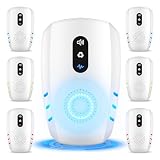
- 【Advanced Ultrasonic Technology】This ultrasonic pest repeller uses multi-frequency ultrasonic waves within a frequency range of 10kHz-65kHz to help create an uncomfortable environment for common indoor pests. As a pest repellent ultrasonic plug in, it supports daily pest control needs for mice, roaches, ants, spiders, mosquitoes, and more. It is a practical choice for customers looking for a mouse repellent, rodent repellent, or ultrasonic rodent repeller for indoor spaces.
- 【Safe Indoor Use & No Mess】Compared with traditional mouse traps indoor for home or chemical sprays for mice, spiders, ants, mosquitoes, and other indoor pests, this mouse repellent ultrasonic plug in helps support a cleaner home without bait, sticky boards, harsh odors, or messy cleanup. Designed for bedrooms, kitchens, living rooms, hallways, and other enclosed areas, it offers a more reassuring choice for everyday indoor use around people and pets.
- 【3 Ultrasonic Modes – Frequency & Target Pest Coverage】Easy plug-in and one-button operation. 3 professional frequency modes for precise pest repelling: Blue Mode (25-45 kHz) for mosquitoes, gnats, fruit flies; Yellow Mode (18-35 kHz) for ants, cockroaches, spiders; Red Mode (10-25 kHz) for rats, mice, large bugs. Red mode may make slight noise, use when no people/pets are indoors. No mess, full room pest protection.
- 【Wide Indoor Coverage】This mice repellent indoor device is suitable for indoor areas up to 1600 sq ft in open space. For better performance, place one unit in each room because ultrasonic waves may be blocked by walls and large furniture. It can be widely used in most indoor environments, whether at home, in the workplace, garages, basements, attics, warehouses, or other enclosed areas, helping provide effective support for a cleaner and more comfortable space.
- 【Energy-saving & 24/7 Automatic Protection】This plug-in ultrasonic device only consumes 3-5W power, saving more electricity than a desk lamp. No batteries required. Simply plug it in, and it works 24/7 all year round with no extra attention needed. It acts as an effective mice repellent and roach repellent indoor, providing steady low-power operation and reliable whole-house pest control for long-term home defense.
Ultrasonic devices versus snap traps: a decision table
| Criterion | Ultrasonic repeller | Traditional snap trap |
|---|---|---|
| Evidence of control | EPA review reports initial reactions, rapid adaptation, directional attenuation, and little promise; USDA review found no significant repellency beyond 3–7 days in the studies reviewed. | Recommended by the CDC for reducing household rodent populations. |
| Effect in a wall cavity | Sound can be shadowed by construction and objects, allowing rodents to remain behind cover. | Must be placed where rodents can physically travel and the trap can be reached, usually along a wall or near an entry route. |
| Pet-hazard mechanism | Pet-specific safe exposure limits were not established in the reviewed sources; proven harm or safety cannot be claimed. | An accessible mechanism can directly injure a paw, nose, or mouth. |
| Follow-up | May require repeated repositioning yet can leave rodents in place if it fails. | Requires regular checking, removal of captured rodents, and continued protection from pets. |
| Root-cause control | Does not seal entry points or remove attractants. | Does not seal entry points or remove attractants. |
| Best role | Optional, low-confidence supplement only; never the sole plan for a wall infestation. | Primary capture method when enclosed or otherwise inaccessible to pets and children. |
The safest way to get rodents out of a wall
Follow these steps in order. Exclusion and sanitation make any trapping effort more effective, while protected placement prevents the control method from becoming a pet injury.
1. Confirm that the signs fit rodent activity
Look for a pattern rather than relying on one unexplained sound. Scratching or movement in a wall, droppings, gnaw marks, disturbed nesting material, or repeated activity near food-storage areas can indicate rodents. Note when and where activity occurs. The location helps identify the wall, floor edge, pipe chase, vent, or utility penetration that may connect to an entry route.
Quick wins for a faster PC:
Repair Windows errors before they cause bigger problemsFix Now →Fix the driver behind crashes, sound loss and screen glitchesFind Drivers →If the sound could instead be plumbing, heating equipment, insects, or another animal, avoid placing traps until the source is reasonably identified. A qualified pest professional can inspect concealed spaces when the signs are ambiguous.
2. Find and seal entry points
Inspect both the interior and exterior of the building, concentrating on gaps around pipes, cables, vents, doors, foundations, roof lines, and wall transitions. The EPA’s prevention guidance is direct: seal holes inside and outside the home to keep rodents out.
Use a rodent-resistant repair appropriate to the location and size of the opening; a temporary patch that rodents can gnaw through does not solve the route. Treat every connected opening, not just the hole nearest the noise. If you seal an interior opening while an animal remains in the wall, you can strand it inside, so coordinate exclusion with trapping or professional advice.
3. Remove food, water, and shelter
Store food, including pet food, in closed containers. Clean crumbs and spills, secure rubbish, repair leaks, and do not leave water or food bowls available longer than necessary. Reduce clutter and nesting material around walls, garages, utility rooms, and storage areas. The EPA recommends removing accessible food and water and eliminating shelter because trapping without these changes can be followed by reinfestation.
4. Place protected snap traps on travel routes
- Choose the floor edge, wall line, or other route where signs indicate rodent movement. The CDC specifically recommends placement on the floor against a wall.
- Put each trap inside a protective box or in a location your dog or cat cannot reach. Check the proposed location from your pet’s perspective: consider climbing, pushing, reaching, and squeezing through gaps.
- Follow the trap manufacturer’s setup directions and use only the amount and type of bait needed. Keep bait and the trap inaccessible to children as well as pets.
- Use more than one protected trap when signs indicate activity in separate areas, while avoiding locations that could be reached through furniture, vents, or open doors.
Do not place traps in the middle of a room merely because that is convenient. Rodents generally use edges and covered routes, so a trap off the travel line may be ignored while the animal continues in the wall.
5. Check traps regularly and remove rodents promptly
Inspect every trap on a regular schedule and follow safe handling directions when a rodent is captured. Prompt removal limits odor and prevents a pet from discovering the trap later. Wear appropriate disposable protection, keep pets and children away during handling, and clean the area according to local public-health guidance.
Also popular on Amazon
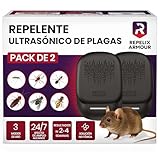
- ✅ AFFORDABLE SOLUTION: Fighting against mice, rats or insects? This ultrasonic pest repeller is a safe, chemical-free mouse repellent to plug in. Protect your home without toxins or expensive deratization services - harmless to humans and pets.
- ✅ SOUND SENSITIVITY NOTE: In modes 2 and 3, some people or animals can hear ultrasonic sound, others may not. This is normal and does not affect effectiveness. If you mind, switch to Mode 1, the quietest option.
- ✅ INTERIOR PROTECTION: Each device covers up to 1,500 sq ft, offering rodent repellent indoor protection for bedrooms, kitchens, living rooms or basements. Works against ants, flies, cockroaches, spiders and mosquitoes. Use one device per room.
- ✅ OPERATION: With three modes of use, this mice repellent indoor adapts to your needs. In the first week, pests may seem more active as they are disturbed, but within 2 to 4 weeks you will see a marked decrease in rodents and insects.
- ✅ 100% SATISFACTION GUARANTEE: If you are not happy with this rodent repellent, or if there is ever an issue, our team is here to help.
Continue checking after one capture. A single rodent does not prove that the wall route is empty, and a quiet period does not prove that exclusion succeeded.
6. Reassess the building, not just the device
If signs continue, look for an overlooked opening, a second food or water source, or a connected void that bypasses the traps. Moving an ultrasonic device from one outlet to another does not correct those conditions. Persistent activity inside an inaccessible wall warrants inspection and exclusion by a qualified pest professional.
Free tools Windows power users keep installed
One-click scans. No signup required.
What to do if you already plugged in an ultrasonic repeller
You do not need to treat a repeller as the main intervention simply because it is already operating. Keep it only as an optional supplement while you complete exclusion and protected trapping, and do not interpret a reduction in scratching as proof of removal. Repositioning can change which area receives sound, but it cannot overcome attenuation, directional coverage, or adaptation.
Observe your pets for any unusual response to a device and discontinue it if you are concerned. Because the reviewed sources do not define a veterinary exposure threshold, contact your veterinarian for individualized advice if a dog or cat appears distressed or develops a new behavior after the device is installed. Do not claim that the product is harmless merely because it is marketed for household use.
When a professional is the safer choice
Arrange an inspection when rodents remain active after entry points and attractants have been addressed, when the suspected route is inside a sealed or inaccessible wall, or when you cannot place traps away from pets and children. A professional can trace connected openings, plan exclusion without trapping an animal in the structure, and select protected placements that fit the building.
Professional help is also appropriate when a wall contains electrical wiring, plumbing, insulation hazards, or structural damage that makes opening or sealing it unsafe. Do not cut into a wall solely to chase a sound without first establishing the likely route and the risks.
Do these 3 things before closing this tab:
1Scan for outdated or missing drivers - takes under a minute2Clear out junk files and repair common Windows errors3Fix the driver behind crashes, sound loss and screen glitchesCommon mistakes that prolong a wall infestation
- Relying on silence. Rodents may reduce activity temporarily after an ultrasonic device is installed without leaving the wall.
- Putting a trap where a pet can investigate it. A trap that catches rodents but can also catch a paw is not a safe setup.
- Sealing only the visible interior hole. Exterior gaps and connected utility openings can keep supplying new rodents.
- Leaving food or water available. An easy food source can offset the pressure created by trapping.
- Stopping after one capture. Continued signs may indicate additional animals or another entry route.
- Using an ultrasonic device as a pet-safety guarantee. The available evidence does not establish safe exposure limits for household dogs and cats.
Bottom line for pet owners
Choose exclusion first, then use traditional snap traps only in protective boxes or locations your pets and children cannot reach. That approach is supported by CDC and EPA guidance and directly addresses the rodent population. Ultrasonic repellers have limited, dated evidence, can be blocked by the structure of a wall, and may lose any effect after rodents adapt. They should not be trusted to clear a wall cavity or to prove that a home is safe for pets.





Leave a Reply