For a confirmed-positive commercial poultry operation, passing an Infected Premises Restock Biosecurity Audit before restocking is required to be eligible for federal indemnity for the restocked birds. A producer moving birds into a designated buffer zone must pass a Buffer Zone Placement Biosecurity Audit to be eligible for indemnity for those birds. These compliance audits are separate from voluntary prevention assessments; confirm your premises designation and current requirements with APHIS or your State animal health official.
Key takeaways
- A confirmed-positive commercial poultry operation seeking indemnity for restocked poultry must pass an Infected Premises Restock Biosecurity Audit before restocking.
- A producer moving birds into a designated buffer zone must pass a Buffer Zone Placement Biosecurity Audit to be eligible for indemnity for those birds.
- Follow the regular poultry movement-permitting process and contact the APHIS Area Veterinarian in Charge, case manager, or State animal health official for site-specific instructions.
- Voluntary Wildlife Biosecurity Assessments and Biosecurity Incentive-Focused Assessments are for eligible commercial operations not affected by HPAI; they do not replace a required compliance audit.
- APHIS says improvements identified during a compliance audit must be completed to preserve relevant indemnity eligibility. Failure to make recommended corrections may also affect eligibility after another infection during the same outbreak.
- USDA indemnity covers eligible live birds and eggs that must be destroyed, not birds that died from HPAI.
What are the new USDA bird flu indemnity requirements?
The USDA APHIS requirements make biosecurity compliance a condition of federal indemnity eligibility in specified commercial poultry situations. The Federal Register interim final rule became effective upon publication on December 31, 2024. Current APHIS guidance describes two mandatory audit paths: restocking a confirmed-positive premises and placing poultry into a designated buffer zone.
The rule is not a blanket requirement that every poultry owner pass the same audit before every federal payment. Requirements depend on the premises’ disease status and designation, the poultry movement, and the indemnity being sought. Confirm the relevant designation and conditions with APHIS or the State animal health official before moving or restocking birds.
APHIS announced the change on December 30, 2024. Dr. Rosemary Sifford, USDA Chief Veterinary Officer, said: “Biosecurity is proven to be our best weapon in fighting this virus, and this update will ensure that poultry producers who received indemnity for HPAI are taking measures to stop future introductions of the disease and avoiding actions that contribute to its spread.” The APHIS announcement reported that more than $365 million in indemnity had gone to premises with reinfections, out of nearly $1.1 billion distributed in total in 2024. Those are historical figures reported by APHIS in 2024, not current cumulative totals or a payment estimate.
Free tools Windows power users keep installed
One-click scans. No signup required.
#1 Best Overall
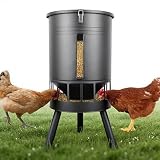
- Oversized Weatherproof Roof with Locking Clasps: The chicken feeder features an oversized roof that provides superior protection against rain and snow. Secure locking clasps keep the cover firmly attached during harsh weather, making it essential chicken coop accessories for outdoor use.
- Rust-Proof Metal Construction: Built with powder-coated steel construction, this chicken feeder resists rust and corrosion for lasting outdoor durability. The sturdy metal build withstands daily coop activity without damage.
- Safe & User-Friendly for Chickens: Designed with 16 smooth-edged feeding ports, this feeder prevents scratches and injuries to chickens. The gravity-fed openings eliminate food blockage and ensure effortless feeding.
- 50-lb Capacity with Feed-Level Visibility: This large chicken feeder holds 50 pounds of feed with a transparent strip window showing real-time consumption levels. Eliminate guesswork while maintaining clean feed storage.
- Barrel Hygiene & Quick Setup: The smooth cylindrical chicken feeder design enables effortless cleaning with no corners for grime buildup. Tool-free assembly takes under 30 minutes for one person using pre-drilled hardware.
Which poultry operations need a biosecurity audit?
The trigger determines which audit applies. A movement into a designated buffer zone is distinct from restocking a confirmed-positive premises, and both differ from the voluntary assessments available to eligible unaffected operations.
| Situation | Audit or program | Timing and birds covered | What to do |
|---|---|---|---|
| Commercial operation confirmed positive for HPAI and seeking indemnity for restocked poultry | Infected Premises Restock Biosecurity Audit | Pass before restocking; applies to the restocked poultry | Contact the APHIS Area Veterinarian in Charge or case manager |
| Producer moving poultry into a designated buffer zone and seeking indemnity | Buffer Zone Placement Biosecurity Audit | Pass before placement; applies to birds moved onto the premises | Follow movement permitting and contact APHIS or the State animal health official for site-specific details |
| Poultry moved onto premises in an active infected zone | Movement-related indemnity restriction described in the 2024 announcement | APHIS said indemnity would not be paid if the flock became infected within 14 days after dissolution of the control area around an active infected premises | Verify current outbreak boundaries, control areas, and movement conditions with officials |
| Eligible commercial operation not affected by HPAI | Voluntary Wildlife Biosecurity Assessment or Biosecurity Incentive-Focused Assessment | Preventive assessment; not a compliance audit | Request one or both through APHIS |
APHIS’s December 2024 announcement described a minimum 7 km buffer zone radius and the 14-day active-infected-zone restriction. These are the conditions described in that announcement; outbreak boundaries and movement controls are time- and premises-dependent, so verify the current designation with officials.
Do I need a biosecurity audit before restocking poultry?
Yes, if your commercial operation has been confirmed positive for HPAI and you want federal indemnity for restocked poultry, APHIS says you must pass an Infected Premises Restock Biosecurity Audit before restocking. The audit is a compliance requirement, not an optional consultation.
Passing the audit does not guarantee payment for every later loss. You must still meet applicable response, inventory, documentation, and claim requirements. Contact your APHIS Area Veterinarian in Charge or case manager to arrange the audit and confirm current site-specific instructions.
What is a buffer zone placement audit?
A Buffer Zone Placement Biosecurity Audit is the required compliance audit for a producer moving poultry into a designated buffer zone and seeking federal indemnity for those birds. Pass the audit before placing the poultry, and follow the applicable movement-permitting process.
Do not assume that a premises is or is not in a buffer zone based on a general map or an earlier outbreak notice. Confirm the designation, permit conditions, and audit scheduling with APHIS or your State animal health official.
Rank #2

- No-waste design: Chicken feeder features a no-waste design with the feed opening extending downward, solving the problem of spilled feed, avoiding feed waste and providing a cleaner coop for your chickens. With the chicken feeder you can feed your chickens efficiently, avoiding mess and waste, saving you money and time. We recommend a distance of 3 inches between the feeder hole and the bottom of the bucket
- Automatic chicken feeder: Chicken feeder has a 3.15" diameter hole. When chickens feed through the feed opening, gravity allows food to flow directly downward, which helps chickens to take their feed easily and freely. We provide feeder opening plugs, which can be plugged into the feed opening at night to prevent anything from entering the feed bucket and preventing feed loss
- Rainproof Cover Design: The feeder's rainproof cover and rubber gasket prevent water from leaking into the feed bucket and causing damage to the feed, keeping the food dry so you can feed your chickens with confidence that their food is clean. This rainproof chicken feeder can be placed anywhere in the coop or outdoors for use
- SAFE AND ROBUSTNESS MATERIALS: The feeder is made of BPA-free plastic for sturdy durability and to ensure long-lasting use outdoors. Because chickens love bright colors, our red design makes it more attractive for chickens to quickly adapt to the feeder
- Easy to install: Use the included hole saw and drill to turn any container into an automatic chicken feeder in minutes. Chicken feeders make it easier to keep your chickens happy and healthy
What happens if a producer fails the audit or ignores corrections?
APHIS says improvements identified during a compliance audit must be completed if the producer wants indemnity for restocked poultry. The 2024 APHIS announcement also warned that a producer who does not make recommended corrections may be ineligible for indemnity if the premises experiences another infection during the same outbreak.
Keep dated records of completed corrective actions and any follow-up direction from APHIS or the case manager. The consequence depends on the applicable condition and circumstances; an audit issue does not mean every existing or future claim is automatically denied.
What’s actually slowing this PC down?
Pick the symptom - the matching free tool is one click away.
How do mandatory audits differ from voluntary APHIS assessments?
Mandatory compliance audits apply to specified affected premises or poultry movements. Voluntary assessments are preventive options for eligible commercial operations not affected by HPAI, and do not substitute for a required compliance audit.
| Feature | Mandatory compliance audits | Voluntary preventive assessments |
|---|---|---|
| Who they are for | Confirmed-positive premises restocking, or producers placing poultry into a designated buffer zone | Eligible commercial operations not affected by HPAI |
| Types | Infected Premises Restock Biosecurity Audit or Buffer Zone Placement Biosecurity Audit | Wildlife Biosecurity Assessment or Biosecurity Incentive-Focused Assessment |
| Purpose and timing | Required before the applicable restocking or placement to qualify for indemnity for the relevant birds | Preventive review; producers may request one or both |
| Cost and financial effect | APHIS compliance condition for relevant indemnity eligibility | Offered at no cost; APHIS may share up to 75% of eligible costs to fix highest-risk concerns, subject to premises-specific caps and resource availability |
The Wildlife assessment focuses on wildlife risks, facility repairs, and wildlife management. The incentive-focused assessment reviews structural and operational biosecurity plans and practices. Voluntary assessment recommendations are not generally mandatory, but improvements identified during a compliance audit must be completed to preserve relevant indemnity eligibility.
To request a voluntary assessment, APHIS asks producers to email [email protected] with premises information such as the name, address, production type, and contact details. APHIS says requests are tracked in received order; assignment timing and prioritization can vary. See APHIS biosecurity-assessment guidance for current instructions.
What may a biosecurity assessment review?
APHIS’s September 2026 FAQ lists areas including biosecurity documentation; perimeter buffer and line-of-separation controls; signs against unauthorized entry; footwear and footbaths; handwashing; mortality monitoring; wild-bird exclusion; rodent control; and sanitizing vehicles, tools, and equipment. These are useful preparation topics, not a universal pass checklist.
Rank #3

- EXTRA LARGE FEED STORAGE. The OverEZ chicken feeder allows three birds to feed at once and holds up to 50 pounds of feed to avoid recurring maintenance. With a chicken coop accessory this efficient, you’ll only have to refill every 4-6 weeks for 3-5 hens, 2-3 weeks for 6-11 hens, or every 1-2 weeks for 12-15 hens.
- COUNTRY TOUGH DURABILITY. Our chicken coop feeder can be used as both an indoor and outdoor feed dispenser. UV-protected and food-safe, our BPA-free chicken feeder is made of recyclable plastic so there’ll be no waste before, during, or after using your OverEZ feeder for fowl.
- NO-WASTE FEEDING DESIGN: The three smart-feeding ports are designed to prevent chickens from soiling or spilling feed, meaning less wasted feed and a cleaner coop for your birds. When it rains, the port overhang and hidden recessed channel prevent runoff water from leaking into the feeder and ruining large amounts of feed for your chickens.
- EASY CLEANING & MAINTENANCE: The poultry feeder can be cleaned and refilled on the ground, unlike other chicken feeders. The wide-mouth opening allows you to easily fill the chicken coop feeder and replace the lid to keep water out.
- GRAVITY-FED: As chickens eat from the feeding ports, the angled design easily allows food to flow directly down for the chicken’s easy reach. The shallow base saves time by allowing your chickens to easily reach the bottom of the feeder. DIMENSIONS: 22 3/4" L X 12 1/2" D X 16 1/4" H
The incentive-focused assessment reviews a standardized set of requirements, while the wildlife assessment focuses on exterior premises and wildlife risks. Do not assume that buying a particular product or making one change guarantees that an audit or assessment will be passed.
What does USDA bird flu indemnity cover?
USDA pays indemnity for eligible live birds and eggs that must be destroyed because of HPAI, but APHIS says it does not pay indemnity for birds that died from HPAI. USDA and State officials work with the producer to create a flock inventory; standardized values vary by poultry segment, species, and egg use.
| Loss or activity | APHIS guidance |
|---|---|
| Eligible live birds and eggs that must be destroyed | Indemnity is calculated using live inventory and applicable standardized values |
| Birds that died from HPAI | Not indemnified |
| Depopulation, disposal, or virus elimination | Separate compensation categories with their own approval and documentation rules |
| Contaminated materials that must be destroyed | May qualify for separate compensation when approved and otherwise eligible |
APHIS updates standardized values annually. If a producer believes the national average does not reflect fair market value, APHIS says to notify the case manager or Field Reimbursement Specialist in writing within 15 days of receiving the initial estimate and obtain an independent qualified appraisal. See APHIS indemnity and compensation guidance for current requirements. Costs arranged by producers themselves may require advance approval.
How do producers apply for HPAI indemnity?
Start with the APHIS case manager or Field Reimbursement Specialist assigned to the incident. APHIS’s current guidance describes this process:
Quick wins for a faster PC:
Repair Windows errors before they cause bigger problemsFix Now →Fix the driver behind crashes, sound loss and screen glitchesFind Drivers →- Work with the assigned case manager or Field Reimbursement Specialist and submit the indemnity request form.
- Coordinate the flock inventory and review the initial indemnity value prepared by APHIS.
- Complete the required claim paperwork, including federal System for Award Management registration when required.
- Provide payment information and retain records for inventory, destruction, approved materials, response work, and communications.
- If disputing the initial value, notify the case manager or Field Reimbursement Specialist in writing within 15 days and obtain an independent qualified appraisal.
APHIS says direct deposit generally arrives about two to three weeks after paperwork is completed. An appeal may result in an additional payment later. Payment timing is separate from the audit requirement, which may apply before restocking or placing birds.
How can a poultry farm prepare for an audit?
Use APHIS’s instructions for your specific premises as the controlling checklist. Before the audit, review the operational and physical areas APHIS identifies and ask your Area Veterinarian in Charge or case manager what documentation and corrective actions are required.
Rank #4

- Keep it clean & No Waste: You just place DIY chicken feeders anywhere on your farm or coop, fill it with feed and poultry feeders will be driven by gravity. Feed your chickens in an easy way, prevents spilling of feed and no waste. Chicken feeders can save you 15-30% of feed and make your coop cleaner and more comfortable
- Good airtightness: We provide the lid to keep the feed dry even in rainy days, while stopping other animals from entering the feed bucket, and also saving 5%-10% of the feed
- High quality material & Robustness: Chicken feeder set is made of strong and robustness PP material. It is not easily damaged in complex environments such as farm chicken coops and can be reused. Because chickens love bright colors, our red design makes it more attractive for chickens to adapt to the feeder
- Easy to install: There is a 3.15 inch hole saw in the accessories. You only need to prepare a drill and a container, a few minutes to easily make an automatic chicken feeder ports, you can place the container 6-10 inches above the ground, so that chickens can easily eat the food inside
- Wide application: The box includes 8 poultry feeder ports, 8 rubber rings and 1 hole saw. Poultry feeder ports are suitable for containers such as buckets, boxes, bins and troughs. You only need to have an unused container, you can easily make automatic feeders. This is not only a waste reuse, but also adds a lot of fun to your life and work
- Documentation: Organize written biosecurity plans, procedures, and records relevant to the premises.
- Perimeter and access: Review perimeter buffer areas, line-of-separation controls, and signs that discourage unauthorized entry.
- People and footwear: Review worker and visitor controls, footwear, footbaths, and handwashing procedures.
- Flock monitoring: Maintain mortality monitoring records and procedures.
- Wildlife and pests: Review wild-bird exclusion and rodent-control measures.
- Vehicles and equipment: Review how vehicles, tools, and equipment are cleaned and sanitized.
- Corrective actions: Keep dated records showing how audit improvements were completed and retain any follow-up direction from APHIS.
These areas reflect APHIS’s assessment guidance and do not guarantee a pass. A general checklist or commercial product cannot replace the required audit or official instructions.
Independent reader supportYour contribution helps us test, update, and keep practical guides available for everyone.What is the current status of the interim rule?
The interim final rule took effect upon publication in the Federal Register on December 31, 2024. APHIS later reopened the comment period in March 2025. The sources reviewed for this article do not provide a consolidated legal history resolving every possible amendment or premises-specific question.
Recommended Free Tools
Current APHIS program guidance continues to describe the restock and buffer-zone audits. Before consequential restocking or poultry movement, confirm the current requirement and your premises designation with APHIS and the relevant State animal health official. See the APHIS notice about the reopened comment period and the current assessment guidance.
Where can poultry producers find official guidance?
Use official APHIS resources and contact officials for decisions about a particular operation:
- APHIS indemnity and compensation guidance for eligible losses, claim paperwork, valuation, and payment information.
- APHIS biosecurity assessments for compliance audit and voluntary assessment information.
- APHIS HPAI resources for broader disease-response information.
- APHIS Defend the Flock Resource Center for practical poultry-biosecurity materials.
FAQ
Do all poultry owners need a USDA biosecurity audit?
No. The mandatory audit conditions described here apply to specified commercial premises and poultry movements. Eligible commercial operations not affected by HPAI may request voluntary assessments, which do not replace a required compliance audit.
Will a biosecurity audit affect my USDA indemnity?
Yes. Passing the applicable audit is required for federal indemnity eligibility for the relevant restocked or moved birds. Producers must also meet the other applicable claim requirements, so passing does not guarantee payment for every loss.
Do these 3 things before closing this tab:
1Repair Windows errors before they cause bigger problems2Fix the driver behind crashes, sound loss and screen glitches3Clear out junk files and repair common Windows errorsBest Value

- Complete Chicken Coop Solution for Busy Owners: This all-metal set combines a high-capacity 50-lb chicken feeder and a 3-gallon chicken waterer—ideal for reducing daily refills and simplifying care for your flock. Perfect as essential chicken coop accessories that save time and effort.
- Heavy-Duty Chicken Waterer & Feeder Built to Last: Constructed from powder-coated galvanized steel, both the chicken waterer and chicken feeder resist rust, weather, and pecking. Unlike lightweight alternatives, this durable set withstands outdoor coop life season after season.
- 16-Port No-Waste Feeder + Automatic Gravity Watering: The chicken feeder has field-tested design to minimize spillage and clogging. The chicken waterer operates via an automatic gravity system: each of the 8 red cups tilts to open the valve when chickens drink, then seals shut when full—keeping water clean and always available.
- Visible Feed Levels & Ergonomic Height Design: A clear acrylic strip on the feeder lets you check feed levels instantly. Both units are elevated to an optimal height—supporting natural feeding and drinking postures for grown chickens while keeping bedding and debris out.
- Easy-Refill Chicken Water Feeder Set for Any Coop: Designed for straightforward setup and daily use, this chicken water feeder combo features large locking lids for quick refills, tool-free assembly, and smooth cylindrical surfaces that simplify cleaning. A ready-to-use, hassle-free kit for every chicken keeper.
What is a buffer zone placement audit?
It is a USDA compliance audit that a producer moving poultry into a designated buffer zone must pass to be eligible for indemnity for those birds. Confirm your premises designation, movement permit, and audit arrangements with APHIS or the State animal health official.
Are USDA poultry biosecurity assessments mandatory?
The Wildlife Biosecurity Assessment and Biosecurity Incentive-Focused Assessment are voluntary for eligible commercial operations not affected by HPAI. Compliance audits are mandatory when the applicable restocking or buffer-zone placement condition applies.
Does USDA pay for chickens that die from bird flu?
No. APHIS says birds that died from HPAI are not indemnified. Eligible live birds and eggs that must be destroyed may qualify, subject to inventory, valuation, and claim rules.
Can I receive cost-sharing for biosecurity improvements?
APHIS may share up to 75% of eligible costs to correct the highest-risk concerns identified through voluntary assessments. The cost-share is subject to premises-specific caps and resource availability and is not guaranteed.
The bottom line
If your commercial operation is confirmed positive and you plan to restock, pass the Infected Premises Restock Biosecurity Audit first to be eligible for indemnity for those birds. If you are moving poultry into a designated buffer zone, pass the Buffer Zone Placement Biosecurity Audit for indemnity eligibility. Confirm the premises designation, movement permit, audit scheduling, and current instructions with APHIS or your State animal health official.
Quick Recap
Product prices and availability are accurate as of the date/time indicated and are subject to change. Any price and availability information displayed on Amazon at the time of purchase will apply.




