
Vermont has several tick species, but the blacklegged tick (Ixodes scapularis), also called the deer tick, is the main concern for people and pets. It occurs throughout the state and accounts for 99% of tick-bite illnesses reported to the Vermont Department of Health. American dog ticks and brown dog ticks are also found statewide. Squirrel and woodchuck ticks usually stay on their wild-animal hosts, while lone star ticks have been documented but are not considered established in Vermont.
Which ticks are found in Vermont?
“Throughout Vermont” means a species has been documented across the state; it does not mean every species is equally abundant around every home. Habitat, host animals and season strongly affect what a person or dog is likely to encounter.
As an Amazon Associate I earn from qualifying purchases.
| Tick | Where it occurs and what it uses as habitat | Most active | Likelihood of biting people | Relevant disease associations |
|---|---|---|---|---|
| Blacklegged tick (Ixodes scapularis) | Throughout Vermont; woods, fields with tall grass and brush | Nymphs usually peak in May and June; adult females rise in October and November; may be encountered whenever temperatures are above freezing | High relative to the other Vermont species; the principal human-biting tick in the state | Lyme disease, anaplasmosis, babesiosis, Powassan virus disease and hard tick relapsing fever |
| American dog tick (Dermacentor variabilis) | Throughout Vermont; grassy fields and areas with little tree cover | April through September | Can bite people and dogs | Associated with tularemia and Rocky Mountain spotted fever; Vermont human cases are described as extremely rare |
| Brown dog tick (Rhipicephalus sanguineus) | Throughout Vermont wherever people and dogs live, including indoors; feeds mostly on dogs | Year-round | Usually encountered on dogs; can be present inside homes or kennels | Can transmit Rocky Mountain spotted fever in the Southwestern United States; Vermont Health reports no evidence of transmission in Vermont |
| Lone star tick (Amblyomma americanum) | Documented in Vermont but not considered established; typically wooded undergrowth and tall shaded grass | April through September | Can bite people and animals where present | Associated elsewhere with ehrlichiosis, tularemia and alpha-gal syndrome; Vermont does not consider the species established |
| Squirrel tick (Ixodes marxi) | Throughout Vermont, mainly in squirrel nests and other host nests | Generally warmer months | Rarely bites humans | Can transmit Powassan virus; human bites are rare |
| Woodchuck tick (Ixodes cookei) | Throughout Vermont, mainly in woodchuck and other host burrows; rarely found on vegetation | Generally summer | Rarely bites humans | Can transmit Powassan virus; human bites are rare |
The Vermont Department of Health’s current tick activity page, updated April 24, 2026, is the source for this inventory and surveillance summary.
Why blacklegged ticks deserve the most attention
Blacklegged ticks are the species most likely to matter after a walk, hike, yard project or outdoor play session in Vermont. Statewide surveillance found that 94% of collected ticks were blacklegged ticks. They account for 99% of tick-bite illnesses reported to Vermont health officials.
#1 Best Overall
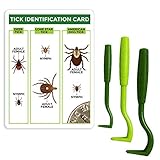
- ✔️ EASY & AFFORDABLE TICK REMOVAL - The hook tip is designed to safely and easily remove ticks from humans or pets, and can be easier to use on a thick-furred, feisty dog or cat than a pair of tweezers.
- ✔️ DURABLE & COMPACT DESIGN - These tick removers are durable, lightweight, and pocket sized, which makes it easy to take with you in your first aid kit or backpack
- ✔️ INCLUDES THREE SIZES OF TICK REMOVER - Keep them together to provide more options, or give one to each member of your family!
- ✔️ FREE TICK ID CARD & STORAGE POUCH - This 3-piece set includes a free pocket-sized Tick Species ID Card, plus a resealable storage pouch
- ✔️ UNIVERSITY RECOMMENDED TICK REMOVAL - Follow the included instructions for safe and complete tick removal by pulling, not twisting, the tick
Both nymphs and adults can transmit pathogens. Nymphs are tiny and often difficult to spot, which is why May and June require particular care. Adult females become more active in October and November and can remain active during any period when temperatures are above freezing. A mild winter day is therefore not automatically a tick-free day.
Testing summarized by Vermont Health found Borrelia burgdorferi in 56.7% of tested adult blacklegged ticks and 24% of tested nymphs during the 2018–2022 surveillance period. Those are infection prevalences in the tested tick samples, not the chance that a particular bite will cause illness. Transmission depends on factors including the tick species, whether it carried a pathogen, how long it was attached and the pathogen involved.
How the other Vermont ticks differ
American dog ticks favor open, grassy places
American dog ticks are found statewide but are most associated with grassy fields and other places with little tree cover. Their main activity period is April through September, overlapping the season when dogs and families spend the most time outdoors. They can bite both people and dogs.
Outdated Drivers Are Slowing You Down
One free scan finds every outdated or missing driver and matches the right update for your exact hardware.Free scan · exact hardware matchPC Slower Than It Used to Be?
A free scan shows the junk files, broken settings and background clutter dragging Windows down - then fixes them in one click.Free scan · Windows 10 & 11They are associated with tularemia and Rocky Mountain spotted fever. Vermont describes human cases of these illnesses as extremely rare. In a special 2018–2023 study, 1,341 American dog ticks tested negative for Rickettsia rickettsii, the bacterium that causes Rocky Mountain spotted fever. That result applies to the tested collection and should not be interpreted as proof that every American dog tick is free of every pathogen.
Rank #2

- ✔️ BEST TICK REMOVERS FOR PEOPLE OR PETS - Kit includes stainless steel tick remover for safely removing larger embedded ticks, and a specially shaped super-fine-tip tweezer for removing nymphs and small deer ticks, in a leatherette pouch
- ✔️ UNIVERSITY TESTED - The tools in this tick removal kit have been field-tested and designed for easily and safely removing embedded adult and nymph ticks from humans, dogs, cats, or other pets
- ✔️ FREE TICK IDENTIFICATION CARD to easily identify the most common species of ticks in the United States
- ✔️ SUPPORT LYME RESEARCH - A portion of the proceeds of this tick remover kit helps fund university research on ticks and Lyme
- ✔️ PERFECT FOR OUTDOORS ENTHUSIASTS - Keep your tick remover kit in your first aid kit, glove compartment, or backpack to easily remove ticks wherever you go
Brown dog ticks can persist indoors
Brown dog ticks are unusual among Vermont’s ticks because they can live wherever dogs and people live, including indoors. They feed mostly on dogs and may be encountered year-round rather than only during a short outdoor season. Finding one on a dog does not necessarily mean the dog was recently in the woods.
Brown dog ticks can transmit Rocky Mountain spotted fever in the Southwestern United States. Vermont Health reports no evidence of transmission in Vermont, so that geographic distinction matters when assessing local risk. A persistent indoor infestation still warrants prompt veterinary advice and environmental control.
Lone star ticks are documented but not established
A lone star tick found in Vermont is evidence that a specimen was present, not evidence that the species has a stable, reproducing population in the state. Vermont does not consider lone star ticks established. Their preferred habitat is wooded undergrowth and tall shaded grass, and their activity is generally April through September.
Lone star ticks are associated with ehrlichiosis, tularemia and alpha-gal syndrome in places where they occur. Vermont’s 2018–2023 testing included four lone star ticks for Ehrlichia chaffeensis and E. ewingii; all four were negative. Because only four specimens were tested, that finding cannot be generalized to every lone star tick that might arrive in Vermont.
Rank #3

- ✓ SAFER THAN TWEEZERS – TRUSTED METHOD FOR COMPLETE TICK REMOVAL - Designed to remove the full tick head and body without squeezing or breaking. Helps reduce risk of infection and avoids leaving mouthparts behind. A safer tick remover tool for dogs, cats, and humans.
- ✓ FAST & EASY TICK REMOVAL TOOL – WORKS IN SECONDS – Skip tweezers. Simply latch, twist, and lift for quick, effective removal. Works even on thick fur and hard-to-reach areas. Ideal for pet owners, families, and outdoor use.
- ✔ PERFECT FOR FIRST AID, HIKING & CAMPING - A must-have for first aid kits, hiking gear, camping trips, and outdoor adventures. Compact, lightweight, and portable so you’re always prepared wherever ticks may be found.
- ✓ BUILT-IN KEYCHAIN HOLE – ALWAYS READY – Attach to your keys, leash, or backpack for instant access. This portable tick remover ensures you’re never without a safe removal tool when you need it most.
- ✔ 3 PACK WITH ID CARD – MULTIPLE SIZES Includes 3 durable tick remover tools for small and large ticks plus a tick identification card. Chemical-free, reusable, and safe for pets and people.
Squirrel and woodchuck ticks usually stay with wildlife
Squirrel ticks are mainly found in host nests, and woodchuck ticks mainly occupy host burrows. Both occur throughout Vermont but rarely bite people. They are generally active during warmer months, with woodchuck ticks especially associated with summer. Each can transmit Powassan virus, although human bites are rare.
When are ticks active in Vermont?
Tick activity is seasonal, but it is not limited to one summer window.
- April through September: American dog ticks and documented lone star ticks are generally active during this period.
- May and June: Blacklegged tick nymphs typically peak. Their small size makes careful checks especially important.
- October and November: Adult female blacklegged tick activity rises.
- Any time above freezing: Blacklegged ticks may be encountered whenever temperatures are above freezing.
- Year-round: Brown dog ticks can persist around dogs and inside homes.
Weather, shade, leaf litter, humidity and the presence of host animals all change local activity. A calendar is useful for planning, but it should not replace a tick check after outdoor exposure.
Free tools Windows power users keep installed
One-click scans. No signup required.
Protect people and pets with several layers
No single measure catches every tick. Vermont Health’s prevention guidance combines clothing, repellents, post-outdoor checks and pet protection.
Rank #4
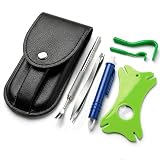
- 6-in-1 Professional Tick Removal Kit: The ultimate tick remover kit from VENOMKILLER includes precision stainless steel tick removal tweezers, multi-size tick hooks, and a slim tick removal card for complete coverage. A powerful, all-in-one tick removal tool for dogs and trusted tick remover for humans-built for real outdoor situations
- Fast, Safe & Controlled Tick Remover For Dogs and Cats: Remove embedded ticks cleanly without squeezing. This tick removal tool works as a reliable tick puller for dogs and cats, effective pet tick remover tool, and precise tick puller for humans, helping you act immediately after every tick check
- Precision Stainless Steel + Multi-size Pet Accessory Tools: Professional-grade tweezers for tick removal deliver superior grip and accuracy, while durable plastic tick hook and tick spoon remover options adapt to small and large ticks. Built for repeated use and easy cleaning in any environment
- Compact First Aid Essential For Outdoors: Organized in a premium leather pouch, this tick remover for humans doubles as a compact tick remover first aid kit. Lightweight, portable, and always ready in your backpack, glove box, hiking gear, or travel bag
- Designed For Families & Pet Owners: A dependable pet tick remover and versatile tick removal tool for cats and dogs. This complete tick kit keeps your household prepared for camping, hiking, gardening, vacations, and everyday outdoor adventures
- Reduce contact with tick habitat. Avoid or limit wooded and brushy areas when practical. Stay on maintained paths and avoid brushing against tall grass and dense vegetation.
- Cover skin. Wear long sleeves and pants. Tucking pants into socks can reduce exposed skin around the ankles, where ticks often crawl upward.
- Use an EPA-registered repellent. Choose a product whose label specifically includes ticks and follow the label for application, reapplication and age restrictions.
- Treat clothing and gear when appropriate. Vermont Health recommends 0.5% permethrin treatment for outdoor clothing, shoes and gear. Permethrin-treated items are not the same as repellent applied directly to skin; follow the product directions exactly.
- Check everyone after coming indoors. Inspect children, adults, dogs, clothing and outdoor gear. Pay attention to the scalp, hairline, ears, neck, underarms, waist, groin and behind the knees, as well as between a dog’s toes, around the collar and in skin folds.
- Shower soon after outdoor activity. Showering can remove unattached ticks and provides a useful opportunity to inspect the body.
- Handle clothing deliberately. Place outdoor clothes in a dryer on high heat for 10 minutes. If clothes are wet, dry them thoroughly before relying on heat as a control measure.
- Ask a veterinarian about dog tick prevention. The appropriate product depends on the dog’s age, health, species and household situation. Do not use a product on a pet unless its label and a veterinarian indicate it is appropriate.
What to do when you find a tick on a person or dog
Remove it promptly
Use fine-tipped tweezers to grasp the tick as close to the skin as possible and pull upward with steady, even pressure. Avoid twisting, crushing the body or covering the tick with substances that can irritate the skin. After removal, clean the bite area and your hands. If mouthparts remain and cannot be easily removed, ask a clinician or veterinarian what to do rather than repeatedly digging at the skin.
Record useful information
Note the date, location on the body or pet and the place where exposure occurred. A clear photograph can help with identification, but appearance alone cannot diagnose whether a tick carried an infection. Do not wait for laboratory testing of a tick before seeking medical advice if symptoms develop.
Report a found tick
Vermont’s current tick activity page directs the public to report species and location information through the Vermont Tick Tracker. Reporting contributes to the state’s understanding of where different species are being encountered, but a report does not determine whether the bite caused illness.
Do these 3 things before closing this tab:
1Clear out junk files and repair common Windows errors2Scan for outdated or missing drivers - takes under a minute3Repair Windows errors before they cause bigger problemsWhen to call a health care provider
Vermont Health advises contacting a health care provider for relevant symptoms occurring within 3–30 days after a tick bite or time spent in tick habitat. Tell the clinician about the exposure date, location and any tick you removed. Seek advice promptly for a new fever, rash, headache, unusual fatigue, muscle aches or other illness after possible exposure; do not wait for a tick-identification result.
Best Value

- SMALL SIZE AND EASY TO CARRY: You Can Take It Anywhere, the Tick Removal Tool is Only 0.04" Thick, 2.5" Long, and 1.5" Wide, and is Designed with Tiny Holes for Easy Storage. Can Be Hung on Any Keychain, Pet Choker, Backpack Zipper or Put in a Tool Bag or Shoulder Bag.
- SAFE AND EFFECTIVE: Use the Principle of Leverage Removes Quickly and Easily Without Leaving the Body Behind.
- QUALITY RAW MATERIALS: Quality High-strength Metal Aluminum, High Hardness and Not Easy to Rust, Strong and Durable, Will Not Break.
- SUITABLE FOR HUMANS AND PETS: Let you enjoy outdoor life and outdoor exploration and travel, hiking, adventure, RV travel, disc sports, camping, fishing, gardening, and other outdoor sports.
- FAST CUSTOMER SERVICE: We Are Enthusiastic about Provide Quality and Fast Customer Service and Try Our Best to Provide You with Quality and Practical Tick Remover Tool. You Can Contact Us if You Have Any Questions.
Different Vermont ticks are associated with different pathogens. Blacklegged ticks can carry organisms linked to Lyme disease, anaplasmosis, babesiosis, Powassan virus disease and hard tick relapsing fever. American dog ticks are associated with tularemia and Rocky Mountain spotted fever. Lone star ticks are associated with ehrlichiosis, tularemia and alpha-gal syndrome elsewhere, but the species is not established in Vermont. These associations describe what a species can transmit; they do not mean every tick carries every pathogen.
What Vermont surveillance numbers do—and do not—tell you
State surveillance provides context rather than a personal risk calculator. The 94% blacklegged-tick figure comes from ticks collected during the state’s surveillance work, and the 56.7% adult and 24% nymph Borrelia burgdorferi figures come from tested ticks in 2018–2022. Neither percentage is the probability that an individual bite will result in Lyme disease.
Vermont Health reports fewer than 85 hard tick relapsing fever cases since 2016 and three Powassan virus cases in Vermont residents since 1999. These counts show that the illnesses are uncommon in the state, while still supporting the need for prevention and prompt medical attention when symptoms appear.
Quick wins for a faster PC:
Repair Windows errors before they cause bigger problemsFix Now →Fix the driver behind crashes, sound loss and screen glitchesFind Drivers →Dr. Natalie Kwit, Vermont’s state public health veterinarian, summarized the practical message in an April 15, 2024 Department of Health release: “But ticks can be found throughout Vermont, so everyone should know how to prevent tick bites, and recognize symptoms of tick bite illnesses so you can call your health care provider as early as possible.”
Quick Recap
A practical Vermont tick routine for dog households
- Before leaving, pack repellent, fine-tipped tweezers and a way to photograph a tick.
- During the outing, keep dogs out of dense brush and tall grass when possible and inspect them before getting into the car.
- At home, remove outdoor clothing, shower, dry clothes on high heat for 10 minutes and check pets again under good lighting.
- If a tick is attached, remove it promptly, record the exposure details and monitor the person or pet.
- Call a veterinarian about any pet illness, a persistent indoor tick problem or the safest preventive product for that animal.
- Call a health care provider about symptoms within 3–30 days of a bite or likely exposure.
Product prices and availability are accurate as of the date/time indicated and are subject to change. Any price and availability information displayed on Amazon at the time of purchase will apply.





Leave a Reply