What’s actually slowing this PC down?
Pick the symptom - the matching free tool is one click away.
Shelters and rescues close veterinary access gaps mainly by building a network of partners instead of depending on one clinic, matching each service model to the animals and families it can realistically reach, and using referral and care-planning conversations to keep pets in homes. The evidence below is U.S.-focused and largely survey-based, so treat the models as decision criteria rather than a proven ranking. Staffing, geography, local regulations, and provider capacity differ enough that no single program design will fit every community.
How large the gap is, and who it affects
The clearest recent measurements come from two sources with different populations. A 2026 report from the San Francisco SPCA, CalAnimals, and the Veterinary Care Accessibility Project surveyed 103 California shelters in October 2025. An earlier California summary from the San Francisco SPCA reports 2023 findings. A national survey of animal-welfare organizations, published by the Association of Animal Welfare Advancement with a 2024 executive summary of its 2023 survey, covers participating organizations across the country. None of these is a census of every U.S. shelter or rescue, and the figures should not be read as national estimates unless the source says so.
| Measure | Population and source | Reported figure |
|---|---|---|
| Shelters that could consistently provide spay/neuter | 103 California shelters, October 2025 survey (2026 report) | 50% of small-town shelters; 80–88% in more resourced areas |
| Rural or small-town shelters reporting high veterinary staffing | Same California survey | 0 surveyed |
| Rural shelters that directly employed a veterinarian | Same California survey | None surveyed |
| Shelter animals lacking adequate access to veterinary-care staff | California shelters, 2023 SF SPCA survey summary | More than 344,000 |
| Shelters that could not consistently provide basic and essential care | California shelters, 2023 SF SPCA survey summary | 25% |
| Shelters that could not consistently spay/neuter animals in their care | California shelters, 2023 SF SPCA survey summary | 40% |
| Often or consistently stopped public intake because the shelter was full | National organizations, 2023 survey (2024 summary) | 42.9% |
| Exceeded housing capacity for care best practices | National organizations, 2023 survey (2024 summary) | 33.6% |
| Reported longer stays | National organizations, 2023 survey (2024 summary) | 31.9% |
| Reported delayed spay/neuter | National organizations, 2023 survey (2024 summary) | 27.5% |
Not every organization offers community safety-net veterinary services consistently. In the national 2023 survey, respondents reported not consistently offering them at these rates: government shelters 77.1%, nonprofit shelters with government contracts 68.3%, nonprofit shelters without contracts 65.6%, and rescue organizations 80.8%. The national survey names cost as the most-cited reason for not offering these services, followed by lack of veterinarian access.
Length of stay is one of the few measures the national survey ties to staffing. Its average figures for brick-and-mortar shelters were:
#1 Best Overall

- ENSURE PET SAFETY ON THE GO with our dog travel accessories, dog must haves in pet travel. Our comprehensive pet first aid kit for dogs is your companion for worry-free journeys.
- VET ENDORSED: Our Dog & Cat first aid kit, vet-reviewed for precision, is expertly crafted in a medical facility, providing superior quality emergency dog essentials for peace of mind.
- PET EMERGENCY ESSENTIALS: In addition to comprehensive pet first aid supplies, we include dog muzzle, tick kit, emergency flashlight, and a handy mini first aid kit pouch.
- Pet Care Guide: A comprehensive first aid manual with essential instructions for treating everything from snake bites to minor injuries, making it dog must haves for your pet’s hiking and camping gear
- GEAR UP FOR OUTDOOR FUN! This first aid kit is your first line of defense during activities like hiking, jogging, or camping, designed for dog camping gear and hunting dog adventures.
| Species | Veterinarian on staff | No veterinarian on staff |
|---|---|---|
| Cats | 25 days | 55 days |
| Dogs | 25 days | 45 days |
These are reported associations from the 2023 national survey. They are useful for planning, but the survey does not show that staffing status alone causes the difference, since shelters with and without veterinarians also differ in size, funding, and intake.
Cost pressure reaches owners as well. An ASPCA poll cited on its 2026 program page found that 58% of Americans are concerned about rising veterinary costs, six in 10 pet owners are not confident they could afford a veterinary emergency, and four in 10 are unsure they could meet routine medical needs. That is a general-public poll, not a shelter-specific rate, but it explains why many families who contact a shelter are already stretched.
Where access breaks down
Staffing gaps in rural and small-town areas
The 2026 California report found the sharpest staffing problems outside metropolitan areas. None of the rural shelters it surveyed reported high veterinary staffing, and none directly employed a veterinarian. Those organizations depend on outside partners or traveling veterinarians. That dependence works only when the partner’s schedule, distance, and willingness to take shelter cases line up with the shelter’s intake.
Rank #2

- 🐾Premium Pet First Aid Care: Elevate your pet care with our 95-piece Everlit Care Pet Medic First Aid Kit. Each item is intricately selected and vet-approved, ensuring your furry friends receive top-tier, professional-grade medical treatment. Delve into a tapestry of high-quality supplies that transcend basic pet care needs for optimal pet health and safety.
- 🏥 Vet-Recommended Essentials (Sterile & Non-Sterile): Contains the top 10 essentials, as recommended by veterinarians, crucial for addressing a wide range of pet emergencies. This kit is a crucible of safety, intricately woven to include everything from cleansing wipes, sterile gauze pads, sterile non-adherent pads, vet wraps and self-adhesive elastic bandage, ensuring professional-grade care for pet emergencies.
- 🛠️ Purpose-Built Quality: Embark on a journey of preparedness with no filler items—only high-quality, purpose-built supplies. From full-size metal tick removers to pet nail clippers, each component is a vital part of the mosaic that forms this comprehensive pet care kit. Housed in a hard-shell, water-resistant EVA bag, our kit orchestrates a perfect balance of durability and style. Its compact design makes it ideal for both verdant backyard adventures and urban excursions, ensuring your supplies remain dry and intact.
- 🌍 Travel-Ready Design: Experience the ease of an intricately organized kit with clear compartments that beckon you in urgent situations. The intuitive layout allows for quick access, helping you navigate the labyrinth of pet care with confidence. Lightweight yet robust, this kit is your ultimate companion for travel. Whether you're exploring verdant trails or navigating the urban jungle, it ensures you are prepared to handle any pet emergency on the go.
- 🎒 Must-Have for Pet Owners: Essential for every pet parent—whether you're a new dog owner, a seasoned cat caretaker, or someone caring for smaller animals. Offers peace of mind knowing you’re prepared for any health emergency.
Spay/neuter as a capacity bottleneck
In the same California report, spay/neuter was the service most often missing in small towns, with half of small-town shelters able to provide it consistently. The consequences extend beyond the shelter. Unsterilized animals leave with less adoption readiness, unplanned litters add to intake, community trap-neuter-return (TNR) work has less capacity to draw on, and public access to other veterinary services can be constrained when the same clinicians are stretched across the same caseload. Several of these effects are reported as consequences in the report, not measured outcomes.
Do these 3 things before closing this tab:
1Fix the driver behind crashes, sound loss and screen glitches2Repair Windows errors before they cause bigger problems3Scan for outdated or missing drivers - takes under a minuteService models and how they fit real constraints
Each model solves a different part of the problem. The table below compares the models the ASPCA describes, along with the partnership types that most shelters use alongside them. Where the reviewed program overview does not state a value, the cell says so rather than filling it in.
| Model | Who it serves | Geography and transport | Service scope | Cost and funding | Staffing needs |
|---|---|---|---|---|---|
| Partner network (general practices, nonprofit clinics, veterinary schools, emergency referral) | Varies by partner; confirm whether shelter, owned, foster, or community animals are accepted | Set by each partner’s location; check distance and referral acceptance | Varies: from routine care to specialty or emergency referral | Usually negotiated per case or per agreement; not stated in the ASPCA overview | Carried by the partner; shelter needs scheduling and records staff |
| Stationary community clinic | Owned pets and animals with shelters, rescues, foster programs, and TNR practitioners, according to the ASPCA overview | Fixed site; clients must travel | Preventive and basic care | Client charge plus subsidy; the ASPCA overview does not state fee levels | Clinic veterinarians and technicians; local rules set what technicians may do |
| Mobile clinic | Same groups as community clinics, reached through the mobile route | Service area defined by the route; addresses transportation barriers | Preventive and basic care, depending on equipment | Not stated in the ASPCA overview | Vehicle, equipment, and scheduling staff in addition to clinicians |
| High-volume spay/neuter | Owned pets and animals in shelter, rescue, foster, or TNR programs | Fixed or scheduled events | Spay/neuter, with throughput built around surgery | Often subsidized; funder not stated in the ASPCA overview | Surgical team, anesthesia, and recovery space |
| Shelter-medicine consultation and training | Shelter staff and partner clinicians | Remote or on-site | Protocols, medical planning, and staff training rather than direct care | ASPCA provides grants and consultations; terms not stated | Shelter staff time to implement protocols |
The sources do not establish one universally most cost-effective model. Compare options on eligibility, geography, service scope, capacity and timing, cost and funding, staffing, continuity, and local rules. Those criteria matter more than any single model’s reputation.
Rank #3
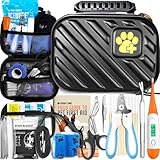
- 🐾Premium Pet First Aid Care: Elevate your pet care with our 95-piece Everlit Care Pet Medic First Aid Kit. Each item is intricately selected and vet-approved, ensuring your furry friends receive top-tier, professional-grade medical treatment. Delve into a tapestry of high-quality supplies that transcend basic pet care needs for optimal pet health and safety.
- 🏥 Vet-Recommended Essentials (Sterile & Non-Sterile): Contains the top 10 essentials, as recommended by veterinarians, crucial for addressing a wide range of pet emergencies. This kit is a crucible of safety, intricately woven to include everything from cleansing wipes, sterile gauze pads, sterile non-adherent pads, vet wraps and self-adhesive elastic bandage, ensuring professional-grade care for pet emergencies.
- 🛠️ Purpose-Built Quality: Embark on a journey of preparedness with no filler items—only high-quality, purpose-built supplies. From full-size metal tick removers to pet nail clippers, each component is a vital part of the mosaic that forms this comprehensive pet care kit. Housed in a hard-shell, water-resistant EVA bag, our kit orchestrates a perfect balance of durability and style. Its compact design makes it ideal for both verdant backyard adventures and urban excursions, ensuring your supplies remain dry and intact.
- 🌍 Travel-Ready Design: Experience the ease of an intricately organized kit with clear compartments that beckon you in urgent situations. The intuitive layout allows for quick access, helping you navigate the labyrinth of pet care with confidence. Lightweight yet robust, this kit is your ultimate companion for travel. Whether you're exploring verdant trails or navigating the urban jungle, it ensures you are prepared to handle any pet emergency on the go.
- 🎒 Must-Have for Pet Owners: Essential for every pet parent—whether you're a new dog owner, a seasoned cat caretaker, or someone caring for smaller animals. Offers peace of mind knowing you’re prepared for any health emergency.
Build a partner network before you need one
A single clinic creates a single point of failure. Map every local general practice, nonprofit clinic, veterinary school, mobile unit, high-volume spay/neuter provider, and emergency referral option, then record for each one which animals it accepts, whether it takes referrals, how many appointments it can offer per week, and how far its clients must travel. That record is more useful than a list of names because it shows which gap each partner can close.
Use mobile and community clinics for transport barriers
Mobile services reach people who cannot get to a fixed clinic. The ASPCA says its community medicine programs address cost, transportation, and limited appointment availability, and it describes community medicine work in New York City, Los Angeles, Miami, and North Carolina. Those are examples of how the model has been run, not a guarantee of service in any other area. A mobile route is only as good as its schedule, so confirm frequency and capacity before promising clients a date.
Recommended Free Tools
Scale spay/neuter through high-volume programs
Because spay/neuter is the service most often missing in small towns, a shelter that cannot run it in-house should find a high-volume provider or a scheduled partner visit. Ask the provider how many procedures it can book per month, whether it takes shelter animals and owned pets, and how it handles recovery and follow-up. Those answers determine whether the partnership clears a backlog or only adds a waiting list.
Rank #4

- 1. BE PREPARED FOR ANY PET EMERGENCY – Vet-approved dog & cat first aid kit with pet-safe medical supplies, perfect for home, car, and outdoor adventures. Designed for fast, effective emergency care.
- 2. MORE THAN JUST BANDAGES – Includes vet-wrap, tick remover, first aid pads, saline wash, styptic pencil, slip leash & thermal blanket—real pet essentials, not just human first aid items.
- 3. BUILT FOR TRAVEL & ADVENTURE – Water resistant, hard-sided case protects supplies in your car, backpack, or RV. Ideal for hiking, road trips, camping, and disaster preparedness.
- 4. STEP-BY-STEP PET FIRST AID GUIDE – Easy-to-follow vet-reviewed manual for treating wounds, bites, bleeding, and emergencies—so you’ll always know what to do.
- 5. PET-SAFE & NON-TOXIC MATERIALS – Every item is vet-reviewed and made with pet-safe, non-toxic materials. Trusted by pet sitters, trainers, groomers, and adventurers—your pet deserves the best care!
Use shelter-medicine consultation and training
Consultation addresses a different gap: staff who lack protocols or clinical oversight. The ASPCA describes training, grants, and remote or on-site shelter medicine consultations for shelters. Cornell University’s Shelter Medicine Program is another practical resource for planning. For staff who want background reading, the ASPCA identifies Shelter Medicine for Veterinarians and Staff as a shelter-medicine textbook; check the current edition and availability before buying. A book supports planning but does not provide clinical capacity.
Set up referral pathways for owned pets
Referrals connect a family with a partner clinic, behavior support, pet-retention help, or housing assistance when those services exist locally. Each referral needs a written handoff: the animal’s history, the reason for referral, the client’s constraints, and who follows up. Without a handoff, a referral often ends at the first phone call.
Independent reader supportYour contribution helps us test, update, and keep practical guides available for everyone.Matching options to real constraints
Start from the constraint, not the model. Use these questions to narrow the choice:
The Tool Desk
Outbyte Driver Updater FREEScan for outdated or missing drivers - takes under a minuteDriver Scan →Outbyte PC Repair FREEClear out junk files and repair common Windows errorsFree Scan →Best Value

- FAST-ACTING PET FIRST AID POWDER: BleedClot Pet First Aid Powder helps stop bleeding from minor cuts, scrapes, nail trimming accidents, and grooming nicks. Developed by the makers of BleedStop, this easy-to-use powder is suitable for dogs, cats, horses, and other animals. A practical addition to any pet first aid kit, grooming kit, or travel kit.
- NON-STINGING AND PET-SAFE FORMULA: This sterile, hypoallergenic, and non-stinging powder is designed for comfort during application. Suitable for use on pets, including those that may lick the area. Ideal for routine grooming, nail care, and everyday pet first aid needs.
- SUITABLE FOR PETS AND LARGE ANIMALS: Can be used on dogs, cats, horses, and other animals, including livestock such as cattle, sheep, and pigs. Helpful for managing minor bleeding from grooming, hoof care, and small external injuries. A useful supply for barns, stables, and veterinary settings.
- ALTERNATIVE TO TRADITIONAL STYPTIC POWDER: BleedClot Pet offers a different approach than traditional styptic powders. Designed for reliable bleeding control for minor wounds, it has been used in veterinary settings for years. Suitable for pet owners, groomers, and animal care professionals.
- EASY APPLICATION FOR QUICK RESPONSE: Pour the powder directly onto the affected area and apply gentle pressure as needed. Forms a barrier to help manage minor bleeding. Simple, mess-free application makes it convenient for home use, travel, and outdoor activities.
- No veterinarian on staff and no partner within reasonable distance: prioritize a mobile route or scheduled partner visits, and set up telehealth or consultation support for triage only where local rules allow it.
- Owned pets whose families cannot travel: favor mobile or community clinic routes, and confirm whether your jurisdiction allows public agencies to provide or fund care for owned animals.
- Persistent spay/neuter backlog: add a high-volume partner before adding any other service, since unsterilized animals drive later intake and litters.
- Frequent emergencies with no emergency partner: build a referral agreement with the nearest emergency hospital before the next case, and agree in writing on who pays for transfer and treatment.
- Repeated disputes about what a family can afford: move to a structured care conversation, described below, rather than a yes-or-no decision.
Using contextualized care conversations
Cornell University’s College of Veterinary Medicine Shelter Medicine Program describes contextualized care as considering the animal, the owner, and the real-world circumstances when making treatment plans. In practice, staff ask about the family’s goals and constraints, then explain the medically appropriate options in a way that supports an informed choice. The conversation covers what each option can and cannot do for the individual animal.
Lower-cost options are not automatically equivalent in every case. The veterinarian should explain the trade-offs for that animal rather than presenting a cheaper plan as the same plan. Dr. Carolyn Brown, vice president of Medicine for ASPCA Community Medicine, put it this way in an ASPCA interview: “Providing options is not about lowering standards or inferior care.” She added that the aim is to “offer options in a way that gives pet owners the freedom to decide what they want while maintaining and improving their pet’s quality of life.”
Rural and small-town rescues also meet a policy barrier that the national survey reported. One respondent described regulations that prevent medical professionals from providing reasonable, affordable care to community members offsite. The survey did not identify the respondent, so the point is a documented policy barrier, not a named-source claim. Before designing any offsite service, check the rules that govern who may treat whom and where.
Referral and support before a crisis becomes surrender
The ASPCA identifies veterinary-care access, pet-friendly housing, and behavioral support as among the challenges affecting whether families can keep their pets. A referral pathway can connect a family to a veterinary appointment, behavior help, pet-retention assistance, or housing support, but only the services that exist locally can be offered. Do not promise that a particular referral will prevent surrender. The sources do not measure that effect for any specific intervention.
PC Slower Than It Used to Be?
A free scan shows the junk files, broken settings and background clutter dragging Windows down - then fixes them in one click.Free scan · Windows 10 & 11Crashes, No Sound, or Screen Glitches?
Random freezes, missing sound and display glitches usually trace back to one bad driver. Find and replace yours safely.Free scan · under a minuteRealistic setups for small rescues
Duplicating clinical infrastructure is rarely practical for a small rescue. A more realistic approach, which is a practical inference rather than a tested universal solution, combines three things: a shared service agreement with a clinic that can take your animals on set days, a written referral pathway for cases you cannot treat, and a consultation relationship for protocols. The rescues that run this kind of setup well tend to keep the agreements in writing and review them when a partner’s schedule changes.
Quick Recap
Steps to start closing gaps in your area
- Map every local provider and record what each accepts, whether it takes referrals, its weekly appointment capacity, and the distance clients must travel.
- Check local rules on whether public agencies can provide or fund care for owned animals, and what practice rules apply to offsite and technician-performed services.
- Confirm capacity in writing, including days, appointment counts, and who covers emergencies.
- Write a referral handoff template covering animal history, reason for referral, client constraints, and follow-up owner.
- Request a shelter-medicine consultation to set intake, isolation, and spay/neuter protocols.
- Track the same measures the national survey used, including intake stopped because of capacity, housing above best-practice levels, length of stay, and delayed spay/neuter, so you can see whether a new partnership changes anything.
Product prices and availability are accurate as of the date/time indicated and are subject to change. Any price and availability information displayed on Amazon at the time of purchase will apply.




