
Usually, no. Wet food gives a cat much more water than dry food, but veterinary sources do not show that switching to wet food alone reliably reduces how often a cat defecates or how much stool it produces. Stool output depends more on the complete recipe, digestibility, fiber type and amount, feeding quantity, and the cat’s gastrointestinal health. Three sensible ways to pursue less troublesome stool are to review the entire diet with a veterinarian, use a highly digestible low-residue therapeutic diet only when a diagnosed condition supports it, and have persistent or abnormal changes investigated rather than repeatedly changing foods at home.
Does wet food make cats poop less?
Wet and dry describe a food’s physical form, not its whole nutritional effect. Cornell University College of Veterinary Medicine reports that canned cat food contains at least 75% moisture, while dry food typically contains 6–10% water. Those figures explain why wet food can contribute substantially more water to the daily ration; they do not demonstrate a reduction in stool frequency or volume.
As an Amazon Associate I earn from qualifying purchases.
No direct wet-versus-dry comparison figure establishing that cats poop less on canned food was identified in the veterinary material reviewed for this topic. A cat may produce smaller, firmer stools after a diet change, but that response cannot be attributed to moisture alone. Two canned foods can differ greatly in protein sources, calories per gram, fiber, digestibility, and nutritional completeness. The same is true of two dry foods.
Quick wins for a faster PC:
Fix the driver behind crashes, sound loss and screen glitchesFind Drivers →Clear out junk files and repair common Windows errorsFree Scan →If your cat is defecating often, producing large stools, passing soft stool, straining, or suddenly changing its bathroom habits, the useful question is not simply “wet or dry?” It is “How much of this particular formula is being digested, what reaches the colon, and why has this cat’s pattern changed?”
#1 Best Overall

- Purina Friskies gravy wet cat food variety pack made with real beef, seafood or poultry. Thinly shredded pieces for a tempting texture
- Savory, thick gravy for cats adds extra yum to every bite. Made with high-quality ingredients with no artificial colors or preservatives
- Purina Friskies cat food delivering high-quality nutrition for adult cats. Contains essential vitamins and nutrients
- Convenient multi-can wet cat food variety pack. Four delicious recipes to choose from
- Friskies Shreds canned cat food made in Purina-owned U.S. facilities
What determines how much stool a cat produces?
Moisture changes hydration, not necessarily residue
Water in food can help a cat meet fluid needs and may be valuable when a veterinarian is managing constipation or another condition. However, most of that water is absorbed or excreted separately from the undigested material that becomes feces. A wetter meal can therefore improve fluid intake without reducing the amount of dry matter that reaches the colon.
Digestibility controls how much remains
UC Davis explains that a more digestible diet leaves less undigested material to move through the gastrointestinal tract. A clinical review of feline idiopathic constipation describes a low-residue diet as highly digestible and low in fiber, with the potential to reduce fecal bulk. This is a property of the formulation and the cat’s ability to use it, not an automatic result of adding water.
Digestibility can be affected by ingredient quality, processing, nutrient balance, disease, and the amount fed. A food that works well for one cat may produce bulky or soft stools in another. Claims such as “premium,” “natural,” or “wet” do not replace the need to assess the actual guaranteed analysis and the cat’s response.
Crashes, No Sound, or Screen Glitches?
Random freezes, missing sound and display glitches usually trace back to one bad driver. Find and replace yours safely.Free scan · under a minutePC Slower Than It Used to Be?
A free scan shows the junk files, broken settings and background clutter dragging Windows down - then fixes them in one click.Free scan · Windows 10 & 11Fiber is useful, but “more” is not a universal answer
Merck’s nutrition reference notes that increasing fiber generally increases fecal output and that high amounts can reduce the digestibility of some nutrients. Yet fiber is not one single substance. Soluble and insoluble fibers, fermentable and poorly fermentable fibers, and their particle size can have different effects on water retention, bacterial fermentation, motility, and stool consistency.
Rank #2

- Friskies Prime Filets wet cat food made with real meat, poultry or seafood. Savory sauce or gravy for cats adds flavor and moisture
- Shredded soft cat food chunks offer a tempting texture. Provides 100 percent complete and balanced nutrition for adult cats
- Multi-can Friskies canned cat food variety pack makes it easy to stock your pantry. Contains essential vitamins and minerals in every serving
- Enticing, moist cat food aroma tempts her to her dish. Checked for quality and safety to provide added peace of mind
- Canned cat food variety pack formulated to meet or exceed industry standards for cat food
The crude-fiber number on a label is an incomplete measure. It does not represent total dietary fiber or predict the full physiological effect of the recipe. A food with a lower crude-fiber value is not automatically appropriate for a cat with constipation, diarrhea, obesity, or another gastrointestinal problem.
Feeding amount and health status matter
A cat eating more calories will usually have more material to process, even if the food is highly digestible. Sudden increases in appetite, weight loss, parasites, malabsorption, inflammatory disease, pain, dehydration, medication effects, and reduced intestinal motility can all change stool patterns. Frequency alone is not a diagnosis: a cat passing a normal, formed stool once daily may be healthier than a cat passing several small, hard stools while straining.
Three veterinarian-guided ways to reduce excessive or troublesome stool
1. Review the complete diet, amount, and recent changes
Start with the information a veterinarian needs to distinguish a food issue from a medical one. Bring the food package or a clear photograph of its nutritional information, the feeding amount, treats, supplements, medications, and a record of when the change began.
- Confirm nutritional completeness. Cornell notes that some specialty canned foods are not complete diets. Check the label’s nutritional guarantee and whether the product is intended as a complete meal or a supplemental food.
- Calculate what the cat actually eats. Include treats, toppers, table food, free-choice access, and multiple-cat feeding. Portion changes can alter stool output even when the brand and form stay the same.
- Discuss digestibility and fiber. Ask which ingredients supply fiber, whether the fiber is likely to be fermentable, and whether the current recipe is suitable for the cat’s age, body condition, and diagnosed problems.
- Review the timeline. Note every recent food, treat, medication, move, stressor, and appetite change. A gradual transition may be advised, but the veterinarian should choose the pace when a cat has disease or a history of constipation.
- Track the response objectively. Record stool frequency, size, firmness, straining, accidents, appetite, water intake, vomiting, and body weight. This prevents a series of unsupervised switches from obscuring what helped or worsened the problem.
The goal is a complete, appropriate formula fed in an appropriate amount—not simply the wettest food available.
Rank #3

- Moist cat food made with fish and poultry for the tastes cats crave with savory gravy or sauce to add flavor and moisture
- Three tasty Friskies cat food recipes keep her interested in mealtime with tender textures to please her palate
- Tempting canned cat food aroma entices your cat to her dish, where she’ll be rewarded with 100 percent complete and balanced nutrition for adult cats with no artificial colors or preservatives
- Adult cat food variety pack makes it easy to stock your cat's pantry
- Wet food for cats crafted by Purina, a trusted leader in pet nutrition, formulated to meet industry standards for cat food and checked for quality and safety
2. Consider a highly digestible, low-residue therapeutic diet when the diagnosis supports it
A low-residue diet can reduce fecal bulk because less undigested material and fiber reaches the colon. The clinical review Nutrition and Feline Idiopathic Constipation identifies this as a possible benefit for selected cats with severely decreased colonic motility. It is a clinical strategy, not a general-purpose “poop less” diet for healthy cats.
Evidence is limited. The review notes that prospective studies in cats with clinical obstipation or megacolon are lacking, and long-term dietary management should be individualized and monitored. A veterinarian may instead recommend a different fiber approach, increased water intake, medication, diagnostic testing, or a combination, depending on whether the problem is constipation, diarrhea, megacolon, pain, dehydration, or another disease.
Do not infer that the lowest-fiber food is always safest. A cat with ordinary constipation may need a plan that improves hydration and motility; a cat with severely reduced colonic movement may be considered for lower residue; a cat with soft stool may require a different evaluation entirely. Changing between these strategies without a diagnosis can delay care.
The Tool Desk
Outbyte PC Repair FREEClear out junk files and repair common Windows errorsFree Scan →Outbyte Driver Updater FREEFix the driver behind crashes, sound loss and screen glitchesFind Drivers →3. Have ongoing or abnormal stool changes assessed
Persistent changes deserve an examination because similar-looking litter-box problems can have opposite dietary solutions. Cornell defines constipation as infrequent or difficult passage of hard, dry feces and emphasizes treatment to prevent progression.
Rank #4
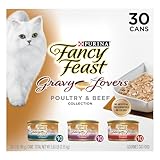
- Cat food with gravy, made without artificial colors or preservatives
- Purina Fancy Feast canned cat food variety pack crafted with real, high-quality ingredients, like real poultry or beef, to deliver 100 percent complete and balanced food for adult cats
- An irresistible, protein-rich Fancy Feast Gravy Lovers cat food taste offering a gourmet turkey, chicken or beef cat food meal with an enticing aroma and a light, savory gravy
- Developed in partnership with our expert nutritionists to create a unique and unforgettable Purina Fancy Feast wet cat food taste experience for your cat
- Canned cat food crafted in our U.S. facilities and undergoes regular quality and safety checks
Arrange veterinary care promptly for repeated straining, crying in the box, hard dry pellets, no bowel movement accompanied by discomfort, vomiting, reduced appetite, lethargy, abdominal pain, blood, dehydration, weight loss, or a rapidly worsening change. A cat that repeatedly enters the box and produces little or nothing may also have a urinary emergency; do not assume the problem is fecal.
Merck’s constipation reference, updated June 2025, warns that phosphate-containing enemas must be avoided in cats because they can cause severe, potentially life-threatening electrolyte abnormalities. Do not give a human enema, laxative, oil, or fiber supplement unless a veterinarian has specifically directed it. Treatment may require hydration, examination for an underlying cause, prescribed medication, a carefully selected diet, or removal of impacted feces.
How to compare wet and dry foods intelligently
Use wet-versus-dry as one observation, not the decision rule. Compare the actual formulas and the cat’s clinical response across these dimensions:
Recommended Free Tools
| Factor | What to check | Why it matters for stool |
|---|---|---|
| Moisture | Canned food: at least 75% moisture; dry food: typically 6–10%, according to Cornell | Changes fluid intake but does not establish lower stool output |
| Digestibility | Veterinary assessment of the recipe and the cat’s tolerance | Higher digestibility generally leaves less undigested material for the colon |
| Fiber amount | Guaranteed analysis plus the ingredient sources | More fiber often increases fecal output; excessive amounts can depress digestibility |
| Fiber type | Soluble, insoluble, fermentable, and other specified sources | Different fibers affect water, fermentation, and motility differently |
| Completeness | Nutritional guarantee stating whether it is complete or supplemental | A supplemental canned food cannot safely replace a complete diet by itself |
| Calorie density and portion | Calories per serving and the amount actually fed | Total intake changes the amount of material entering the gut |
| Medical suitability | Whether the diet fits the diagnosed condition | A low-residue approach may help selected cats but is not universally appropriate |
| Observed response | Formed stool, effort, frequency, appetite, weight, and comfort | The cat’s monitored response is more useful than the food form alone |
Constipation, frequent stool, and soft stool are different problems
When the concern is constipation
Look for hard or dry feces, reduced frequency, prolonged time in the box, repeated attempts, or obvious effort. Hydration and diet may be part of treatment, but the veterinarian must determine whether dehydration, pain, medication, obstruction, narrowed pelvic anatomy, megacolon, or reduced motility is involved.
Best Value

- Made with seafood and chicken with a smooth, pate cat food texture to tempt her to her dish
- Multi-can with seafood or chicken cat food pate variety pack makes it easy to stock your pantry with an array of delicious tastes she can't resist
- Provides 100 percent complete and balanced adult cat food nutrition, including essential vitamins and minerals in every serving and no artificial colors or preservatives
- Friskies canned cat food pate variety pack checked for quality and safety to provide added peace of mind and formulated to meet or exceed industry standards for cat food
- Friskies cat food packaged in recyclable pull-tab cat food cans and proudly manufactured in Purina-owned U.S. facilities
When the concern is frequent or bulky stool
Frequent large stools can reflect excessive intake, a lower-digestibility recipe, a high-fiber formula, parasites, malabsorption, or intestinal disease. Reducing food indiscriminately can cause weight loss or nutritional deficiency. A fecal examination and other tests may be more useful than another brand change.
When the concern is soft stool
Soft stool can follow an abrupt diet change, intolerance, infection, medication, stress, or gastrointestinal disease. Wet food is not a guaranteed remedy, and adding fiber without guidance can make some cases worse. Seek advice if soft stool persists, recurs, contains blood, or is accompanied by vomiting, poor appetite, dehydration, or weight loss.
A practical monitoring plan after a diet decision
- Write down the baseline: food, amount, treats, stool frequency, stool form, appetite, water intake, and body weight.
- Change only one major variable at a time unless the veterinarian gives a combined treatment plan.
- Feed the recommended amount consistently and prevent other household members from adding unrecorded treats.
- Inspect the litter box daily for effort, hard pellets, unusually large stools, diarrhea, mucus, or blood.
- Contact the clinic if the cat worsens, stops eating, vomits, becomes lethargic, strains repeatedly, or fails to pass stool normally.
This approach can show whether a formulation is helping while reducing the risk that repeated unsupervised experiments mask a progressing condition.
Bottom line on wet food and pooping less
Wet food supplies far more moisture—at least 75% in canned food versus about 6–10% in dry food according to Cornell—but that difference does not prove that cats will poop less. For lower fecal bulk, the relevant variables are digestibility, fiber amount and type, calories fed, and the cat’s gastrointestinal function. A veterinarian-guided diet review, a therapeutic low-residue plan for an appropriate diagnosis, and timely assessment of persistent changes are safer and more evidence-based than treating wet food as a guaranteed stool-reduction trick.
Quick Recap
Product prices and availability are accurate as of the date/time indicated and are subject to change. Any price and availability information displayed on Amazon at the time of purchase will apply.





Leave a Reply