
What’s actually slowing this PC down?
Pick the symptom - the matching free tool is one click away.
Some links on this page are affiliate links: if you buy through them we may earn a commission, at no extra cost to you.
Yes, the viral video is genuine—but the humpback whale did not swallow Adrián Simancas into its stomach. On February 8, 2025, near the San Isidro Lighthouse in Chile’s Strait of Magellan, a humpback briefly engulfed Simancas and his small inflatable packraft. The whale released him within seconds, and Simancas and his father, Dell, returned to shore uninjured. Marine-mammal experts say the most likely explanation is an accidental overlap with a whale’s feeding lunge—not an attack or an attempt to eat a person.
What happened in the viral whale video?
The encounter took place on Saturday, February 8, 2025, in Bahía El Águila near the San Isidro Lighthouse in Chilean Patagonia, close to Punta Arenas. The video was published several days later, on February 13 and 14, which is why many posts described it only as a recent incident.
As an Amazon Associate I earn from qualifying purchases.
Recommended Free Tools
Adrián Simancas and his father, Dell Simancas, were paddling separate lightweight inflatable packrafts. Headlines commonly call the craft a kayak, but a packraft is smaller, softer, and more easily displaced than a rigid sea kayak. Dell was recording with a 360-degree camera. The footage was published and authenticated through outlets including The Associated Press and Storyful.
The sequence is startling but relatively clear:
- A humpback whale suddenly surfaces behind or beside Adrián.
- The whale opens its mouth as it rises, and Adrián and the yellow packraft disappear from view beneath or within the mouth area.
- After only a few seconds, the whale releases him.
- Adrián resurfaces wearing a life vest and paddles toward his father.
- The two men make it back to shore without physical injuries.
Dell can be heard trying to keep his son calm as Adrián resurfaces. The recording proves that the whale’s maneuver temporarily engulfed or obscured him and that it released him. It cannot show with certainty exactly where every part of Adrián or the packraft was, whether the whale’s mouth closed fully around him, or whether the entire craft entered the mouth.
Popular on Amazon

- 【FAMILY FRIENDLY PADDLE】The Adjustable Paddle Family Friendly is the ultimate solution for those looking for a versatile and inclusive watercraft experience. Measuring between 210-230 centimeters (82.5-90.5 inches), this paddle is designed to accommodate people of various heights. Its adjustable feature ensures that everyone in your family can enjoy the water without any limitations. Get yours today and create lasting memories with your loved ones while having fun in the water!
- 【TRAVELABLE AND CONVENIENT】The detachable paddle is a great choice for travelers. This three-piece paddle is suitable for various kayaking and can be easily carried in your bag. It allows you to explore distant places without any hassle, giving you the freedom to kayaking wherever you want. With this paddle, you can now enjoy your kayaking trips with ease and comfort. So, if you are planning to kayaking or boating far away from home, make sure to bring along this portable and convenient paddle.
- 【FEATHERED BLADES】Feathered blades are designed with an offset angle between each other, typically ranging from 60 degrees. This unique design reduces wind resistance on the blade that is out of the water, resulting in higher efficiency. By minimizing the drag caused by air flow across the surface of the blade, feathered blades enable boats to move through the water with greater ease and speed. The feathering also helps to improve the overall stability and control of the vessel.
- 【LIGHTWEIGHT AND DURABLE 】The aluminum alloy shaft is known for its strength and ability to withstand the wear and tear of frequent use. In addition to its durability, the aluminum alloy shaft also offers better performance and more efficient paddling. PP blades are lightweight and indestructible blades offer flexibility and efficiency, making it easier for paddlers to navigate through the water with ease.
- 【EFFICIENCY AND PERFORMANCE】An asymmetrical blade is characterized by a relatively narrow and shorter on one side. The surface area of the asymmetrical blade remains more uniform as it moves through the water. This design allows for efficient and effective cutting through the water.
That distinction matters. The most accurate description is that Adrián was briefly engulfed or scooped into the mouth of a humpback whale, not swallowed through the whale’s throat.
Why did the whale do it?
The leading explanation is accidental lunge feeding. Humpback whales are baleen whales. They do not hunt people with teeth; they filter-feed on small fish and krill.
Outdated Drivers Are Slowing You Down
One free scan finds every outdated or missing driver and matches the right update for your exact hardware.Free scan · exact hardware matchWindows Errors? Fix Them Before They Spread
Repair common Windows errors and clear accumulated junk for a smoother, more stable PC - no reinstall needed.Free scan · no reinstallDuring a lunge, a humpback accelerates rapidly along a relatively straight path toward concentrated prey with its mouth open. Its mouth and expandable throat pleats allow it to take in a huge volume of water along with the fish or krill. The whale then closes its mouth and pushes the water back out through its baleen plates, retaining the food. NOAA Fisheries describes the humpback’s diet and feeding adaptations, while NOAA’s Stellwagen Bank National Marine Sanctuary explains how lunge feeding can bring a whale’s head above the surface.
The likely reconstruction is that Adrián and his packraft happened to be in the whale’s feeding path at the exact moment the whale surged upward with its mouth open. Jooke Robbins of the Center for Coastal Studies said the whale was probably just as surprised as the kayaker. Iain Kerr of Ocean Alliance likewise characterized the event as an extraordinary case of a person being in the wrong place at the wrong time. Their interpretations are consistent with the footage and with known humpback behavior, as reported by Forbes and KPBS/NPR.
That is the best-supported explanation, but it remains an inference. Adrián said he did not notice a bait ball, visible fish, or unusual surface activity immediately beforehand. The video also does not establish whether the whale was feeding on fish, krill, or another food source. It is therefore accurate to say the whale likely was lunge-feeding—not that the footage definitively proves what the whale was targeting.
Did the humpback actually swallow him?
No—not in the ordinary biological meaning of swallowed. A humpback’s mouth is enormous and can engulf a person or a small craft. Its throat, however, is far too narrow to pass an adult human into the digestive tract.
Also popular on Amazon
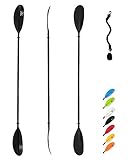
- MADE TO LAST: This kayak paddle is with high-quality aluminum alloy shaft (1.1mm shell thickness) and fiberglass reinforced PP blade. The material combination ensures a stiff and made to last kayak paddle at a better price. It’s a perfect choice for starters and intermediate kayakers.
- USERES FRIENDLY: The oar shaft is designed with a shrinking PE tube cover. It provides better grip for your hands to prevent blistering. Especially, your hands won’t suffer from the cold feeling from the alloy when you kayak in winter weather.
- POPULAR LENGTH AT 230CM: Not too short, not too long, the oar is 230cm (90.5 inches) at length. It’s an ideal kayak paddle with moderate length for you and your family. It’s also detachable at 2 sections, so you might carry it around and put it away easily.
- LEASH/3 ANGLES/ DRIP RINGS: All OCEANBROAD kayak paddles come with a bungee paddle leash. It helps secure your paddle to your kayak, especially when you want to lay down the oars, stop by a little bit to enjoy great views around. The paddle is with 3 locking positions for different kayaking angle preference. The drip rings at two ends help stop water flowing from the blades. So, the shaft and your hands won’t get wet easily.
- SUITABLE FOR MORE: With high-quality aluminium shaft and fiberglass reinforced PP blades, the paddle ensures a nice performance in kayaking. Whether you are a starter or a pro, it's easy to master this paddle soon. Find the one to suit your kayak, and just paddle on.
The mouth and throat serve different purposes:
- Mouth: large enough to take in a volume of water, prey, and potentially an accidentally encountered person or small boat.
- Baleen: comb-like plates that strain food from the water. Humpbacks do not use teeth to bite or chew people.
- Throat: too narrow for an adult human to pass through into the esophagus and stomach.
Some media explanations compare the throat with objects such as a fist or grapefruit. Those comparisons are useful for conveying scale, but they are not precise standardized measurements for every humpback. The important point is simply that a humpback can have a mouth large enough to engulf a person while lacking a throat large enough to swallow that person.
For that reason, The Guardian amended its headline to remove the misleading suggestion that Adrián had been swallowed. The most precise terms are engulfed, caught in the mouth, or scooped into the mouth.
Why did the whale release him?
The whale did not continue a normal swallowing sequence because Adrián was not suitable prey and could not pass through its throat. A person and an inflatable packraft are also very different from the small fish or krill a humpback filters from the water.
Still, the exact mechanics are unknown. The whale may have opened its mouth as the feeding maneuver ended, or the force of the surrounding water may have displaced Adrián and the packraft. The footage does not reveal whether the whale actively recognized him as an inedible object or simply completed the maneuver and released whatever was in its mouth. Saying the whale released him is more accurate than saying it deliberately spat him out.
There is no evidence that the whale deliberately pursued, attacked, or hunted Adrián. But accidental does not mean harmless. A humpback’s body, jaw, tail, or sudden movement could strike a small craft, overturn it, separate paddlers, or force someone into cold water. Adrián said that after resurfacing he was concerned about his father and about hypothermia.
What did Adrián say the encounter felt like?
In interviews, Adrián described seeing dark blue and white around him and feeling a slimy texture against his face. He felt himself being pulled underwater and initially believed he had been eaten. He said he closed his eyes because he expected an impact.
Also popular on Amazon

- 【Durability Meets Efficiency】This kayak paddle features an anodized, high-quality aluminum shaft for saltwater resistance and durability. Total length 218cm/86 inches,It is an ideal option for both starters and intermediate kayakers.
- 【Feathered Angles】The paddle is designed with an adjustable feathering angle of 0° or 60° (L or R) to cut down on wind resistance. It not only boosts performance and efficiency but also makes paddling more comfortable and ergonomically sound, giving you a smoother and less tiring kayaking experience.
- 【Effortless Paddling】Our kayak paddle features a generously sized blade, designed to reduce effort and fatigue during each stroke.Choose OCEANBROAD kayak paddles and ride the waves, feeling the power and control in every stroke.
- 【Portable & Lightweight】The kayak paddle shaft is detachable at 2 sections, for easy carrying and space-saving storage.It's your ideal travel buddy for every outdoor expedition!
- 【User-Friendly】Crafted with a refined high-temperature baked paint process, its comfortable grip makes it perfect for both beginners seeking to master the basics and experts aiming for excellence.Drip rings at both ends prevent water from reaching the blades, keeping the shaft and your hands dry.
After he resurfaced, his attention shifted quickly to whether his father was safe and whether the cold water would become a medical emergency. His account helps explain why the video looks more like a whale swallowing a person than a feeding lunge viewed from outside: for several seconds, Adrián himself could see only the inside or immediate surroundings of the whale’s mouth and the water around him. His first-person account was reported by CNN and The Guardian.
Published reports have differed on whether Adrián was 23 or 24 at the time. That discrepancy does not affect the verified sequence, so his age is not necessary to establish what happened.
The Tool Desk
Outbyte PC Repair FREEClear out junk files and repair common Windows errorsFree Scan →Outbyte Driver Updater FREEFix the driver behind crashes, sound loss and screen glitchesFind Drivers →Was the whale attacking him?
Nothing in the available video or reporting shows an intentional attack. The whale’s movement is consistent with a feeding maneuver, and experts interviewed by KPBS/NPR and Forbes favored accidental feeding-path overlap.
Adrián later speculated that the whale might have been curious. That is understandable after such an encounter, but curiosity is not established by the footage and is not the leading expert explanation. Nor is there evidence that the whale considered a human a potential meal.
The safer conclusion is more nuanced: this was probably not predation, but it was still a genuinely dangerous wildlife encounter. A whale does not need to intend harm to capsize a packraft or cause a potentially fatal cold-water immersion.
What the footage can—and cannot—prove
Viral videos often invite viewers to fill in details that the camera cannot actually resolve. In this case, the footage supports the following:
Do these 3 things before closing this tab:
1Scan for outdated or missing drivers - takes under a minute2Repair Windows errors before they cause bigger problems3Fix the driver behind crashes, sound loss and screen glitchesAlso popular on Amazon

- 【FAMILY FRIENDLY PADDLE】The Adjustable Paddle Family Friendly is the ultimate solution for those looking for a versatile and inclusive watercraft experience. Measuring between 210-230 centimeters (82.5-90.5 inches), this paddle is designed to accommodate people of various heights. Its adjustable feature ensures that everyone in your family can enjoy the water without any limitations. Get yours today and create lasting memories with your loved ones while having fun in the water!
- 【TRAVELABLE AND CONVENIENT】The detachable paddle is a great choice for travelers. This three-piece paddle is suitable for various kayaking and can be easily carried in your bag. It allows you to explore distant places without any hassle, giving you the freedom to kayaking wherever you want. With this paddle, you can now enjoy your kayaking trips with ease and comfort. So, if you are planning to kayaking or boating far away from home, make sure to bring along this portable and convenient paddle.
- 【FEATHERED BLADES】Feathered blades are designed with an offset angle between each other, typically ranging from 60 degrees. This unique design reduces wind resistance on the blade that is out of the water, resulting in higher efficiency. By minimizing the drag caused by air flow across the surface of the blade, feathered blades enable boats to move through the water with greater ease and speed. The feathering also helps to improve the overall stability and control of the vessel.
- 【LIGHTWEIGHT AND DURABLE 】The aluminum alloy shaft is known for its strength and ability to withstand the wear and tear of frequent use. In addition to its durability, the aluminum alloy shaft also offers better performance and more efficient paddling. PP blades are lightweight and indestructible blades offer flexibility and efficiency, making it easier for paddlers to navigate through the water with ease.
- 【EFFICIENCY AND PERFORMANCE】An asymmetrical blade is characterized by a relatively narrow and shorter on one side. The surface area of the asymmetrical blade remains more uniform as it moves through the water. This design allows for efficient and effective cutting through the water.
- The video is genuine and was recorded by Adrián’s father, Dell Simancas.
- The whale was a humpback.
- The whale surfaced beside or behind Adrián with its mouth open.
- Adrián disappeared from view for several seconds and then resurfaced.
- The whale released him, and both men reached shore uninjured.
It does not independently establish:
- the exact distance between Adrián and the whale before the surfacing maneuver;
- whether a visible bait ball or a particular school of fish was present;
- whether Adrián’s entire body entered the mouth;
- whether the whale’s mouth fully closed around him;
- whether the packraft was inside the mouth or was pulled under by the whale’s movement and the surrounding water; or
- what the whale perceived or intended at the moment of contact.
This is why responsible coverage separates confirmed facts from expert interpretation. The encounter is real; the feeding explanation is highly plausible; the whale’s precise motivation cannot be observed directly.
Do not confuse this with the California kayak video
A separate incident is frequently mixed into social-media posts about the Chile footage. The two events involved different people, places, dates, and boats.
| Incident | What happened | Outcome |
|---|---|---|
| Chile, February 8, 2025 | Adrián Simancas was briefly engulfed in a small inflatable packraft in the Strait of Magellan. His father recorded it. | Adrián resurfaced within seconds, and both men returned uninjured. |
| California, November 2020 | Julie McSorley and Liz Cottriel were in a tandem kayak off Avila Beach while humpbacks fed near baitfish. A whale breached beneath or beside the kayak, overturning it and briefly engulfing or surrounding the women. | Both women were uninjured. Later fact-checking found that different camera angles helped create the impression that the whale had swallowed them whole. |
The California event is useful context because it also involved people near a whale feeding on concentrated prey. It is not proof that the Chilean whale was definitely feeding on a visible bait ball. Lead Stories and Outdoor Life provide additional reporting on that separate incident.
Independent reader supportYour contribution helps us test, update, and keep practical guides available for everyone.How close should kayakers and boaters get to whales?
The fact that humpbacks do not normally eat humans is not a reason to approach them. Whales are extremely large, powerful animals that can change direction quickly and may be difficult to see from a low craft. Feeding whales are especially unpredictable because they can accelerate toward prey with little warning.
Free tools Windows power users keep installed
One-click scans. No signup required.
For people in the United States, NOAA recommends observing large whales from at least 100 yards, or 300 feet. That is guidance rather than a universal rule for every place and species. Some U.S. waters have stricter mandatory distances, including 500 yards for North Atlantic right whales and 200 yards for killer whales in Washington inland waters. Local, state, federal, and protected-area rules can differ.
For Chile, the International Whaling Commission’s Chile country profile summarizes whale-watching rules requiring vessels to remain at least 100 meters from large whales. The same guidance calls for a steady speed, avoidance of sudden changes, and retreating farther if the animal shows signs of disturbance. Its approach guidance is written primarily for vessels and whale-watching activity, so private paddlers should also check local maritime instructions rather than assuming that the summarized distance answers every situation.
Also popular on Amazon
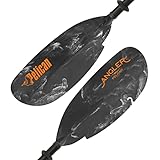
- Length: Measuring 240 (94.5"), this quality paddle is ideal for angler paddlers over 152 cm (5'5") in kayaks over 86 cm (34") wide.
- Durable And Affordable: This kayak paddle is made of a two-piece anti-slip grip aluminum shaft and fiberglass reinforced polypropylene blades. The blades ensure better durability and performance on the water. It offers excellent value for money.
- Multifunction: This convenient fishing paddle includes an integrated hook retrieval system directly on the blade and measurement tape along the shaft that will allow you to measure your catch.
- Ovalization: This paddle offers a unique ergonomic shaft design called indexing. The right side of the shaft changes from a rounded shape to a slightly oval shape that tells you where to place your hand. This promotes proper technique that reduces wrist fatigue.
- Performance: The push button system allows the blades to be feathered with a 0/65° angle. Paddling with offset blades will reduce the wind resistance on the top blade as it moves through the air. This will ensures an optimized and more comfortable paddling experience.
Practical precautions around whales
- Keep your distance before the whale gets close. Do not paddle toward a surfacing whale, cut across its likely path, or try to obtain a dramatic photograph.
- Do not pursue, touch, feed, swim with, or provoke a whale. NOAA explains that these actions can constitute harassment and can put both people and marine mammals at risk. See its guidance on feeding or harassing marine mammals.
- Give feeding activity extra room. Repeated lunges, birds diving, baitfish at the surface, or several whales converging can indicate an active feeding area. Even when those signs are not visible—as Adrián reported in Chile—an unseen feeding path may still exist.
- Wear a properly fitted life jacket. Adrián was wearing one, which was important when he was pulled underwater.
- Prepare for cold-water immersion. A whale encounter can become an emergency through capsize or separation even without direct contact. Appropriate thermal protection, communication equipment, and a plan for getting back to shore matter in cold regions such as the Strait of Magellan.
- If a whale surfaces unexpectedly nearby, do not try to race it or force a close pass. Stop attempting to approach, avoid placing your craft between the whale and open water, and follow local wildlife-viewing and maritime instructions. If you capsize, prioritize your airway, flotation, and contacting help rather than trying to film the animal.
How rare is this?
There is no reliable global probability estimate for a person ending up in a humpback’s mouth. Occasional comments that such an event happens every few years are anecdotal impressions, not a verified incident rate. The rarity of the video should not be interpreted as a safety recommendation or as evidence that close approaches are acceptable.
The bottom line
The February 8, 2025, Chile video is real. A humpback whale briefly engulfed Adrián Simancas and his inflatable packraft before releasing him, and he and his father got back to shore uninjured. The whale almost certainly did not swallow a human into its digestive system, and there is no evidence of a deliberate attack.
The strongest explanation is that Adrián was accidentally caught in the path of a humpback’s open-mouth lunge-feeding maneuver. That explanation remains an expert inference rather than a proven reconstruction of the whale’s private intentions. The encounter was extraordinary, but it was not harmless: a collision, capsize, submersion, or hypothermia could have made the same few seconds fatal.
Frequently Asked Questions
Could a humpback whale swallow an adult human?
Not in the normal sense of passing a person through its throat into its stomach. A humpback’s mouth is large enough to engulf a person, but its throat is too narrow for an adult human. In the Chile video, Adrián was briefly engulfed in the whale’s mouth rather than swallowed into its digestive tract.
Was the whale trying to eat the kayaker?
There is no evidence that it was. Experts believe the whale was probably lunge-feeding on small prey and accidentally encountered Adrián in its path. Because the footage does not show what the whale was targeting, feeding should be described as the most likely explanation, not an absolute certainty.
How far away should people stay from whales?
In the United States, NOAA recommends at least 100 yards, or 300 feet, from large whales, with stricter rules for some species and regions. The International Whaling Commission’s summary of Chilean whale-watching rules specifies at least 100 meters from large whales. Always check the local rule, and never pursue, touch, feed, swim with, or provoke a wild whale.
The Bottom Line
Real video, real danger—but probably not a predatory attack and not a human being swallowed into a humpback’s stomach. Adrián Simancas was most likely caught in the path of a feeding lunge, briefly engulfed, and released within seconds.





Leave a Reply