
Recommended Free Tools
No scent has been shown to keep snakes out of a yard reliably. Sulfur, mothballs, essential oils, sonic devices and folk remedies may be widely advertised, but extension guidance and field evidence do not support them as dependable barriers. Mothballs should never be scattered outdoors to repel snakes: that use is not approved and is illegal in the guidance from UF/IFAS.
The practical way to reduce encounters is to make the area less useful to snakes: remove hiding places, reduce rodents and other prey, maintain short vegetation, and close access points. If you need to protect a small play area, patio or animal enclosure, a carefully built mesh fence can help. No yard treatment guarantees that a snake will never pass through.
As an Amazon Associate I earn from qualifying purchases.
Why a snake noticing an odor is not the same as being repelled
Snakes use chemical cues to investigate prey, shelter and their surroundings. That ability is sometimes presented as proof that a strong-smelling product will drive them away. It is not. Detecting a chemical, avoiding it briefly, or changing direction in a controlled test does not establish that a product will protect a changing outdoor yard over weeks of weather, vegetation growth and animal movement.
Ask Extension summarizes the practical standard this way: “There are no snake repellents on the market that have been shown through a scientific study to consistently repel snakes.” Virginia Tech Extension similarly reports that research on the active ingredients in commonly promoted products has not demonstrated success. The conclusion is narrower than “no snake can ever react to an odor”: an individual animal may respond in a particular situation, but homeowners cannot depend on a scent to create a lasting exclusion zone.
#1 Best Overall
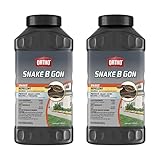
- PEOPLE, PET & PLANT SAFE: This snake away product has a pet-safe formula that is also safe for use around people and plants when used as directed (not intended for use on or around plants intended for consumption)
- SNAKE PREVENTION: Ortho Snake B Gon1 Snake Repellent Granules prevent snake entry, nesting, and foraging outdoors with an easy application, "no stink" formula
- SNAKE DETERRENT FOR OUTSIDE: Use this repellent outdoors where snake activity has been noticed, such as around houses, garages, sheds, barns, woodpiles, and patios
- HOW TO USE: Apply by simply shaking bottle side to side and dispensing granules on the ground; reapply as needed, usually every 30 days
- SNAKE REPELLENT COVERAGE: This bundle contains two 2 lb. bottles of Ortho Snake B Gon1 Snake Repellent Granules; each 2 lb. bottle covers up to 1,440 sq. ft.
Outdoor conditions explain why claims are difficult to reproduce. Rain and irrigation dilute residues, sunlight and heat change volatile compounds, wind carries odors away, and a snake can approach from an untreated direction. If food, cover or a cool refuge is available, those habitat incentives may outweigh an unpleasant smell.
Common snake-repellent scents and what the evidence supports
| Claimed deterrent | What extension guidance and field evidence support | Practical decision |
|---|---|---|
| Sulfur | It has been recommended for years, but Virginia Tech says studies of the relevant active ingredients have not demonstrated successful snake repelling. Ask Extension reports that sulfur does not consistently repel snakes. | Do not scatter sulfur around a yard as a dependable fix. It adds cleanup and exposure concerns without a demonstrated benefit. |
| Mothballs or naphthalene | Naphthalene appears in some registered repellent formulations, but mothball products themselves are not approved for outdoor snake control. UF/IFAS describes using them outdoors to repel wildlife as illegal. Ask Extension also warns that mothball vapors are toxic to people and pets. | Never place mothballs in a yard, crawl space, garden or pet area for snakes. Use any pesticide only for the exact site and pest listed on its label. |
| Cinnamon, clove, eugenol and essential-oil blends | Field research on mixtures containing these oils did not establish an effective snake repellent, despite early interest in the ingredients. | Do not treat an essential-oil spray as a proven alternative. Concentrated oils can also irritate animals and people when misapplied. |
| Sonic devices | Ask Extension reports no scientific studies showing that these devices consistently repel snakes. | Do not buy one as an evidence-based exclusion method. |
| Lime, cayenne, cedar oil and other folk remedies | Extension publications list these and similar materials among approaches without demonstrated effectiveness. | Replacing one unsupported scent with another does not solve the access or habitat problem. |
Why sulfur products remain popular
Sulfur is inexpensive, easy to spread and associated with a strong odor, so it appears in many informal recommendations. Popularity is not a performance result. Virginia Tech’s review of registered repellent ingredients and available testing found no demonstrated success sufficient to recommend it as a reliable yard treatment.
Rank #2

- POWERFUL PROTECTION: This 10 lb snake repellent for yard provides comprehensive pest control coverage up to 1.25 acres, effectively deterring both venomous and non-venomous snakes from your outdoor patio and backyard areas
- LONG-LASTING FORMULA: Snake away granules deliver up to 2-3 months of continuous snake deterrent protection per application, making this pest repellent solution ideal for ongoing lawn care and backyard essentials maintenance
- EPA-REGISTERED SAFETY: Victor's snake repellent outdoor formula is the only EPA-registered snake away repellent for outdoors
- DUAL-ACTION INGREDIENTS: The active ingredients disrupt snakes' scent detection, creating an effective rattlesnake repellent barrier that sends pests away in search of fresh air
- EASY APPLICATION: Simply spread these snake be gone granules in 4-5 inch bands around your yard perimeter to repel garter snakes, or use 8-12 inch bands for enhanced protection against larger snake species
Why mothballs are a special safety and legal issue
Mothballs are pesticide products intended for labeled uses such as protecting stored clothing from fabric pests. Their active vapors are designed to build up in an enclosed container, not disperse across an open yard. Scattering them outside can expose children, pets and wildlife to toxic fumes and leaves pesticide residues where the label does not permit them. UF/IFAS states that outdoor wildlife-repellent use is not an approved product use and is illegal. If mothballs are already outdoors, collect them without bare-hand contact, keep pets away and follow local hazardous-waste or pesticide-disposal directions.
Start with habitat changes around the places people and pets use
Habitat work will not make a property snake-proof. It removes reasons for a snake to linger near a house, deck, shed or play space and makes any later inspection easier.
Rank #3

- PEOPLE, PET & PLANT SAFE: This snake away product has a pet-safe formula that is also safe for use around people and plants when used as directed (not intended for use on or around plants intended for consumption)
- SNAKE PREVENTION: Ortho Snake B Gon1 Snake Repellent Granules prevent snake entry, nesting, and foraging outdoors with an easy application, "no stink" formula
- SNAKE DETERRENT FOR OUTSIDE: Use this repellent outdoors where snake activity has been noticed, such as around houses, garages, sheds, barns, woodpiles, and patios
- HOW TO USE: Apply by simply shaking bottle side to side and dispensing granules on the ground; reapply as needed, usually every 30 days
- SNAKE REPELLENT COVERAGE: One 2 lb. bottle of Ortho Snake B Gon1 Snake Repellent Granules covers up to 1,440 sq. ft.
Remove or relocate hiding cover
- Move brush, lumber, sheet materials, discarded containers and other debris away from foundations and frequently used paths.
- Break up or relocate rock, block and wood piles rather than leaving cavities at ground level beside the house.
- Store firewood on a rack above the ground and away from walls, then inspect it before bringing pieces indoors.
- Keep grass, weeds and ornamental plants trimmed near doors, play areas, kennels and other high-traffic locations. Illinois Extension’s 2026 guidance emphasizes vegetation and debris management.
Clear cover in stages rather than reaching blindly into a pile. Use tools to move material, wear sturdy footwear and keep children and animals away until the area has been inspected.
Reduce rodents and other prey opportunities
Many snakes eat rodents, so a yard with spilled feed, overflowing bins or accessible shelter for mice can be more attractive than a tidy yard. Store pet food, bird seed and livestock feed in sealed containers; clean spills promptly; secure garbage; and address rodent activity with methods appropriate to your location. Removing prey opportunities does not guarantee that a snake will leave, but it reduces one reason to remain near buildings.
Rank #4

- EFFECTIVE SNAKE REPELLENT: Victor Snake-A-Way granules provide reliable snake repellent for yard protection, targeting both venomous and non-venomous species that disrupts snakes' scent detection
- COMPREHENSIVE COVERAGE: Protect up to 1/2 acres with the 4 lb container of snake repellent outdoor granules, making it ideal for home and garden pest control around houses, sheds, gardens, and other backyard areas you want to safeguard
- IMMEDIATE OUTDOOR PEST CONTROL: Snake away repellent for outdoors works immediately upon application, creating protective barriers that repel rattlesnakes, garter snakes, and other unwanted species from your property
- LONG-LASTING: Provide up to 3 months of continuous snake repellent protection with only a single application, with granules maintaining effectiveness until reapplication is needed after heavy rainfall or when odor fades
- SAFE APPLICATION: Pest repellent granules are safe for use around people and pets when used as directed, offering reliable snake protection without compromising family or animal safety in your backyard
Close building access points
Inspect the foundation, vents, door sweeps, utility penetrations and gaps beneath sheds. Repair openings with durable materials suited to the location, while keeping required ventilation clear. Florida IFAS includes access-point management in encounter prevention because a snake inside a structure requires a different response from one crossing an open lawn.
Do these 3 things before closing this tab:
1Clear out junk files and repair common Windows errors2Scan for outdated or missing drivers - takes under a minute3Repair Windows errors before they cause bigger problemsWhen a small exclusion fence makes sense
Fencing is most realistic for a defined space such as a children’s play area, patio, chicken run or section immediately around a building. Florida IFAS cautions that trying to exclude snakes from an entire yard can be time-consuming and expensive. A fence also fails if gates are left open, vegetation provides a bridge or the bottom edge has gaps.
Best Value

- EFFECTIVE SNAKE REPELLENT: Snake repellent outdoor granules target both poisonous and non-poisonous snakes in your yard and outdoor areas, disrupting their sensory reception to encourage them to leave
- LONG-LASTING YARD PROTECTION: Each 28 lb container provides up to 3 months of continuous snake deterrent coverage for your backyard, patio, and outdoor spaces when applied as directed
- EPA-REGISTERED: Use this product with peace of mind knowing that Snake-A-Way repellent is EPA-registered, ensuring its safe for use around people and pets when used as instructed to help provide consistent outdoor pest control
- WIDE COVERAGE AREA: Protects up to 3.5 acres of outdoor patio and yard space by creating effective barrier bands around houses, sheds, gardens, and other areas where protection is needed
- WORKS QUICKLY: These snake repellent granules begin working immediately upon application, repelling both garter snakes, rattlesnakes and other species by disrupting their Jacobson's organ function (auxiliary olfactory sense organ) altering sensory reception
Published construction examples
Extension specifications differ by location and are examples rather than a universal code. Arkansas Extension describes a 36-inch-high galvanized hardware-cloth fence using 1/4-inch mesh, with the lower edge buried 6 inches and angled outward at about 30 degrees. Washington Department of Fish & Wildlife describes 30-inch fencing with 1/4-inch mesh and burial of 3 to 6 inches. Use the guidance from your state or local wildlife authority when terrain, protected species or building rules affect the design.
| Source example | Height | Mesh | Buried edge | Other detail |
|---|---|---|---|---|
| Arkansas Extension | 36 inches | 1/4-inch galvanized hardware cloth | 6 inches | Lower section angled outward about 30 degrees |
| Washington Department of Fish & Wildlife | 30 inches | 1/4-inch mesh | 3 to 6 inches | Regular maintenance and tight gates are emphasized |
Installation and maintenance checklist
- Define the smallest area that needs protection and map gates, corners, slopes and drainage before buying material.
- Choose sturdy 1/4-inch galvanized hardware cloth; verify the actual height and mesh opening rather than relying on a product title.
- Bury the bottom edge according to your local extension specification. A shallow trench and an outward-facing apron can reduce attempts to push underneath.
- Fit gates tightly against the ground and side posts. A gap under a gate can defeat an otherwise continuous fence.
- Keep grass, vines and branches cut back so they cannot provide a route over the mesh. Snakes can climb, so fence height alone is not a guarantee.
- Inspect after storms, landscaping work and animal digging. Look for lifted edges, holes, bent mesh and places where soil has washed away.
- Keep the gate closed whenever the protected space is occupied and repair damage promptly.
Fencing has a larger upfront labor and material cost than clearing debris, and it creates an ongoing maintenance obligation. It is justified when the protected area is small and used often, not as an automatic whole-yard remedy.
A practical decision guide for homeowners
| Your situation | First action | Why |
|---|---|---|
| Occasional snake sightings in an open yard | Remove debris and dense vegetation near the house; reduce rodent attractants. | These steps address shelter and prey without adding an unproven chemical. |
| Snakes near a patio, play space or pet run | Complete habitat cleanup, then consider a small, well-maintained mesh exclusion fence. | A limited area is more feasible to fence and inspect than an entire property. |
| Snake entering a home or outbuilding | Keep people and pets away, close interior doors if safe, and contact local wildlife authorities or a qualified wildlife-control professional. | Removal and legal requirements vary by species and location; chasing an unknown snake can increase risk. |
| Considering a store-bought repellent | Read the label for the exact pest, site and application. Reject products that rely on unsupported scent or sonic claims. | Label compliance is required, and extension evidence does not show consistent yard repellency for these approaches. |
What to do when you see a snake
If the snake is outside and not blocking a necessary route, leave it alone and give it space. Bring pets indoors or leash them, move children away and observe from a safe distance. Do not corner, handle or try to identify a snake by stepping close to it. Species, protections and removal rules vary by location; a local wildlife agency or qualified professional can advise on identification and lawful response.
Quick wins for a faster PC:
Fix the driver behind crashes, sound loss and screen glitchesFind Drivers →Repair Windows errors before they cause bigger problemsFix Now →For a snake inside a building, close off access to occupied rooms if you can do so without approaching it, and seek local assistance. Do not release mothballs, sprays or essential oils into an enclosed room. A professional can remove the animal and identify the gap or habitat feature that allowed entry.
How to avoid creating a new problem while trying to solve one
- Do not combine pesticides. Using sulfur, mothballs or other products outside their labels can expose pets and wildlife and may violate pesticide law.
- Do not assume “natural” means harmless. Essential oils and concentrated plant extracts can irritate skin, eyes and airways, and their snake-repellent performance is unproven.
- Do not let cleanup create hiding places. A temporary pile of branches or bags beside the house can become the very cover you meant to remove; take material off-site or store it securely.
- Do not skip maintenance. A fence with an open gate, eroded trench or overgrown edge is no longer a continuous barrier.
- Do not promise a snake-free yard. Habitat reduction lowers the chance of encounters; it cannot prevent every snake from passing through.
The bottom line on scents
Sulfur, mothballs, cinnamon, clove, eugenol blends, cedar oil, lime, cayenne and sonic devices are not dependable ways to keep snakes out of a yard. Mothballs carry an additional toxicity and legal problem when used outdoors. Focus instead on debris and vegetation management, rodent control, building repairs and, when the need is specific and the area is small, a properly installed and maintained 1/4-inch-mesh fence designed with local guidance.
Quick Recap
Product prices and availability are accurate as of the date/time indicated and are subject to change. Any price and availability information displayed on Amazon at the time of purchase will apply.





Leave a Reply